

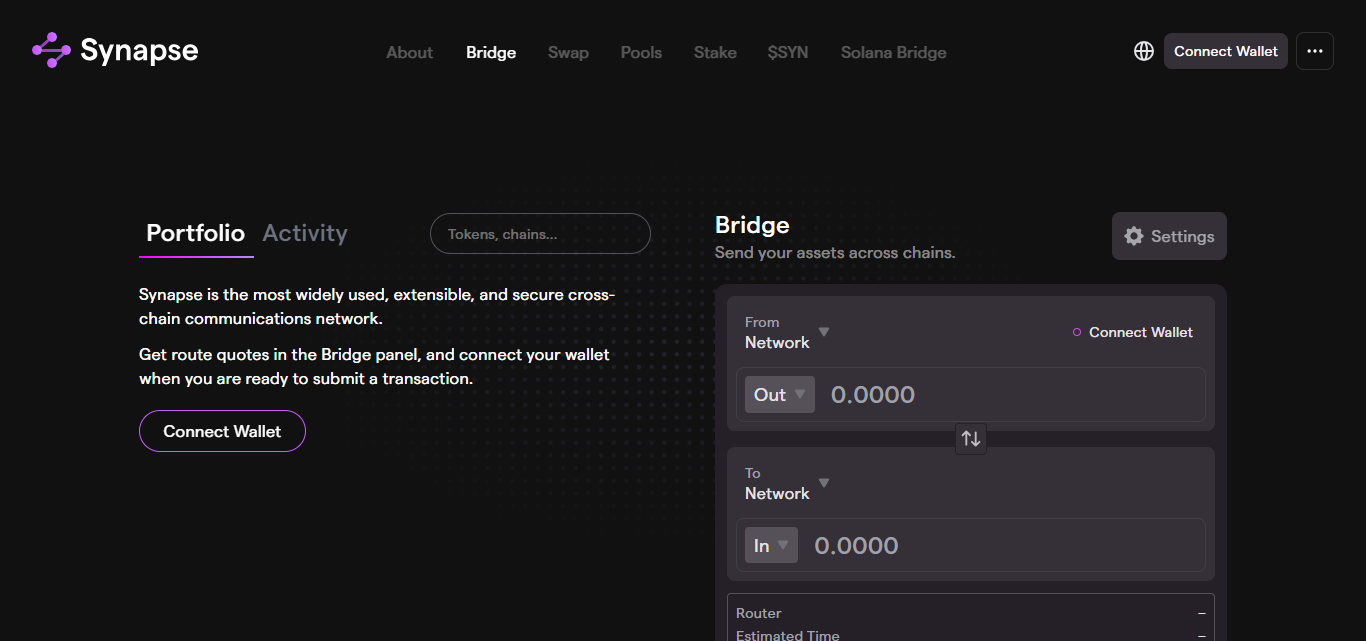
In this article I will cover the Top Synapse Protocol Competitors for Swaps, the best platforms for cross-chain swaps, token swaps and blockchain interoperability solutions.
We will explore Stargate Finance, Jumper Exchange, Rubic Exchange, Symbiosis Finance, Rango Exchange, Meson, THORChain, Hop Protocol, Across Protocol and 1inch to know their key features, supported blockchains, fees, speed and security strategies.
Key Points & Best Synapse Protocol Competitors for Swaps
| Competitor | Explanation |
|---|---|
| Stargate Finance | Enables cross-chain swaps and transfers using unified liquidity pools for efficient settlement. |
| Jumper Exchange (LI.FI) | Aggregates bridges and decentralized exchanges, helping users find efficient cross-chain swap routes. |
| Rubic Exchange | Connects multiple blockchains and exchanges, simplifying cross-chain swaps through route aggregation. |
| Symbiosis Finance | Provides cross-chain token swaps across networks through aggregated liquidity and bridging solutions. |
| Rango Exchange | Aggregates bridges and decentralized exchanges to route cross-chain swaps across ecosystems. |
| Meson | Specializes in fast, low-cost stablecoin swaps across supported blockchain networks globally. |
| THORChain | Enables native cross-chain swaps between supported blockchain assets without wrapped tokens or custodians. |
| Hop Protocol | Facilitates rapid token transfers between Ethereum layer-two networks using liquidity providers. |
| Across Protocol | Uses intents and relayers to deliver efficient cross-chain transfers with competitive fees. |
| 1inch | Aggregates decentralized exchanges to find competitive token swap prices across supported networks. |
10 Best Synapse Protocol Competitors for Swaps
1. Stargate Finance
Stargate Finance is a cross-chain liquidity protocol that enables users to transfer supported assets across blockchains as well as access unified liquidity pools. It is useful for DeFi applications that require reliable cross-chain settlement and token transfers. Supported Blockchains Stargate supports select networks including Ethereum, Arbitrum, Optimism, Base, Polygon and BNB Chain.
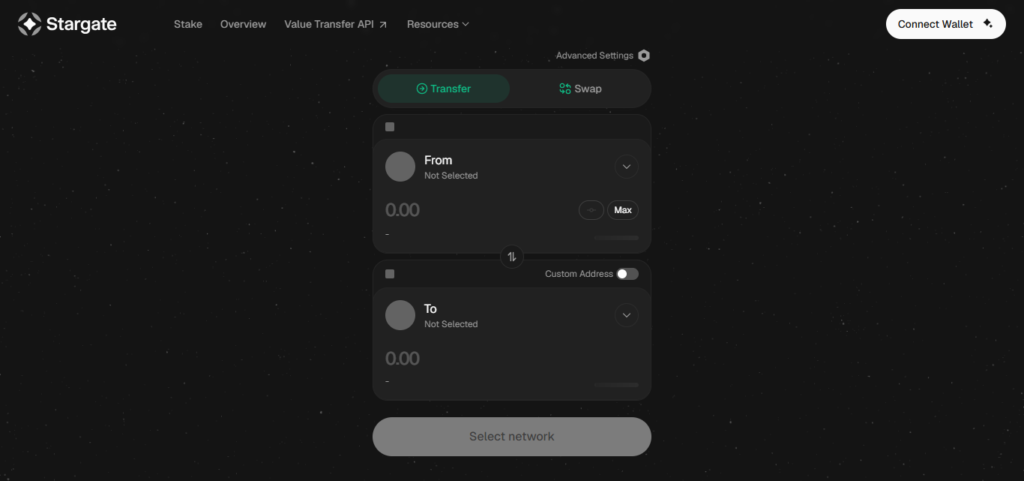
Exact routes depend on asset availability and protocol version. Fees and Speed Costs – Network gas, protocol fees, and any liquidity or routing costs. Time to complete – Depending on the route and network conditions. Security Approach Stargate uses smart contract technology and LayerZero messaging infrastructure. Users should check relevant audits, supported routes and contract risks before swapping.
Stargate Finance Feature
| Feature | Explanation |
|---|---|
| Unified Liquidity | Connects liquidity pools across supported blockchains for cross-chain asset transfers. |
| Native Asset Transfers | Enables transfers of supported assets without requiring additional wrapped-token conversions. |
| Cross-Chain Composability | Allows decentralized applications to integrate cross-chain transfers into their transaction workflows. |
| Developer Integration | Provides APIs and smart-contract infrastructure for building cross-chain applications. |
2. Jumper Exchange (LI.FI)
Jumper is powered by LI.FI infrastructure and aggregates decentralized exchanges, bridges and other routing providers to help users swap tokens across blockchain networks. It compares the routes available and makes cross-chain trading and asset transfers easier in one interface.
Blockchains Supported: LI.FI supports over 60 chains including major EVM networks and Solana, but the routes and tokens available will differ. Speed and fees: Total costs depend on the network gas, bridge or exchange fees, liquidity and the route you choose.
The speed of execution depends on the underlying providers. Security Approach: 1. LI.FI combines multiple providers and mechanisms for risk management but the security is partially dependent on the bridge, exchange and intelligent contracts chosen.
Jumper Exchange (LI.FI) Feature
| Feature | Explanation |
|---|---|
| Route Aggregation | Aggregates bridge and decentralized exchange routes for cross-chain swaps. |
| Multi-Chain Access | Connects users to supported blockchain networks through one swapping interface. |
| Route Optimization | Evaluates available routes using factors such as price, fees, and execution time. |
| Developer Tools | Offers APIs, SDKs, and widgets for integrating swaps into applications. |
3. Rubic Exchange
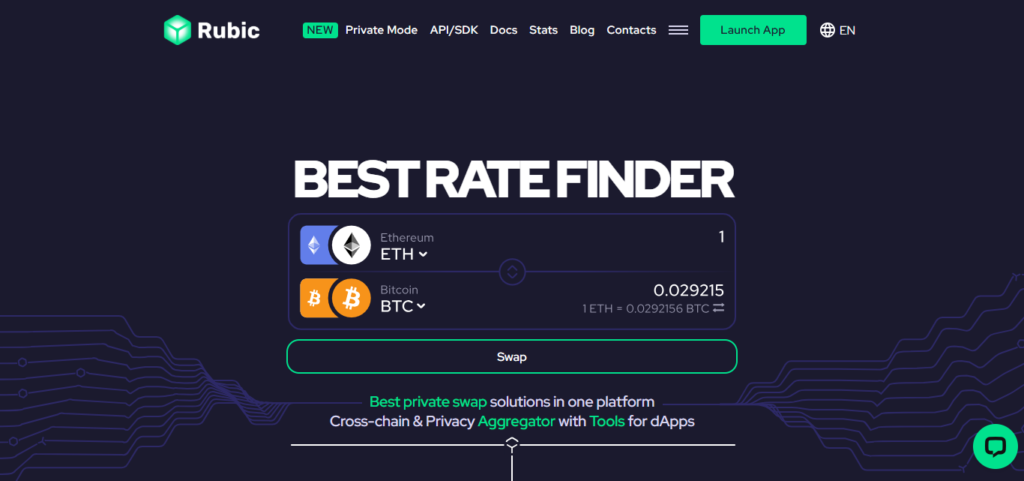
Rubic Exchange is a cross-chain aggregator that connects decentralized exchanges, bridges and intent-based protocols, allowing users to exchange tokens between different chains. It simplifies trading by looking for optimal routes among integrated providers.
Supported Blockchains Rubic supports 70+ blockchains including Ethereum, Arbitrum, Polygon, Base, Solana, Avalanche and other blockchains. Availability depends on the token and the route selected. Speed and Charges: Rubic does not charge any protocol fees for eligible swaps, including swaps under $100. Other routes may incur provider fees, network gas, and slippage.
Time to complete varies by route. Security Strategy: Rubic uses intelligent contracts and third-party integrations. The audits of the respective contracts can be found here. The user must review the selected provider and transaction details.
Rubic Exchange Feature
| Feature | Explanation |
|---|---|
| Cross-Chain Swaps | Enables token exchanges between supported blockchain networks through integrated providers. |
| Aggregated Liquidity | Connects multiple exchanges and bridges to identify suitable trading routes. |
| Token Route Discovery | Helps users find available routes between supported tokens and networks. |
| Simplified Trading | Combines cross-chain routing and token swapping within a single interface. |
4. Symbiosis Finance
Symbiosis Finance is a cross-chain AMM protocol that connects liquidity across different blockchain ecosystems. It allows users to exchange tokens without the hassle of having to use different bridges and swaps. Supported Blockchains Supported Blockchains Supported networks include Ethereum, BNB Chain, Polygon, Avalanche, Arbitrum, Optimism, zkSync, Base, and other added networks. Actual availability is subject to current protocol support.
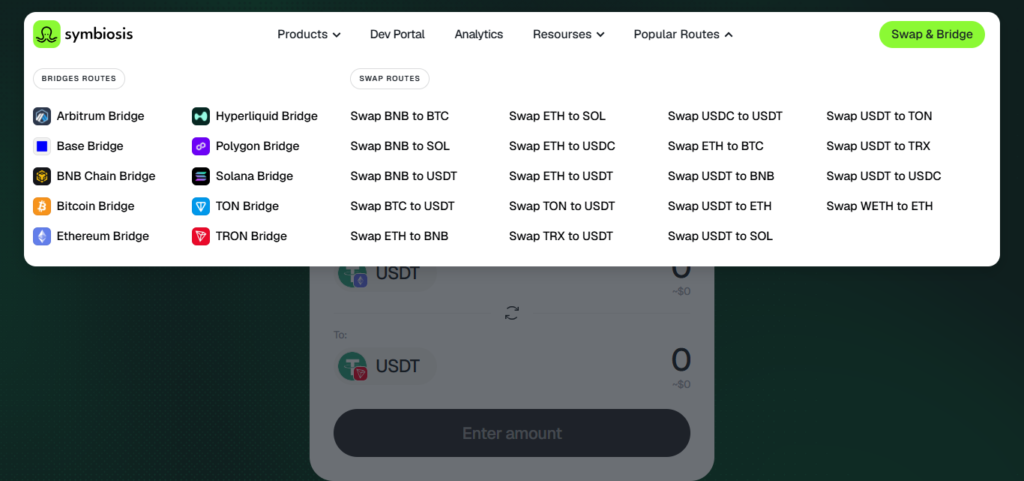
Fees & Velocity: Costs to swap could include source-chain gas, destination-chain gas, liquidity costs and route-dependent fees. The time to complete depends on the network conditions and the transaction path.
Security Approach: Symbiosis coordinates cross-chain transactions using intelligent contracts, liquidity pools, and relayers. Its non-custodial design means users remain in control of their wallets, but contract, relayer, and cross-chain execution risks still exist.
Symbiosis Finance Feature
| Feature | Explanation |
|---|---|
| Cross-Chain Exchange | Enables token swaps between supported networks within one transaction flow. |
| Liquidity Aggregation | Sources liquidity from integrated pools and exchanges to improve swap execution. |
| Non-Custodial Design | Uses smart contracts to execute swaps without requiring centralized custody of user funds. |
| Developer Integration | Provides API and SDK infrastructure for integrating cross-chain swaps into applications. |
5. Rango Exchange
Rango Exchange is a cross-chain aggregator linking decentralized exchanges, bridges, and liquidity providers to discover routes between tokens on different blockchains. The main advantage is that it supports multiple blockchain ecosystems in one interface, instead of requiring users to use multiple platforms.
Supported Chains: Rango supports integrations with EVM networks and Bitcoin related ecosystems, Cosmos, Solana and other supported chains. According to its documentation, it has wide coverage over 50+ blockchains, but individual routes can change. Time and fees: costs vary according to the route taken and include network gas, bridge fees, exchange fees, and slippage.
The speed is dependent on the underlying protocols. Security Approach: Rango routes transactions through integrated providers and decentralized message systems. Aggregation doesn’t eliminate third party risks so users should check the details of the route and the security of the provider.
Rango Exchange Feature
| Feature | Explanation |
|---|---|
| Bridge Aggregation | Connects multiple bridging protocols to facilitate cross-chain asset movements. |
| DEX Aggregation | Searches integrated decentralized exchanges for possible token swap routes. |
| Multi-Ecosystem Support | Connects supported EVM, Cosmos, Solana, and other blockchain ecosystems. |
| Route Management | Combines bridge and swap steps into a streamlined transaction experience. |
6. Meson
Meson is a cross-chain swap protocol that aims to facilitate fast token transfers between supported blockchain networks, especially stablecoins and a few major assets. It employs liquidity providers and hash time-locked contract mechanisms to facilitate swaps without depending on conventional token-bridging paths for each swap.
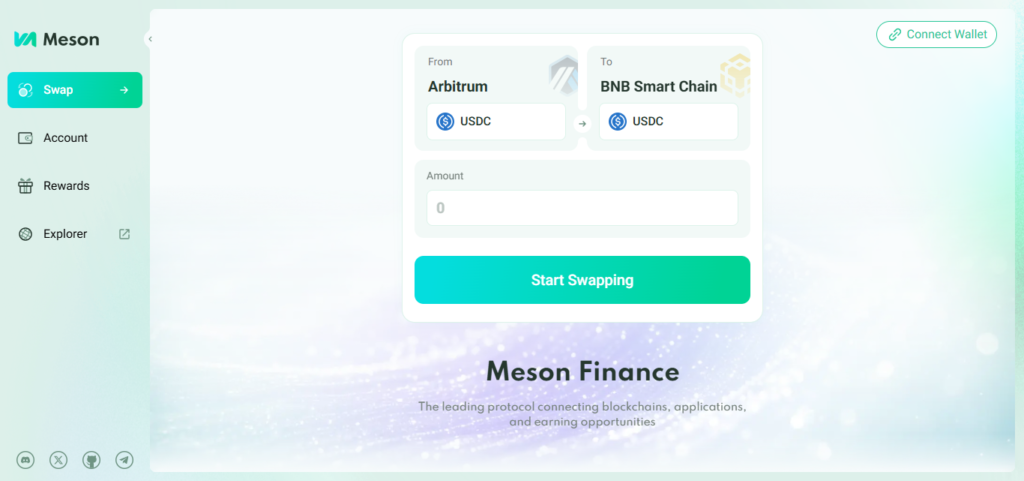
Supported Blockchains: The project has existing integrations with Ethereum, BNB Chain, Tron, Avalanche, Polygon, Arbitrum, Optimism, zkSync and other chains, with tokens available at the moment depending on the chain. Fees and Speed Meson aims to provide low-cost execution and quick settlement. Service fees, gas fees and liquidity-provider fees may apply.
Security Approach: Built with smart contract technology, pre-positioned liquidity and cryptographic swap authorization. Please review current contract audits, supported routes and quoted fees before confirming transactions.
Meson Feature
| Feature | Explanation |
|---|---|
| Stablecoin Swaps | Focuses on cross-chain swaps involving stablecoins and other supported assets. |
| Liquidity Providers | Uses available liquidity to facilitate exchanges across supported blockchain networks. |
| Atomic Swap Mechanism | Uses hash time-locked contract mechanisms to coordinate supported cross-chain swaps. |
| Transaction Efficiency | Aims to provide low-cost, fast swaps where supported routes and liquidity permit. |
7. Thorchain
THORChain is a decentralized liquidity protocol that enables users to swap native crypto assets across supported chains without using traditional wrapped-token bridges. This is especially helpful for traders who wish to trade assets such as Bitcoin and Ethereum through a decentralized system.
Supported Blockchains Supported assets and networks: Bitcoin, Ethereum, BNB Smart Chain, XRP Ledger, Solana, Tron, Litecoin, Dogecoin, Bitcoin Cash, Avalanche, Cosmos and more. Speed and fees: Users might pay source-chain gas, liquidity fees and destination-chain transaction costs.
Fees and completion time depend on pool depth, swap size, and network conditions. Security Approach THORChain makes use of validator operated vaults, threshold signature schemes and on-chain consensus. These mechanisms lessen dependence on centralized custodians but do not eliminate protocol or smart-contract risk.
THORChain Feature
| Feature | Explanation |
|---|---|
| Native Asset Swaps | Enables swaps between supported native assets across connected blockchain networks. |
| Liquidity Pools | Uses protocol liquidity pools to facilitate asset exchanges and pricing. |
| Decentralized Infrastructure | Uses validator-operated vaults and consensus mechanisms to coordinate cross-chain transactions. |
| No Wrapped-Token Requirement | Supports native-asset swaps without requiring conventional wrapped versions of every asset. |
8. Hop Protocol
Hop Protocol is a cross-chain bridge that’s primarily designed to transfer supported tokens from Ethereum to compatible layer-two or sidechain networks. It leverages liquidity providers and certain bridge mechanisms to enable users to transfer assets without waiting for the full canonical bridge withdrawal period.

Supported Blockchains: Ethereum, Arbitrum, Optimism, Polygon and Gnosis are historically connected networks, but users should check which routes and assets are still live. Fees and Speed: Costs can include source chain gas, destination chain gas and liquidity provider fees.
Depending on liquidity and network conditions available, transfers may be faster than some traditional bridge routes. Security Model: Hop’s bridge architecture and smart contract. Before transferring assets, check the current deployment status, audits, supported routes, and liquidity.
Hop Protocol Feature
| Feature | Explanation |
|---|---|
| Layer-Two Bridging | Focuses on transferring supported tokens between Ethereum and compatible scaling networks. |
| Liquidity Providers | Uses liquidity providers to facilitate transfers across supported networks. |
| Faster Transfers | Can provide faster routes than some canonical bridge withdrawal processes. |
| Rollup Connectivity | Helps move assets across supported Ethereum layer-two networks and sidechains. |
9. Across Protocol
Across Protocol is an intent-based cross-chain bridge that requires relayers to deliver supported assets on destination networks before completing the protocol’s settlement process. It aims to be capital-efficient, competitively priced and to allow for fast transfers, and is useful for users moving assets between Ethereum and connected networks.
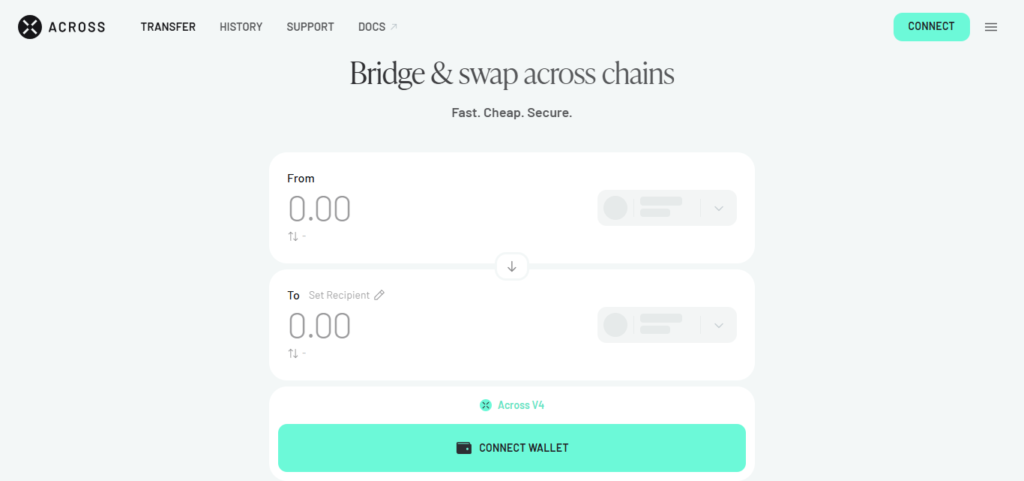
Supported Blockchains: Across supports Ethereum, Arbitrum, Optimism, Base, Polygon and many more networks including select emerging ecosystems. Fees and Speed: Many transfers can take around two seconds, and total fees are based on the costs of the liquidity-provider, relayer, gas, and the route.
Security Approach: Uses optimistic verification, economic bonds and UMA’s Optimistic Oracle to dispute invalid proposals for settlements. Users should still check token support, contract risks and current transaction quotes.
Across Protocol Feature
| Feature | Explanation |
|---|---|
| Intent-Based Transfers | Lets users specify desired cross-chain outcomes instead of manually managing every step. |
| Relayer Network | Uses relayers to deliver assets on destination chains and settle transactions. |
| Capital Efficiency | Uses pooled liquidity and competitive relayers to support efficient cross-chain transfers. |
| Optimistic Verification | Uses UMA’s Optimistic Oracle framework to support verification and dispute resolution. |
10. 1inch
1inch is a decentralized exchange aggregator that searches liquidity sources to provide users with the best token swap execution. It is especially useful for on-chain trading and through supported products, selected cross-chain swaps. Supported Blockchains: Its swap infrastructure supports networks such as Ethereum, BNB Chain, Polygon, Arbitrum, Optimism, Base, Avalanche and Solana for certain swap modes.
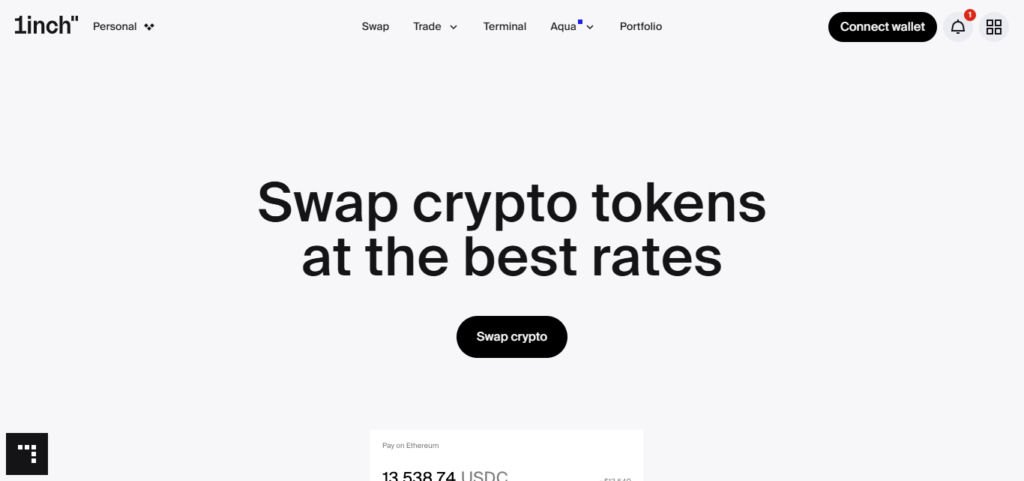
Classic swaps, intent-based swaps and cross-chain swaps have different availabilities. Rates and Speed: Users may pay network gas, liquidity-provider fees, and any applicable service or route fees. The time of execution and output depends on network congestion and the chosen method of trade.
Security Approach: 1inch uses routing based on intelligent contracts and various execution models including intent based swaps. Users have to check the transaction approval, contract address and quoted output before signing.
1inch Feature
| Feature | Explanation |
|---|---|
| DEX Aggregation | Searches multiple decentralized exchange liquidity sources for token swap opportunities. |
| Swap Routing | Routes trades through available liquidity sources to improve execution. |
| Price Optimization | Compares available trading paths to seek competitive token exchange rates. |
| DeFi Integration | Provides swap infrastructure and developer tools for supported decentralized applications. |
Conclusion
To summarize, the Best Synapse Protocol Competitors for Swaps provide alternative options for cross-chain trading, token swaps, and blockchain interoperability. Stargate Finance Jumper Rubic Symbiosis Rango Meson THORChain Hop Across 1inch
These protocols offer their own unique features, supported networks, and routing options. Be sure to compare transaction fees, speed, liquidity, security, and blockchain compatibility before choosing a platform to ensure you’re getting the best one for your swapping needs.
FAQ
Yes, Jumper aggregates bridges and decentralized exchanges to find suitable cross-chain swap routes.
Rubic combines cross-chain bridges and decentralized exchanges to simplify token swaps across supported networks.
Yes, Symbiosis enables token exchanges across supported blockchains through integrated liquidity and bridging infrastructure.
Meson focuses on fast, low-cost cross-chain swaps, particularly for stablecoins and supported digital assets.