

In this article, I will discuss the Best Jumper Exchange Rivals for Bridge Swaps. Best Alternatives for Smooth Cross-Chain Cryptocurrency Transactions.
We will be reviewing platforms like Rubic, Mayan, OpenOcean, Rango Exchange, deBridge, and many others based on the blockchains they support, their swap functionalities, fees, transaction speed, security, liquidity, and exchange rates to guide you in choosing the best one for your trading needs.
Key Points & Best Jumper Exchange Rivals for Bridge Swaps
- Rubic – Aggregates cross-chain swap routes, helping users find competitive rates across supported networks.
- Mayan – Enables cross-chain token swaps, particularly between Solana and supported blockchain ecosystems.
- OpenOcean – Aggregates decentralized exchanges to optimize token swap pricing across multiple supported blockchain networks.
- KyberSwap Aggregator – Finds efficient decentralized exchange routes to improve swap rates and reduce trading costs.
- Rango Exchange – Aggregates cross-chain bridges and exchanges, simplifying swaps between different blockchain networks and tokens.
- deBridge – Provides cross-chain transfers and swaps, focusing on fast settlement and secure asset movement.
- Across Protocol – Specializes in fast, capital-efficient cross-chain transfers using intents and relayer-based infrastructure.
- Stargate Finance – Facilitates cross-chain asset transfers through unified liquidity pools across supported blockchain networks.
- Symbiosis – Enables multichain token swaps by connecting decentralized exchanges and bridges across supported networks.
- Synapse Protocol – Offers cross-chain token swaps and bridging, connecting assets across multiple blockchain ecosystems.
10 Best Jumper Exchange Rivals for Bridge Swaps
1. Rubic
Rubic is a strong competitor for Jumper Exchange as it combines multiple decentralized exchanges and bridging providers in one interface. Supported Blockchains Rubic supports many EVM and non-EVM networks, including Ethereum, Polygon, Arbitrum, Base, Solana and others. Cross-Chain Swap. Swap between assets on supported networks via aggregated routes.
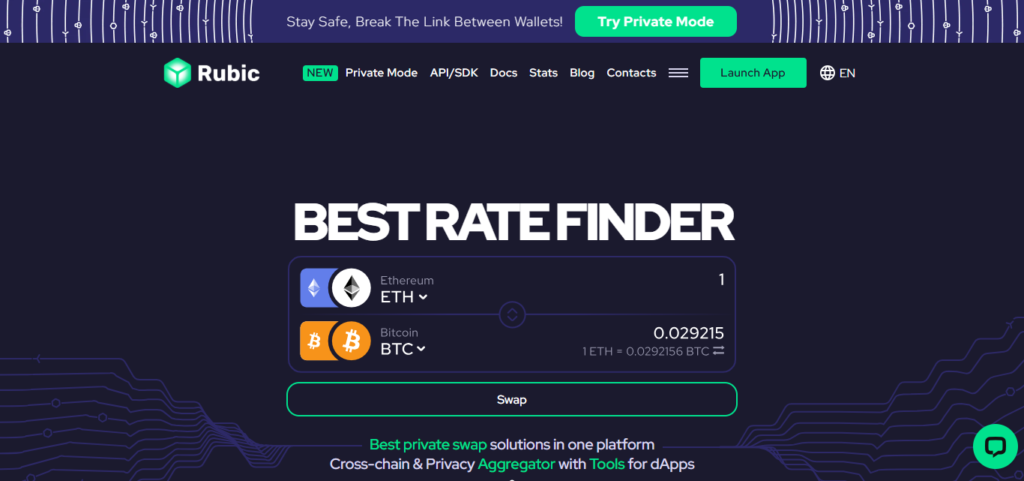
Supported Tokens The tokens are determined by the connected networks and providers. Pricing and Fees: Fees for gas, route, and provider are variable. Transaction Speed: Depends on bridge selection and network conditions. Security: It relies on third-party intelligent contracts and providers. Liquidity and exchange rates: aggregation of routes allows to compare prices and available liquidity.
Rubic Pros & Cons
| Pros | Cons |
|---|---|
| Aggregates numerous DEXs, bridges, and intent protocols. | Route availability varies by token and network. |
| Supports a broad range of blockchain ecosystems. | Multi-provider routes can make comparisons more complex. |
| Offers one interface for cross-chain and same-chain swaps. | Final prices depend on selected providers and gas fees. |
2. Mayan
Mayan represents another option for users interested in cross-chain trading with Solana as a focal ecosystem. Blockchains Supported: Solana, Ethereum, BNB Chain, Polygon, Arbitrum, Optimism, Base and other supported networks. Cross-Chain Swap: Mayan’s routing infrastructure merges token swaps and cross-chain transfers.
Supported Tokens: Availability includes major assets and tokens supported by networks connected to the bridge. Fees & Pricing Pricing is subject to change depending on swap route and applicable network fees, see current quote.
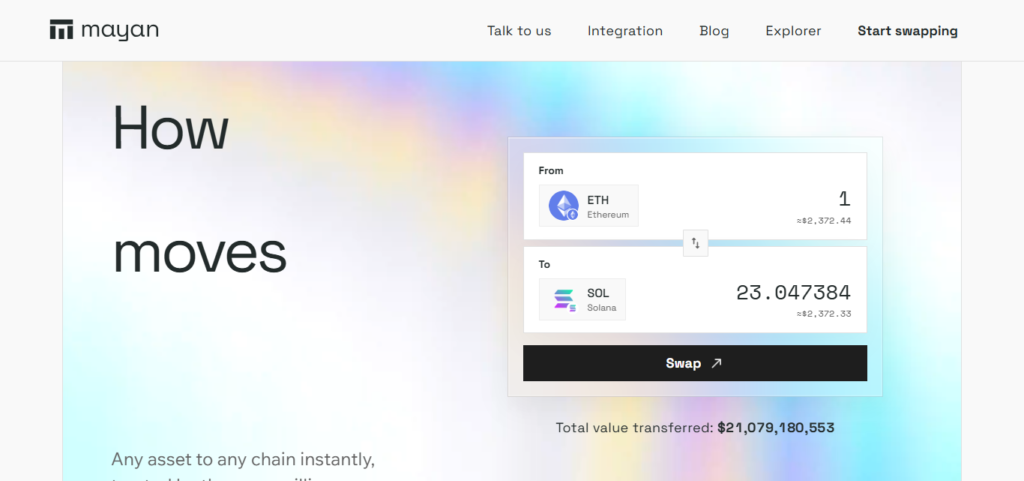
Transaction Speed: Depends on destination and confirmation by network. Security: Cross-chain infrastructure is built on wormhole technology. Liquidity and Exchange Rates Routing looks for competitive output and compares available execution paths.
Mayan Pros & Cons
| Pros | Cons |
|---|---|
| Offers cross-chain swaps with strong Solana ecosystem integration. | Supported routes and tokens vary by network. |
| Simplifies transfers between supported blockchain ecosystems. | Network congestion can affect execution times. |
| Uses cross-chain infrastructure to coordinate transfers. | Users depend on integrated protocols and their security assumptions. |
3. OpenOcean
OpenOcean allows traders to compare liquidity between decentralized exchanges and maximize their token swaps. Blockchains supported: The docs list over 40 chains and ecosystems, including Ethereum, BNB Chain, Arbitrum, Base, Solana and Sui. Cross-Chain Swap: It allows for cross-chain trading via integrated routing infrastructure.
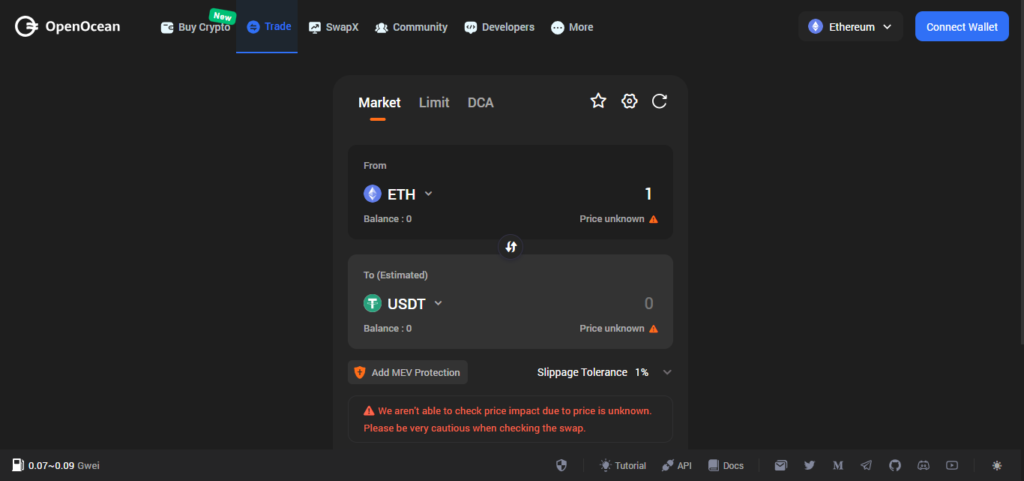
Supported Tokens Token availability is determined by the supported chains and liquidity sources. Fees and Pricing: Users should check the gas costs, provider fees and the quoted output.
Transaction Speed: Depends on routing and blockchain conditions. Security: As a non-custodial protocol, users sign their own transactions. Liquidity & Exchange Rates Smart order routing compares liquidity sources to find competitive prices and reduce price impact.
OpenOceanPros & Cons
| Pros | Cons |
|---|---|
| Aggregates liquidity across numerous DEXs and blockchain networks. | Some tokens may have limited liquidity. |
| Smart routing can optimize price and gas costs. | The best quoted route may change before execution. |
| Provides APIs and tools for developers. | Cross-chain availability depends on supported integrations. |
4. KyberSwap Aggregator
KyberSwap Aggregator provides optimized trading paths and cross-chain swap options, which can serve as an alternative to Jumper Exchange. Supported Blockchains Supported Blockchains: The aggregator supports major networks such as Ethereum, BNB Chain, Avalanche, Base, Arbitrum, Optimism, Polygon, and other integrations. Cross-Chain Swap: Users can swap assets across supported networks through its cross-chain interface.
Available tokens: depends on the selected network and the integrated exchanges. Fees & Pricing Costs include network gas and other third party cross-chain fees Transaction Speed: Varies depending on the originating and destination networks.
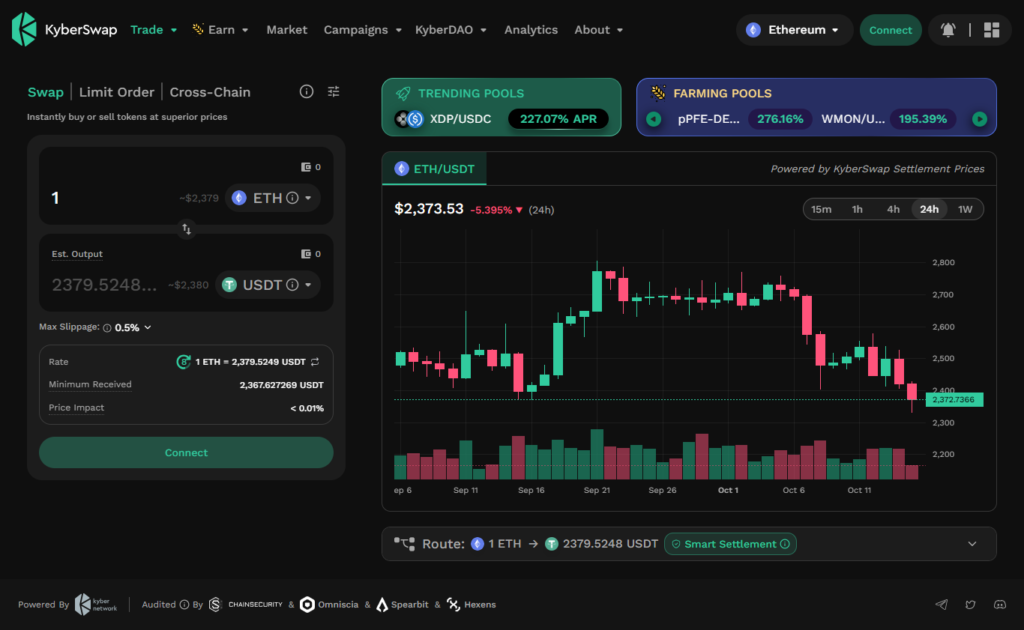
Security: Transactions interact with protocols and integrated providers on the blockchain. Liquidity and Exchange Rates: DEX aggregation can help find efficient routes and competitive rates.
KyberSwap Aggregator Pros & Cons
| Pros | Cons |
|---|---|
| Aggregates liquidity sources to find efficient swap routes. | Available tokens and routes vary across networks. |
| Supports advanced trading features and customizable parameters. | Complex routing may be harder for beginners to understand. |
| Offers same-chain and cross-chain swap functionality. | Cross-chain transactions depend on third-party integrations where applicable. |
5. Rango Exchange
Rango Exchange is a one-stop swap platform that aggregates decentralized exchanges, bridges and cross-chain liquidity providers. Supported Blockchains: It supports EVM networks, Solana, Cosmos-based ecosystems and some UTXO chains. Cross-Chain Swap Users can swap tokens between different networks through routes with multiple services.
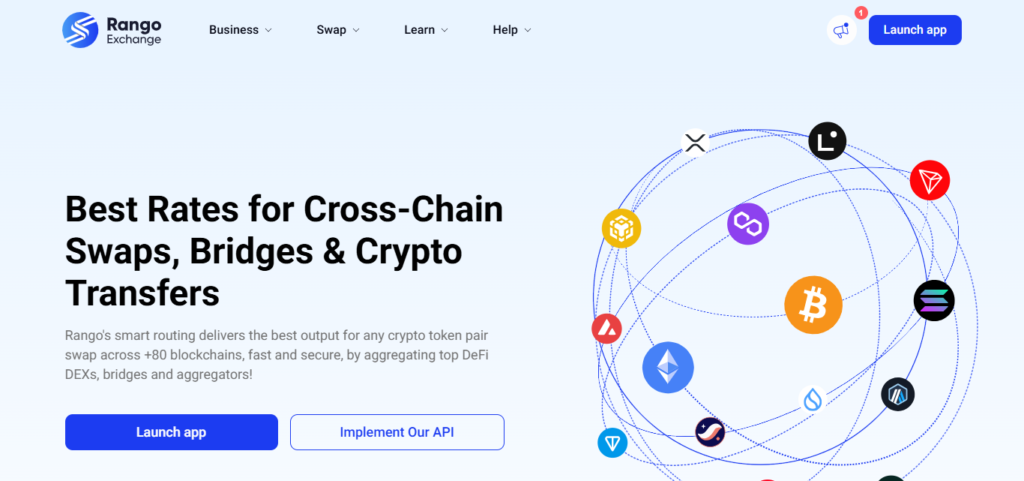
Supported Tokens Availability of tokens depends on active integrations and the route selected. Fees and Pricing Total costs may include network gas, bridge fees, and any applicable platform or provider fees. Transaction Speed : Transfers vary based on route complexity and confirmation times.
Security: The risk is partially dependent on the intelligent contracts and bridges used. Liquidity and Exchange Rates: Aggregation enables the comparison of sources of liquidity and routes available.
Rango Exchange Pros & Cons
| Pros | Cons |
|---|---|
| Connects multiple bridges and exchanges through one interface. | Route complexity can make transaction costs harder to compare. |
| Supports diverse blockchain ecosystems and token standards. | Not every token pair has an available route. |
| Reduces the need to use bridges separately. | Execution depends on the underlying bridge and exchange providers. |
6. deBridge
deBridge is a competitor for users that need cross-chain asset transfers, token swaps and efficient execution. Supported Blockchains: It supports many networks with its infrastructure including Ethereum, Solana, Tron, BNB Chain, Base and Arbitrum. Cross-Chain Swap: Its DLN liquidity network enables cross-chain swaps and transfers without relying on traditional bridge liquidity pools for each route.
Supported Tokens: Depending on supported assets and source-destination pairs. Fees and Pricing: Costs can include a chain flat fee, solver fees, and source-chain gas.
Transaction Speed Execution depends on solvers’ fulfillment and network conditions. Security: Its architecture prevents pooled TVL on bridge for DLN transfers. Liquidity and Exchange Rates Solver-driven operation Quoted rates for supported transactions
deBridge Pros & Cons
| Pros | Cons |
|---|---|
| Provides cross-chain transfers and token swaps. | Supported routes depend on available liquidity and integrations. |
| Intent-based execution can provide competitive transaction quotes. | Solver availability can influence execution outcomes. |
| Designed to facilitate efficient cross-chain settlement. | Users must understand the risks of the underlying protocol. |
7. Across Protocol
Across Protocol is another noteworthy alternative for users moving assets between Ethereum and supported Layer 2 networks. Supported Blockchains: Primarily Ethereum and its layers such as Arbitrum, Optimism, and Base (via integrations). Cross-Chain Swap: Across is primarily a bridge, token conversion may require another swap route.
Supported Tokens Supported assets depend on the route and bridge configuration. Pricing & Fees: Fees may include relayer fees, source-chain gas. Quotes are based on demand.
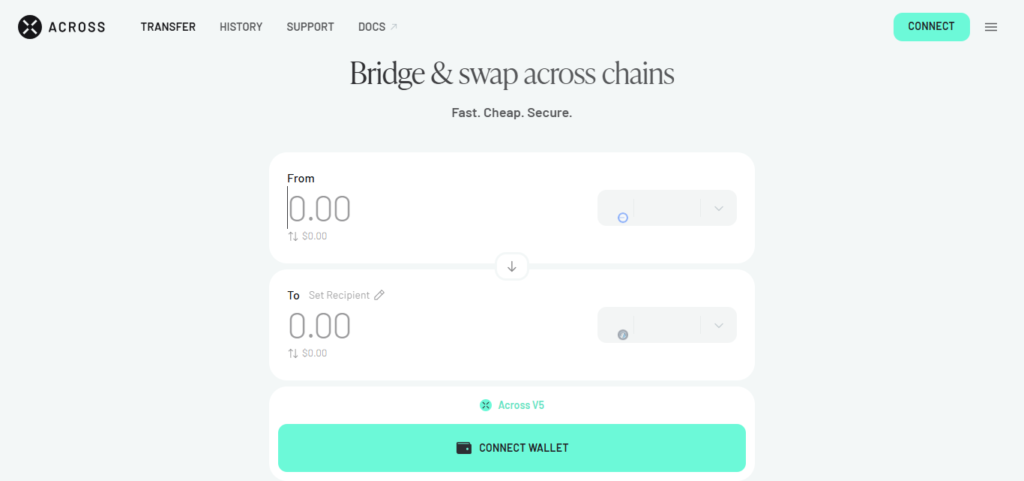
Transaction Speed: Relayers can process eligible transfers quickly but settlement and finality are slower. Security: Its design uses an optimistic verification system related to UMA . • Liquidity & Exchange Rates: Relayer capital and route availability affect execution and overall costs.
Across Protocol Pros & Cons
| Pros | Cons |
|---|---|
| Designed for efficient transfers between Ethereum and Layer 2 networks. | Its core bridging focus may require separate swaps for other tokens. |
| Relayers can provide fast transfers on supported routes. | Coverage depends on supported chains and assets. |
| Uses an optimistic verification design with a dispute mechanism. | Final settlement may take longer than initial transfer fulfillment. |
8. Stargate Finance
“Stargate Finance is focused on the movement of supported assets across blockchain networks on unified liquidity infrastructure. Supported Blockchains: It supports a number of EVM networks as well as other supported ecosystems depending on the current deployment. Cross-Chain Swap: Stargate mainly moves assets cross-chain; a user might need to do a separate swap to get a different token.
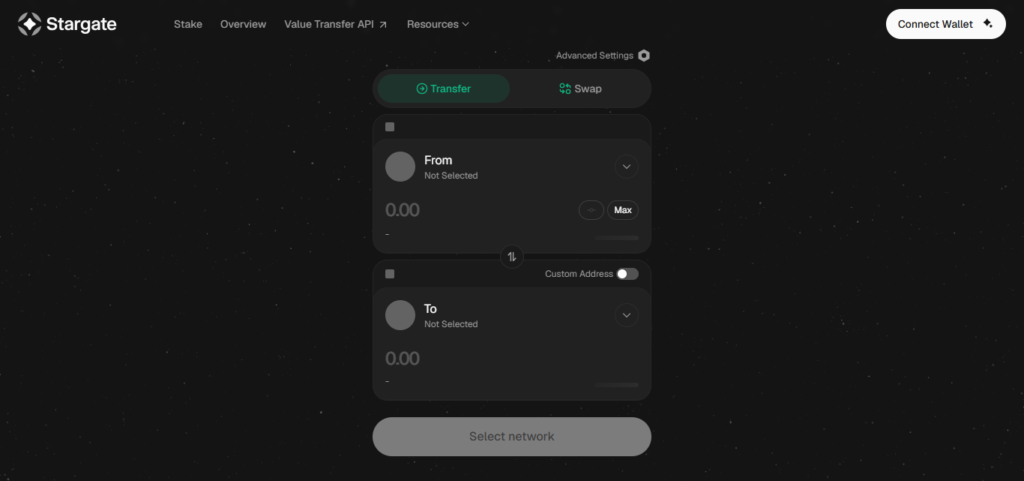
Supported Tokens: The assets it has available depend on network specific pools and supported routes. Fees & pricing: Fees may include protocol fees, destination execution costs and blockchain gas. Transaction Speed: Depends on the route and network confirmation.
Security: Transfers are done through Stargate contracts and its underlying cross-chain messaging infrastructure. Liquidity and Exchange Rates: Unified liquidity pools enable cross-chain transfers, but pool availability and fees impact the final amount received.
Stargate Finance Pros & Cons
| Pros | Cons |
|---|---|
| Uses unified liquidity infrastructure for cross-chain transfers. | Liquidity is not equally available for every asset and network. |
| Simplifies transfers between supported blockchain ecosystems. | Primarily transferring the same asset may require an additional swap to change tokens. |
| Provides integrated cross-chain transaction functionality. | Fees and execution depend on route conditions and network costs. |
9. Symbiosis
Symbiosis connects decentralized exchanges and cross-chain transfer infrastructure to enable multichain token swapping. Supported Blockchains: The network covers different EVM-compatible blockchains and other blockchains that are integrated, depending on the availability of the current route. Cross-Chain Swap: Users can exchange tokens across supported networks from a single interface.
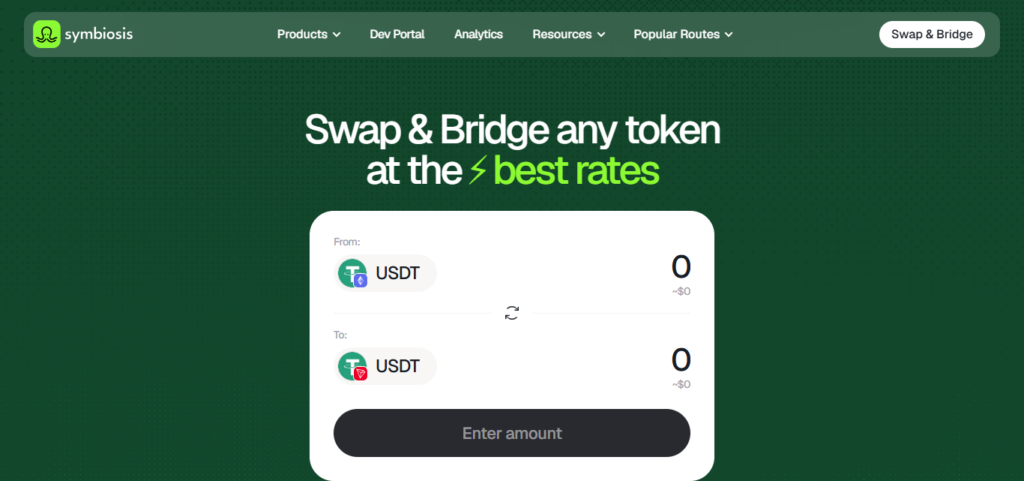
Supported Tokens Token support is based on the chain, liquidity pools and providers you are connected to. Fees & Pricing: Total costs are based on the network gas, the swap fees and the bridge-related charges displayed in the quote.
Speed of transaction Transfers are dependent on route selection and network conditions. Security. Safety is determined by the relevant intelligent contracts and cross-chain mechanisms. Liquidity and exchange rates: The linked liquidity sources help to determine swap routes, but slippage depends on trade size and pool depth.
Symbiosis Pros & Cons
| Pros | Cons |
|---|---|
| Combines cross-chain transfers and token swaps. | Available routes depend on current integrations. |
| Supports users operating across multiple blockchain ecosystems. | Thin liquidity can increase slippage for some trades. |
| Offers a unified interface for multichain transactions. | Underlying smart contracts and bridging mechanisms introduce protocol risk. |
10. Synapse Protocol
Synapse Protocol offers cross-chain transfers and swaps for assets supported by its bridge and liquidity infrastructure. Supported Blockchains: The available networks depend on active deployments and supported routes. Cross-Chain Swaps: Users can move supported assets across chains and utilize token swaps if liquidity and integrations are present.
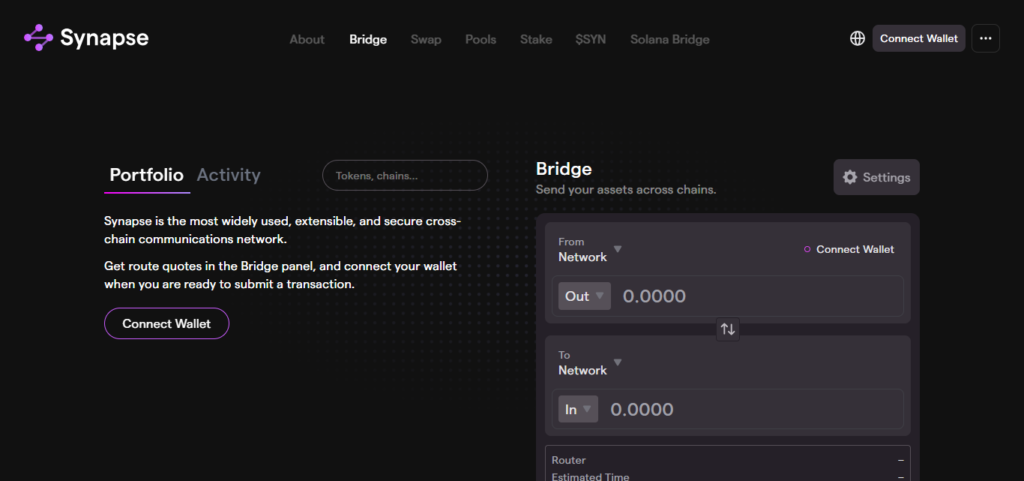
Supported Tokens The official route documentation lists the tokens supported by each blockchain, such as ETH, USDC, USDT, etc. Fees & Pricing: The cost depends on gas, transfer routes and any applicable swap fees.
Transaction Speed Dependent on network confirmations and bridge processing for finalization. Security: Users trust the deployed contracts and cross-chain messaging mechanisms. Liquidity and Exchange Rates: Pool depth and route availability impact pricing, slippage, and execution quality.
Synapse Protocol Pros & Cons
| Pros | Cons |
|---|---|
| Supports bridging across numerous EVM and non-EVM chains. | Not all chain and token combinations are supported. |
| Offers multiple transfer mechanisms depending on the route. | Fees and liquidity can vary significantly between routes. |
| Provides developer tools for integrating cross-chain transfers. | Users remain exposed to smart-contract and cross-chain infrastructure risks. |
Conclusion
To summarize, the Best Jumper Exchange Rivals for Bridge Swaps offer multiple advantages for cross-chain crypto transactions. There are various swapping and bridging options like Rubic, Mayan, Rango Exchange, deBridge, and Across Protocol.
Before choosing a platform, compare supported blockchains, transaction fees, speed, security, liquidity, and exchange rates to ensure you are getting the most suitable solution for your crypto swapping needs.
FAQ
Rubic, Mayan, Rango, deBridge, and Symbiosis offer useful cross-chain swapping alternatives.
Yes, Rubic aggregates multiple bridges and exchanges for convenient cross-chain swaps.
Mayan supports Solana-focused cross-chain swaps with several integrated blockchain networks.
Yes, OpenOcean aggregates decentralized exchanges and supports selected cross-chain swap routes.
Across Protocol and deBridge offer efficient transfers across supported blockchain networks.