


The Top Odos Competitors for DEX Aggregation will be covered in this post, along with top systems that assist cryptocurrency traders in comparing liquidity sources, finding effective swap routes, and optimizing transaction performance.
To help readers understand how these alternatives compare to Odos and find appropriate solutions for decentralized trading needs, we will look at their salient features, trading tools, blockchain support, and cross-chain capabilities.
Key Points & Top Odos Competitors for DEX Aggregation
| Top DEX Aggregation Competitor | Explanation |
|---|---|
| 1inch Network | Aggregates decentralized exchanges to find competitive swap rates across supported blockchain networks. |
| Matcha | Simplifies token trading by sourcing liquidity from multiple decentralized exchanges for users. |
| Velora | Provides decentralized trading solutions focused on efficient swaps and optimized transaction execution. |
| Jupiter | Solana-based aggregator offering token swaps, routing optimization, and advanced trading features. |
| CoW Swap | Uses batch auctions and coincidence-of-wants matching to improve decentralized trading execution. |
| KyberSwap | Aggregates decentralized liquidity sources to help traders access competitive token swap rates. |
| OpenOcean | Connects centralized and decentralized exchanges to compare prices across multiple blockchain networks. |
| LI.FI / Jumper Exchange | Combines cross-chain bridges and DEX aggregators to simplify swaps between blockchain ecosystems. |
| RocketX | Enables cross-chain crypto swaps by comparing liquidity and routes across supported platforms. |
| Rango Exchange | Aggregates cross-chain swap routes across decentralized exchanges, bridges, and blockchain ecosystems. |
| LlamaSwap | Compares decentralized exchange aggregators to help users discover potentially better token swap prices. |
| Symbiosis Finance | Facilitates cross-chain swaps by connecting liquidity providers across multiple blockchain networks. |
| SushiX | Supports cross-chain token swaps through Sushi’s decentralized exchange and bridging integrations. |
| DODO | Uses proactive market-making technology to provide liquidity and facilitate efficient decentralized token swaps. |
14 Top Odos Competitors for DEX Aggregation
1. 1inch Network
A well-known decentralized exchange aggregation platform, 1inch Network looks for competitive routes for bitcoin swaps by searching a variety of liquidity sources. By dividing trades among several exchanges and liquidity pools, its routing technology may enhance execution.
By taking into consideration variables including liquidity, transaction costs, and price impact, this method might assist traders in finding advantageous pricing.
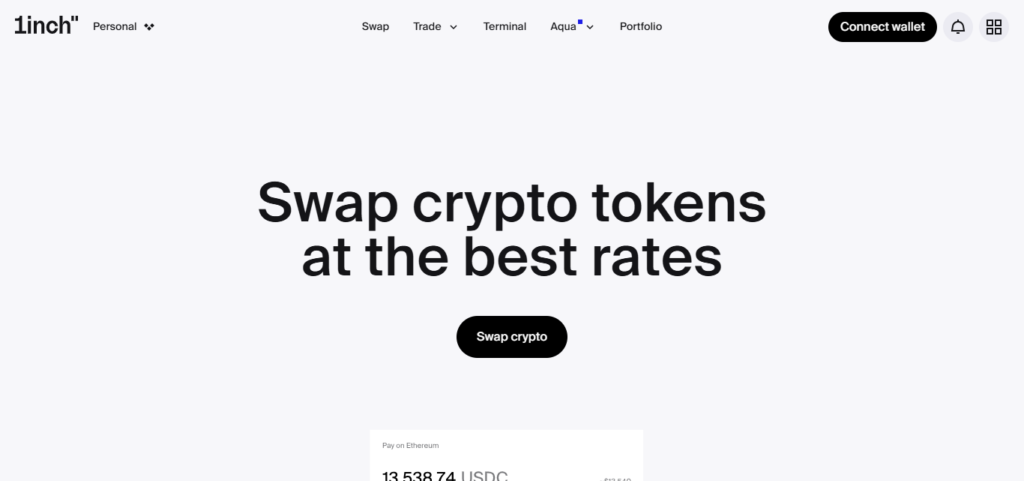
Because both platforms concentrate on maximizing decentralized token swaps through intelligent routing, 1inch Network is relevant as an Odos rival. Before confirming a deal, traders can examine their available routes, projected output amounts, and transaction fees.
However, the token pair, blockchain, market circumstances, and liquidity available at the time of trading all affect the actual outcomes. Additionally, 1inch has a more comprehensive DeFi environment, making it a significant rival for users seeking more than just switch capability.
1inch Network Feature
| Feature | Explanation |
|---|---|
| Intelligent Swap Routing | Uses Pathfinder to identify efficient trading routes across supported decentralized exchanges. |
| Trade Splitting | Splits trades across liquidity sources to potentially reduce price impact. |
| Gas Optimization | Optimizes transaction execution costs across supported networks and swap methods. |
| MEV Protection | Fusion provides intent-based execution designed to reduce front-running and MEV exposure. |
2. Matcha
Matcha is a decentralized trading platform that aggregates liquidity from compatible decentralized exchanges to facilitate token swaps. Without having to manually verify several protocols, it assists consumers in comparing trade prospects. For supported token pairs, its interface prioritizes competitive execution, transparent swap information, and easily accessible trading.
By assisting traders in finding effective swap routes and possibly lessening the effects of fragmented liquidity, Matcha competes with Odos. Both systems seek to enhance the process of acquiring a chosen token at a competitive price while streamlining decentralized trade.
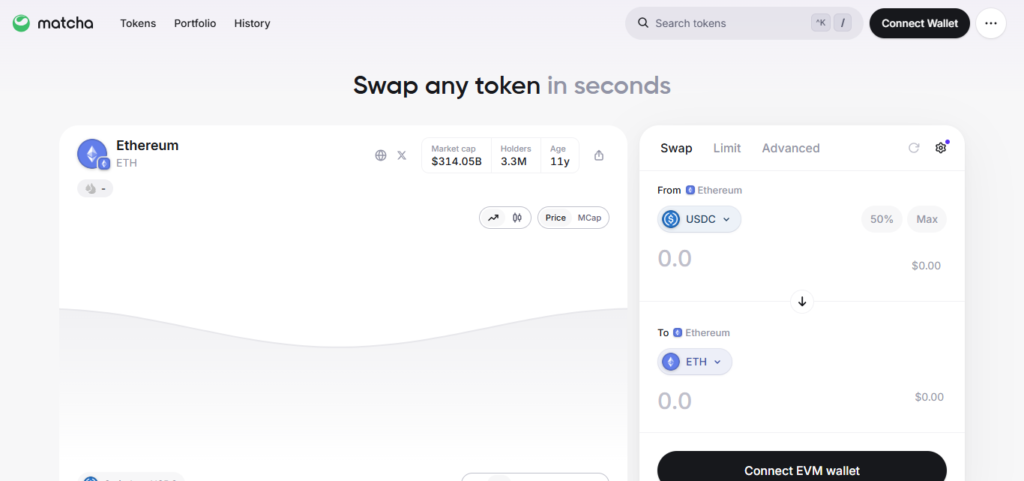
Instead of assuming that one platform always delivers the best rate, users comparing Matcha and Odos should look at quoted output, network fees, price impact, and available liquidity. Matcha is especially useful for traders who want to explore decentralized swap opportunities with an easy-to-use interface.
Matcha Feature
| Feature | Explanation |
|---|---|
| Liquidity Aggregation | Connects to supported decentralized exchanges and liquidity providers for token swaps. |
| Competitive Pricing | Compares available routes to help users find favorable swap quotes. |
| RFQ Liquidity | Can use request-for-quote liquidity from market makers through its underlying infrastructure. |
| Simple Trading Interface | Offers an accessible interface for comparing tokens and executing decentralized trades. |
3. Velora
Velora is a decentralized trading protocol that is part of the ParaSwap ecosystem. Its main goals are to discover effective pathways for token swaps and to aggregate liquidity.
Its platform helps traders achieve competitive execution by assessing liquidity across supported decentralized exchanges. Users may have access to routing capabilities designed to increase swap efficiency, depending on the network and integration that are supported.

Because both systems concentrate on maximizing decentralized trade execution rather than depending on a single liquidity pool, Velora is a pertinent Odos rival. When comparing the two systems, traders might analyze expected output, routing efficiency, transaction costs, and pricing impact.
Velora is helpful for people looking for different execution paths across DeFi markets because of its aggregation strategy. Each quote’s quality is determined by the particular transaction being carried out, supported assets, available liquidity, and blockchain conditions.
Velora Feature
| Feature | Explanation |
|---|---|
| Multi-Source Routing | Searches supported liquidity sources to identify efficient token swap routes. |
| Trade Optimization | Evaluates different execution paths to improve potential swap outcomes. |
| Intent-Based Swaps | Delta supports intent-based execution through competing solvers on supported routes. |
| DeFi Integration | Provides aggregation technology for decentralized applications and supported blockchain ecosystems. |
4. Jupiter
Within the Solana ecosystem, Jupiter is a significant decentralized trading and liquidity aggregation platform. By obtaining liquidity from approved decentralized exchanges and directing trades toward competitive execution outcomes, it facilitates token swapping for users.
Depending on the products that are now available, its larger trading ecosystem also includes features like limit orders and other sophisticated trading tools.
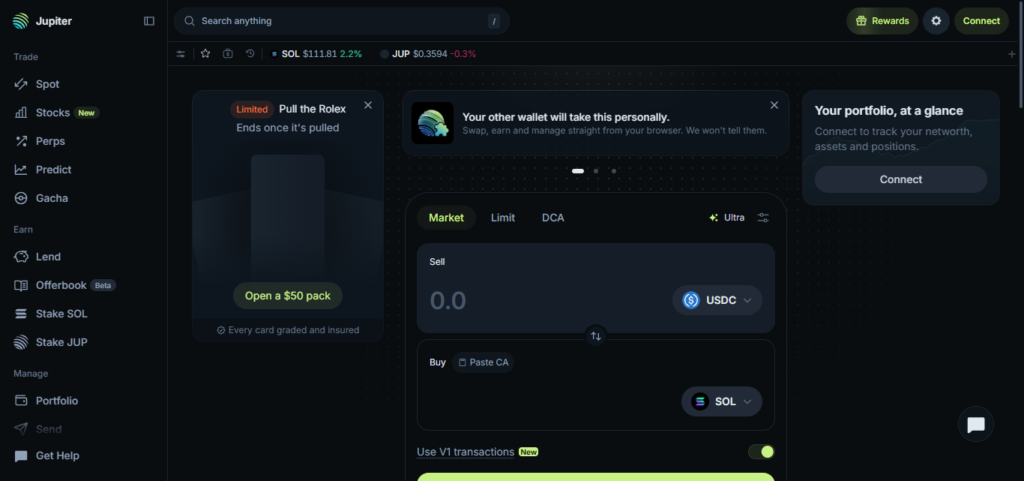
Jupiter’s emphasis on user-friendly token swaps, liquidity discovery, and efficient routing sets it apart from Odos. In Solana, where a wide variety of tokens and liquidity sites provide options for aggregation, it is most relevant.
By looking at supported assets, quoted production, transaction costs, price impact, and routing quality, Odos and Jupiter may be compared. When comparing Jupiter other aggregators that support numerous networks, traders should also take blockchain compatibility into account because Solana is Jupiter’s main ecosystem.
Jupiter Feature
| Feature | Explanation |
|---|---|
| Solana Swap Aggregation | Routes token swaps across supported Solana decentralized exchanges and liquidity pools. |
| Intelligent Routing | Evaluates available paths to help optimize token swap execution. |
| Limit Orders | Offers limit-order functionality for supported tokens and trading pairs. |
| Advanced Trading Tools | Provides additional Solana ecosystem trading features, subject to current product availability |
5. CoW Swap
CoW Swap is a decentralized exchange trading technology that enhances trade execution using coincidence-of-wants (CoW) matching and batch auctions.
It can match compatible trade intentions and employ solver competition to find execution possibilities rather than depending solely on traditional automated market maker routes. Incorporating transaction expenses and protection against specific types of bad execution, this strategy can assist consumers in obtaining advantageous rates.
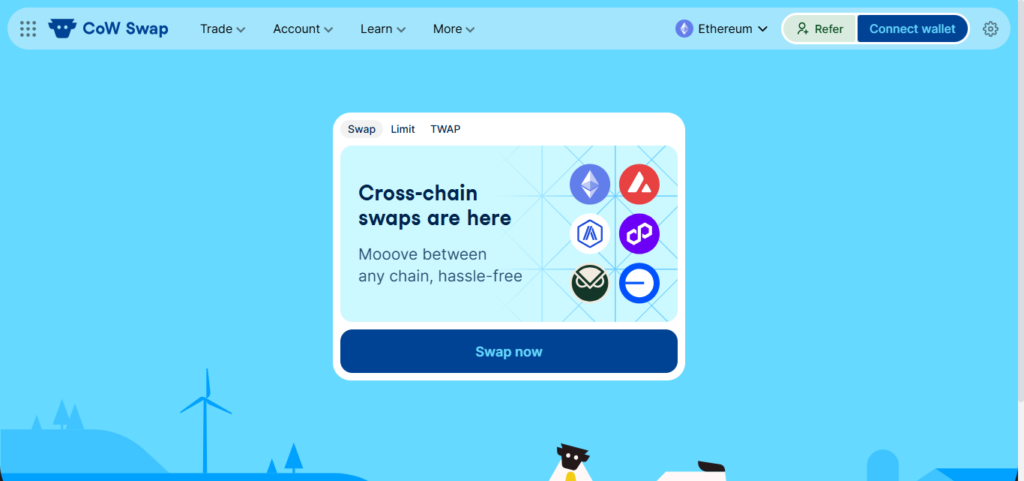
CoW Swap and Odos compete by tackling the same more general issue: effectively carrying out decentralized transactions in dispersed markets. Their methods are not the same, though. Whereas CoW Swap prioritizes batch auctions, solver-based execution, and order matching
Odos focuses on identifying and optimizing swap routes across liquidity sources. To find the solution that best suits their needs, traders should analyze accessible quotations, execution conditions, settlement processes, and supported tokens.
CoW Swap Feature
| Feature | Explanation |
|---|---|
| Batch Auctions | Groups orders into batches to determine efficient settlement prices. |
| Coincidence of Wants | Matches compatible opposing trades to reduce reliance on external liquidity pools. |
| Solver Competition | Allows competing solvers to propose execution solutions for user orders. |
| MEV Mitigation | Uses batch-auction execution and order matching to help reduce certain MEV risks. |
6. KyberSwap
KyberSwap is a decentralized financial platform that provides infrastructure related to liquidity and swap aggregation. Users can locate competitive token swap routes by using its aggregation functionality to reach supported decentralized exchanges and liquidity sources. Liquidity protocols and tools for decentralized trading are also part of the larger Kyber ecosystem.
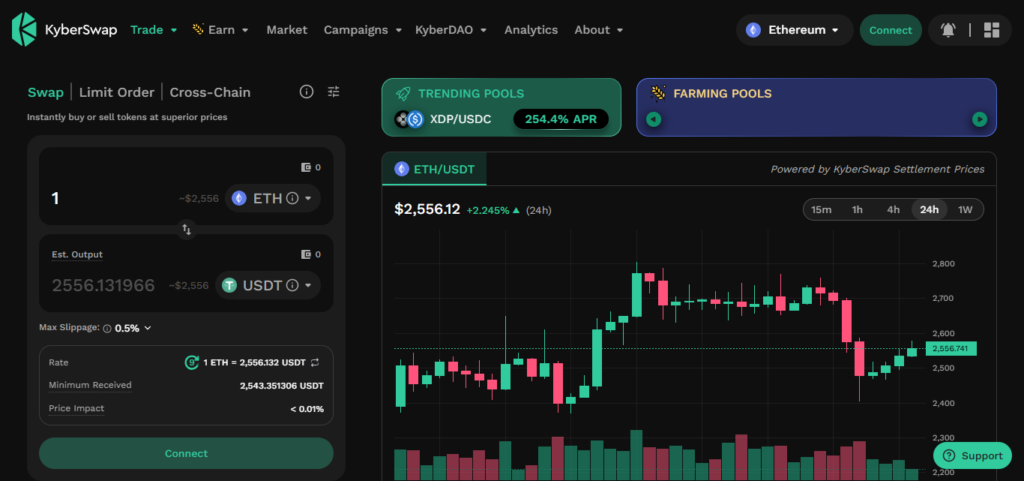
Because both services aim to enhance token swap execution by searching across available liquidity, KyberSwap and Odos are competitors. The network, token pair, trade size, and liquidity venues used in the routing process can all affect how well they execute.
By contrasting anticipated output, pricing impact, network fees, and transaction reliability, users can assess KyberSwap in conjunction with Odos. When evaluating whether product directly competes with Odos, it is also important to distinguish KyberSwap’s aggregation characteristics from its distinct liquidity procedures.
KyberSwap Feature
| Feature | Explanation |
|---|---|
| Smart Route Scanning | Searches supported liquidity sources to identify potentially competitive swap routes. |
| Trade Splitting | Can divide trades across liquidity sources to improve execution efficiency. |
| Limit Orders | Supports conditional orders that execute when specified trading conditions are met. |
| Cross-Chain Swaps | Provides cross-chain swap functionality through supported networks and third-party integrations. |
7. OpenOcean
OpenOcean is a cryptocurrency trading aggregator that links users to both decentralized and centralized exchange liquidity sources. Its service is intended to assist traders in identifying trading routes and comparing prices across various venues and blockchain networks. Users investigating several trading environments with a single interface may find this more comprehensive aggregate strategy helpful.
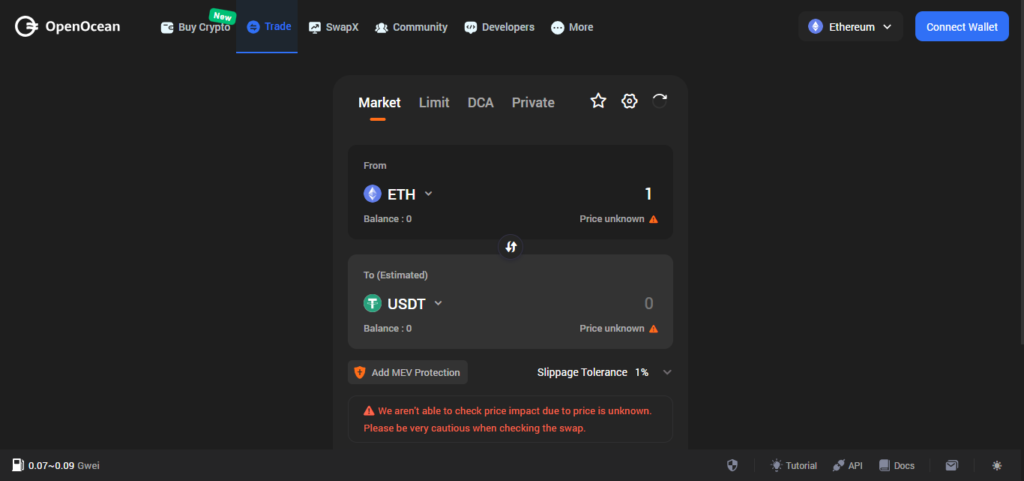
By concentrating on price discovery, routing, and access to fragmented liquidity, OpenOcean competes with Odos in the aggregation business. Its scope differs from that of a totally decentralized swap aggregator since it incorporates centralized exchange connectivity into some aspects of its ecosystem.
Users should look at which networks and exchanges are currently supported, whether a route is entirely on-chain, and how costs and execution risks vary in order to make a fair comparison. The user’s assets, trading needs, and desired settlement method all influence the optimal choice.
OpenOcean Feature
| Feature | Explanation |
|---|---|
| Exchange Aggregation | Connects supported centralized and decentralized exchange liquidity sources. |
| Smart Routing | Compares available trading routes to identify competitive execution opportunities. |
| Multi-Chain Trading | Supports token trading across selected blockchain networks and ecosystems. |
| Developer Integration | Provides APIs that developers can use to integrate aggregation functionality. |
8. LI.FI / Jumper Exchange
In order to enable transactions across blockchain networks, LI.FI is a cross-chain infrastructure aggregator that links supported bridges, decentralized exchanges, and swap providers. Its consumer-facing platform, Jumper Exchange, allows users can access cross-chain exchanges via an integrated interface. Users can transfer value and exchange assets between compatible chains without having to manually navigate each underlying protocol, depending on the route they choose.
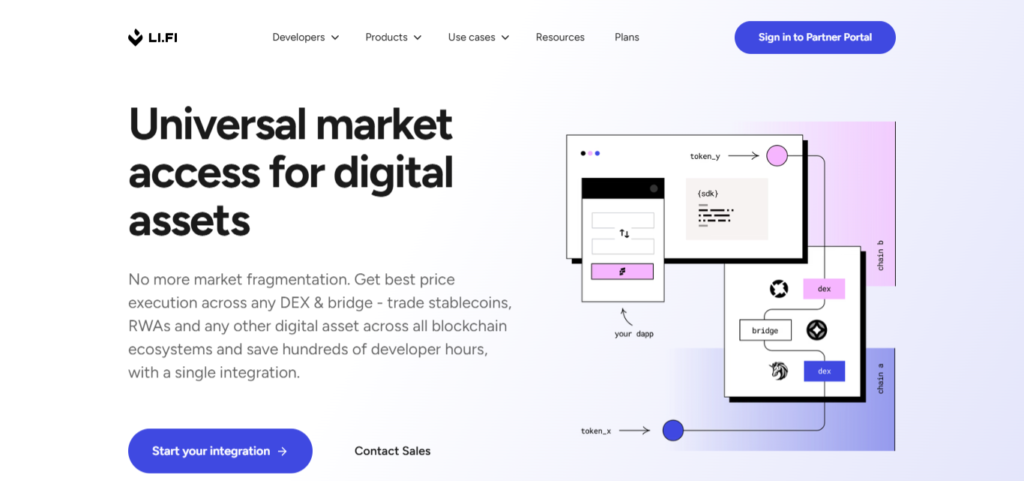
Because cross-chain routing is related to the more general objective of identifying effective routes for cryptocurrency exchanges, LI.FI and Jumper are pertinent Odos competitors. The comparison, however, is contingent upon the particular Odos product and integration under consideration.
While DEX aggregators could concentrate more on identifying the best paths within a single network, LI.FI prioritizes cross-chain infrastructure. Before selecting a platform, users should evaluate supported chains, bridge choices, expected arrival amounts, total fees, transfer timeframes, and route reliability.
LI.FI / Jumper Exchange Feature
| Feature | Explanation |
|---|---|
| Cross-Chain Routing | Connects supported bridges and swap providers for multichain transactions. |
| Bridge Aggregation | Compares available bridge routes to help users transfer assets between networks. |
| DEX Aggregation | Integrates decentralized exchange liquidity for swaps along supported transaction routes. |
| Developer APIs | Provides infrastructure for applications seeking integrated cross-chain swap functionality. |
9. RocketX
The goal of RocketX, a cryptocurrency exchange aggregator, is to assist customers in exchanging digital assets between blockchain networks, centralized exchanges, and decentralized exchanges. Its aggregation method is intended to assess potential routes and streamline transactions that could otherwise have consumers visiting several trading sites. For traders who frequently transfer assets between various ecosystems, cross-chain capabilities makes it pertinent.
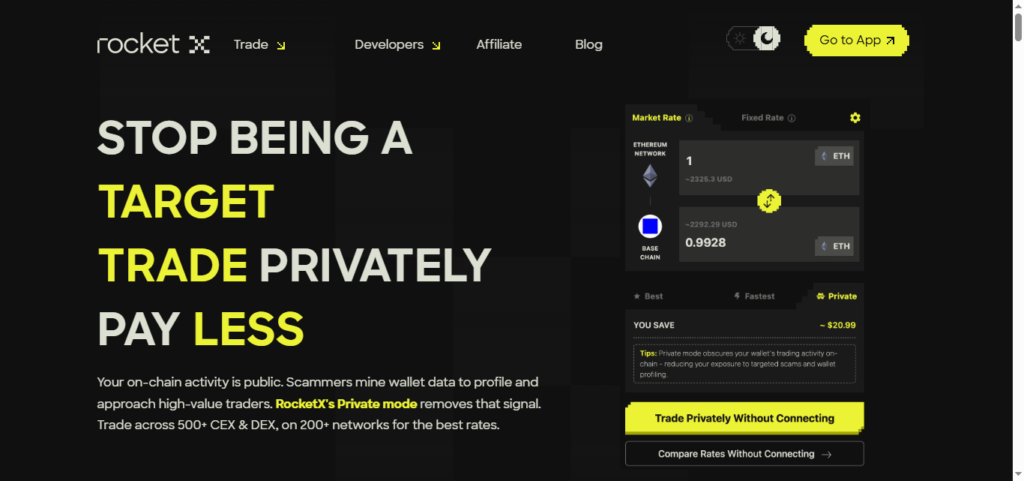
By focusing on route finding, cost comparisons, and easy cryptocurrency swaps, RocketX challenges Odos. Although their supported venues, chains, and transaction techniques may vary, both can assist users in assessing possible execution options.
Users should evaluate the quoted output amount, total transaction fees, liquidity depth, supported assets, and whether a route uses a bridge or centralized middleman when comparing RocketX with Odos. These specifics are crucial because the finest final execution is not always provided by the cheapest price that is displayed.
RocketX Feature
| Feature | Explanation |
|---|---|
| Exchange Comparison | Compares available trading options across supported exchange and liquidity providers. |
| Cross-Chain Swaps | Helps users exchange assets across supported blockchain networks. |
| Route Discovery | Identifies available transaction paths based on supported assets and providers. |
| Simplified Trading | Brings supported swap options together through a unified trading interface. |
10. Rango Exchange
In order to enable cryptocurrency swaps between blockchain ecosystems, Rango Exchange is a cross-chain swap aggregator that links bridges, alternative route providers, and supported decentralized exchanges.
By evaluating potential routes for transferring assets across compatible networks, its routing technology assists users in avoiding the need to manually arrange each stage of a multichain transaction. Because of this, it is especially important for users that work in various blockchain contexts.
Cross-chain trade and route optimization overlap at Rango Exchange, an Odos rival. Both seek to make it easier to choose a suitable route for trading cryptocurrency assets, whereas Rango prioritizes multichain connection.
Supported chains, token availability, route complexity, anticipated output, bridge fees, and transaction completion criteria should all be included in a helpful comparison. When evaluating the platforms, users should also take into account the extra risks related to cross-chain transfers, such as bridge security and potential delays.
Rango Exchange Feature
| Feature | Explanation |
|---|---|
| Cross-Chain Aggregation | Connects supported bridges and exchanges to facilitate multichain asset swaps. |
| Route Optimization | Evaluates transaction paths to identify suitable cross-chain swap options. |
| Multi-Chain Support | Supports swaps across selected blockchain ecosystems and token standards. |
| Transaction Tracking | Provides transaction-status information for supported swap and bridging routes. |
11. LlamaSwap
A decentralized swap comparison service connected to the DeFiLlama ecosystem is called LlamaSwap. It makes it simpler for consumers to find potentially advantageous token exchange prices without having to individually examine each source by allowing them to compare quotes from supported DEX aggregators. Instead of depending only on one routing engine, its value is derived from comparing the outcomes of several aggregating services.
The main areas in which LlamaSwap and Odos compete are swap discovery and comparison. LlamaSwap can assist consumers in comparing quotes from various aggregators, including companies that might route transactions through various liquidity sources, whereas Odos concentrates on creating efficient trading routes.
The total output after fees, predicted gas costs, and price impact should all be compared by traders. Before depending on a specific comparison, users should confirm the current integrations and supported networks because the availability of individual providers and features may vary.
LlamaSwap Feature
| Feature | Explanation |
|---|---|
| Aggregator Comparison | Compares quotes from supported decentralized exchange aggregators. |
| Price Discovery | Helps users identify potentially favorable swap prices across available providers. |
| Multiple Routing Sources | Presents swap options generated by integrated aggregation services. |
| DeFiLlama Ecosystem | Benefits from its association with DeFiLlama’s decentralized finance discovery ecosystem. |
12. Symbiosis Finance
A cross-chain decentralized financial protocol called Symbiosis financial was created to make asset transfers and token exchanges between compatible blockchain networks easier.
Its infrastructure facilitates the transfer of digital assets between various ecosystems by connecting cross-chain transaction mechanisms and liquidity. A transaction may include swaps, bridges, or more underlying actions, depending on the chosen path.
Because cross-chain transactions frequently necessitate careful routing and liquidity selection, Symbiosis Finance is pertinent to Odos. While Symbiosis is more focused on transfers between blockchain networks, both platforms can be taken into consideration when users wish to swap tokens effectively.
Examining supported chains, destination assets, projected output, fees, transfer durations, and transaction success requirements are all part of comparing the services. Because cross-chain transactions can pose dangers beyond those of standard single-chain swaps, users should carefully assess the security assumptions of the underlying bridges and contracts.
Symbiosis Finance Feature
| Feature | Explanation |
|---|---|
| Cross-Chain Swaps | Facilitates token exchanges between supported blockchain networks. |
| Liquidity Connectivity | Connects supported liquidity sources to enable cross-chain asset transactions. |
| Route Selection | Uses available routes and integrations to facilitate multichain exchanges. |
| Multichain Accessibility | Simplifies interactions with supported blockchain ecosystems through an integrated interface. |
13. SushiX
SushiX Users can now access token exchanges across supported blockchain networks thanks to Sushi’s cross-chain swap capabilities and associated integrations, which are referred to as SushiX. Token-swapping and liquidity services are offered by Sushi’s larger decentralized exchange ecosystem; cross-chain capability is contingent upon the relevant product version and underlying integrations.
When considering cross-chain swap access, routing, and streamlined multichain trade, SushiX is a possible rival to Odos.
Both can assist users in exchanging digital assets, but how well they operate depends on the networks and sources of liquidity that the applicable implementation supports. Instead of presuming that every function from the past is still available, users should confirm whether SushiX-branded features are currently available. Compare supported chains, fees, expected output, route execution, destination-token availability, and any bridge dependencies that might have an impact on the final transaction.
SushiX Feature
| Feature | Explanation |
|---|---|
| Cross-Chain Trading | Has provided cross-chain swap functionality through supported integrations. |
| Sushi Ecosystem Integration | Connects with Sushi’s broader decentralized exchange ecosystem and liquidity services. |
| Token Swaps | Supports token exchange functionality where the relevant product integrations remain available. |
| Multichain Access | Helps users access supported networks through compatible swap and bridging infrastructure. |
14. DODO
The proactive market maker (PMM) model of DODO, a decentralized finance protocol, is well-known for its ability to facilitate decentralized token trading and supply liquidity. Decentralized exchange functionality and aggregation-related features across supported networks are part of its ecosystem. To assist market makers in effectively providing capital, the PMM model makes use of liquidity management strategies and pricing mechanisms guided by oracles.
In the larger DEX trading market, DODO and Odos are competitors; nevertheless, the comparison varies depending on whether users are assessing DODO’s exchange, liquidity infrastructure, or aggregation capabilities.
While DODO is renowned for its underlying market-making technology, Odos focuses on identifying and optimizing swap routes between available liquidity sources. The available swap quotations, liquidity depth, price impact, transaction costs, and supported networks should all be compared by traders. Although actual outcomes rely on the particular pool and trade conditions, DODO’s liquidity model may be pertinent to execution quality.
DODO Feature
| Feature | Explanation |
|---|---|
| Proactive Market Maker | Uses a PMM model designed to support efficient liquidity provision. |
| Capital Efficiency | Its liquidity model aims to use contributed capital efficiently for supported markets. |
| Decentralized Token Swaps | Provides decentralized exchange functionality for trading supported digital assets. |
| Liquidity Infrastructure | Offers market-making and liquidity tools for traders and decentralized applications. |
Conclusion
To sum up, the leading Odos rivals for DEX aggregation provide a variety of options for enhancing cryptocurrency swaps, gaining access to liquidity, and streamlining transaction execution. Different routing and trading features are offered by platforms such as 1inch Network
Matcha, Jupiter, CoW Swap, and Velora. In the meanwhile, cross-chain connection is the focus of LI.FI, Rango Exchange, and Symbiosis Finance. Traders can select appropriate options by comparing fees, supported networks, security, and execution quality.
FAQ
Yes, 1inch competes with Odos by aggregating liquidity sources and optimizing token swap routes across supported networks.
A DEX aggregator searches multiple decentralized exchanges to find suitable token swap routes and potentially improve execution prices.
Jupiter primarily serves Solana traders, while Odos focuses on optimized swap routing across supported blockchain ecosystems.
LI.FI, Jumper Exchange, Rango Exchange, RocketX, and Symbiosis Finance focus on cross-chain swaps and multichain connectivity.