


In this article I will talk about the Top Trocador Rivals for Multi-Exchange Routing comparing platforms that aggregate exchanges, DEXs, bridges and liquidity sources.
You will see how each option handles routing, supported networks, crypto assets, fees, privacy, transaction speed and execution. Such comparison will allow traders and crypto users to choose the most appropriate routing platform for their particular swapping needs.
Key Points & Top Trocador Rivals for Multi-Exchange Routing
- SwapSpace: Aggregates multiple exchanges, helping users compare rates and route swaps efficiently.
- OrangeFren: Provides streamlined crypto swaps with competitive exchange options and straightforward routing.
- Baltex: Offers decentralized exchange aggregation focused on privacy, liquidity, and efficient cryptocurrency trading.
- SideShift: Enables quick cryptocurrency swaps without accounts, emphasizing simplicity and flexible asset selection.
- StealthEX: Aggregates crypto exchanges, providing non-custodial swaps with competitive rates and numerous assets.
- Exolix: Delivers fast crypto exchanges with fixed-rate options, privacy, and broad asset support.
- LI.FI: Connects bridges and decentralized exchanges, optimizing cross-chain routes through aggregated liquidity.
- Rubic: Provides cross-chain swaps by aggregating decentralized exchanges and blockchain bridges for users.
- deBridge: Enables secure cross-chain transfers and liquidity movement across multiple blockchain ecosystems efficiently.
- Bungee / Socket: Aggregates bridges and liquidity sources to optimize cross-chain transactions and routing.
- Symbiosis: Facilitates cross-chain swaps by connecting liquidity across numerous blockchain networks seamlessly.
- 1inch: Aggregates decentralized exchanges to find efficient swap routes and competitive execution prices.
- Velora / ex-ParaSwap: Aggregates decentralized liquidity sources, optimizing token swaps across multiple blockchain networks efficiently.
- CoW Swap: Uses batch auctions and intent-based trading to seek efficient decentralized swap execution.
- Jupiter: Solana-focused aggregator finding optimal swap routes across decentralized exchanges and liquidity pools.
15 Top Trocador Rivals for Multi-Exchange Routing
1. SwapSpace
SwapSpace is a non-custodial crypto exchange aggregator comparing offers from 45+ exchange partners and 2400+ supported assets. It provides fixed and floating rates, estimated transaction times and potential KYC requirements allowing users to choose an offer rather than be tied to one provider.
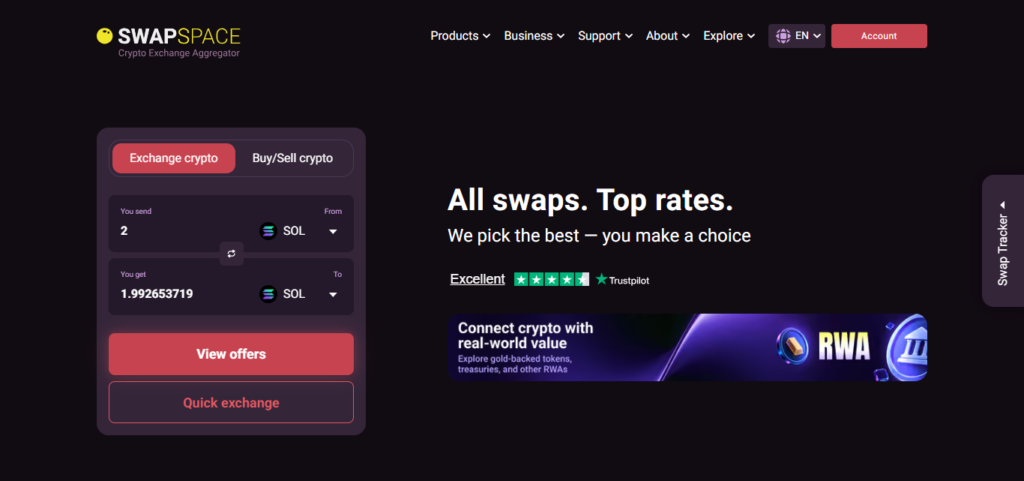
Top Trocador Competitors for Multi-Exchange Routing are SwapSpace, whose key strength is comparing multiple external exchange offers in one interface. It says it doesn’t require registration for crypto-to-crypto swaps and doesn’t add any SwapSpace markup. Before choosing an offer, users should compare the rate shown, terms of provider, network costs, possibility of KYC, and estimated time of completion.
SwapSpace Pros & Cons
| Pros | Cons |
|---|---|
| Aggregates offers from numerous external exchange providers. | Final exchange quality depends on the selected third-party provider. |
| Supports a broad range of cryptocurrencies and trading pairs. | Some providers may require identity verification. |
| Lets users compare available rates before swapping. | Floating rates can change during transaction processing. |
| Offers fixed-rate and floating-rate exchange options. | Network congestion can affect completion times. |
2. OrangeFren
OrangeFren is a privacy-first crypto exchange discovery platform, in particular for users looking for services that do not require KYC. Its platform lists several exchange providers and shows supported coins, fees and KYC availability, helping users compare different routes and providers.
OrangeFren deserves a place in the Top Trocador Rivals for Multi-Exchange Routing because its value comes from combining various exchange options that emphasize privacy, rather than simply acting as a conventional single exchange.
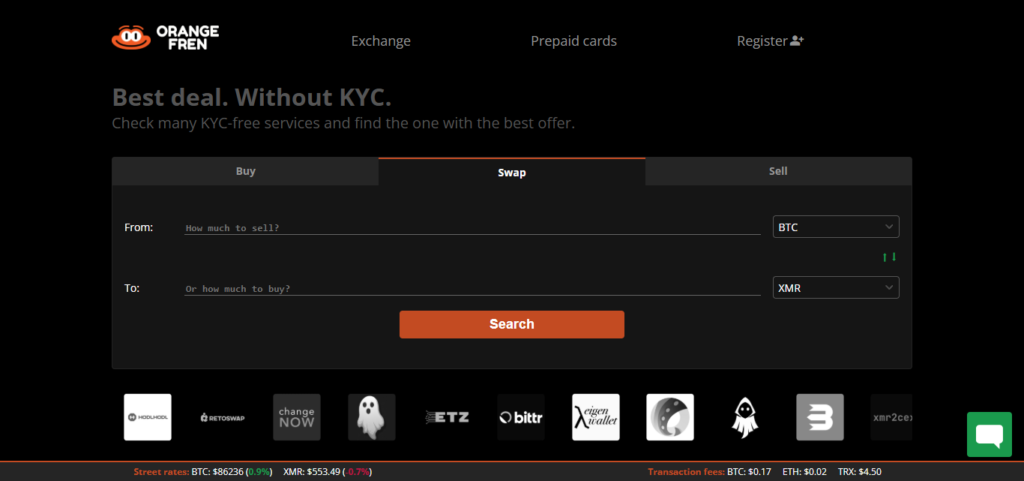
The platform also provides data on transaction fees across various networks and supports services such as Bitcoin, Monero, stablecoins and other assets. Before starting a transaction, users should verify the provider’s availability, exchange rates, applicable fees and KYC conditions.
OrangeFren Pros & Cons
| Pros | Cons |
|---|---|
| Focuses strongly on privacy-oriented cryptocurrency exchanges. | Available liquidity can differ between supported providers. |
| Helps users discover exchanges with different KYC policies. | Some listed exchange options may have limited asset coverage. |
| Useful for comparing privacy-focused swap services. | Exchange rates can vary significantly between providers. |
| Supports several privacy-conscious cryptocurrency use cases. | Users remain subject to individual provider terms. |
3. Baltex
Baltex is a combination of cross-chain swapping, liquidity aggregating, dynamic routing, and privacy-focused exchange functionality. The current platform says it supports 200+ networks and thousands of assets. The routing infrastructure can tap into CEX liquidity and DEX ecosystems.
Best Trocador competitors for multi-exchange routing are Baltex , which combines aggregation with cross-chain routing and non-custodial execution, instead of only showing exchange offers. Baltex also provides private swap, dynamic paths for transactions
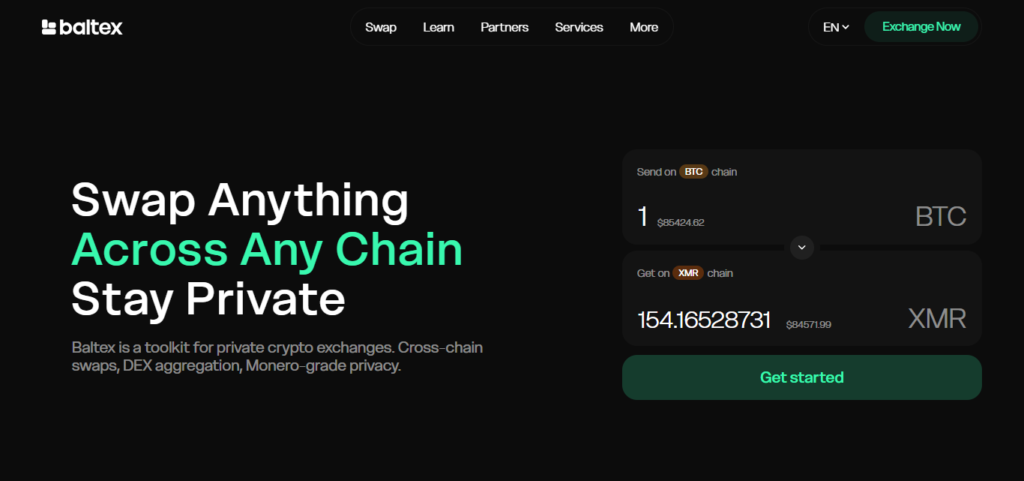
API access, and real-time execution monitoring for integrations. It claims an average completion time of less than five minutes on most supported routes. For comparison, privacy options, route quality, network fees, liquidity and final received amounts should be considered by users.
Baltex Pros & Cons
| Pros | Cons |
|---|---|
| Combines liquidity aggregation with cross-chain routing. | Cross-chain transactions can involve more execution complexity. |
| Provides access to multiple liquidity ecosystems. | Route availability depends on current liquidity conditions. |
| Supports a broad range of blockchain networks and assets. | Network-specific costs can increase the final transaction expense. |
| Offers non-custodial transaction functionality. | New users may need time to understand routing options. |
4. SideShift
SideShift allows you to do direct crypto swaps in a simplified, shift-based process with many crypto assets and different rate options. Its fee structure may include network related costs, with fixed rate shifts including applicable network fees within the shown exchange rate and variable rate shifts showing network fees separately.
Best Trocador Competitors for Multi-Exchange Routing SideShift for straightforward crypto-to-crypto conversion and transparent shift info over a complex trading interface.

The platform can also provide fee estimates for supported transactions. Users should evaluate the selected asset pair, rate type, network conditions, settlement costs, and the final amount before confirming a shift as network fees may vary.
SideShift Pros & Cons
| Pros | Cons |
|---|---|
| Provides a straightforward cryptocurrency swapping experience. | It may offer fewer advanced routing controls than DEX aggregators. |
| Supports direct wallet-to-wallet cryptocurrency exchanges. | Network fees can influence the final received amount. |
| Does not require a traditional trading-account workflow. | Supported assets and pairs vary by current availability. |
| Provides different rate structures for supported transactions. | Variable-rate swaps can change with market movements. |
5. StealthEX
StealthEX is a non-custodial instant crypto exchange service. It is designed for simple asset swaps without the need to maintain an exchange account. Compared to routing-based alternatives, key considerations include its supported cryptocurrency selection, available exchange liquidity, rate structure, transaction processing and privacy requirements.
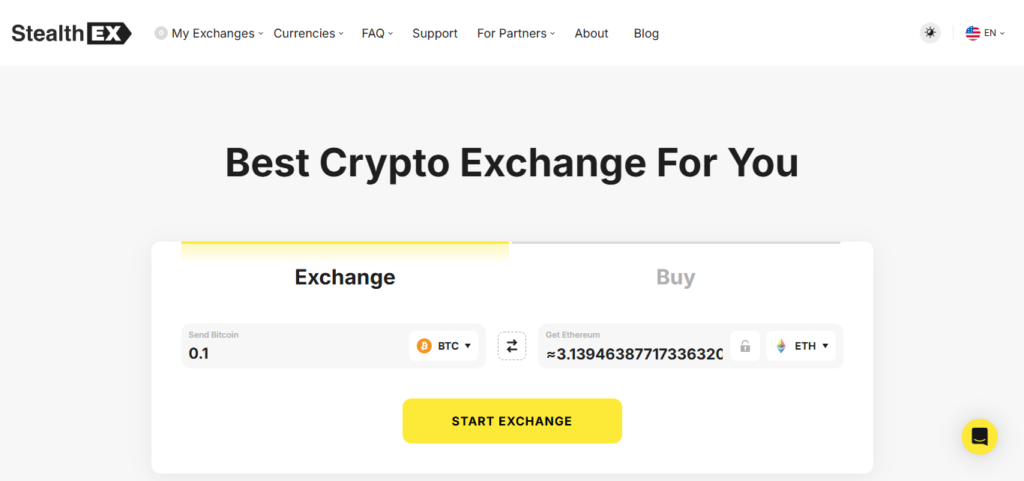
StealthEX is the best Trocador Rivals for Multi-Exchange Routing as it offers a simple alternative for users who want instant swaps among a wide selection of cryptocurrencies. To make a correct comparison, users should check if a specific pair is available, if the quoted rate is fixed or floating, if KYC can be asked, and what network or provider costs affect the final received amount.
StealthEX Pros & Cons
| Pros | Cons |
|---|---|
| Offers non-custodial cryptocurrency exchange functionality. | Some transactions may trigger additional verification requirements. |
| Provides access to a large selection of digital assets. | Exchange availability can vary by individual trading pair. |
| Uses external liquidity sources for swap execution. | Third-party liquidity can affect quoted exchange rates. |
| Designed for relatively simple cryptocurrency conversions. | Advanced trading tools are more limited than full exchanges. |
6. Exolix
Exolix is a non-custodial crypto exchange service with support for hundreds of cryptocurrencies and fixed and floating exchange rates. The fixed-rate option promises the quoted rate for a certain period of time, while floating rates are subject to market conditions.
This is the list of the top Trocador Rivals for Multi-Exchange Routing compiled by Exolix based on its liquidity aggregation combined with privacy-first, direct wallet-to-wallet exchanges. Standard exchanges don’t require users to register or complete KYC, and transactions can usually be completed in minutes depending on the route,
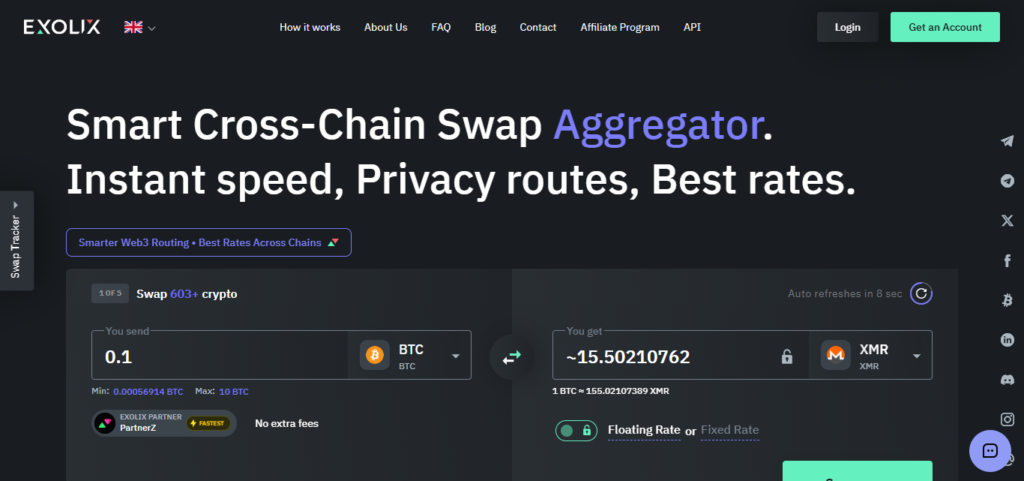
Exolix says. It also enables cross-chain swaps and multiple liquidity sources. Users should compare the rate they select, network fees, minimums, processing time and applicable verification requirements.
Exolix Pros & Cons
| Pros | Cons |
|---|---|
| Supports fixed-rate exchanges for greater quote certainty. | Fixed-rate transactions may have specific time restrictions. |
| Offers a broad selection of cryptocurrencies. | Minimum and maximum limits can vary by transaction. |
| Provides non-custodial swapping functionality. | Network conditions can affect transaction completion times. |
| Supports cross-chain cryptocurrency exchanges. | Actual rates can differ across supported liquidity sources. |
7. LI.FI
LI.FI is not really a traditional consumer exchange but rather a cross-chain infrastructure. It connects DEX aggregators, bridges, intent systems, and liquidity sources through a single integration. Its current platform supports 60+ chains and 50,000+ token pairs, with routing optimized for cost, speed and reliability.
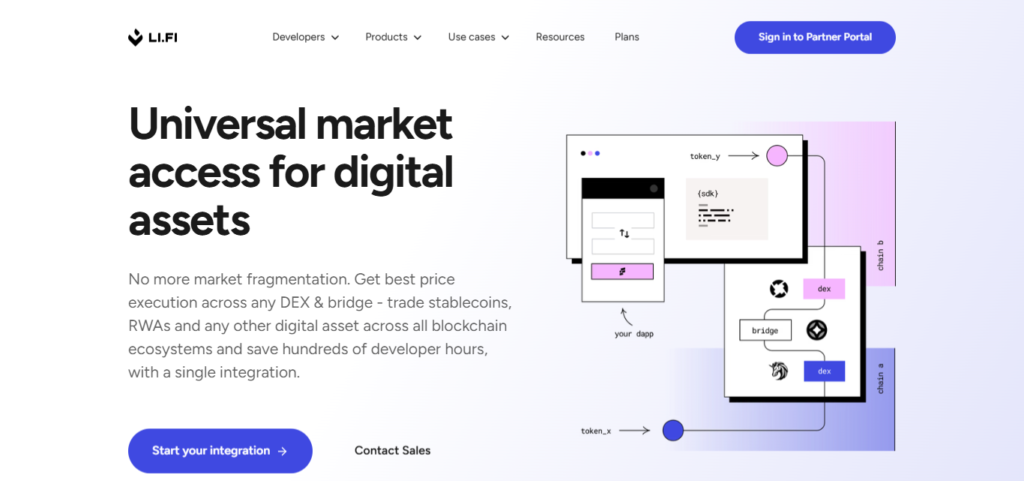
Top Trocador Rivals for Multi-Exchange Routing LI.FI: Its smart-routing infrastructure can find routes across both same-chain and cross-chain liquidity. This functionality is available to developers through APIs, SDKs, widgets and intent infrastructure, which is especially relevant for wallets and dApps. Key comparison factors include route selection, supported networks, availability of liquidity, execution costs and integration requirements.
LI.FI Pros & Cons
| Pros | Cons |
|---|---|
| Aggregates bridges and DEXs through unified routing infrastructure. | Primarily targets developers and applications rather than beginners. |
| Provides extensive cross-chain connectivity. | Route complexity increases when multiple bridges are involved. |
| Offers API, SDK, and widget integration options. | Integrated routes depend on third-party infrastructure availability. |
| Optimizes routes around cost, speed, and execution. | Supported routes can change as liquidity conditions fluctuate. |
8. Rubic
Rubic is a cross-chain DEX aggregation platform that aims to make swaps easier across different blockchain ecosystems. Its current infrastructure is support for 100+ blockchains, 15,500+ assets, and 360+ DEXs, bridges and intent protocols.
Top Trocador Rivals for Multi-Exchange Routing Rubic — Rubic doesn’t restrict users to one provider but compares multiple sources of liquidity and routing through its Best Rate Finder. The chain-abstract approach aggregates
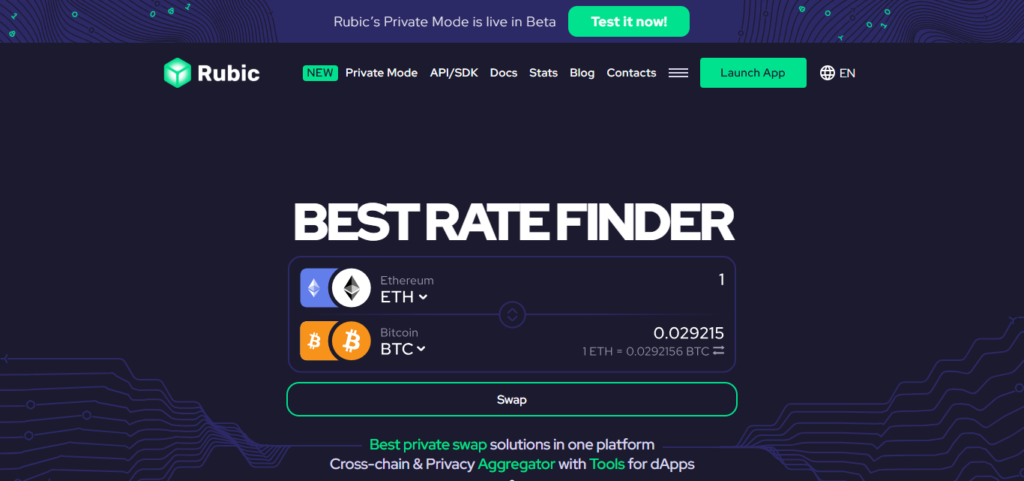
DEX and bridge actions into multi-hop transactions, and the API and SDK allow developers to build cross-chain functionality into applications. For users the important points for comparison are network coverage, available routes, liquidity, speed of execution, fees and supported token pairs.
Rubic Pros & Cons
| Pros | Cons |
|---|---|
| Combines DEX and bridge aggregation for cross-chain swaps. | Large route selections can make the interface complex for beginners. |
| Provides broad blockchain and token coverage. | Cross-chain transactions can carry additional network costs. |
| Offers developer-focused API and SDK functionality. | Execution depends on connected liquidity and bridge providers. |
| Can combine multiple steps into optimized transaction routes. | Highly complex routes may require additional transaction confirmations. |
9. deBridge
deBridge is a cross-chain interoperability protocol enabling asset transfers, swaps and cross-chain functionality between 24+ blockchain networks including Ethereum, Solana, Tron, BNB Chain, Base and Arbitrum. deBridge is listed in Top Trocador Rivals for Multi-Exchange Routing when the routing requirement is to move assets between different networks, not just to swap assets on one chain.

Its architecture is designed for native transfers, cross-chain limit orders and guaranteed-rate functionality. Transaction costs are a chain flat fee, dynamic solver gas costs and source-chain gas deBridge offers developer infrastructure for integration. When comparing it to Trocador, users should consider: Supported chains, route liquidity, execution time, fees, wallet support, and cross-chain requirements.
deBridge Pros & Cons
| Pros | Cons |
|---|---|
| Strong focus on cross-chain interoperability. | Primarily designed around cross-chain activity rather than broad exchange discovery. |
| Supports transfers between numerous blockchain ecosystems. | Cross-chain transactions introduce additional execution dependencies. |
| Provides infrastructure for developers and DeFi applications. | Fees can vary according to source-chain and solver requirements. |
| Supports cross-chain trading and transfer functionality. | Route availability depends on supported networks and liquidity. |
10. Bungee / Socket
Bungee is built on top of the Socket infrastructure and is focused on cross-chain routing, connecting different bridges and liquidity paths. Its role is especially important when users need to move assets across blockchain networks but seek an efficient path across the available infrastructure.

Bungee competes with Trocador for Multi-Exchange Routing since the model of Bungee is focused on route discovery and cross-chain execution, not a traditional centralized exchange. For developers, API and integration capabilities are important as routing can be embedded into wallets
Applications and DeFi products. Bungee and Trocador: a comparison of supported networks, bridge availability, route selection, liquidity depth, estimated fees, transaction execution, failure handling, and developer integration options.
Bungee / Socket Pros & Cons
| Pros | Cons |
|---|---|
| Aggregates multiple bridge routes for cross-chain transfers. | Bridge-dependent routes can introduce additional execution risks. |
| Helps users compare different cross-chain pathways. | Available routes can change with bridge liquidity. |
| Provides infrastructure suitable for wallet and dApp integrations. | Technical integrations may require developer expertise. |
| Can optimize routes across different bridge providers. | Transaction costs vary depending on selected route and networks. |
11. Symbiosis
Symbiosis is a cross-chain liquidity and swapping protocol created to facilitate users to swap assets across supported blockchain networks. The routing relevance is that it combines cross-chain liquidity and automatic swap/bridge functionality, enabling users to avoid having to manually select individual bridge providers for each transaction.
If your primary need is moving assets cross chains instead of just same chain exchange aggregation, Symbiosis is a top trocador rival for multi-exchange routing.
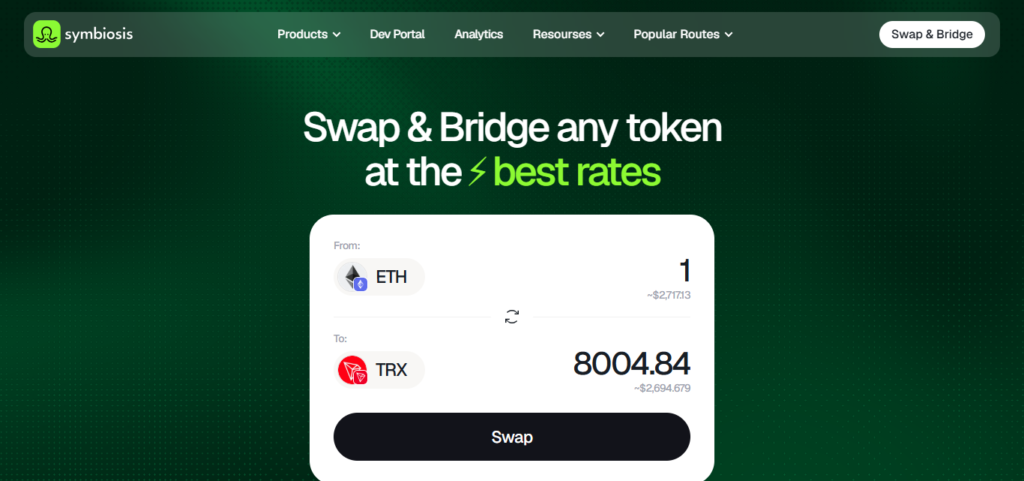
A useful comparison should include supported networks, token availability, sources of liquidity, route building, transaction speed, fees and security architecture. Developers should also consider API or integration capabilities when thinking about Symbiosis as infrastructure for wallets, applications, or other DeFi interfaces.
Symbiosis Pros & Cons
| Pros | Cons |
|---|---|
| Enables cross-chain token swaps through unified infrastructure. | Cross-chain swaps remain dependent on network availability. |
| Connects liquidity across multiple blockchain ecosystems. | Liquidity depth can vary between assets and networks. |
| Reduces the need for manually selecting separate bridges. | Some routes may involve multiple transaction steps. |
| Provides an accessible interface for multi-chain swapping. | Network fees can become significant during congestion. |
12. 1inch
1inch is a DEX aggregator that finds efficient swap routes by looking at multiple liquidity sources. Its central strength is execution efficiency and its Pathfinder routing technology evaluates available liquidity and can split transactions across different sources when appropriate.
Top Trocador Rivals for Multi-Exchange Routing 1inch is included because it is one of the main on-chain options for users who want to aggregate DEX liquidity instead of using only one exchange. When comparing, look at supported networks, token coverage, available liquidity, route quality
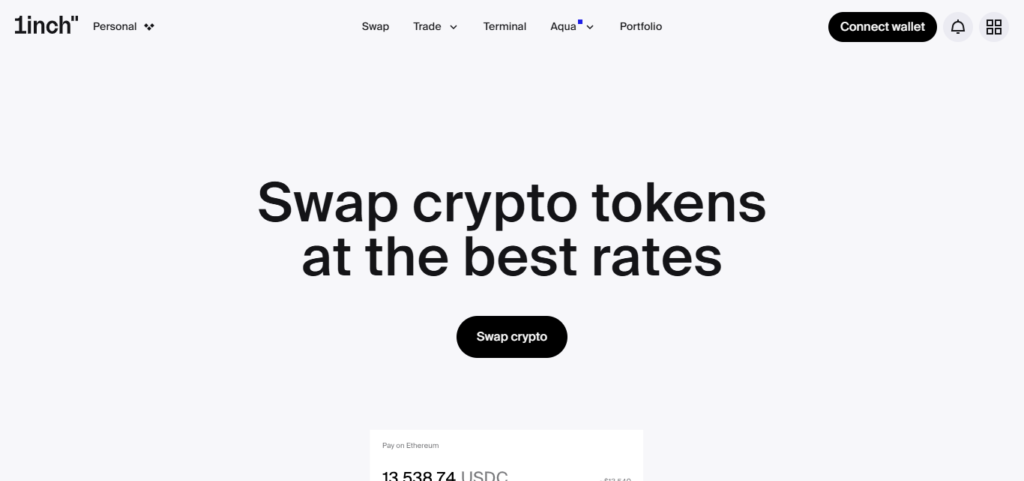
price impact, gas costs and conditions of execution. It also boasts a larger ecosystem and more sophisticated trading features such as limit orders, making it relevant for users looking for something more than a basic swap.
1inch Pros & Cons
| Pros | Cons |
|---|---|
| Aggregates liquidity from multiple decentralized exchanges. | Primarily focused on decentralized liquidity rather than centralized exchanges. |
| Pathfinder can identify efficient multi-source swap routes. | Complex routing can increase gas requirements in some situations. |
| Offers broad token and blockchain support. | Final execution depends on available DEX liquidity. |
| Provides advanced trading features beyond basic swaps. | Beginners may find advanced functionality less intuitive. |
13. Velora / ex-ParaSwap
Formerly known as ParaSwap, Velora is DeFi application’s decentralized liquidity aggregation and routing infrastructure. It is designed to compare liquidity sources and optimize execution, not to be a traditional centralized exchange. Top Trocador Rivals for Multi-Exchange Routing: Velora, whose aggregation model enables users and applications to access different decentralized liquidity venues through a unified routing layer.

If you look at Velora, look at what chains it supports, what liquidity sources are integrated, the routing and execution tech, gas efficiency, price impact and what MEV-protection mechanisms are available. Developers should also consider API, SDK, and integration capabilities when choosing routing infrastructure for wallets, DeFi applications, or trading interfaces.
Velora / ex-ParaSwap Pros & Cons
| Pros | Cons |
|---|---|
| Aggregates multiple decentralized liquidity sources. | Primarily serves DeFi and on-chain trading environments. |
| Optimizes routes for competitive swap execution. | Available liquidity depends on integrated protocols. |
| Provides infrastructure for developers and DeFi applications. | Technical features may be excessive for casual swap users. |
| Supports execution-focused routing functionality. | Gas costs can vary considerably between different routes. |
14. CoW Swap
CoW Swap runs on an intent-based trading model — users sign intents to trade and professional solvers compete to find suitable execution paths. Its batch-auction mechanism and solver competition are aimed at improved execution and protection from several forms of MEV.
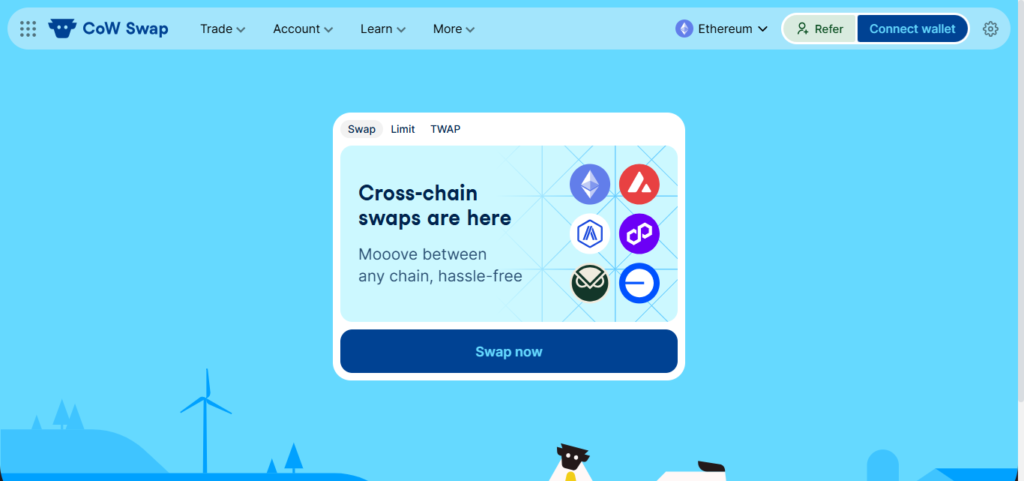
The CoW Swap with multi-exchange routing includes top Trocador rivals because its routing differs from simple exchange aggregation: solvers look for public and private liquidity and compete to settle batches. CoW Protocol has 29 active solvers and supports advanced order types such as limit and TWAP orders.
When comparing points , these are the features to look at : competition of solvers , supported chains , access to liquidity , execution surplus , MEV protection , order types , and trading costs .
CoW Swap Pros & Cons
| Pros | Cons |
|---|---|
| Uses batch auctions to improve trade execution. | Execution may not work like an instant conventional swap. |
| Solver competition can improve available trade outcomes. | Supported assets and networks are more limited than broad aggregators. |
| Provides protection against several MEV-related issues. | Settlement depends on solver and auction mechanisms. |
| Supports advanced order types for sophisticated traders. | The intent-based model can require explanation for beginners. |
15. Jupiter
Jupiter is the leading Solana-centric aggregation and routing platform designed to discover liquidity in the Solana trading ecosystem. Its main strength is finding routes for token swaps, helping users to see the available liquidity and make trades using an aggregated interface.
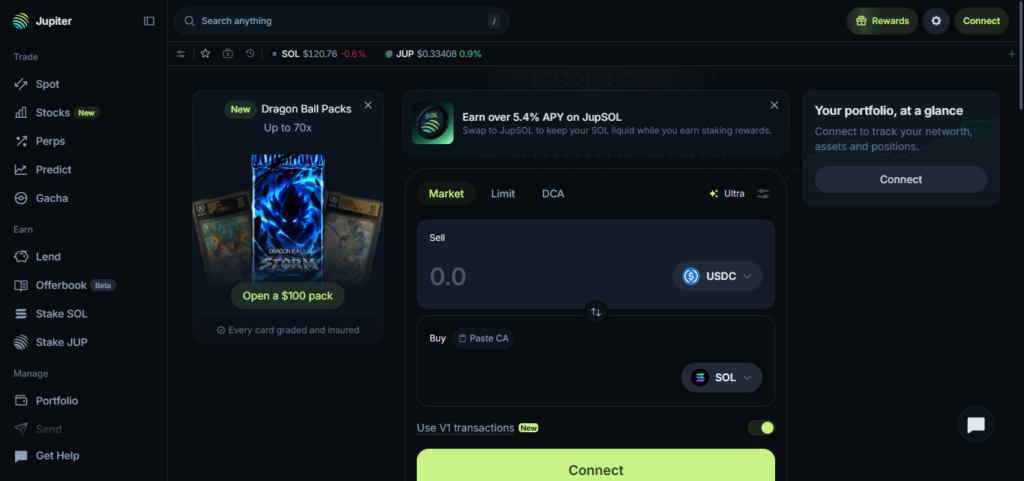
Top Trocador Competitors for Multi-Exchange Routing. Includes Jupiter if the routing requirement is for Solana specifically and not general multi-chain exchange discovery. Relevant comparison data includes coverage of Solana tokens, integrated liquidity sources, route optimization, price impact, transaction costs, execution speed, and advanced trading functionality such as limit-style orders where supported.
Users should also differentiate between Jupiter’s Solana-based routing model and cross-chain aggregators, which are mainly built to optimize routes across multiple blockchain networks.
Jupiter Pros & Cons
| Pros | Cons |
|---|---|
| Strong liquidity aggregation across the Solana ecosystem. | Its core strength is more concentrated around Solana. |
| Provides sophisticated route discovery for token swaps. | Users needing broad multi-chain coverage may need another solution. |
| Offers advanced trading functionality beyond simple swaps. | Solana network conditions can affect transaction execution. |
| Connects users with multiple Solana liquidity venues. | Its model differs from privacy-focused exchange aggregators like Trocador. |
Conclusion
Conclusion Choosing the best Trocador Rivals for Multi-Exchange Routing depends on your priorities, such as privacy, supported networks, liquidity, fees and execution speed. SwapSpace, LI.FI, Rubic, 1inch, CoW Swap, and Jupiter are platforms that have different routing approaches to serve different users.
Before making a choice that best suits your cryptocurrency swapping needs consider available assets, transaction costs, route quality, security and platform features.
FAQ
Trocador rivals are platforms offering exchange aggregation, routing, swaps, or liquidity discovery.
LI.FI, Rubic, deBridge, Bungee, and Symbiosis support cross-chain routing.
1inch, Velora, CoW Swap, and Jupiter emphasize decentralized liquidity aggregation.
OrangeFren and StealthEX are useful privacy-focused alternatives.
Jupiter is a strong Solana-focused routing platform.