

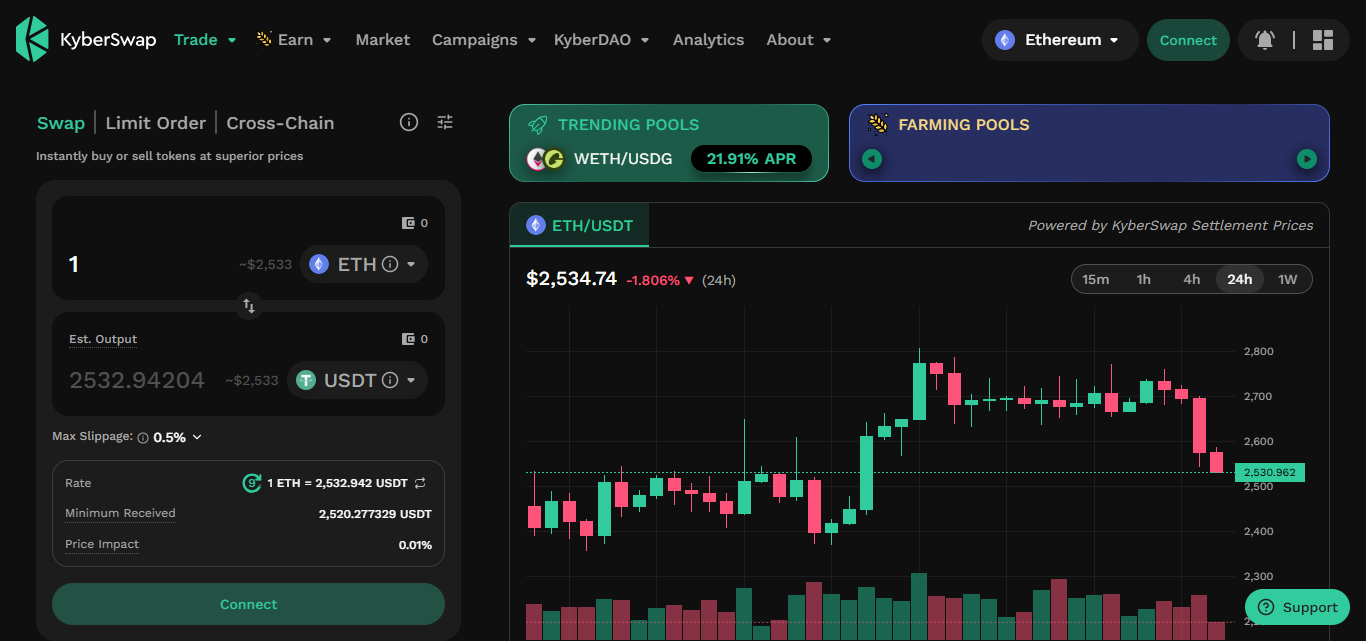
In this article, I will discuss the Top KyberSwap Alternatives for Multi-Chain Swaps, highlighting platforms that provide efficient liquidity aggregation, smart routing, cross-chain functionality, competitive fees, and reliable execution.
I will compare their supported blockchain networks, key features, security, trading technology and ideal use cases to help users to choose the most suitable alternative for seamless multi-chain cryptocurrency swapping.
Key Points & Top KyberSwap Alternatives for Multi-Chain Swaps
| KyberSwap Alternative | Explanation |
|---|---|
| 1inch | Aggregates liquidity across decentralized exchanges to find competitive swap rates efficiently. |
| Jupiter | Solana-based aggregator offering optimized token swaps and extensive ecosystem liquidity. |
| deBridge | Enables secure cross-chain transfers and token swaps across multiple blockchain networks. |
| CoW Swap | Uses batch auctions and intent-based trading to optimize decentralized swap execution. |
| Odos | Routes trades across multiple liquidity sources for efficient, optimized token swaps. |
| LI.FI | Aggregates bridges and decentralized exchanges for seamless cross-chain swaps and transfers. |
| Matcha | Provides smart token routing across decentralized exchanges to improve trading execution. |
| ParaSwap (Velora) | Aggregates decentralized liquidity sources while optimizing prices, routes, and transaction execution. |
| Bungee (by Socket) | Simplifies cross-chain transactions by connecting bridges and liquidity providers across networks. |
| Rubic | Offers cross-chain swaps and aggregation across numerous blockchains and decentralized exchanges. |
10 Top KyberSwap Alternatives for Multi-Chain Swaps
1. 1inch
1inch is a multi-chain DEX aggregator that tries to find the best path for swaps across supported networks. It supports major chains like Ethereum, BNB Chain, Polygon, Arbitrum, Optimism, Base and more. It’s liquidity / routing system queries multiple decentralized exchanges and splits trades when useful. The cross-chain features are more than just simple single-network swaps but extend through its larger aggregation ecosystem.
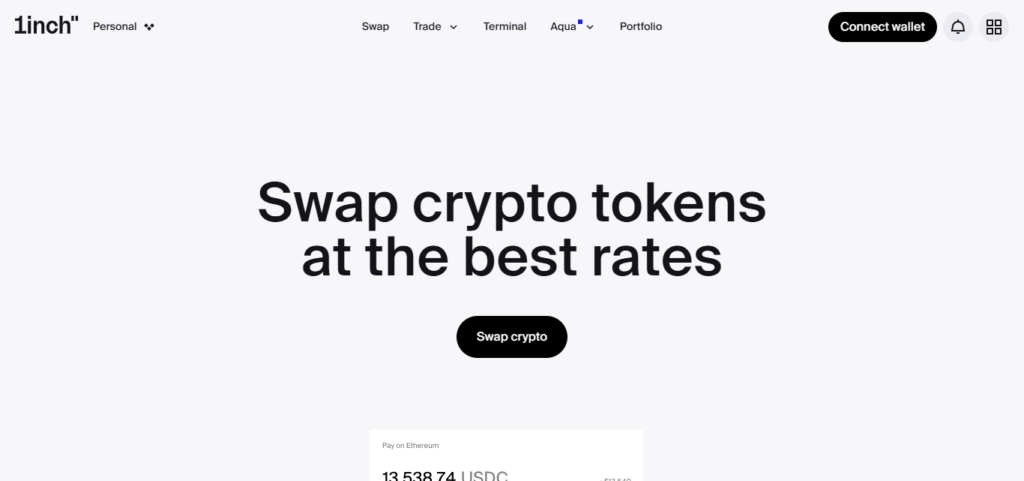
Fees are based on the underlying liquidity sources, network costs and any relevant protocol fees. Execution Focus is on reducing price impact and improving effective swap rates. It has special technology with sophisticated Pathfinder routing. Security is improved by existing smart contract infrastructure and audits. Perfect for users who want to maximize DEX aggregation across different chains.
1inch — Key Features
| Feature | Explanation |
|---|---|
| Multi-Chain Swaps | Supports token swaps across numerous major blockchain networks. |
| Smart Routing | Searches multiple DEXs to identify efficient trading routes. |
| Pathfinder | Optimizes complex routes to improve rates and execution quality. |
| Liquidity Aggregation | Combines liquidity sources to help reduce price impact. |
2. Jupiter
Jupiter is a major trading aggregator on Solana that specializes in efficient token swapping and liquidity discovery. Its chains are mainly centered around Solana and its broad token ecosystem. Jupiter searches the available Solana liquidity venues for the best route to improve execution and pricing for your liquidity/routing.
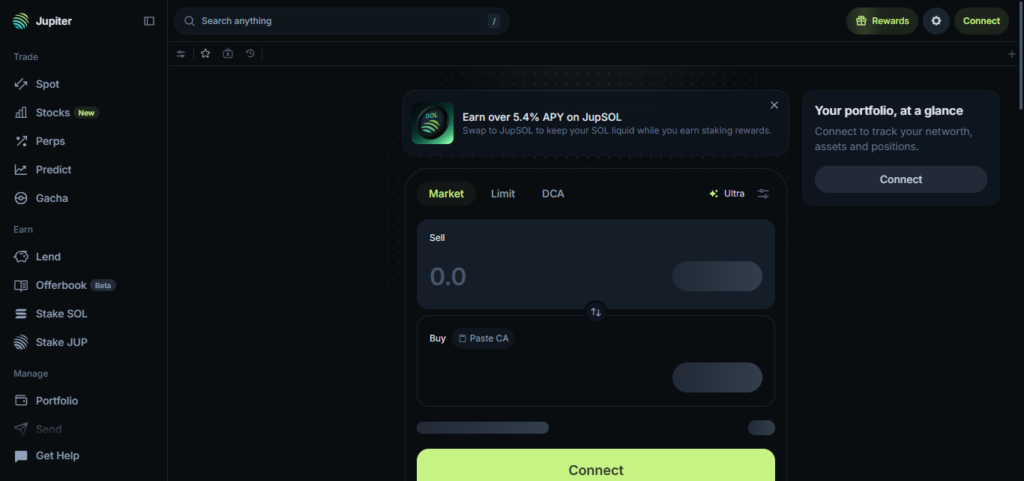
Its cross-chain capabilities are growing with integrations connecting Solana to assets and ecosystems outside the network. Fees will vary according to the route selected, transaction requirements and applicable platform charges.
Fast Solana transactions Execution Competitive pricing & efficient routing. Its advanced routing and trading infrastructure is its unique technology. Security comes from audited protocols and ecosystem protections. Great for Solana traders looking for deep liquidity and efficient swaps.
Jupiter — Key Features
| Feature | Explanation |
|---|---|
| Solana Aggregation | Aggregates liquidity across Solana’s decentralized trading ecosystem. |
| Smart Routing | Finds efficient routes across multiple liquidity pools. |
| Limit Orders | Provides advanced trading functionality beyond basic token swaps. |
| Low-Latency Execution | Leverages Solana for fast transaction confirmation and execution. |
3. deBridge
deBridge is focused on cross-chain interoperability, enabling users to transfer assets and make transfers between different blockchain ecosystems. One of its chains includes several major networks, interconnected by its interoperability infrastructure. DeBridge is not just a traditional DEX aggregator but also facilitates cross-chain transactions for liquidity/routing.
Its biggest advantage is its cross-chain capabilities, which allow for efficient asset transfers between connected chains. Fees may include cross-chain transaction fees and network fees Execution is focused on fast messaging and reliable transaction settlement across networks.
Its proprietary technology is based on cross-chain communication and secure asset transfers. Security is based on validators and protocol level protections. Best for those who want reliable cross-chain transfers and interoperability.
deBridge — Key Features
| Feature | Explanation |
|---|---|
| Cross-Chain Transfers | Enables asset movement between supported blockchain networks. |
| Interoperability | Connects different blockchain ecosystems through cross-chain messaging infrastructure. |
| Fast Settlement | Designed for efficient cross-chain transaction processing and settlement. |
| Secure Messaging | Uses decentralized validation mechanisms for cross-chain communication. |
4. CoW Exchange
CoW Swap is a decentralized trading protocol focusing on efficient execution via batch auctions and intent-based trading. Its chains include Ethereum and select compatible networks that are supported by its infrastructure. CoW Swap utilizes a solver competition to discover optimal execution opportunities for liquidity/routing, rather than depending solely on conventional AMM routing.
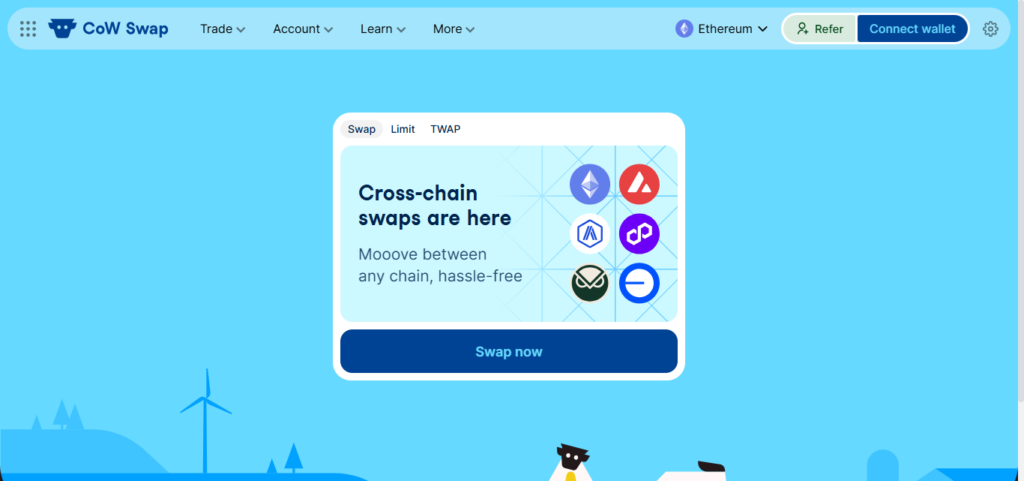
More intent-based infrastructure and ecosystem integrations are being built for its cross-chain capabilities. Fees are based on trade and network . Execution is done to avoid unnecessary fees . Execution is improved with batch settlement and MEV-aware mechanisms.
It has unique technology like Coincidence of Wants and solver based auctions. Security is offered by audited intelligent contracts and decentralized settlement. Best for traders looking for MEV aware execution.
CoW Swap — Key Features
| Feature | Explanation |
|---|---|
| Batch Auctions | Groups trades together to optimize execution and settlement. |
| MEV Protection | Helps protect traders from certain forms of transaction exploitation. |
| Solver Competition | Competing solvers search for favorable trade execution opportunities. |
| Intent-Based Trading | Lets users specify desired outcomes rather than direct routes. |
5. Odos
Odos is a decentralized exchange aggregator to find the best token swap from multiple liquidity sources. Its chains include Ethereum, Arbitrum, Optimism, Polygon, Base, BNB Chain and other supported chains. Odos scans through many pools for liquidity / routing and can combine multiple routes to improve pricing and capital efficiency.
Supported integrations and the infrastructure you connect with determine the cross-chain capabilities. Fees usually include network gas, the costs of the underlying protocol, and any applicable routing fees. The execution strategy focuses on reducing price impact, improving rates and processing larger trades efficiently.
The technology is unique including complex multi-path routing. Security based on audited contracts and integrated protocols. It is best for users looking for optimized multi-route DEX execution.
Odos — Key Features
| Feature | Explanation |
|---|---|
| Multi-Route Swaps | Combines different liquidity paths for optimized trade execution. |
| Smart Order Routing | Searches available liquidity to improve swap pricing. |
| Multi-Token Routing | Supports complex trades involving multiple tokens and routes. |
| Price Optimization | Designed to reduce slippage and improve effective transaction rates. |
6. LI.FI
LI.FI is a cross-chain infrastructure and aggregation protocol that integrates decentralized exchanges with bridge providers. It has chains on many EVM and non EVM ecosystems based on current integrations. LI.FI examines available bridges and DEX routes and compares them to find appropriate paths for swaps and transfers (liquidity/routing).
One of its core strengths is its cross-chain functionality that enables users and applications to move assets across the supported networks, based on aggregated infrastructure. Fees depend on the bridge, DEX, gas requirements and route chosen.
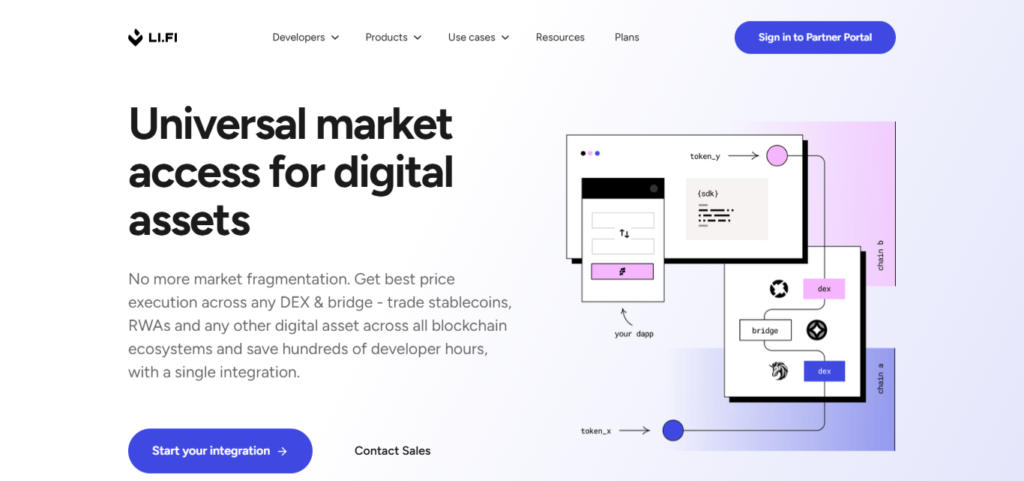
The execution consists of finding efficient combinations of swaps and bridging steps. What makes it unique is the unified routing infrastructure. Security comprises route monitoring and integrated protocol protection. It is best for cross-chain trading and seamless applications.
LI.FI — Key Features
| Feature | Explanation |
|---|---|
| Bridge Aggregation | Compares multiple bridges for cross-chain asset transfers. |
| DEX Aggregation | Connects decentralized exchanges for efficient swap routing. |
| Cross-Chain Routing | Combines bridge and swap routes across supported networks. |
| Developer Infrastructure | Provides APIs and tools for integrating cross-chain functionality. |
7. Matcha
Matcha is a decentralized exchange aggregator that scours various liquidity sources to provide competitive token swap execution. It’s chains include Ethereum, Polygon, Arbitrum, Optimism, Base and other supported chains. For liquidity/routing, Matcha compares available DEX liquidity and chooses routes optimized to improve price execution.
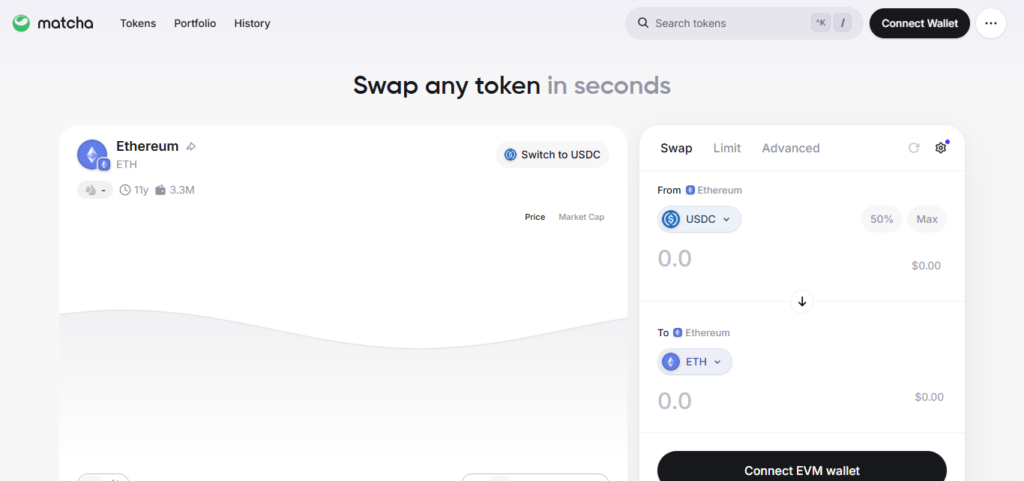
However, its core strength of efficient on-chain aggregation remains; the cross-chain features are dependent on its supported network and ecosystem integrations. They are mostly determined by the network gas, the liquidity-source conditions, and any applicable transaction fees.
Execution is about minimizing price impact and enhancing effective rates. It uses 0x-powered aggregation infrastructure and smart order routing to deliver its unique technology. Security benefits of existing audited infrastructure. Best for simple multi-chain DEX aggregation.
Matcha — Key Features
| Feature | Explanation |
|---|---|
| DEX Aggregation | Searches multiple decentralized exchanges for competitive liquidity. |
| Smart Routing | Selects routes designed to improve trade execution. |
| Multi-Chain Support | Enables swaps across several supported blockchain networks. |
| 0x Infrastructure | Uses established aggregation technology for decentralized trading execution. |
8. ParaSwap (Velora)
Velora is now integrated with ParaSwap, a decentralized liquidity aggregator and optimized trading infrastructure across supported blockchain networks. Its chains include Ethereum and a number of major EVM-compatible ecosystems. To route/liquidity, the platform compares several decentralized exchanges and liquidity providers to find the most efficient paths for the transaction.

Its cross-chain capabilities are supported by the broader Velora interoperability and intent-based infrastructure. Fees are based on network gas, sources of liquidity and applicable protocol mechanisms. Execution is about pricing competitively, minimizing slippage and choosing the best path.
Sophisticated aggregation and intent-driven trading infrastructure, proprietary technology. Security via audited intelligent contracts and proven protocol development. It’s optimized for programmable liquidity aggregation and best suited for traders and applications.
ParaSwap (Velora) — Key Features
| Feature | Explanation |
|---|---|
| Liquidity Aggregation | Connects multiple decentralized liquidity sources for trading. |
| Smart Routing | Identifies efficient paths across available liquidity providers. |
| Cross-Chain Infrastructure | Supports interoperability through Velora’s broader protocol ecosystem. |
| Developer Tools | Offers infrastructure for applications integrating optimized decentralized trading. |
9. Bungee (by Socket)
Bungee uses Socket infrastructure to enable users to transfer and swap assets across multiple blockchain networks. Its chains are available across many EVM ecosystems and additional networks supported through connected bridges and liquidity providers.
Bungee compares available bridging routes and swap paths for practical cross-chain transactions for liquidity/routing. Its main focus is its cross-chain features, allowing users to transfer assets between supported chains without having to manually pick out individual bridges.
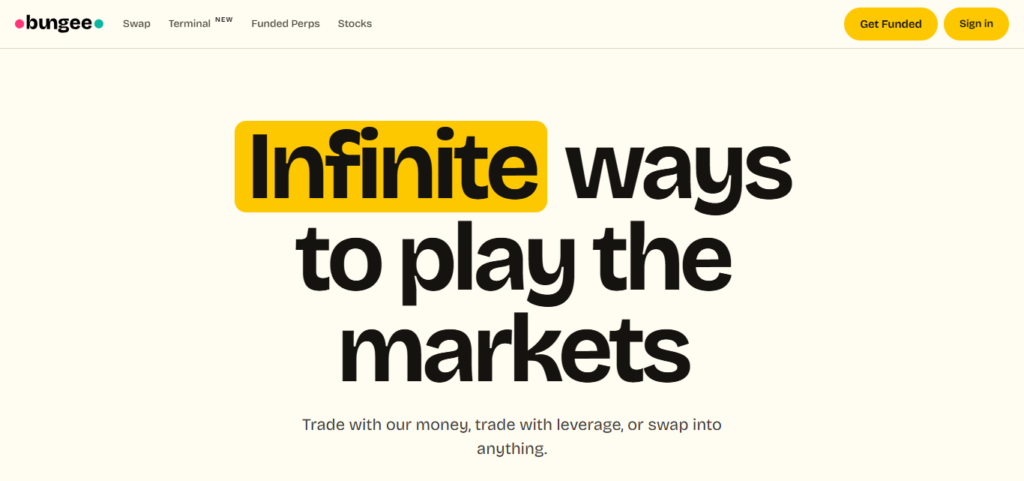
Depending on the route, fees may include bridge fees, DEX fees and gas fees on the blockchain. The goal of execution is fast transfers and routing . The difference is its technology, built on Socket’s interoperability infrastructure. Security is built-in with bridge protocols and Socket safeguards. It is the best for users to simplify cross-chain transfer.
Bungee (by Socket) — Key Features
| Feature | Explanation |
|---|---|
| Cross-Chain Transfers | Simplifies moving tokens between supported blockchain networks. |
| Bridge Aggregation | Compares multiple bridges to identify suitable transfer routes. |
| Route Optimization | Selects efficient paths based on available cross-chain infrastructure. |
| Socket Infrastructure | Uses Socket’s interoperability layer to connect blockchain ecosystems. |
10. Rubic
Rubic is a multi-chain swap and bridge platform for users to tap into decentralized liquidity across dozens of blockchain networks. It covers major EVM and other supported ecosystems. Coverage varies as integrations grow. For liquidity/routing, Rubic aggregates DEXs and bridges to find the best swap and transfer routes. It offers cross-chain features that enable users to transfer assets across different networks that are connected by the bridge infrastructure.
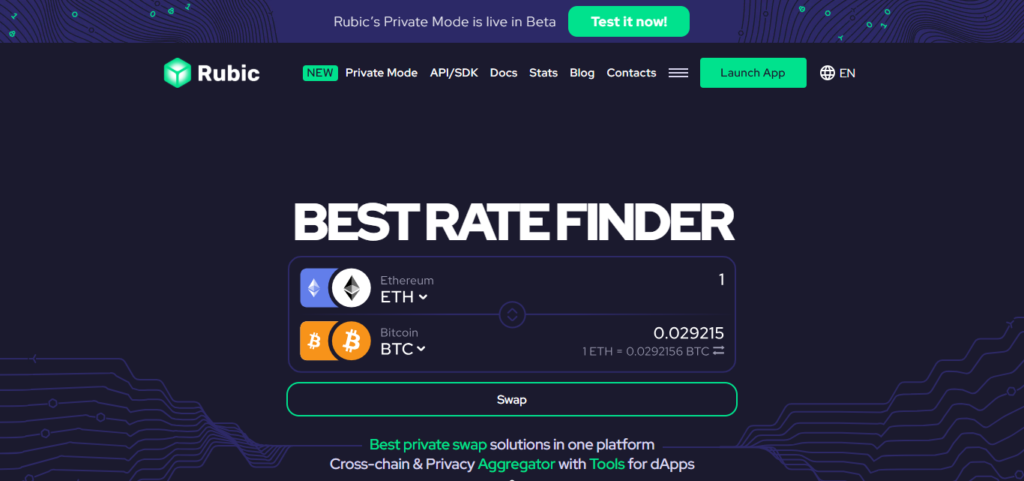
The fees can include network gas, bridge fees, liquidity provider costs and Rubic fees where applicable. The implementation focuses on easy routing and simple cross-chain transactions. Its breakthrough technology features swap aggregation and cross-chain routing. Security is built on audited contracts and integrated third-party protocols. It’s best for users who want an easy, all-in-one cross-chain swapping experience.
Rubic — Key Features
| Feature | Explanation |
|---|---|
| Cross-Chain Swaps | Enables token exchanges between supported blockchain networks. |
| DEX Aggregation | Connects multiple decentralized exchanges for liquidity discovery. |
| Bridge Aggregation | Integrates bridge providers for cross-chain asset movement. |
| Multi-Chain Support | Provides swapping infrastructure across numerous supported blockchain ecosystems. |
Conclusion
To summarize, the best KyberSwap alternatives for multi-chain swaps are determined by your preferred networks, liquidity needs, fees, execution quality, and cross-chain requirements.
Traders get to benefit from the different strengths of platforms like 1inch, Jupiter, Odos, LI.FI, Matcha and Rubic. You can compare routing technology, supported chains, security, and overall functionality to select the best platform for fast multi-chain cryptocurrency swaps.
FAQ
1inch, Jupiter, LI.FI, Odos, Matcha, Rubic, and deBridge offer strong alternatives.
1inch and Odos provide advanced routing across multiple decentralized liquidity sources.
Jupiter is particularly strong for Solana token swaps and liquidity aggregation.
LI.FI, deBridge, Bungee, and Rubic specialize in cross-chain transfers and swaps.
CoW Swap uses batch auctions and intent-based trading to reduce MEV risks.