

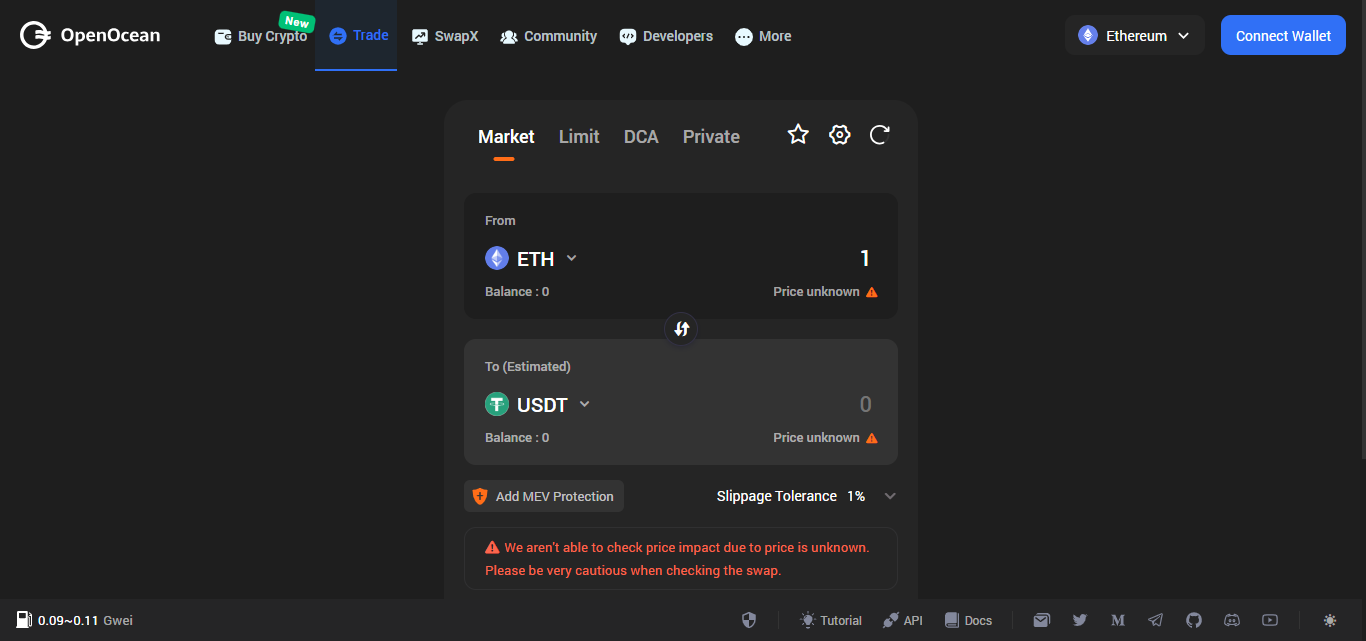
I’ll go over the Top OpenOcean Competitors for Cheap Swaps in this post, looking at the top options for cryptocurrency traders looking for cheaper transaction fees and competitive exchange rates.
To assist you in selecting the best platform for your trading requirements, we will evaluate 15 well-known platforms based on their salient characteristics, supported blockchains, swap fees, liquidity sources, cross-chain swapping capabilities, and slippage protection.
Key Points & Top OpenOcean Competitors for Cheap Swaps
| Competitor | Explanation |
|---|---|
| 1inch | Aggregates decentralized exchanges to find competitive token swap rates across supported networks. |
| Velora | Routes trades across decentralized exchanges, helping users access competitive prices and liquidity. |
| Matcha | Aggregates decentralized exchange liquidity to help traders find efficient token swap prices. |
| Odos | Splits trades across liquidity sources to optimize pricing and reduce swap costs. |
| KyberSwap | Aggregates liquidity across decentralized exchanges to deliver competitive rates for token swaps. |
| Jupiter | Solana-based aggregator that compares liquidity sources to find efficient token swap routes. |
| Raydium | Solana decentralized exchange offering token swaps through automated market makers and liquidity pools. |
| Jumper | Connects cross-chain bridges and exchanges to simplify asset transfers between blockchain networks. |
| deBridge | Enables cross-chain swaps and transfers with efficient routing across supported blockchain ecosystems. |
| Symbiosis Finance | Facilitates cross-chain swaps by connecting liquidity sources across multiple blockchain networks. |
| Rango Exchange | Aggregates cross-chain bridges and decentralized exchanges to simplify multichain asset swaps efficiently. |
| Rubic | Offers cross-chain and on-chain swaps by aggregating multiple exchanges and bridges. |
| CoW Swap | Uses batch auctions and solver competition to seek favorable decentralized trading prices. |
| Hashflow | Provides zero-slippage quoted trades through professional market makers across supported blockchain networks. |
| ChangeNOW | Offers convenient cryptocurrency swaps across numerous assets and networks with simple transactions. |
15 Top OpenOcean Competitors for Cheap Swaps
1. 1inch
One inch Users can get competitive cryptocurrency swap rates across various liquidity sources with the use of 1inch, a decentralized exchange aggregator. Ethereum, BNB Chain, Polygon, Arbitrum, Base, Optimism, Avalanche, Solana, and other networks are supported.
Its routing system divides orders among several liquidity pools and evaluates available trade routes rather than depending on a single exchange. Network gas, pool fees, pricing impact, and execution technique all affect swap costs.
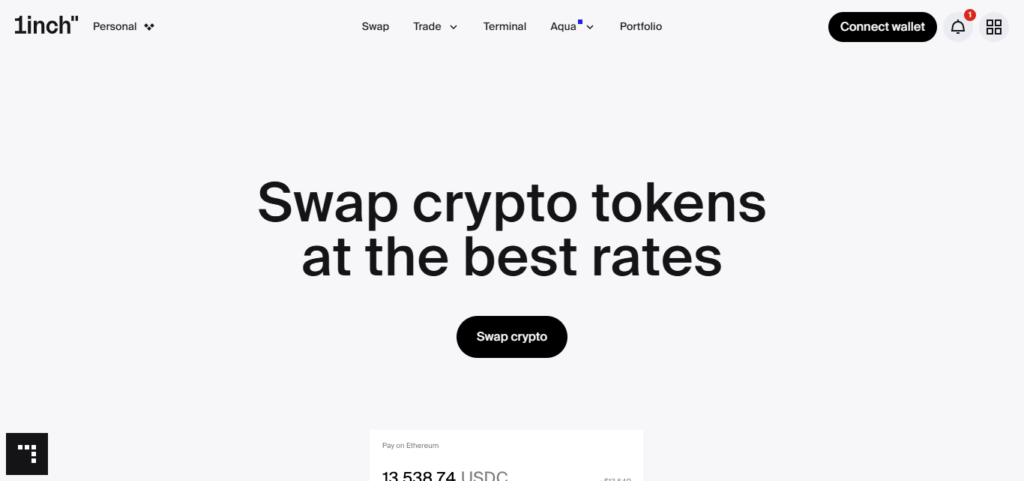
While conventional on-chain swaps need network gas, supported intent-based swaps may provide gasless execution and MEV protection. Eligible assets can transfer between supported networks thanks to cross-chain capability. Before finalizing trades, users can set up slippage tolerance and examine minimum received amounts.
1inch — Key Features
| Feature | Explanation |
|---|---|
| DEX Aggregation | Compares liquidity sources to find competitive token swap rates. |
| Multi-Chain Support | Supports Ethereum, BNB Chain, Polygon, Arbitrum, Base, and other networks. |
| Gasless Swaps | Fusion mode allows eligible swaps without users paying gas directly. |
| MEV Protection | Intent-based execution helps protect eligible swaps from front-running attacks. |
2. Velora
Velora, which was once part of the ParaSwap brand, offers decentralized trade aggregation with the goal of assisting customers in obtaining competitive token swap prices. Its routing algorithm can determine appropriate execution channels by comparing the liquidity offered by linked decentralized exchanges. Because coverage can change, it is best to verify supported networks and available trading pairs directly in the current interface.

The indicated exchange rate may include fees for blockchain gas and liquidity providers; any additional platform or integration costs will vary depending on the business in question. For the particular assets and networks being exchanged, cross-chain capability needs to be confirmed.
Check if the route offers good overall value by comparing the quoted production, expected price impact, transaction cost, and slippage parameters before confirming a swap.
Velora — Key Features
| Feature | Explanation |
|---|---|
| Trade Aggregation | Searches integrated liquidity sources for competitive decentralized swap execution. |
| Route Optimization | Evaluates available trading paths to improve expected token output. |
| Wallet-Based Trading | Enables decentralized swaps through compatible self-custody wallets. |
| Execution Efficiency | Helps traders evaluate prices and routes before confirming transactions. |
3. Matcha
Matcha is a decentralized trading platform that enables users to use aggregated liquidity to execute swaps and compare token prices. Rather than depending just on one liquidity pool, its routing method can seek across supported decentralized exchanges. Before linking a wallet, traders should confirm the chain they have selected because blockchain availability is dependent on the networks that Matcha currently supports.
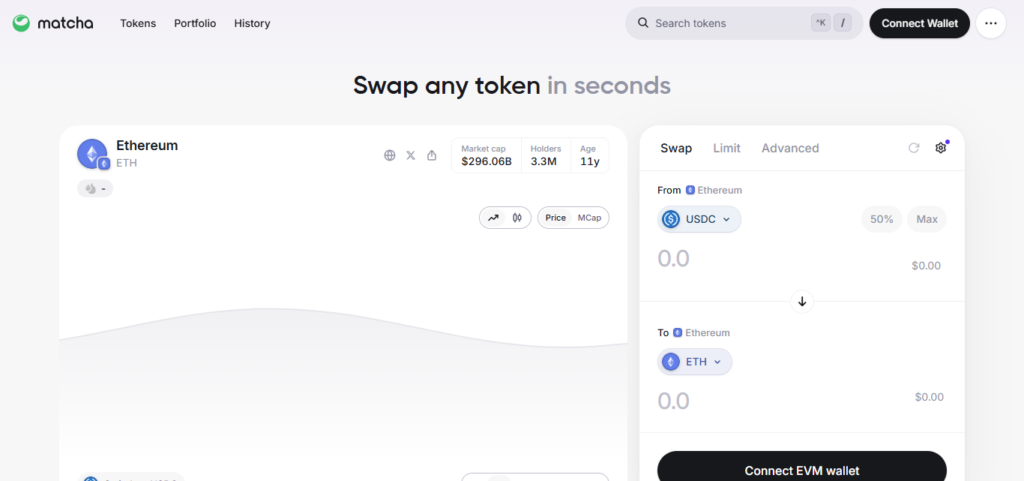
Network gas, liquidity provider fees, price impact, and any relevant service costs are examples of swap expenditures. Although market fluctuations may alter the outcome, the exchange rate shown prior to execution gives an approximation of the tokens received.
For the chosen path, cross-chain swapping needs to be examined independently. Before approving transactions, users should consider the minimum received amounts, slippage tolerance, and pricing impact.
Matcha — Key Features
| Feature | Explanation |
|---|---|
| DEX Aggregation | Combines liquidity from supported decentralized exchanges for token trading. |
| Price Comparison | Helps users compare available swap quotes before choosing a route. |
| Wallet Integration | Supports wallet-connected trading without requiring traditional exchange accounts. |
| Trade Execution | Provides a streamlined interface for reviewing and submitting token swaps. |
4. Odos
Odos is a decentralized exchange aggregator that focuses on identifying effective ways to trade tokens across different sources of liquidity. Its routing mechanism may increase execution prices by dividing trades among several pools. This strategy can assist traders in lessening the influence on prices, especially in situations where liquidity is dispersed among several exchanges.
Current Odos integrations determine which blockchain networks are available, therefore users should confirm that their preferred chain and coin combination are supported. Network gas, liquidity-pool fees, and the impact of market price fluctuations are examples of trading costs.

Before completing a transaction, users can compare anticipated results with the aid of Odos quotations. For every route, cross-chain availability should be verified rather than presumed. When making larger or more volatile transactions, slippage settings and minimum output checks are still crucial.
Odos — Key Features
| Feature | Explanation |
|---|---|
| Smart Routing | Searches available liquidity routes to improve swap execution. |
| Trade Splitting | Can divide trades across multiple pools when beneficial. |
| Liquidity Aggregation | Connects supported decentralized exchanges and liquidity sources. |
| Price Optimization | Seeks improved execution prices and reduced price impact for eligible trades. |
5. KyberSwap
KyberSwap Across supported blockchain networks, including as Ethereum, BNB Chain, Arbitrum, Optimism, Polygon, Base, and others, KyberSwap offers token exchanging and liquidity aggregation. To find competitive routes, our aggregator looks across integrated decentralized exchanges and liquidity pools. Although specific availability varies by product and chain, KyberSwap documentation lists extensive exchange and network coverage.
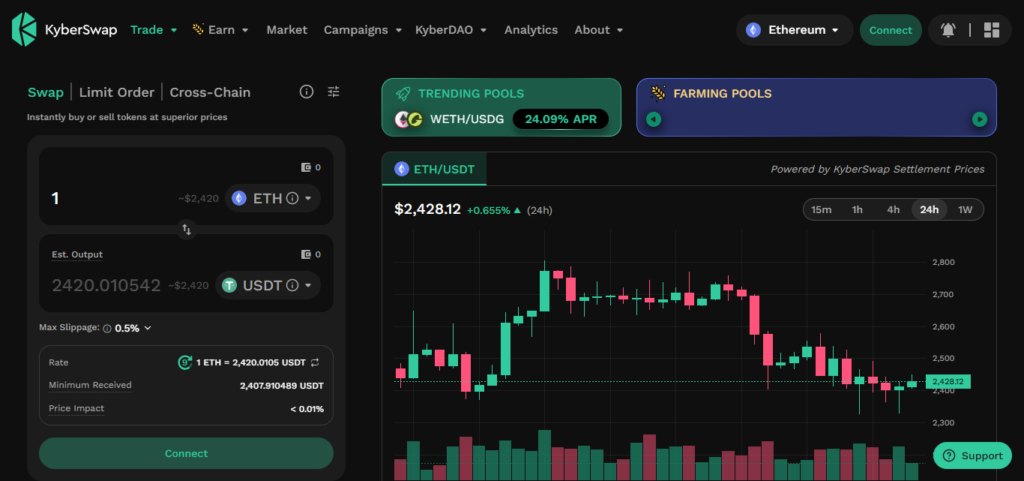
Blockchain gas and liquidity provider fees are examples of costs; on some networks, there may be additional swap fees. The quoted exchange rate is a reflection of the chosen route and is subject to change based on trade size and liquidity circumstances.
The availability of cross-chain swaps is contingent upon the source and destination networks being supported. To reduce execution risk and compare the expected amount received, users can set the maximum slippage and examine routing possibilities.
KyberSwap — Key Features
| Feature | Explanation |
|---|---|
| DEX Aggregation | Routes swaps across integrated decentralized exchanges and liquidity pools. |
| Multi-Chain Trading | Offers swap functionality across supported blockchain networks. |
| Dynamic Market Making | Provides liquidity infrastructure with dynamic automated market maker pools. |
| Advanced Routing | Optimizes eligible trades across supported exchanges and aggregators. |
6. Jupiter
Jupiter A significant trading aggregator for the Solana ecosystem, Jupiter assists users in comparing token swap paths across integrated liquidity sources. With capabilities and network coverage based on the individual Jupiter product, it is especially helpful for trading Solana-based tokens.
To increase predicted execution prices, the aggregator can route transactions and compare liquidity pools. Solana network fees, liquidity-provider fees, price impact, and any relevant platform expenses are examples of swap costs. The token pair, available liquidity, and trade size all affect exchange rates.
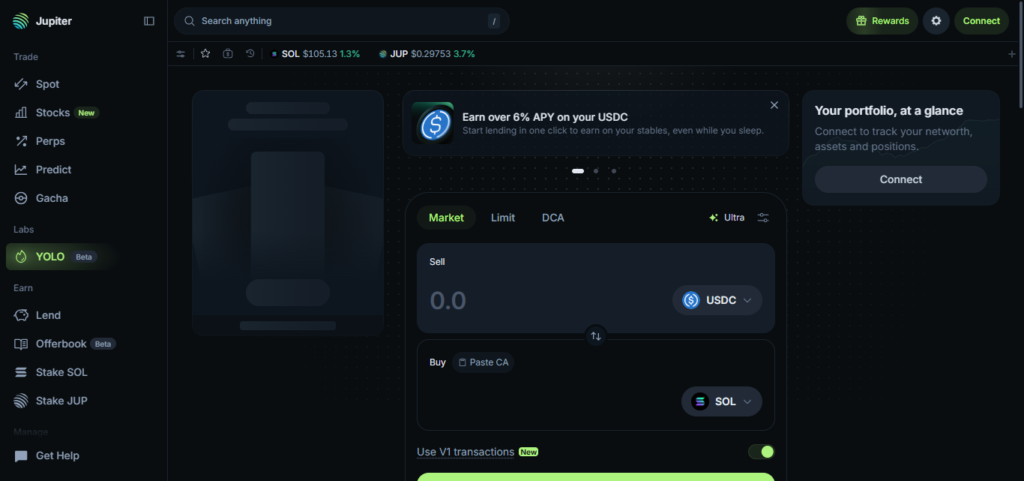
While multichain features rely on the particular service offered, Jupiter’s fundamental swap capability concentrates on Solana. Before executing, traders can evaluate possible price changes with the aid of slippage settings and transaction previews. The predicted production and the total transaction cost should always be compared.
Jupiter — Key Features
| Feature | Explanation |
|---|---|
| Solana Aggregation | Compares liquidity routes across supported Solana decentralized exchanges. |
| Smart Swap Routing | Finds eligible trading paths based on available liquidity and prices. |
| Token Trading | Provides access to a wide range of supported Solana ecosystem tokens. |
| DeFi Tools | Offers additional trading tools depending on the selected Jupiter product. |
7. Raydium
Raydium is a decentralized exchange situated in Solana that allows users to exchange tokens via its integrated trading infrastructure and liquidity pools. Raydium mainly supports the Solana ecosystem, in contrast to a multichain aggregator.
The chosen pool, liquidity depth, token demand, and trade volume all affect its exchange rates. Solana network transaction fees and pool-specific swap fees are examples of trading costs, and large orders or low-liquidity tokens may have a greater price impact.

The underlying assets required to carry out several swaps are provided by Raydium’s liquidity pools. Instead of assuming native cross-chain execution, cross-chain transactions typically require an additional supported bridge or interoperability service. Before confirming a swap, traders should review the quoted output, pool liquidity, slippage tolerance, and token information.
Raydium — Key Features
| Feature | Explanation |
|---|---|
| Solana DEX | Enables decentralized token swaps within the Solana ecosystem. |
| Liquidity Pools | Uses liquidity pools to facilitate token trading. |
| Automated Market Making | Uses AMM mechanisms to determine trading prices from pool balances. |
| DeFi Integration | Connects token swapping with supported Solana liquidity and trading services. |
8. Jumper
Jumper is a cross-chain swap interface that uses integrated bridges and swap providers to assist users in transferring cryptocurrency between supported blockchain networks. It displays potential pathways and projected transaction outcomes instead of needing users to independently investigate each bridge.
Current integrations and the chosen source and destination assets determine which blockchains are supported. Source-chain gas, bridge fees, destination-chain costs, and fees included in the quoted exchange rate are examples of costs.

Completion times and quantities obtained can vary depending on the route. Although the cheapest path isn’t always the fastest or least risky, Jumper is particularly helpful for comparing cross-chain transfer choices. The underlying swap provider and bridge determine slippage protection. Before moving further, review the transaction requirements, projected fees, minimum received amounts, and route specifics.
Jumper — Key Features
| Feature | Explanation |
|---|---|
| Cross-Chain Swaps | Helps users exchange assets between supported blockchain networks. |
| Bridge Aggregation | Compares available bridge routes for eligible cross-chain transfers. |
| Route Comparison | Displays estimated outputs and costs for supported transaction routes. |
| Multichain Access | Simplifies moving assets without manually navigating every bridge separately. |
9. deBridge
Users and applications can move assets and carry out qualified swaps between supported blockchain networks thanks to deBridge’s cross-chain technology. Its DLN technology is intended to enable cross-chain transactions without requiring each transfer to use traditional liquidity-pool bridging.
The supported route and integration determine the networks and assets that are available. Source-chain gas, destination execution costs, solver or protocol fees, and any discrepancy shown in the given conversion rate are examples of transaction costs.
The market, route-specific requirements, and available liquidity all affect cross-chain pricing. The terms of the quote and the transaction mechanism determine the slippage and execution guaranties. Before approving a transfer, users should evaluate the final predicted output, fees, transaction limitations, and settlement circumstances, especially when transferring large amounts between various networks.
deBridge — Key Features
| Feature | Explanation |
|---|---|
| Cross-Chain Transfers | Transfers assets between supported blockchain networks. |
| DLN Technology | Uses its DeFi trading infrastructure for cross-chain transactions. |
| Cross-Chain Swaps | Enables eligible asset exchanges across different supported networks. |
| Route-Based Pricing | Provides transaction quotes based on available execution conditions and costs. |
10. Symbiosis Finance
Symbiosis Finance specializes in cross-chain token swaps, which enable users to transfer assets via an integrated interface between compatible blockchain networks. To make multichain transactions easier, its routing system links cross-chain infrastructure and compatible liquidity sources. As integrations change, supported chains, token pairings, and execution paths may also change.
Depending on the route chosen, costs could include pricing effect, bridge-related fees, network gas, and liquidity-provider fees. The conversion process throughout the pertinent networks and the liquidity that is available are reflected in exchange rates.
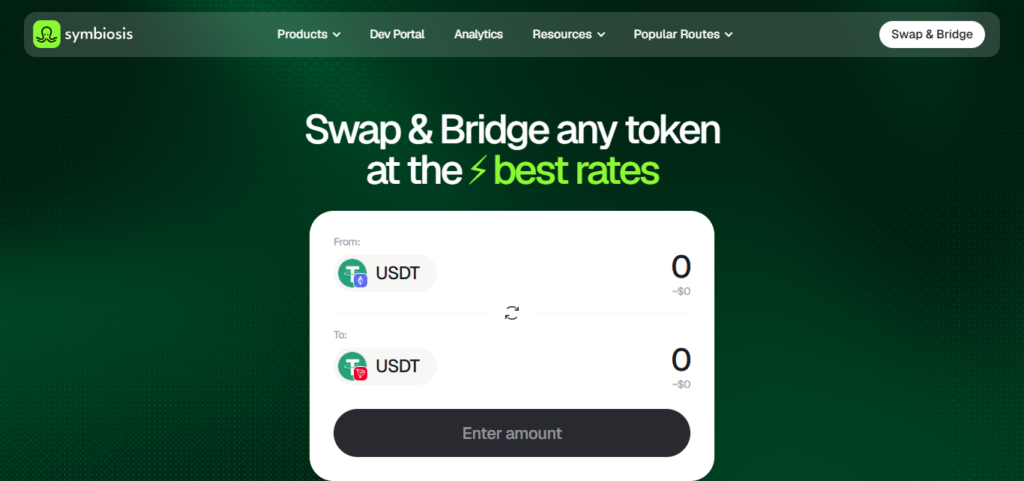
The platform’s primary use case is cross-chain capabilities, which makes it pertinent to users who must transfer assets rather than just execute same-chain swaps. The chosen route determines transaction limitations and slippage protection. Before confirming, review the anticipated output, costs, and destination specifications.
Symbiosis Finance — Key Features
| Feature | Explanation |
|---|---|
| Cross-Chain Trading | Enables swaps between supported assets on different blockchain networks. |
| Liquidity Connectivity | Connects compatible liquidity sources across supported networks. |
| Multichain Interface | Simplifies cross-network swaps through a unified trading experience. |
| Route Selection | Helps users evaluate available routes and estimated transaction outputs. |
11. Rango Exchange
Rango Exchange is a cross-chain aggregator that facilitates asset swapping between supported blockchain ecosystems by connecting decentralized exchanges, bridges, and other trading services. It helps users assess several ways to finish a transaction by comparing suitable routes for a chosen source asset and destination asset. Several blockchain ecosystems are among the supported net
Network gas, bridge fees, liquidity provider fees, and pricing variations between viable routes are examples of costs. A crucial use case is cross-chain swaps, particularly when assets need to transfer between otherwise distinct networks.
Protections against slippage and execution differ depending on the route and underlying provider. Before choosing an option, consider the projected amount received, total costs, route complexity, and transaction needs.
Rango Exchange — Key Features
| Feature | Explanation |
|---|---|
| Cross-Chain Aggregation | Connects multiple bridges and exchanges for multichain swaps. |
| Bridge Integration | Provides access to supported bridge providers through one interface. |
| DEX Integration | Aggregates supported decentralized exchanges across compatible networks. |
| Route Comparison | Helps users compare possible paths for cross-chain asset transfers. |
12. Rubic
Rubic is a multichain swap aggregator that facilitates bitcoin exchanges between compatible networks or within a blockchain. It presents accessible pathways for specific assets by integrating various decentralized exchanges and bridge providers. Current integrations determine which blockchains, token pairs, and services are supported.
The presented exchange rate should be assessed in conjunction with the projected final output because transaction costs can include network gas, bridge fees, liquidity-provider fees, and price impact. Although execution time and reliability vary by route,
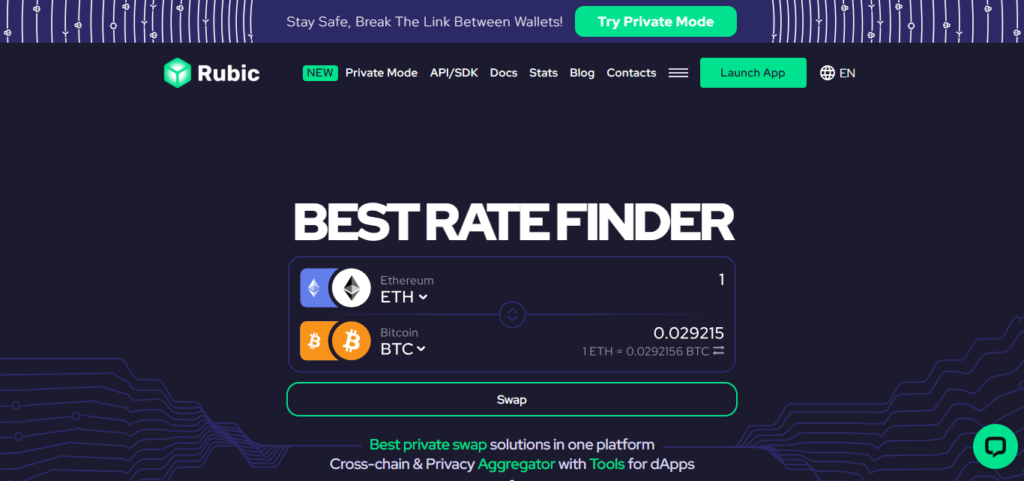
Rubic’s cross-chain capabilities helps streamline transfers that would otherwise require different services. The underlying protocol and transaction conditions determine slippage protection. Before finalizing a swap, users should check the offered rate, minimum received amount, fees, and destination-chain requirements to see if the route is economical.
Rubic — Key Features
| Feature | Explanation |
|---|---|
| Multichain Swaps | Supports eligible cryptocurrency exchanges across connected blockchain networks. |
| DEX Aggregation | Connects supported decentralized exchanges for on-chain token swaps. |
| Bridge Aggregation | Integrates bridge providers for cross-chain asset transfers. |
| Route Discovery | Helps users compare available transaction routes and expected outputs. |
14. CoW Swap
CoW Swap is a decentralized trading system that looks for advantageous execution prices through trade intents, batch auctions, and solver competition. Its approach can match suitable orders and look for effective execution chances instead of depending solely on a traditional direct swap.
Ethereum and specific EVM networks are essential to its ecosystem, and network availability is dependent on its supported installations. Although actual execution prices are dependent on market conditions, costs may include blockchain gas, relevant protocol, or liquidity-related expenditures.
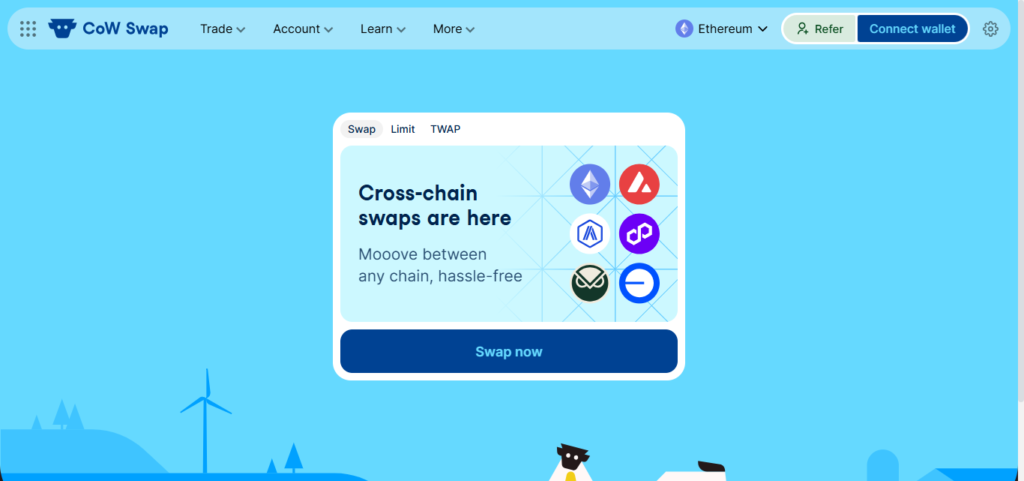
Cross-chain capability should not be assumed without a supported route, as CoW Swap is primarily intended for same-chain trade. MEV exposure is one of the trading risks that its slippage controls and execution techniques can help mitigate. Before signing, go over the transaction terms, minimum output, and final quote.
CoW Swap— Key Features
| Feature | Explanation |
|---|---|
| Market-Maker Quotes | Uses professional market makers to provide quoted trading prices. |
| RFQ Trading | Uses request-for-quote mechanisms for supported trades. |
| Price Certainty | Eligible quoted trades can execute at agreed prices under applicable conditions. |
| Cross-Chain Functionality | Supports cross-chain trading for eligible assets and integrated networks. |
15. ChangeNOW
ChangeNOW is a cryptocurrency swap service that supports exchanges across numerous digital assets and blockchain networks. Unlike a purely decentralized exchange aggregator, it provides a streamlined swap experience through its own service infrastructure and supported liquidity partners. Available cryptocurrencies, networks, and transfer routes depend on current service coverage.
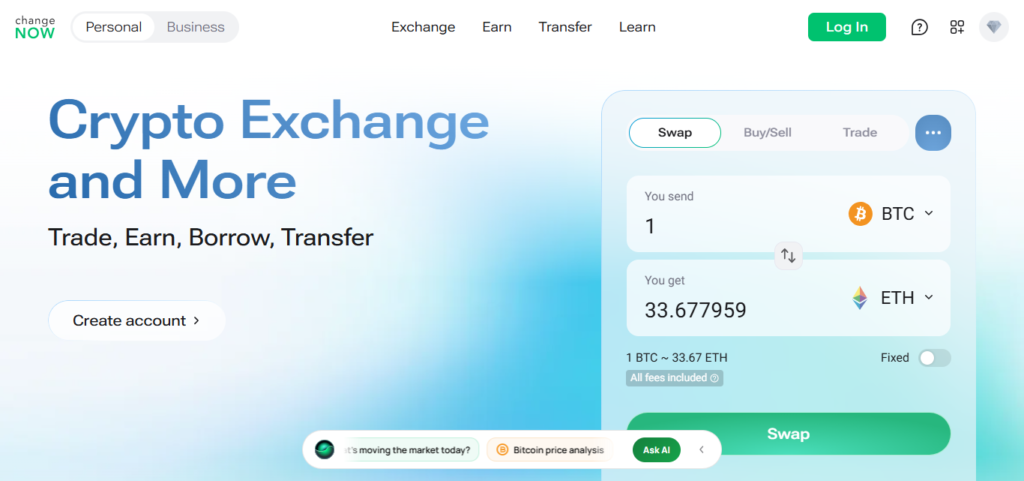
Fees and pricing can be incorporated into the displayed exchange rate or otherwise specified in the transaction quote; blockchain network charges may also apply. Users should distinguish between fixed-rate and floating-rate options where available, because the final received amount can depend on market movements and quote conditions.
Cross-chain swaps are available for eligible assets and routes. Slippage exposure and execution guarantees depend on the selected rate type and service terms. Review the quoted amount, included fees, network details, and transaction limits before proceeding.
ChangeNOW — Key Features
| Feature | Explanation |
|---|---|
| Cryptocurrency Swaps | Offers exchanges across a broad selection of supported cryptocurrencies. |
| Cross-Network Exchanges | Supports eligible swaps between assets on different blockchain networks. |
| Rate Options | Provides fixed-rate or floating-rate options where available. |
| Simple Interface | Streamlines the swap process with transaction quotes and order tracking. |
Conclusion
In conclusion, cryptocurrency traders looking for competitive rates, reduced transaction costs, and effective trading routes can benefit from a variety of advantages offered by the Top OpenOcean Competitors for Cheap Swaps.
While Jupiter specializes in Solana swaps and Jumper facilitates cross-chain transactions, platforms like 1inch, Matcha, and Odos concentrate on aggregating liquidity. Find the best platform by comparing exchange rates, network costs, supported blockchains, and slippage protection before selecting an alternative.
FAQ
1inch, Odos, Matcha, and Jupiter are worth comparing. Actual costs depend on network gas, liquidity fees, token pairs, and trade size.
1inch offers competitive liquidity aggregation and routing. The better option depends on supported networks, available liquidity, and the final quoted amount.
Jupiter is a popular Solana-focused aggregator, while Raydium provides direct decentralized trading and liquidity pools within the Solana ecosystem.
Jumper, deBridge, Symbiosis Finance, and Rango Exchange specialize in cross-chain routing or transfers across supported blockchain networks.
Odos focuses on smart-order routing and can split eligible trades across multiple liquidity pools to improve execution and reduce price impact.