

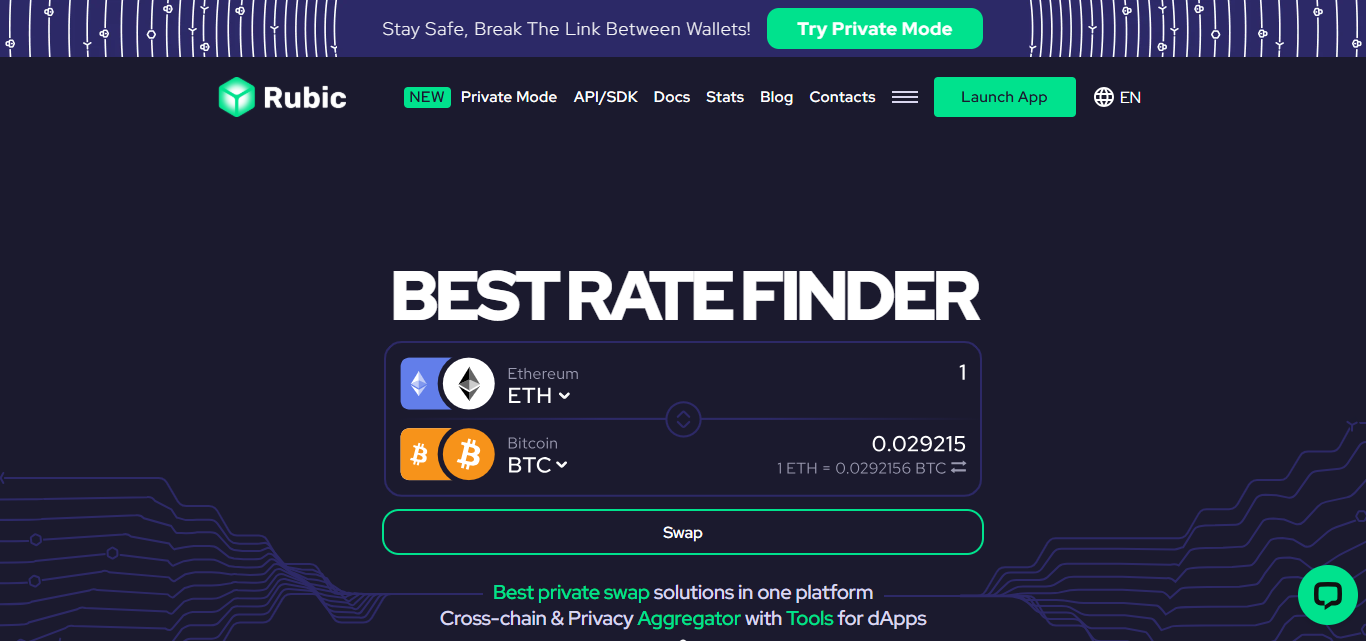
In this article, we will look at the Top Rubic Competitors for Cross-Chain Swaps, highlighting the top platforms that are helping to facilitate smooth transfers of cryptocurrencies across different blockchain networks.
We will contrast their main features, supported networks, swap mechanisms, liquidity solutions and unique advantages to help readers understand how these alternatives differ from Rubic and select the most appropriate platform for their cross-chain trading needs.
Key Points & Top Rubic Competitors for Cross-Chain Swaps
| Platform | Type / Focus | Key Features |
|---|---|---|
| LI.FI (Jumper Exchange) | Cross-Chain Route Composition & Aggregator | Aggregates bridges and decentralized exchanges to optimize cross-chain swaps across supported networks. |
| Rango Exchange | Multi-Chain DEX & Bridge Aggregator | Compares routes, security, rates, slippage, and settlement speeds for efficient cross-chain transactions. |
| THORChain | Native Asset Swap Protocol | Enables direct native-asset swaps across blockchains without requiring wrapped tokens or intermediaries. |
| Symbiosis Finance | Cross-Chain Liquidity Protocol | Supports numerous networks, offering fast routing and permissionless cross-chain trading without mandatory KYC. |
| deBridge | Intent-Based & Solver Swaps | Enables fast cross-chain swaps and secure messaging through decentralized execution infrastructure and solvers. |
| Stargate Finance | Liquidity Bridge | Provides unified liquidity pools enabling cross-chain transfers with fast, predictable transaction finality guarantees. |
| Across Protocol | Relayer-Execution Bridge | Enables fast cross-chain transfers using relayers and optimistic verification for efficient settlement. |
| Wormhole Portal | Cross-Chain Messaging Bridge | Connects diverse blockchains through messaging infrastructure, enabling token transfers and cross-chain application interoperability. |
| Synapse Protocol | Omnichain Liquidity Network | Connects Layer-one and Layer-two networks, supporting asset bridging and cross-chain messaging capabilities. |
| Chainflip | Decentralized Cross-Chain DEX | Facilitates native-asset swaps across Bitcoin, Ethereum, Solana, and Polkadot without wrapped tokens. |
10 Top Rubic Competitors for Cross-Chain Swaps
1. LI.FI (Jumper Exchange)
LI.FI is a multi-chain routing and aggregation protocol that connects decentralized exchanges (DEXs), bridges and other swap providers through a single interface. Its routing infrastructure evaluates the available routes to help users to exchange tokens efficiently across the supported blockchain networks.
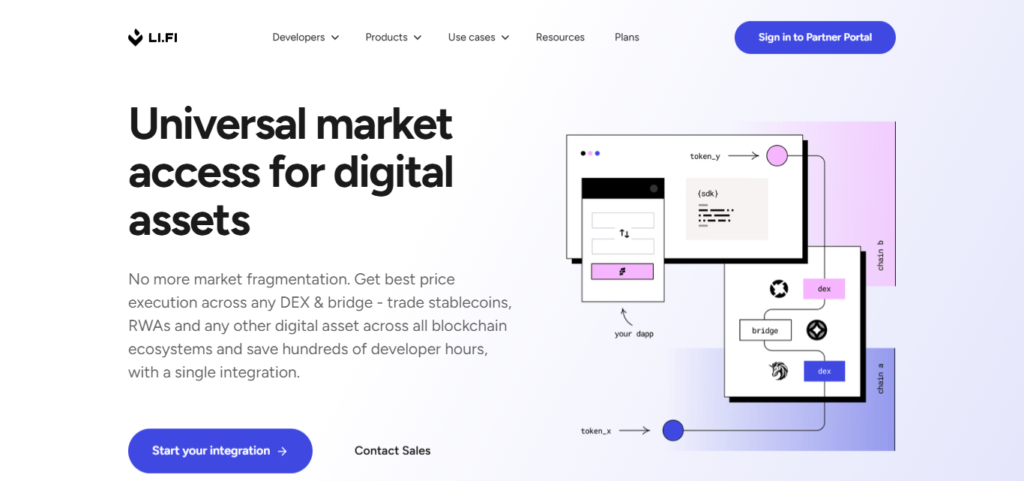
LI powers Jumper Exchange, an interface that consumers face.FI technology that simplifies cross-chain swaps without requiring users to manually select bridges and exchanges.
LI.FI also offers developer APIs and integration tools for wallets and decentralized applications. LI.FI is a very close competitor when compared with Rubic, as both aggregate several liquidity sources and automate cross-chain transaction routes.
LI.FI (Jumper Exchange)
| Feature | Explanation |
|---|---|
| Cross-Chain Aggregation | Combines multiple bridges, decentralized exchanges, and swap providers to support cross-chain transactions. |
| Smart Route Optimization | Evaluates available routes using factors such as fees, execution time, and expected output. |
| Multi-Chain Support | Connects supported blockchain ecosystems, allowing users to swap assets between different networks. |
| Developer Integration | Provides APIs, SDKs, and widgets for integrating cross-chain swaps into wallets and applications. |
2. Rango Exchange
Rango Exchange is a cross-chain and on-chain swap aggregator which aggregates liquidity from decentralized exchanges, bridges and other interoperability protocols. It enables users to discover routes between tokens on several blockchain networks including EVM-compatible chains, Solana and Cosmos-based ecosystems. Instead of having to manually compare multiple bridges and exchanges, users can select their source token, destination token and networks all from one interface.
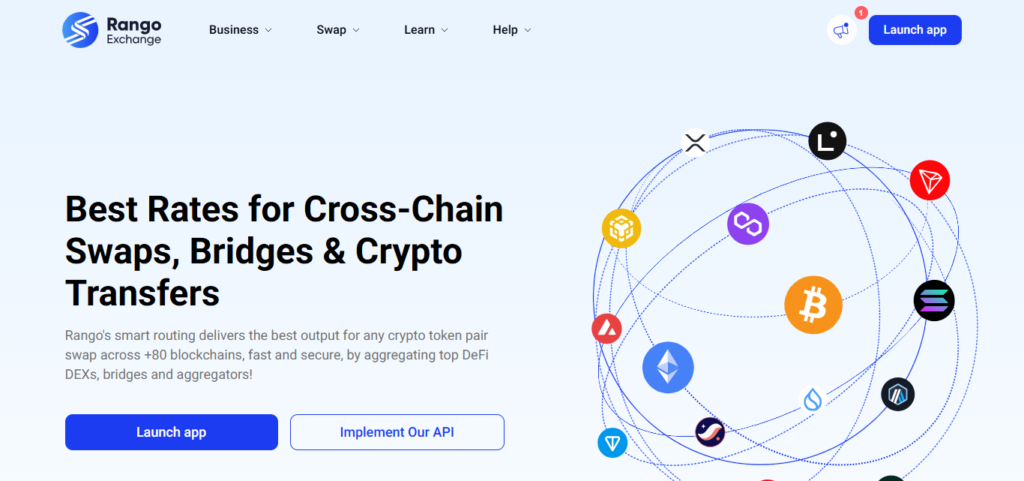
Rango’s routing system checks the available paths to find the best transaction for you based on cost, speed and execution requirements. Rango is also focused on simplifying fragmented cross-chain liquidity like Rubic and is a strong alternative for users who want broad network connectivity.
Rango Exchange
| Feature | Explanation |
|---|---|
| Multi-Chain Aggregation | Aggregates swap routes and bridging services across supported blockchain ecosystems. |
| Route Comparison | Helps users compare available routes based on estimated output, fees, and execution requirements. |
| Diverse Blockchain Connectivity | Supports interoperability across multiple blockchain environments, including EVM and non-EVM ecosystems. |
| Developer Tools | Offers integration options that help applications incorporate cross-chain swaps and routing functionality. |
3. THORChain
THORChain is a decentralized liquidity protocol that enables users to swap native cryptocurrencies across supported blockchains without the need for wrapped assets. For example, users can trade native Bitcoin for native Ethereum on the protocol’s liquidity pools. THORChain’s native token, RUNE, is the settlement asset bridging the supported pools.
Threshold-signature cryptography and economic security mechanisms are employed to manage vaults and process transactions by a decentralized network of node operators. THORChain is especially handy for traders wanting to move between native Layer 1 assets without needing to use a centralized exchange. THORChain is not an aggregator like Rubic, it is running its own liquidity and swap infrastructure.
THORChain
| Feature | Explanation |
|---|---|
| Native Asset Swaps | Enables swaps between supported native cryptocurrencies without requiring wrapped-token representations. |
| Liquidity Pools | Uses liquidity pools connected through RUNE to facilitate swaps between supported assets. |
| Decentralized Vaults | Uses network-operated vaults and threshold signatures to manage cross-chain asset transfers. |
| Non-Custodial Architecture | Allows users to swap native assets without depositing them into a conventional centralized exchange. |
4. Symbiosis Finance
Symbiosis Finance is a cross-chain liquidity and exchange protocol that enables users to exchange tokens across supported blockchain networks from a single interface. It leverages on-chain contracts, liquidity pools, and cross-chain communication infrastructure to coordinate transactions across different ecosystems.
Depending on the route, assets can be routed through transit tokens and liquidity pools before being swapped into the requested destination asset. Symbiosis also provides developer APIs to integrate cross-chain swaps, bridging and other related DeFi functionality into other applications.
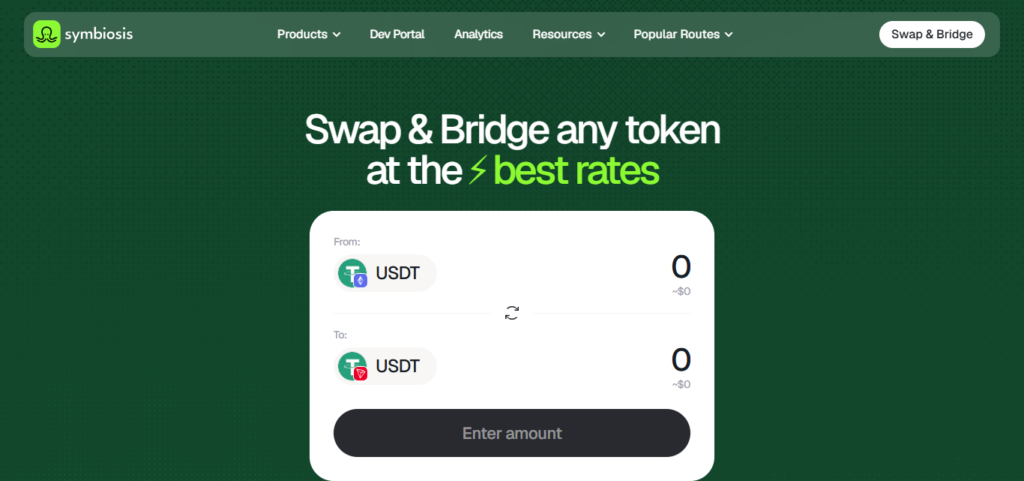
It’s focus on enabling cross-chain trades puts it in the same category as Rubic, especially for those who would like to swap assets between chains without having to juggle several transactions on their own.
Symbiosis Finance
| Feature | Explanation |
|---|---|
| Cross-Chain Swaps | Enables users to exchange supported tokens between different blockchain networks. |
| Multi-Route Optimization | Evaluates available transit-token routes and selects an efficient path based on expected output. |
| Cross-Chain Bridging | Transfers supported assets between networks using the protocol’s available bridging mechanisms. |
| Interchain Messaging | Supports cross-chain communication and operations that can interact with destination-chain applications. |
5. deBridge
deBridge is a cross-chain interoperability protocol that enables to transfer assets, swap tokens and send messages between the blockchain networks supported by it. Its DLN (deBridge Liquidity Network) enables users to request cross-chain trades via a solver-based execution model that matches orders with liquidity on the destination chain.

This approach is intended to make transfers easier without using the usual lock-and-mint process for each transaction. deBridge also offers cross-chain messaging and programmable calls, which allow decentralized applications to trigger on another blockchain.
Whereas Rubic aggregates routes from different providers, deBridge also provides its own execution infrastructure, making it a relevant option for users and developers interested in cross-chain swaps and application interoperability.
deBridge
| Feature | Explanation |
|---|---|
| Intent-Based Swaps | Lets users specify desired cross-chain outcomes for execution through the DLN solver-based system. |
| Cross-Chain Transfers | Supports transfers of assets between supported networks using its interoperability infrastructure. |
| Solver-Based Execution | Uses liquidity providers and solvers to fulfill eligible cross-chain orders on destination chains. |
| Cross-Chain Messaging | Enables applications to exchange messages and coordinate supported operations across blockchain networks. |
6. Stargate Finance
Stargate Finance is a cross-chain liquidity transfer protocol, which transfers supported assets across blockchain networks through unified liquidity pools and cross-chain messaging. Its architecture aims to reduce liquidity fragmentation by allowing supported transfers to pull from shared pools rather than dedicated pools for each route.
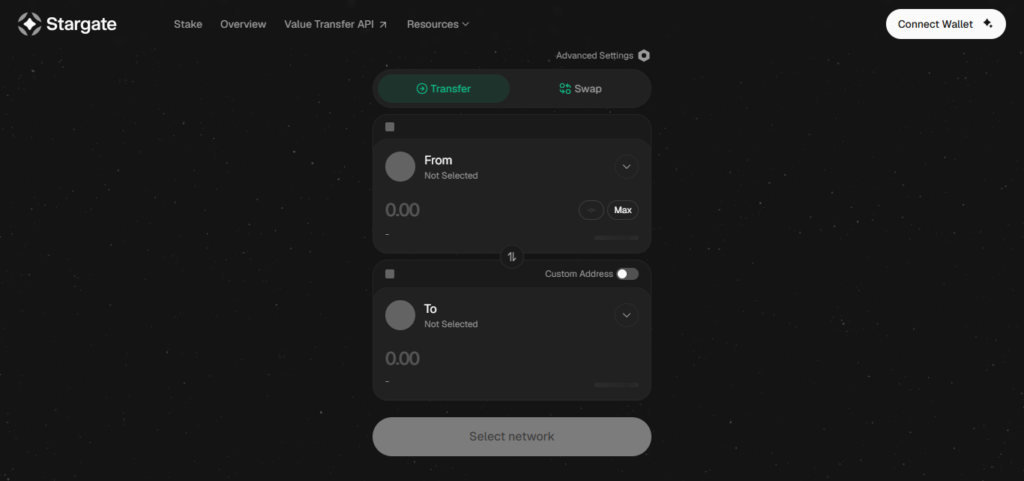
Stargate also has guaranties on destination execution in the protocol design, but actual delivery time can depend on the transfer method decided and underlying messaging system. This is especially useful for users moving supported stablecoins and other assets between compatible networks. Stargate is not a multi-provider aggregator like Rubic, instead concentrating on its own bridging and liquidity infrastructure.
Stargate Finance
| Feature | Explanation |
|---|---|
| Unified Liquidity | Uses shared liquidity pools to facilitate supported transfers between connected blockchain networks. |
| Cross-Chain Transfers | Enables users to transfer supported tokens between integrated networks through its bridging infrastructure. |
| Instant Guaranteed Finality Design | Designed to provide predictable destination delivery for supported transfers, subject to protocol conditions. |
| Developer Integration | Provides tools and interfaces for applications that need cross-chain transfers and messaging. |
7. Across Protocol
Across Protocol is a cross-chain bridge that allows for the efficient transfer of supported assets, especially between Ethereum and Layer 2s. Its system is based on relayers that are able to deliver the requested destination-chain funds shortly after a user deposits assets on the source chain. Relayers are reimbursed after the protocol verifies the transfer through its settlement and optimistic oracle.
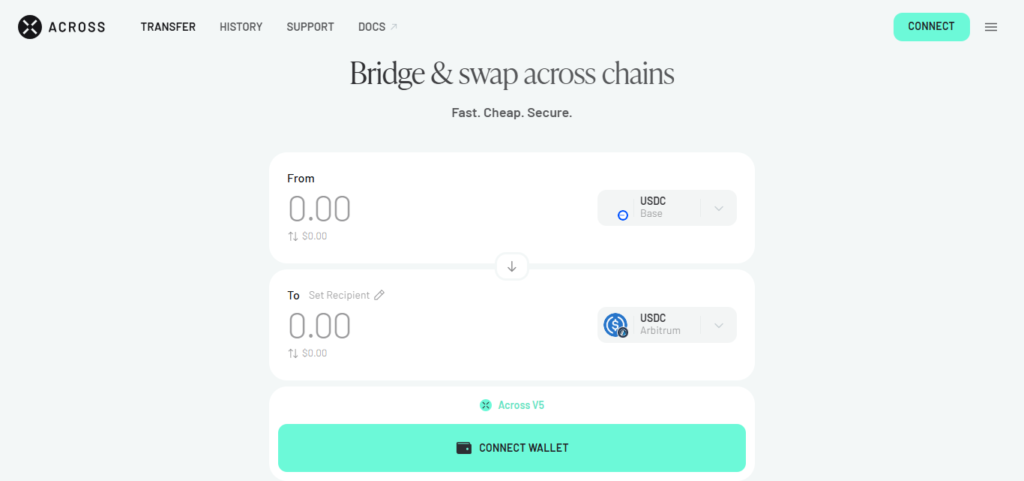
The model can reduce waiting time of traditional bridge transfers, but the real speed and costs will depend on the route and network conditions. Across can be a good choice for users looking to move funds quickly between supported chains. It’s not as focused on its bridge and relayer-based execution model as Rubic is.
Across Protocol
| Feature | Explanation |
|---|---|
| Relayer-Based Transfers | Relayers provide destination-chain funds before later reimbursement through the protocol’s settlement mechanism. |
| Optimistic Verification | Uses optimistic-oracle mechanisms to verify transfer-related information during settlement. |
| Layer 2 Connectivity | Focuses on efficient transfers between Ethereum and supported Layer 2 networks. |
| Capital Efficiency | Coordinates relayers and settlement processes to reduce the need for traditional liquidity lockup periods. |
8. Wormhole Portal
Wormhole is a messaging and token-transfer infrastructure that links blockchain ecosystems through a cross-chain interoperability protocol. Historically, its Portal interface has offered a user-facing way to move assets between supported networks, while Wormhole’s broader technology also allows developers to build applications that communicate across chains.
Its token-transfer products are Wrapped Token Transfers (lock-and-mint mechanisms) and Native Token Transfers (supported tokens are allowed to move between chains under their respective integration models).
Wormhole is especially useful for applications that tie ecosystems such as Solana and EVM-compatible networks. Wormhole is mainly about cross-chain messaging and transfer infrastructure, while Rubic is about aggregating swap routes.
Wormhole Portal
| Feature | Explanation |
|---|---|
| Cross-Chain Messaging | Enables applications on supported blockchains to communicate through Wormhole’s messaging infrastructure. |
| Token Transfers | Supports cross-chain token transfers through integrations such as Wrapped and Native Token Transfers. |
| EVM and Non-EVM Connectivity | Connects supported ecosystems, including EVM networks and Solana-based applications. |
| Developer Infrastructure | Provides messaging and interoperability tools for building cross-chain decentralized applications. |
9. Synapse Protocol
Synapse Protocol offers cross-chain bridging and swapping infrastructure for both supported EVM and non-EVM blockchain networks. Its bridge routes can use different mechanisms depending on the assets and networks involved, including canonical bridging, liquidity pools and supported native stablecoin transfer integrations.
The protocol’s router picks the right bridge function for a given transaction, allowing asset transfers for users without needing to manually coordinate every step of the process. Synapse also offers developer tools and an SDK to add cross-chain functionality to decentralized applications.
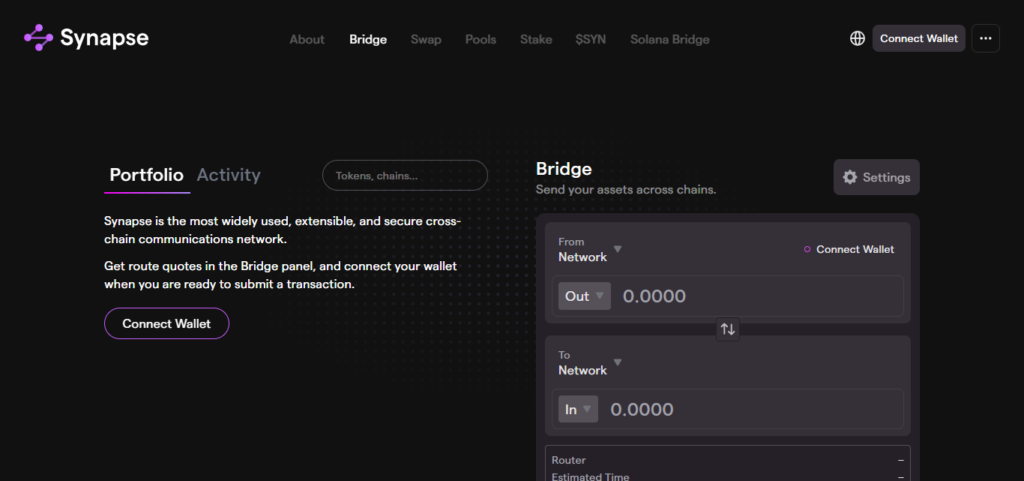
It can compete with Rubic for users who want to transfer assets across chains but Synapse’s main emphasis is its own bridging and liquidity infrastructure, not the broad aggregation of unrelated providers.
Synapse Protocol
| Feature | Explanation |
|---|---|
| Cross-Chain Bridging | Enables supported assets to move between compatible blockchain networks. |
| Cross-Chain Swaps | Supports eligible token exchanges involving bridging and liquidity-based routing mechanisms. |
| Liquidity Infrastructure | Uses supported liquidity pools and bridging integrations to facilitate asset transfers. |
| Developer Tools | Offers integration resources for applications implementing cross-chain transfers and related functionality. |
10. Chainflip
Chainflip is a decentralized cross-chain exchange protocol that aims to allow swaps between supported native assets across different blockchain networks. Its infrastructure uses a dedicated State Chain, distributed validators and a Just-In-Time automated market maker to orchestrate deposits, swaps and destination payouts.
Users input the source asset, destination asset, and receiving address to initiate a swap. After the deposit is properly registered, the protocol processes the trade and sends the destination asset.
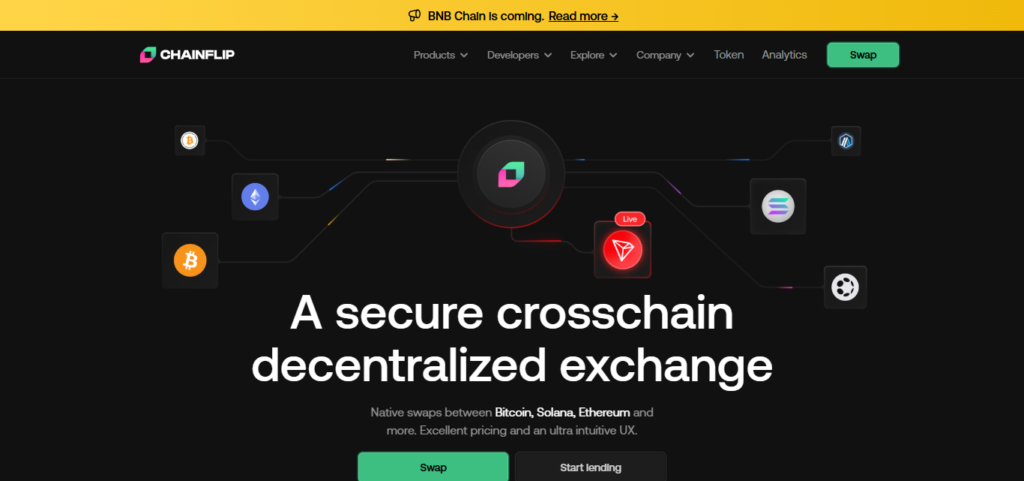
Chainflip is particularly relevant for users who want to swap native cryptocurrencies without having to manually deal with wrapped tokens. Chainflip does not rely on Rubic’s aggregation model, but has its own exchange infrastructure and liquidity system.
Chainflip
| Feature | Explanation |
|---|---|
| Native Asset Swaps | Enables exchanges between supported native cryptocurrencies across connected blockchain networks. |
| Just-In-Time AMM | Uses an automated market-making design to facilitate swaps and manage available liquidity. |
| Validator Network | Uses distributed validators and a dedicated State Chain to coordinate cross-chain operations. |
| Destination Payouts | Processes eligible swaps by sending the requested destination asset to the specified address. |
Conclusion
Selecting the appropriate Rubic competitor for cross-chain swaps is contingent on your trading requirements, preferred blockchains, transaction fees, and security needs. Some useful alternatives to move digital files across networks are platforms like LI.FI, Socket, Squid and Rango Exchange.
Compare their features, supported tokens, liquidity, and user experience to find the best solution for seamless, efficient and reliable cross-chain cryptocurrency swaps.
FAQ
Popular alternatives include LI.FI, Socket, Squid, and Rango Exchange.
Socket connects blockchain networks, enabling seamless asset transfers across multiple chains.
Rango aggregates bridges and exchanges to facilitate cross-chain cryptocurrency swaps.
Fees vary by network, liquidity, bridge selection, and transaction complexity.
Most leading alternatives support several blockchain networks and token standards.