


In this article I will talk about the Best deBridge Rivals for High Speed Swaps that help users transfer cryptocurrencies across various blockchain networks efficiently.
We’ll cover popular alternatives like Across Protocol, Relay, Orbiter Finance, Stargate Finance and other top platforms. You will find out their main features, supported chains, transaction speeds, fees, and technologies to choose the right cross-chain swapping solution for your needs.
Key Points & Best deBridge Rivals for High-Speed Swaps
| Platform | Explanation |
|---|---|
| Across Protocol | Offers fast cross-chain transfers with competitive fees and efficient liquidity-based bridging mechanisms. |
| Relay | Enables quick cross-chain swaps with streamlined transactions across supported blockchain networks. |
| Orbiter Finance | Specializes in rapid, low-cost asset transfers between compatible Ethereum Layer 2 networks. |
| Stargate Finance | Provides cross-chain transfers with unified liquidity pools and predictable transaction experiences. |
| Wormhole Portal Bridge | Connects multiple blockchain ecosystems, enabling token transfers across diverse supported networks. |
| Symbiosis Finance | Aggregates cross-chain liquidity to simplify token swaps across numerous blockchain ecosystems. |
| THORChain | Enables native asset swaps across blockchains without relying on wrapped token representations. |
| LI.FI | Aggregates bridges and decentralized exchanges to find efficient cross-chain swap routes. |
| Rango Exchange | Combines multiple bridges and exchanges to facilitate convenient cross-chain cryptocurrency swaps. |
| Bungee Exchange | Compares cross-chain routes to help users find efficient transfers and competitive fees. |
10 Best deBridge Rivals for High-Speed Swaps
1. Across Protocol
Across Protocol is an attractive alternative for users who care about fast cross-chain transfers and capital-efficient liquidity. Has its own growing ecosystem that supports Ethereum and a host of Layer 2 networks including Arbitrum, Optimism, Base, Polygon, zkSync and more.
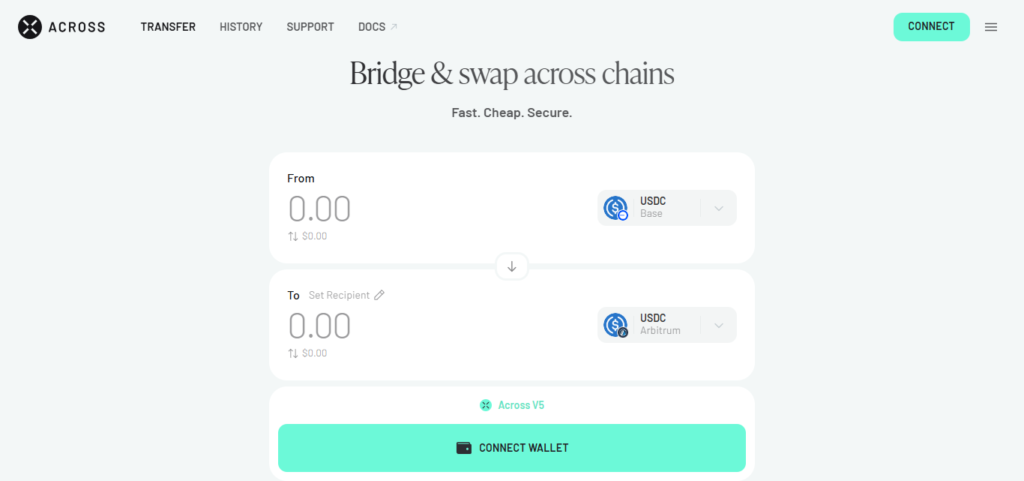
Its intent-based architecture allows relayers to push assets to the destination chain before the protocol has even finished reimbursing itself, allowing many transfers to complete in seconds. Costs can include relayer, liquidity provider and network gas fees, and will vary depending on the route, token and size of transaction. The competitive advantage is efficient liquidity utilization. However, users should compare live quotes before transferring funds.
Across Protocol — Features
| Feature | Explanation |
|---|---|
| Fast Transfers | Enables rapid cross-chain transfers through intent-based bridging. |
| Supported Networks | Connects Ethereum with multiple Layer 2 networks and other supported chains. |
| Capital Efficiency | Uses relayers and liquidity providers to facilitate efficient asset delivery. |
| Competitive Fees | Offers route-dependent pricing with applicable gas and relayer fees. |
2. Relay
Relay is designed for fast cross-chain transfers and swaps, which helps users who want to move assets without having to deal with complex bridge procedures. It supports networks and tokens based on the routes available with its interface and integrations, so users should check for their specific source and destination chains.
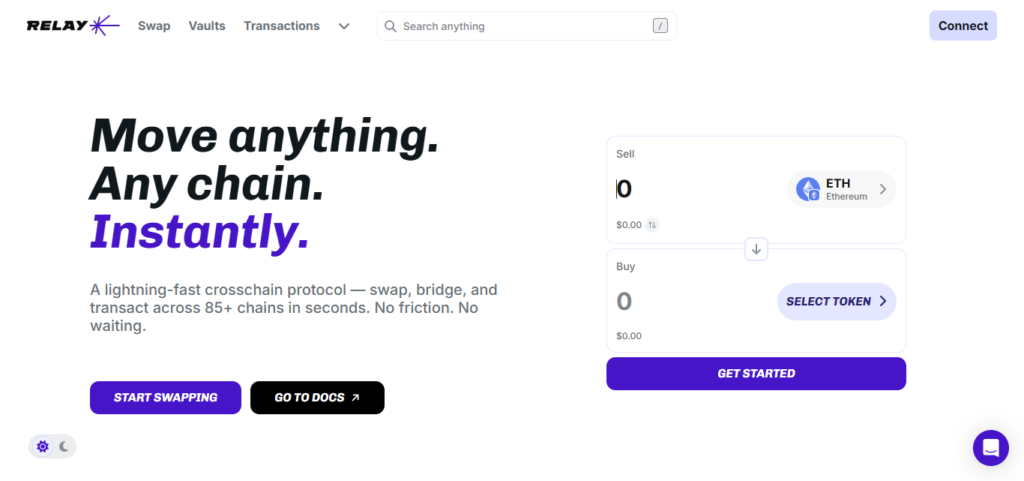
Relay wants to make executing transactions simple. Liquidity providers and routing infrastructure help assets move efficiently across networks.
The actual time to complete depends on the chosen path, the need for confirmation on the network and the availability of liquidity. Costs can include source-chain gas, destination execution costs and route-specific fees or price differences. Don’t judge a route on speed alone, compare the final amount received.
Relay — Features
| Feature | Explanation |
|---|---|
| Quick Swaps | Simplifies cross-chain transfers through streamlined transaction execution. |
| Chain Connectivity | Supports multiple blockchain networks, depending on available routes. |
| Efficient Routing | Connects users with suitable transfer and swap execution paths. |
| Transparent Pricing | Displays route-specific costs and estimated output before confirmation. |
3. Orbiter Finance
Orbiter Finance is a cross-rollup transfer platform that aims to help users transfer assets between Ethereum scaling networks. Supported ecosystems: Ethereum, Arbitrum, Optimism, Base, zkSync Era, Linea, Scroll, Polygon, Mantle and other listed networks (availability depends on the asset and route).
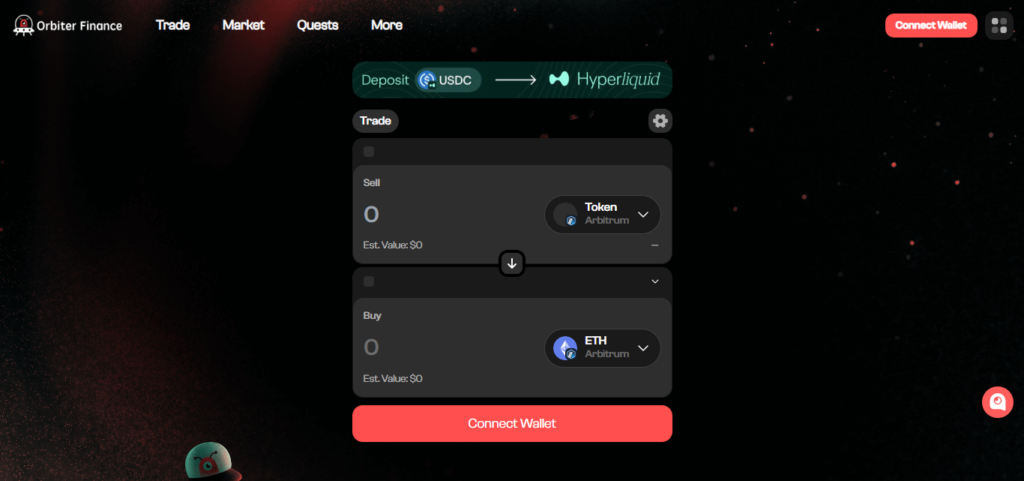
Its cross-rollup transfer design aims to provide simple, fast transactions without users having to go through multiple separate bridge interfaces. Transfer time and cost depend on network conditions, transaction processing and the route you select. Orbiter is a good choice for users who require quick Layer 2 transfers but it requires the asset and the destination network to succeed.
Orbiter Finance — Features
| Feature | Explanation |
|---|---|
| Layer 2 Transfers | Specializes in transfers between supported Ethereum scaling networks. |
| Fast Execution | Designed for efficient cross-rollup asset transfers. |
| Low-Cost Transactions | Can reduce transfer expenses on supported routes. |
| Simple Interface | Offers a straightforward experience for moving compatible assets. |
4. Stargate Finance
Stargate Finance is a cross-chain liquidity protocol, which allows users to send supported assets across different blockchain networks. Its ecosystem has included Ethereum, Arbitrum, Optimism, Base, BNB Chain, Avalanche and other supported networks, although you should check current route availability before swapping. Stargate’s unified liquidity model aims to make assets available across connected chains, eliminating the need to rely on fragmented pools for each and every destination.
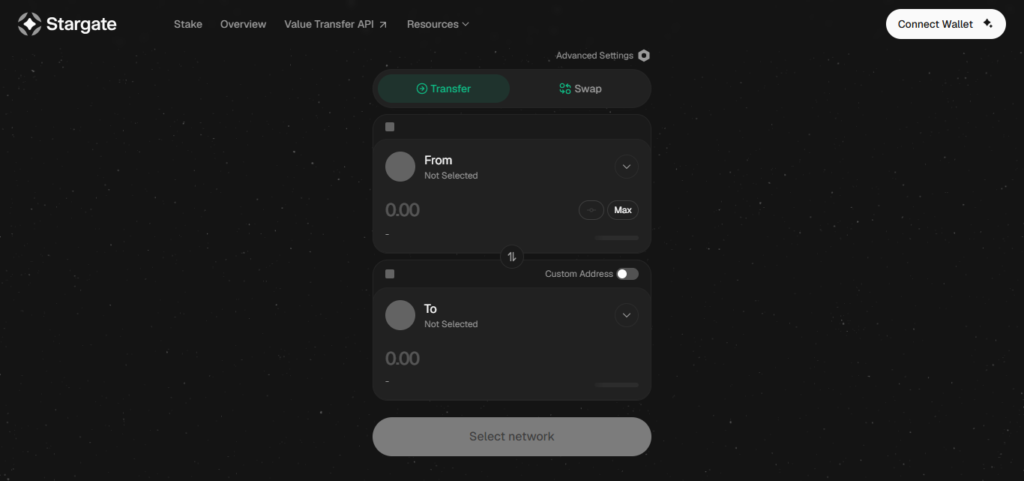
The transfer speed depends on the route chosen, transaction confirmations, and network conditions. The costs can include the fees to bridge, gas on the destination chain and liquidity fees. Stargate is another good one to compare with deBridge when predictable liquidity access and transfers between supported networks are more of a priority than just going for the lowest advertized fee.
Stargate Finance — Features
| Feature | Explanation |
|---|---|
| Unified Liquidity | Uses shared liquidity infrastructure across supported blockchain networks. |
| Cross-Chain Transfers | Facilitates transfers of supported assets between connected chains. |
| Native Asset Support | Supports specified assets through its available liquidity pools. |
| Fee Transparency | Provides route-specific transfer costs and applicable transaction fees. |
5. Wormhole Portal Bridge
The Wormhole Portal Bridge is the bridge that connects blockchain ecosystems with the Wormhole cross-chain messaging infrastructure. It is relevant for users transferring supported assets between different networks. Its ecosystem includes major chains like Ethereum and Solana, as well as other integrated networks; specific token and route support will depend on the Portal’s current availability.
Wormhole’s messaging architecture allows information and transfer instructions to flow across chains. The underlying token-transfer mechanism defines how assets are delivered. Speed depends on source-chain finality, verification, destination execution, and network congestion.
Users pay the gas on the source chain, the gas on the destination chain and any transfer or liquidity fee. Verify whether the route comprises native assets or wrapped representations before selecting Portal for a particular swap.
Wormhole Portal Bridge — Features
| Feature | Explanation |
|---|---|
| Multichain Connectivity | Connects numerous blockchain ecosystems through Wormhole infrastructure. |
| Cross-Chain Messaging | Uses messaging technology to communicate information between blockchains. |
| Token Transfers | Enables transfers of supported assets across connected networks. |
| Flexible Ecosystem | Supports interoperability between different blockchain architectures. |
6. Symbiosis Finance
Symbiosis Finance offers cross-chain swaps and enables liquidity and routes on many blockchain networks. Its supported ecosystem has included EVM-compatible chains and selected non-EVM networks with specific availability depending on the token pair and integrated providers.
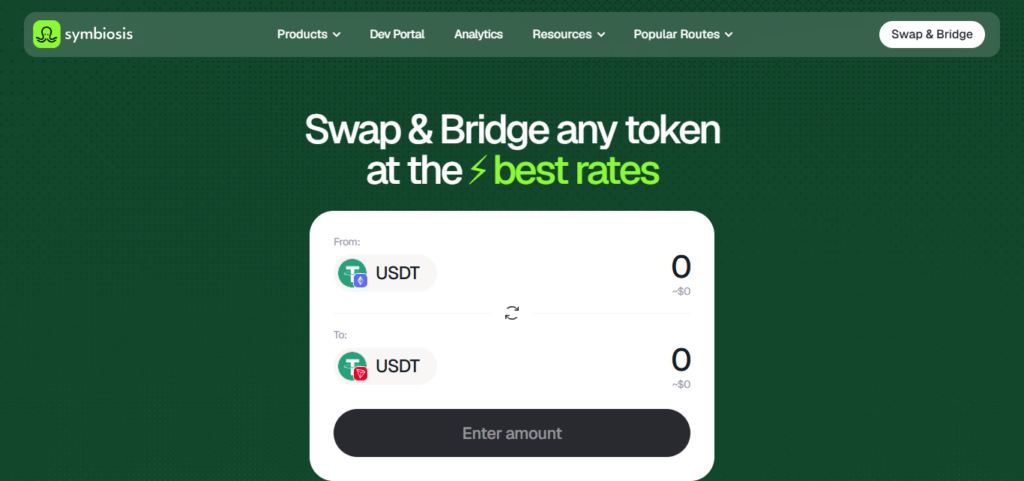
Symbiosis can perform a cross-chain conversion combining bridging and swapping steps instead of using one transfer method for each transaction. This flexibility may be good for users to find convenient routes, but multi-step transactions may have different completion times and execution risks .
Total costs can include network gas, provider or bridge fees and swap price impact With deBridge, always check the final quoted output, the route details and the estimated time of completion before confirming a transfer.
Symbiosis Finance — Features
| Feature | Explanation |
|---|---|
| Cross-Chain Swaps | Enables token exchanges between supported blockchain networks. |
| Liquidity Aggregation | Connects liquidity sources to facilitate cross-chain transactions. |
| Route Optimization | Helps identify suitable paths for token swaps. |
| Convenient Interface | Simplifies multichain exchanges through a unified swapping experience. |
7. THORChain
THORChain is especially helpful for those who want to exchange native cryptocurrencies between supported blockchains without wrapping them. We support a variety of networks including Bitcoin, Ethereum, BNB Smart Chain, Solana, Litecoin, Dogecoin, Avalanche, Bitcoin Cash, Cosmos, XRP Ledger, TRON, Base and more, depending on network and asset availability at the time.
THORChain allows cross-chain swaps through liquidity pools and RUNE-based settlement. Speed of transaction is determined by confirmations in and out, network conditions and processing at the protocol level.
Fees can include source-chain gas, destination-chain transaction costs and liquidity fees which vary depending on trade size and pool depth. This is especially true in the case of native-asset swaps, but not for all possible token-to-token paths.
THORChain — Features
| Feature | Explanation |
|---|---|
| Native Asset Swaps | Enables swaps between supported native blockchain assets. |
| Liquidity Pools | Uses protocol-managed pools to facilitate cross-chain exchanges. |
| RUNE Settlement | Uses RUNE within its cross-chain liquidity and settlement architecture. |
| Decentralized Infrastructure | Facilitates swaps without requiring a centralized exchange intermediary. |
8. LI.FI
LI.FI is a cross-chain aggregation and routing infrastructure that connects decentralized exchanges, bridges and liquidity sources via a single interface. Ethereum, Arbitrum, Optimism, Base, Polygon, Avalanche, Solana and other integrated networks depending on route availability at the time.
LI.FI is not a bridge but rather evaluates the available routes to assist users in discovering the optimal swaps and transfers. Transaction speed depends on the providers you choose, blockchain confirmations and the complexity of the route.
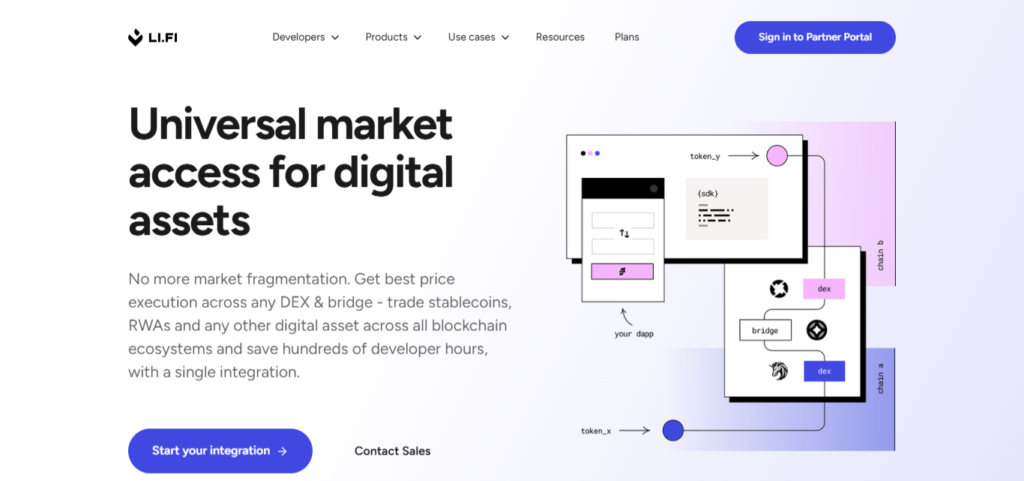
Costs can include bridge fees, exchange fees, gas and price impact. LI.FI is good for comparing execution options but users should check the full quote and destination amount before selecting a route.
LI.FI — Features
| Feature | Explanation |
|---|---|
| Bridge Aggregation | Connects multiple bridging protocols through a unified interface. |
| DEX Aggregation | Integrates decentralized exchanges for cross-chain swap execution. |
| Smart Routing | Evaluates available routes to identify suitable transaction paths. |
| Cost Comparison | Helps users compare estimated outputs, fees, and execution options. |
9. Rango Exchange
Rango Exchange is a cross-chain swap aggregator that connects various blockchains, decentralized exchanges and bridging protocols. Supported Ecosystem: EVM networks, Solana, chains based on Cosmos, some UTXO networks. Individual routes depend on available integrations. Rango’s routing technology can find possible routes to convert assets across chains, sometimes combining multiple swaps and bridge transfers in a single transaction flow.
The speed of execution depends on the providers you choose, the congestion of the network and the number of steps. Costs can be network gas, bridge fees, swap fees and price impact. Rango is a good deBridge alternative for users who care about broad interoperability and route discovery, as long as they compare the estimated output and transaction requirements.
Rango Exchange — Features
| Feature | Explanation |
|---|---|
| Broad Interoperability | Connects supported EVM and non-EVM blockchain ecosystems. |
| Route Aggregation | Combines available bridges and exchanges for cross-chain swaps. |
| Multi-Step Swaps | Supports routes involving multiple exchanges or bridging operations. |
| Token Accessibility | Helps users exchange supported assets across different networks. |
10. Bungee Exchange
Bungee Exchange aggregates bridging and swapping routes from integrated providers to enable users to transfer assets across supported blockchain networks. Network coverage and available token pairs are subject to available integrations and liquidity.
Users are advised to double check source and destination for the transfer. Bungee’s routing algorithm can compare different transfer options, so users can view estimated execution times and costs without having to manually go through each bridge.
Actual speed will depend on the underlying provider, transaction confirmations and network conditions. Total expense may include gas fees, bridge fees, swap fees, and price impact Bungee is worth looking at for route comparison and convenient cross-chain execution, but the cheapest quoted route isn’t necessarily the fastest or most suitable.
Bungee Exchange — Features
| Feature | Explanation |
|---|---|
| Bridge Aggregation | Combines supported bridging providers for cross-chain transfers. |
| Route Comparison | Helps users evaluate available transfer routes. |
| Efficient Execution | Simplifies transfers through integrated routing infrastructure. |
| Cost Estimation | Displays estimated transaction costs and received amounts for supported routes. |
Conclusion
To put it simply, the Best deBridge Rivals for High-Speed Swaps have varied advantages for cross-chain cryptocurrency transfers. Some platforms with fast routing, competitive fees and wide blockchain connectivity include Across Protocol, Relay, Orbiter Finance
Stargate Finance and LI.FI. Before selecting an alternative, check supported networks, transaction speed, liquidity, security and total costs to decide the most suitable solution for your swapping needs.
FAQ
Speed varies by network congestion, liquidity, and selected transaction route.
Orbiter Finance and Across Protocol can offer competitive route-dependent fees.
LI.FI, Rango Exchange, and Wormhole connect numerous blockchain ecosystems.
Yes, THORChain enables native asset swaps across supported blockchain networks.