

This article will examine the best Off-Grid Solar-Powered Water Pumping Systems for Remote Agriculture. It will also demonstrate the importance of reliable water systems for farmers as an alternative to costly and unreliable grid electricity.
Agricultural Surface Pumps, Submersible Pumps, Smart Pumps, Hybrid Pumps, and other systems of irrigation will be analyzed for benefit farm efficiency and cost as well as the sustainability of systems for remote rural areas.
Key Poinst & Best Off-Grid Solar-Powered Water Pumping Systems for Remote Agriculture
| Off-Grid Solar Water Pumping System | Explanation |
|---|---|
| Solar Surface Pump Systems | Ideal for rivers, ponds, and shallow irrigation water sources. |
| Solar Submersible Pump Systems | Efficiently pumps groundwater from deep wells using solar energy. |
| DC Solar Water Pumps | Direct solar operation reduces energy losses and maintenance costs. |
| AC Solar Water Pumps | Suitable for larger farms requiring higher water flow rates. |
| Hybrid Solar Pump Systems | Combines solar and grid power for uninterrupted water supply. |
| Battery-Based Solar Pumps | Stores excess solar energy for nighttime irrigation operations. |
| Batteryless Solar Pumps | Operates directly from sunlight, reducing system installation costs. |
| Drip Irrigation Solar Pumps | Provides precise water delivery, minimizing agricultural water wastage. |
| Floating Solar Pump Systems | Utilizes water surfaces, saving valuable agricultural land space. |
| Smart Solar Pump Systems | Remote monitoring improves efficiency, performance, and maintenance scheduling. |
10 Best Off-Grid Solar-Powered Water Pumping Systems for Remote Agriculture
1. Solar Surface Pump Systems
Solar surface pump systems are a near-perfect choice for farms located next to rivers, lakes, ponds, and other shallow water reservoirs.
These surface pumps draw water using a fuel and grid-electricity-free pumping and distribution system. Several of the latest models have solar panels and smart controllers that optimize pumping to the flow of available sunlight.
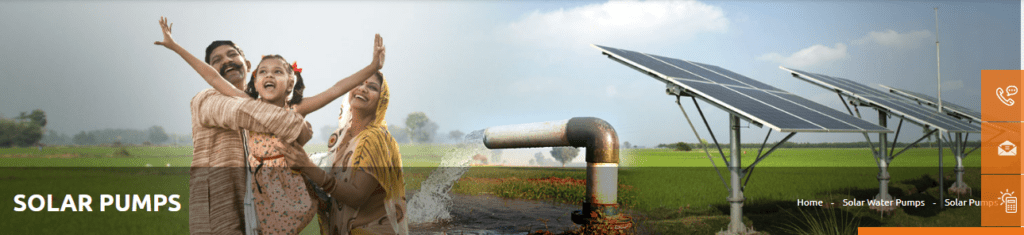
With surface pumps, rural farms can greatly and cost-effectively improve crop irrigation while increasing the farm’s sustainability, and reducing operating costs, and the farm’s traditional energy dependency.
Key Features Solar Surface Pump Systems
- Made for water sources with shallow water (e.g. rivers, lakes, and ponds).
- Easy to install and maintain.
- Operates using high-efficiency solar energy.
- Intelligent water flow controllers are offered.
- Ideal for small to medium-scale farms.
Pros & Cons Solar Surface Pump Systems
Pros
- Surface water irrigation systems are more affordable than deep-well systems.
- Operation is fuel-free and better for the environment.
- More maintenance-free.
- Reliable systems.
Cons
- Cannot access water from deep wells.
- Performance is reliant on available surface water.
- Less effective during long, cloudy weather.
2. Solar Submersible Pump Systems
Solar submersible pump systems are the perfect choice for remote farms that do not have easy access to surface water, but do have access to water via deep wells and other underground water sources.
These pumps are installed below the water level, and using a submersible design, push water to the surface while minimizing energy loss.
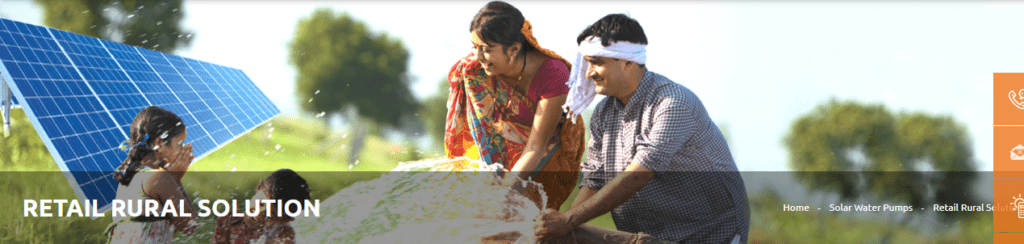
With the recent technology improvements, farmers can reliably access ground water even at greater depths while the sealed construction of the pumps protects the motors and other internal components from dust and moisture, which greatly reduces maintenance.
With water scarcity growing more of a concern with each passing year, solar submersible pumps offer a sustainable and reliable solution for irrigation.
Key Features Solar Submersible Pump Systems
- Operates under water and in wells and boreholes.
- Made to access deep groundwater.
- Sealed motors and high efficiency with low energy loss.
- Made for remote areas.
Pros & Cons Solar Submersible Pump Systems
Pros
- Designed for deep water access.
- Protected from weather and other physical damage.
- Silent.
- Long life with little maintenance.
Cons
- More expensive to install.
- More complex if maintenance is required.
- Typically requires a professional to install.
3. DC Solar Water Pumps
DC Solar Water Pumps can run straight from the solar panels, eliminating the excess energy loss and costly power conversion equipment needed for standard alternating current pumps, thus making the whole system more efficient.
Also, due to the minimal number of electrical components, DC pumps are lower maintenance and more reliable in the rural setting.
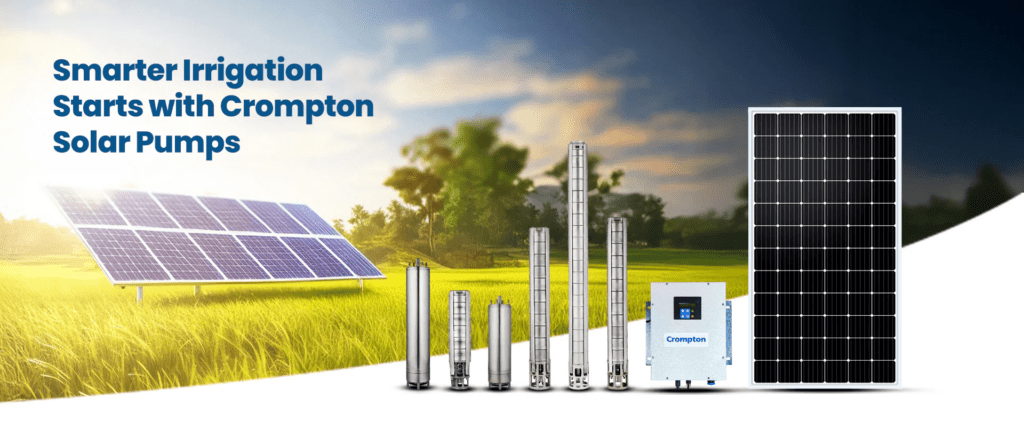
It is also important to note that the development of the brushless DC motors shows improved performance and longer durability of the pumps.
For these reasons, and the low costs of operations and ease of installation, many farmers opt to implement DC solar pumps to create a low-cost and efficient irrigation system.
Key Features DC Solar Water Pumps
- Direct use of solar energy with no inverter.
- Brushless DC motors.
- High energy efficiency.
- Compact and lightweight.
Pros & Cons DC Solar Water Pumps
Pros
- Low energy loss.
- Less maintenance.
- Inexpensive.
- Very efficient in sunny areas.
Cons
- Less powerful for large irrigation.
- Irrigation performance is tied to sunlight availability.
- Fewer high-capacity options.
4. AC Solar Water Pumps
Large-scale agricultural enterprises and operations that need a large output of water can implement AC Solar Water Pumps.
In this case, the use of a solar-powered inverter that converts the panels’ direct current to alternating current allows for the use of more powerful AC motors.
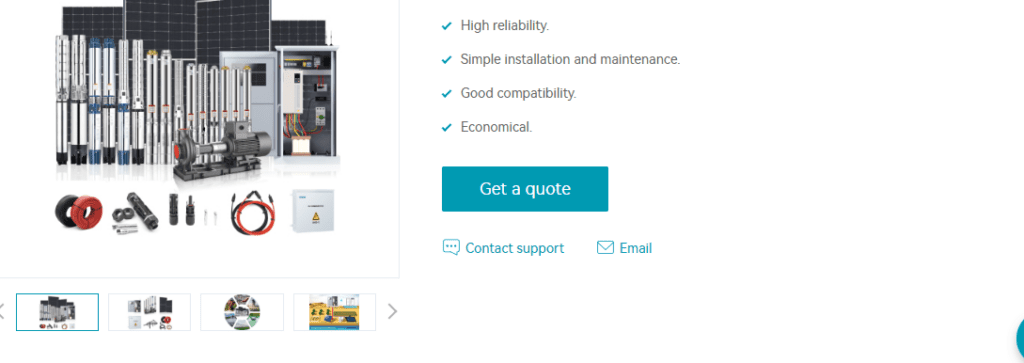
The newer models of AC pumps are also equipped with a variable-frequency drive that helps the motors run more efficiently by adjusting the speed to the amount of solar energy available.
This technology allows farmers to optimize the amount of water that is moved and, therefore, helps in the implementation of more efficient and sustainable methods of agriculture.
Key Features AC Solar Water Pumps
- Solar inverter technology.
- Integrates with strong AC motors.
- Ideal for large irrigation systems.
- Works with VFDs.
- Applicable to large commercial farms.
Pros & Cons DC Solar Water Pumps
Pros
- More water with more capability.
- Supports large-scale operations.
- Compatible with AC technology.
- Ideal for extensive farming.
Cons
- More expensive than DC systems.
- More maintenance for inverters.
- Energy loss in power conversion.
5. Hybrid Solar Pump Systems
Hybrid solar pump systems use both solar energy and other energy sources such as grid electricity or standby generators. Such systems ensure water is pumped year-round.
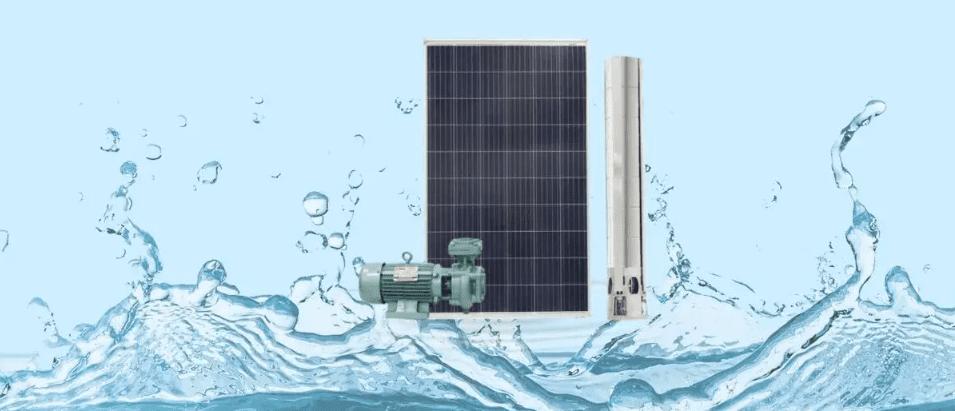
The use of advanced hybrid controllers allows for seamless switching between the energy sources. Hybrid solar pump systems are favored for commercial use, especially in remote farming, since they are more reliable and flexible.
Key Features Hybrid Solar Pump Systems
- Solar with grid or generator backup.
- Automatic changeover.
- Continuous water supply.
- Innovative power management controls.
- Designed for varying weather challenges.
Pros & Cons Hybrid Solar Pump Systems
Pros
- Reliable all year.
- Less irrigation downtime.
- More options for the farmer.
- Great for commercial farming.
Cons
- High initial cost.
- More complicated to install.
- More maintenance for backup systems.
6. Battery-Based Solar Pumps
Solar pump systems that use batteries store surplus solar energy for later use. Stored energy allows for irrigation at night when evaporation is less.
The use of lithium batteries and the addition of battery powered systems allow for use of these systems at anytime.
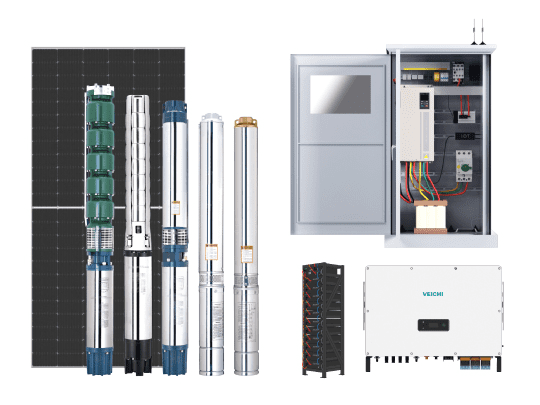
These systems are also more reliable than other solar systems since batteries allow energy needs to be met even when sunlight is limited. ‘
Battery-powered solar pumps also allow for the use of a renewable energy source while decreasing reliance on fuels.
Key Features Battery-Based Solar Pumps
- Built in battery storage for excess solar.
- Nighttime irrigation.
- Advanced lithium technology.
- Energy backup on cloudy days.
- Water is always available.
Pros & Cons Hybrid Solar Pump Systems
Pros
- Irrigation after the sun goes down.
- More options for irrigation.
- Reliable with less sun.
- More choice and less dependence on other energy.
Cons
- Higher cost.
- Batteries eventually need to be replaced.
- More maintenance with storage systems.
7. Batteryless Solar Pumps
Batteryless solar pumps provide direct sunlight-to-pump functionality via solar panel implementation, removing the need for expensive battery energy storage.
This design permits less enterprise and maintenance investment while simultaneously providing a more reliable system.
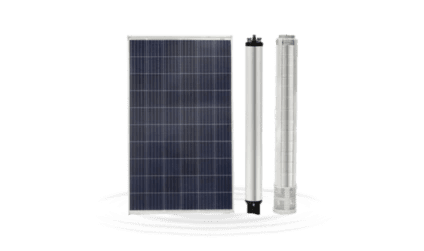
Batteryless pumps use maximum power point tracking (MPPT) technology to optimize energy harvesting, even with variable sun.
This technology is an excellent alternative for small to medium farms to reduce irrigation costs and their water management system, as it eliminates the need for battery replacement and expensive maintenance.
Key features Batteryless Solar Pumps
- Powered by the sun directly.
- No battery storage.
- MPPT technology maximizes efficiency.
- Design is more streamlined.
- Low installation cost.
Pros & Cons Batteryless Solar Pumps
Pros
- Cost savings.
- Almost no maintenance.
- Increased system longevity.
- No need for battery replacement.
Cons
- Only works during the day.
- Sun-dependent.
- Weather impacts functionality.
8. Drip Irrigation Solar Pumps
Drip irrigation solar pumps use the synergy of a solar energy driven irrigation system to provide energy precisely when and where necessary on a farm.
This system enables the delivery of water directly to the roots through drip lines and greatly cuts evaporation and runoff. This design is even more favorable for drought prone regions.
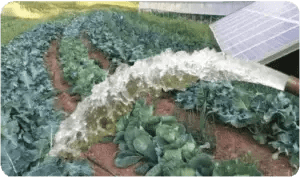
Newer technologies that support smart-flow enable the irrigation to be systemized to deliver water as necessary and conserve even more water. This system is one of the more resource-friendly and operationally inexpensive irrigation systems.
Key Features Drip Irrigation Solar Pumps
- Direct delivery to the irrigation system.
- Efficient irrigation system.
- Losses due to evaporation are negligible.
- Flow-control and smart-system technologies.
- Water usage highly efficient.
Pros & Cons Drip Irrigation Solar Pumps
Pros
- Less water use.
- Better crop yield.
- Less fertilizer use.
- Less cost to operate.
Cons
- Higher setup cost.
- Drip lines must be maintained.
- Not all crops are suitable.
9. Floating Solar Pump Systems
Floating solar pump systems are comprised of solar panels mounted on floating platforms that are placed on top of reservoirs, ponds, or lakes used for irrigation.
This unique design produces clean energy and allows for the protection of land that could be used for agricultural purposes.

Furthermore, the water that sits under the solar panels helps to cool them and, with floating systems, helps to reduce the evaporation of water.
This helps to conserve water, which is extremely precious to farmers. As the availability of land continues to decrease, floating solar solutions provide a renewable and helpful way to aid and manage the water used for agriculture.
Key Features Floating Solar Pump Systems
- Solar panels on floating structures.
- Use of ponds and water bodies.
- Less agricultural land use.
- Less evaporation.
- Better cooling of panels.
Pros & Cons Floating Solar Pump Systems
Pros & Cons
Pros
- Full use of land.
- Better solar use.
- Better use of water.
- Creative renewable energy.
Cons
- More complex setup.
- Needs certain water bodies.
- The floating system needs maintenance.
10. Smart Solar Pump Systems
Smart solar pump systems utilize more advanced technologies such as IoT, remote monitoring, automated control, and real-time performance data. Farmers can view and even control their systems from mobile devices or web interfaces.
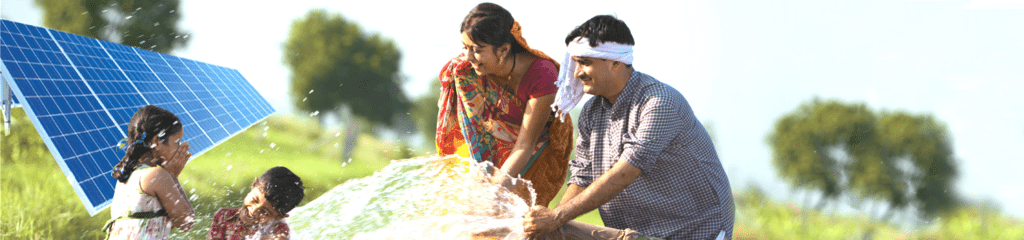
Automated AI controls can adjust the pumping schedule based on the forecast and predicted irrigation needs of the farm. These systems can save maintenance costs and improve the overall efficiency of the systems.
With the continued evolution of precision agriculture comes the additional optimization of smart solar pumps for farm productivity and management of irrigation.
Key Features Smart Solar Pump Systems
- Irrigation control via IoT technology.
- Smartphones used for system control.
- Real-time irrigation system monitoring.
- AI of irrigation and preventive maintenance.
Pros & Cons Smart Solar Pump Systems Pros & Cons
Pros
- Better irrigation.
- Less cost of operation.
- Less maintenance.
- Better use of land.
Cons
- High initial cost.
- Needs internet.
- Must learn how to use features.
How We Selected the Best Off-Grid Solar-Powered Water Pumping Systems for Remote Agriculture
Water Pumping Performance We focused on systems that could offer reliable water pumping for various agricultural needs, including irrigation, watering livestock, and growing crops.
Energy Efficiency Higher efficiency systems that provided consistent performance while minimizing energy losses were preferred.
Designed for Off-Grid Use We prioritized systems that were designed to be completely self-sufficient systems that could be used on remote and off-grid farms.
Ease of Use Systems that were easy to use, easy to install, and had low maintenance requirements were ranked higher.
Weatherproofing We looked at the construction of the pumping systems and their resistance to the harsh environments of heat, dust, and moisture, and the construction of the systems.
Water Source Variation We included systems that could pump water from various sources, including wells, boreholes, rivers, lakes, ponds, and reservoirs.
Conclusion
To summarize, the best remote agricultural, off-grid, solar-powered water pumping systems are those that offer access to water that is dependable, economical, and “green.” Solar pumps come in all varieties: surface, submersible, hybrid, battery-based, and smart pumps.
Each of these systems offers differing advantages and can be the best choice for differing farming needs. Sustainable irrigation, cost savings and less resource draining are some of the advantages of selecting the appropriate solar pumping system to be integrated into the greater goals of farming.
FAQ
Solar submersible pump systems are the best choice for deep wells and groundwater extraction.
Yes, they provide reliable irrigation in remote areas where electricity access is limited.
Yes, but performance may decrease unless the system includes batteries or hybrid backup power.
DC pumps run directly on solar power, while AC pumps require an inverter and support larger operations.
Not always. Many systems operate without batteries, while battery-based models provide extended operating hours.