

I’ll go over the Best Immunefi Alternatives for Web3 Bug Bounties in this post, emphasizing the best platforms for vulnerability detection, blockchain audits, and smart contract security.
To assist you in selecting the best platform for safeguarding your Web3 project and digital assets, you will learn about their salient characteristics, supported blockchains, cost, reward schemes, advantages, and disadvantages.
How We Select the Top Immunefi Substitutes for Web3 Bug Bounties
- Web3 Security Expertise: Assess knowledge of blockchain security, DeFi, and smart contracts.
- Verify whether Ethereum, Solana, Polygon, and other networks are compatible with the supported blockchains.
- Bug Bounty Programs: Evaluate competitive, private, and public vulnerability finding initiatives.
- Examine the bounty amounts, severity levels, and researcher payment policies in the reward structure.
- Pricing and Fees: Examine platform fees, commissions, subscriptions, and engagement expenses.
- Evaluate the experience, knowledge, involvement, and reputation of the researcher community.
- Vulnerability Detection: Assess the platform’s capacity to spot important security flaws.
Key Points & Best Immunefi Alternatives for Web3 Bug Bounties
| Platform | Explanation |
|---|---|
| Sherlock | Connects security researchers with Web3 projects through competitive audits and vulnerability contests. |
| Cantina | Provides competitive security audits, bug bounties, and expert-led blockchain security assessments. |
| HackerOne | Connects organizations with ethical hackers to identify vulnerabilities through coordinated bug bounty programs. |
| Bugcrowd | Offers crowdsourced security testing, vulnerability disclosure programs, and bug bounty management solutions. |
| HackenProof | Specializes in blockchain security, connecting Web3 projects with researchers through bug bounties. |
| Code4rena | Organizes competitive smart contract audits where researchers compete to discover security vulnerabilities. |
| Intigriti | Provides crowdsourced security testing and coordinated vulnerability disclosure for organizations worldwide. |
| Hashlock | Offers blockchain security audits, smart contract assessments, and Web3 vulnerability detection services. |
| Yogosha | Connects organizations with vetted ethical hackers for crowdsourced security testing and vulnerability discovery. |
| Synack | Combines vetted security researchers and technology to deliver continuous enterprise security testing. |
10 Best Immunefi Alternatives for Web3 Bug Bounties
1. Sherlock
Sherlock is a Web3 security platform that focuses on vulnerability identification, competitive security evaluations, and smart contract audits. In order to find key vulnerabilities prior to deployment or exploitation, it links blockchain projects with seasoned security researchers. Competitive evaluations and security engagements guided by specialists are part of its audit model.
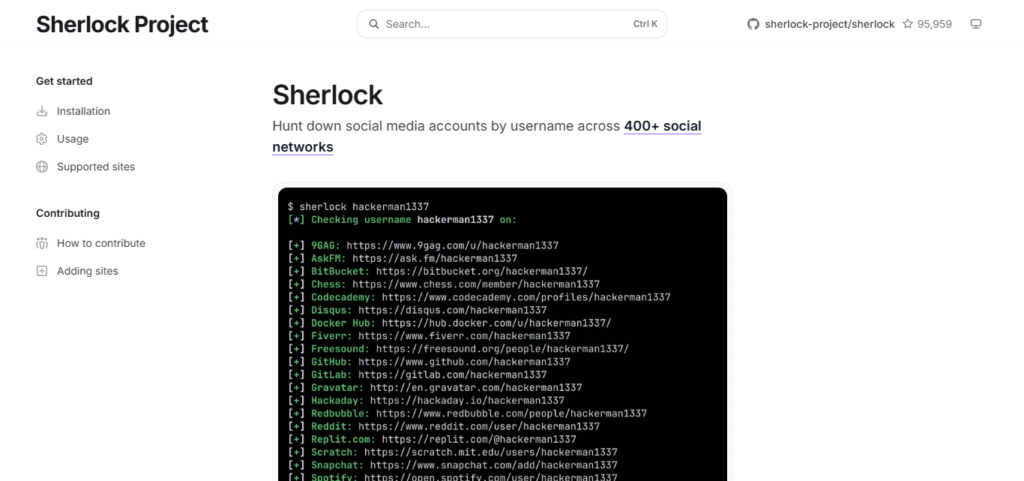
Supported Blockchains: Ethereum and EVM-compatible smart contract projects are among its primary sectors, and its supported ecosystems rely on specific audit scopes. Pricing or Fees: Rather than a single, uniform public subscription price, project costs are determined by the audit engagement, scope, and approved commercial conditions.
Reward Structure: Researchers are compensated based on prize pools, contest regulations, and the severity of their findings. Sherlock is appropriate for creators of smart contracts and DeFi protocols looking for impartial security evaluations.
Sherlock Pros & Cons
| Pros | Explanation | Cons | Explanation |
|---|---|---|---|
| Audit contests + bounties | Combines competitive audits and bug bounties in one platform | Smaller researcher pool | Fewer participants than the largest platforms |
| Coverage model | Protocols can pair audits with exploit coverage, a unique selling point | EVM/Solidity-heavy | Less suited to non-EVM or Web2 scope |
| Senior watson system | Top auditors lead reviews, improving report quality | Judging disputes | Escalations over severity can frustrate researchers |
| Strong DeFi reputation | Trusted by many established DeFi protocols | Contest-centric | Continuous bounty coverage is less prominent than at Immunefi |
2. Cantina
Through competitive audits, private engagements, and vulnerability discovery programs, Cantina, a Web3 security platform, links blockchain developers with expert security researchers. It helps initiatives looking for comprehensive studies of smart contracts, protocol evaluations, and continuous security enhancements.
Supported Blockchains: Depending on the audit scope of the project and the availability of researchers, Cantina works with a number of blockchain ecosystems, including Ethereum and other networks. Pricing or Fees: Depending on the complexity of the code, the length of the audit, the needs of the researcher, and the project’s scope, pricing is typically engagement-based.

Reward Structure: Competitive audits provide predetermined prize pools that are often allocated in accordance with competition regulations, acceptable findings, and severity. Blockchain infrastructure, DeFi protocols, and teams looking for expert-led security reviews will find Cantina very helpful.
Cantina Pros & Cons
| Pros | Explanation | Cons | Explanation |
|---|---|---|---|
| Elite talent | Backed by Spearbit’s well-known security researchers | Premium pricing | Costs are higher than open contest platforms |
| Flexible services | Offers competitions, bounties, and managed audits | Fewer public programs | Smaller catalog than Immunefi |
| Quality triage | Experienced reviewers filter noise and low-quality reports | Selective access | Top engagements can favor established researchers |
| Modern tooling | Clean platform with good collaboration for teams | Newer bounty ecosystem | Less long-term track record than older platforms |
3. HackerOne
HackerOne is a well-known crowdsourced cybersecurity tool that uses a global network of ethical hackers to assist businesses in finding security flaws. It offers security testing, expert triage services, vulnerability disclosure programs, and both public and private bug bounty programs.
Supported Blockchains: Ethereum, Polygon, Solana, and other blockchain assets can be tested when included in a program’s authorized scope; HackerOne does not provide a universal blockchain-specific network list. Pricing or Fees: Depending on program requirements, services, and security testing requirements, organizations typically obtain tailored pricing.
Reward Structure: Organizations set bounty amounts according to program policies, business effect, and vulnerability severity. It works well for Web3 businesses that need more comprehensive infrastructure and application security.
HackerOne Pros & Cons
| Pros | Explanation | Cons | Explanation |
|---|---|---|---|
| Largest community | Huge researcher base across all security domains | Weak Web3 specialization | Triage teams may lack smart-contract depth |
| Enterprise features | Compliance, reporting, and integrations suit large organizations | High cost | Platform fees can be steep for startups |
| Mature triage | Established processes and managed services | Slower for crypto issues | Web3 reports may need extra explanation |
| Brand trust | Recognized by corporates and regulators | Fewer crypto-native programs | Fewer DeFi protocols run bounties here |
4. Bugcrowd
A crowdsourced cybersecurity tool called Bugcrowd links companies with ethical hackers to find vulnerabilities in digital products, infrastructure, applications, and APIs. It offers penetration testing, security researcher management, managed bug bounty programs, and vulnerability disclosure programs.
Supported Blockchains: There isn’t a set list of blockchain compatibility published by Bugcrowd. When supported by a specific customer’s testing scope, Ethereum, Solana, Polygon, and other blockchain technologies can be added. Pricing or Fees: Program requirements, platform services, and the customer-funded incentive pool all affect pricing.

Reward System: When a customer approves a unique, legitimate vulnerability, researchers are rewarded financially. Payments are determined by program regulations, impact, and vulnerability prioritization. Web3 businesses that require more comprehensive cybersecurity coverage can benefit from Bugcrowd.
Bugcrowd Pros & Cons
| Pros | Explanation | Cons | Explanation |
|---|---|---|---|
| Managed programs | Strong triage and program management | Limited Web3 focus | Mostly Web2 and enterprise targets |
| Flexible engagements | Bug bounty, VDP, pen testing, and attack surface management | Cost | Enterprise pricing may not suit small protocols |
| Large researcher base | Wide pool of ethical hackers | Few smart-contract experts | Blockchain specialists are a minority |
| Enterprise integrations | Works with Jira, Slack, and other tools | Less crypto community | Fewer DeFi-native programs and discussions |
5. HackenProof
HackenProof is a specialized Web3 bug bounty platform that links security researchers and ethical hackers with blockchain enterprises. It assists companies in locating weaknesses in DeFi protocols, blockchain infrastructure, decentralized apps, smart contracts, and cryptocurrency exchanges. Additionally, the platform provides security audit, penetration testing, and vulnerability triage services. Supported

Blockchains: Depending on the specific program scope, its programs cover a variety of ecosystems, such as Ethereum, EVM-compatible networks, Starknet, and other blockchain environments. Pricing or Fees: Rather of employing a single, universal public subscription pricing, organizations can request tailored programs and typically pay for legitimate findings. Reward Structure: Each project defines its own bounties, with compensation based on the effect and severity of vulnerabilities.
HackenProof Pros & Cons
| Pros | Explanation | Cons | Explanation |
|---|---|---|---|
| Web3 and crypto focus | Built for blockchain, exchanges, and DeFi | Smaller community | Fewer researchers than the big platforms |
| Hacken ecosystem | Connects with audits and security services from Hacken | Fewer top-tier protocols | Major DeFi names are more often on Immunefi |
| Managed triage | Dedicated team validates reports | Lower brand recognition | Less trusted by some top researchers |
| Flexible programs | Supports bounties, VDPs, and exchange programs | Smaller reward scale | Payouts are often lower than on top competitors |
6. Code4rena
Code4rena gained notoriety for its competitive smart contract auditing methodology, in which independent security experts known as Wardens analyzed blockchain codebases and identified flaws. DeFi protocols, blockchain infrastructure, and decentralized apps were all included in its competitions.
The results were assessed using predetermined judging procedures. Supported Blockchains: Depending on the specific audit needs, previous competitions included Ethereum, EVM-compatible networks, Cosmos, Stellar, and other ecosystems.
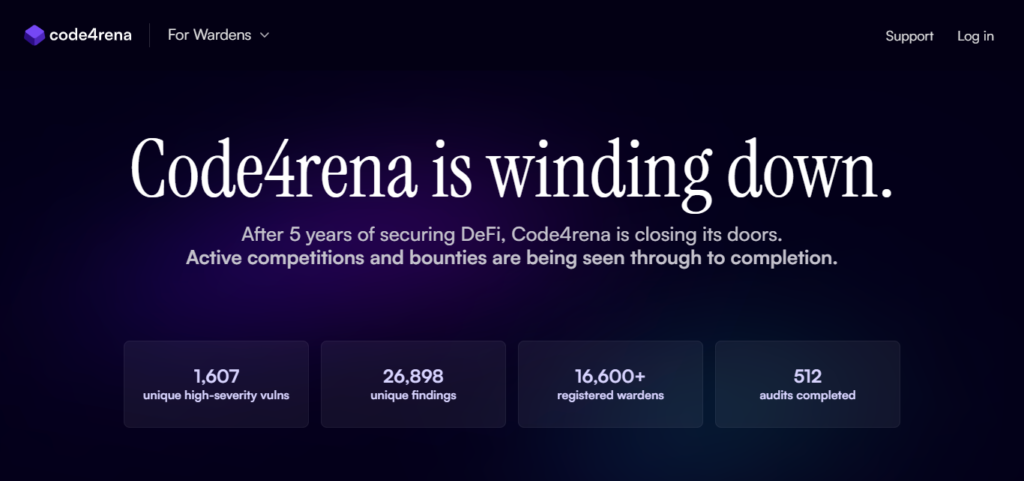
Pricing or Fees: Prize pools were financed by previous contest organizers, and a $25 USDC deposit was required for some bounty entries. Reward Structure: Researchers competed for allotted prize pools and were typically awarded based on the severity, judging results, and acceptable findings. Important: Code4rena should be viewed as a historical alternative rather than an active platform for new initiatives, as it announced its wind-down in 2026.
Code4rena Pros & Cons
| Pros | Explanation | Cons | Explanation |
|---|---|---|---|
| Large warden community | Many skilled auditors compete in contests | Time-boxed | Contests are not continuous bounties |
| Cost-effective | Competitive model gives wide review coverage for the price | Duplicate splits | Rewards are shared across duplicate findings |
| Transparency | Public reports and clear contest rules | Variable quality | Results depend on who participates |
| Strong reputation | Respected in the Ethereum and DeFi ecosystem | Judging disputes | Severity decisions can be contested |
7. Intigriti
Intigriti is a crowdsourced security platform that uses professional security testing and ethical hackers to assist corporations find vulnerabilities. It provides managed security services, penetration testing, vulnerability disclosure programs, and both public and private bug bounty programs. Supported Blockchains: Web3 assets and cryptocurrencies can be added to certain application scopes, however Intigriti does not keep a list of all blockchains it supports.
Crypto-related security initiatives have been hosted on its platform. Pricing or Fees: Its sales team can provide pricing for its customized Core, Premium, and Enterprise plans. Reward Structure: Researchers are compensated according to acceptable findings, program-specific reward tiers, and the severity of vulnerabilities. Web3 companies looking for more comprehensive application security and managed vulnerability identification can benefit from Intigriti.
Intigriti Pros & Cons
| Pros | Explanation | Cons | Explanation |
|---|---|---|---|
| European compliance | GDPR-friendly and strong in the EU market | Limited Web3 presence | Few blockchain-native programs |
| Good triage | Responsive and well-reviewed validation team | Smaller than the giants | Fewer researchers than HackerOne or Bugcrowd |
| Researcher-friendly | Known for good communication and community | Few smart-contract specialists | Weaker for deep DeFi issues |
| Flexible programs | Public, private, and VDP options | Less crypto brand trust | Not top of mind for crypto teams |
8. Hashlock
Hashlock is a blockchain security firm that provides Web3 bug bounty services, penetration testing, and smart contract audits. Its bug bounty platform links blockchain projects with ethical hackers who find weaknesses in decentralized apps, network infrastructure, and smart contracts.

Testing scopes, vulnerability severity levels, reward systems, and submission requirements can all be specified by organizations. Supported Blockchains: Redbelly Network, which covers mainnet, testnet, node infrastructure, and specific smart contracts, is one of its published bounty programs.
Costs or Fees: Organizations can get in touch with Hashlock for specialized agreements; platform fees and subscription costs are not made public. Reward Structure: Every project sets its own qualifying rules, severity-based rewards, and reward caps.
Hashlock Pros & Cons
| Pros | Explanation | Cons | Explanation |
|---|---|---|---|
| Web3-focused | Specializes in blockchain security | Newer and smaller | Less proven than established platforms |
| Audit + bounty combo | Offers audits alongside bounty services | Small researcher network | Fewer eyes on each program |
| Direct engagement | Closer working relationship with clients | Limited brand recognition | Fewer high-profile protocols |
| Multi-chain experience | Covers varied blockchain ecosystems | Less public data | Fewer visible case studies and payout stats |
9. Yogosha
Yogosha is a cybersecurity platform that offers vulnerability disclosure services, penetration testing, and private bug bounty programs. Through its Yogosha Strike Force network, it links companies with a screened community of ethical hackers. Researchers find security flaws, report vulnerabilities, and offer proof-of-concept data along with suggestions for fixing them.
Blockchains that are supported: There isn’t a specific blockchain compatibility list published by Yogosha. Depending on the agreed-upon testing scope and available researcher competence, Web3 applications, smart contracts, and blockchain infrastructure can be taken into consideration.
Pricing or Fees: While precise platform charges necessitate a quote, pricing is tailored based on engagement requirements. Reward Structure: Companies pay for legitimate, acknowledged vulnerabilities; larger awards are often given to findings with more impact.
Yogosha Pros & Cons
| Pros | Explanation | Cons | Explanation |
|---|---|---|---|
| Vetted researchers | Invite-only, vetted community (Strike Force) | Not Web3-native | Mainly aimed at Web2 and enterprise |
| Quality over quantity | Fewer but higher-quality reports | Limited public programs | Less visibility than open platforms |
| Managed triage | Strong validation and program support | Smaller community | Fewer researchers than the big platforms |
| European compliance | Strong for EU-based organizations | Few DeFi programs | Little smart-contract specialization |
10. Synack
Synack is a cybersecurity platform that integrates managed penetration testing services, cutting-edge technology, and human security experts. Its Synack Red Team is made up of thoroughly screened ethical hackers who find weaknesses in infrastructure, networks, enterprise apps, and APIs.
Supported Blockchains: Synack does not focus solely on smart contract security or release a list of blockchain compatibility. A specially agreed-upon testing engagement may be necessary for Web3-related assets.
Pricing or Fees: Standard penetration testing costs $10,283, select AI-led assessments start at $4,181, and Synack14 engagements cost $27,120. Customized enterprise pricing is also offered. Reward Structure: Unlike standard public bug bounty incentives, researchers are compensated for accepted vulnerabilities and accomplished tasks.
Synack Pros & Cons
| Pros | Explanation | Cons | Explanation |
|---|---|---|---|
| Elite vetted testers | The Synack Red Team (SRT) is carefully screened | Closed model | No open public bounty community |
| Controlled testing | Secure environment and monitored access | High cost | Priced for enterprise budgets |
| Continuous testing | Platform-based pen testing (PTaaS) | Not Web3-focused | Limited smart-contract and DeFi expertise |
| Enterprise-grade | Compliance, reporting, and governance | Less flexible | Unsuitable for open, crowd-driven bounties |
Conclusion
In conclusion, the security needs, budget, and blockchain environment of your project will determine which Immunefi options are appropriate for Web3 bug bounties.
While HackerOne, Bugcrowd, and Intigriti offer more comprehensive cybersecurity services, Sherlock, Cantina, and HackenProof are excellent Web3-focused choices.
Before choosing the best platform to safeguard your smart contracts and decentralized apps, compare supported blockchains, reward schemes, cost, researcher experience, and auditing capabilities.
FAQ
Sherlock and Cantina specialize in competitive smart contract audits and vulnerability discovery.
Yes, several platforms support DeFi protocols, smart contracts, and decentralized application security.
Sherlock and Cantina organize competitive audits with predefined researcher rewards and judging processes.
Several platforms support Ethereum, EVM-compatible networks, and other ecosystems depending on scope.