


This article reviews the Best Exchange Compliance Platforms that assist cryptocurrency exchanges in following regulations, safeguarding against financial crime, and enhancing security. Compliance
Exchange Platforms feature sophisticated technology to monitor blockchain transactions, support AML, provide KYC and risk and fraud assessment services.
Organizations construct and comply confidently to securely participate in the evolving digital assets marketplace and consequently establish and maintain trusted status with their clients.
What Are Exchange Compliance Platforms?
Exchange Compliance Platforms help cryptocurrency exchanges meet regulatory standards to avoid financial crimes and keep operations secure. These platforms incorporate tools for monitoring and detecting suspicious behavior using blockchain analytics, KYC verification, AML assistance, and risk assessment.
They use a combination of all of these tools to help exchanges follow regulations in a safer and more trustworthy way. This is especially important because thousands of users engage with different financial institutions and exchange voluntary regulatory standards for security and trust in the evolving digital asset market.
Why Exchange Compliance Platforms Are Important
- Maintains AML Compliance: Assists operators of crypto exchanges to keep business at the regulatory bounds of local and global Anti-Money Laundering frameworks.
- Identifies Risky Actions: Tracks everyday transaction flows and spots potentially threatening behaviors and suspicious wallets.
- Safeguards against Crypto Fraud: Shields exchanges from losing funds through scams and laundering as well as hacking attempts and other illicit financial operations.
- Enhances Trust: Strengthens the security of the platform and the trust users have while trading.
- Eases the Burden of Compliance Reporting: Fulfills automated compliance reporting as well as audit requests of financial authorities.
Key Points & Best Exchange Compliance Platforms
| Exchange Compliance Platform | Explanation |
|---|---|
| Chainalysis | Provides blockchain analytics, transaction monitoring, and cryptocurrency compliance solutions globally. |
| Elliptic | Detects crypto risks using advanced blockchain investigation and compliance tools. |
| TRM Labs | Offers crypto intelligence, fraud prevention, and regulatory compliance monitoring. |
| CipherTrace | Delivers cryptocurrency tracing, risk assessment, and compliance management solutions. |
| Scorechain | Helps exchanges manage AML compliance with blockchain transaction analysis. |
| Crystal Blockchain | Provides crypto monitoring, investigation, and regulatory reporting capabilities worldwide. |
| Merkle Science | Uses blockchain intelligence to prevent fraud and financial crimes. |
| ComplyAdvantage | Provides AI-powered AML screening and compliance risk management solutions. |
| Sumsub | Offers identity verification, KYC, and compliance automation tools globally. |
| Onfido | Provides biometric verification and secure digital identity compliance solutions. |
10 Best Exchange Compliance Platforms
1. Chainalysis
Chainalysis provides sophisticated transaction monitoring and risk assessment tools for compliance with regulatory requirements.
Blockchain transaction analytics, suspicious activities profiling, wallet screening, and other investigative tools help exchanges fulfill their AML obligations and identify illicit transactions, thus building confidence among regulators.
To optimize global digital asset business compliance with crypto crime prevention, Chainalysis focuses cross-chain monitoring and automated risk scoring efforts.
Chainalysis
- Blockchain Transaction Monitoring – For compliance and suspicious behavior, Chainalysis streams real-time monitoring of crypto transactions.
- Risk Scoring – Using proprietary blockchain data, Chainalysis provides an advanced risk assessment and score of a wallet and its transactions.
- AML Compliance – With Chainalysis, exchanges meet the requirements of AML compliance through automated monitoring.
- Cross-Chain Analytics – Chainalysis provides analytics for multiple blockchain networks.
- Crypto Crime – Chainalysis will assist security teams to understand and map illicit funding with complex transaction analyses.
| Pros | Cons |
|---|---|
| Advanced blockchain transaction monitoring with real-time risk detection. | High pricing may not be suitable for small crypto exchanges. |
| Provides accurate wallet risk scoring and suspicious activity analysis. | Requires trained compliance professionals for effective usage. |
| Strong AML compliance features for global regulatory requirements. | Advanced tools can have a steep learning curve. |
| Supports cross-chain analytics across multiple blockchain networks. | Implementation and integration may take significant time. |
| Powerful crypto crime investigation capabilities for tracing illegal funds. | Mainly focused on blockchain analytics, not complete KYC solutions. |
2. Elliptic
Developing tools for blockchain investigations and compliance, Elliptic helps exchanges assess the risk that cryptocurrencies and financial crimes pose and helps fulfill AML compliance. With advanced intelligence and risk assessments of blockchain networks, sanctions, and fraud,
Elliptic helps client mitigate the risk of money laundering, fraud, and sanctions. Not only does Elliptic continuously enhance its coverage of the crypto assets, but it also focuses on automated investigations and regulatory compliance.
Elliptic
- Blockchain Crime Risk – Through advanced detection and analysis, Elliptic can identify suspicious behaviors on the blockchain.
- Wallet Screening – With Elliptic, wallet address assessments can identify fraud and sanction risks as well as illicit activities.
- Compliance Monitoring – To facilitate the AML process, Elliptic employs automated surveillance of transactions.
- Compliance of Sanctions – Elliptic is designed to avoid restricted transactions.
- Intelligence for Investigation – Regarding analysis and reporting compliance to regulations, advanced forensic analysis of the blockchain is invaluable.
| Pros | Cons |
|---|---|
| Strong blockchain risk detection and investigation technology. | Enterprise-level pricing can be expensive. |
| Effective wallet screening for fraud and sanctions monitoring. | Requires technical knowledge for advanced features. |
| Automated AML monitoring improves compliance efficiency. | Limited identity verification capabilities. |
| Helps exchanges manage regulatory and financial crime risks. | Setup process may require professional support. |
| Provides detailed investigation reports for compliance teams. | Smaller businesses may find features complex. |
3. TRM Labs
Providing advanced compliance and transaction monitoring capabilities, TRM Labs enables exchanges to reduce the risk associated with digital assets. TRM Labs provides coverage of blockchain analytics investigations, transaction monitoring and assessments focused on compliance with U.S.
Sanctions and AML. TRM Labs’ early compliance technologies are focused on the detection of illicit activity and the protection of user funds across multiple blockchain networks. TRM Labs is dedicated to help exchanges strengthen their AML compliance programs and reduce operational risks.
TRM Labs
- Transaction Intelligence – An analysis of blockchain transactions offers numerous opportunities for TRM Labs to assess the risks of financial crime.
- Monitoring of Multiple Blockchains – TRM Labs offers compliance of multiple cryptocurrency networks and assets.
- Fraud Assessment – Aiding compliance to fraud is the detection of suspicious behavior and transactions with TRM Labs.
- Sanctions Screening – To assess the risks of transactions involving sanctioned entities, TRM Labs provides tools to monitor sanctioned wallets.
- Reporting Compliance Regulations – For compliance with newly enacted and/or amended regulations, TRM Labs offers preformatted templates for audits.
| Pros | Cons |
|---|---|
| Provides powerful crypto transaction intelligence solutions. | Pricing details are generally customized for businesses. |
| Supports monitoring across multiple blockchain networks. | May require technical expertise for configuration. |
| Real-time fraud detection improves exchange security. | Advanced features may be unnecessary for small platforms. |
| Strong sanctions screening and risk management tools. | Integration with existing systems can take time. |
| Helps businesses meet changing crypto regulations. | Requires additional tools for complete KYC management. |
4. CipherTrace
CipherTrace is a cryptocurrency tracing and compliance management tool that enables exchanges to secure their digital asset transactions. CipherTrace provides blockchain analytics, risk assessment, transaction monitoring, and investigation capabilities to identify illicit activities.
CipherTrace’s compliance and AML-integrated intelligence tools support and improve compliance controls for exchanges and offer reporting capabilities.
Because of CipherTrace’s multi-chain analysis and fraud-prevention reporting capabilities, exchanges may find they can implement stronger compliance controls and better protect their clients.
CipherTrace
- Tracking of Transactions: Analysis of transactions to trace suspicious funding.
- Assessment of Risk Technology: Reviews transactional risk through blockchain analysis.
- Automated AML Monitoring: Offers exchanges an automated way to handle compliance and monitoring.
- Fraud Detection: Identifies fraud, theft and illicit crypto activities.
- Blockchain Investigative Tools: Provides security teams with insight into every detail of a transaction.
| Pros | Cons |
|---|---|
| Excellent cryptocurrency tracing and forensic investigation features. | Less focused on modern automated compliance workflows. |
| Helps detect fraud, scams, and suspicious transactions. | May require additional solutions for customer verification. |
| Provides detailed blockchain transaction analysis. | Advanced investigation tools need skilled users. |
| Supports AML monitoring for cryptocurrency businesses. | Pricing may be high for startups. |
| Useful for security teams investigating crypto crimes. | Product capabilities may vary based on available integrations. |
5. Scorechain
Scorechain is a risk management and blockchain transaction analysis tool that enables cryptocurrency exchanges to meet AML compliance. Scorechain increases compliance with financial regulations by monitoring and scoring transactions, allowing for the identification and reporting of suspicious activities.
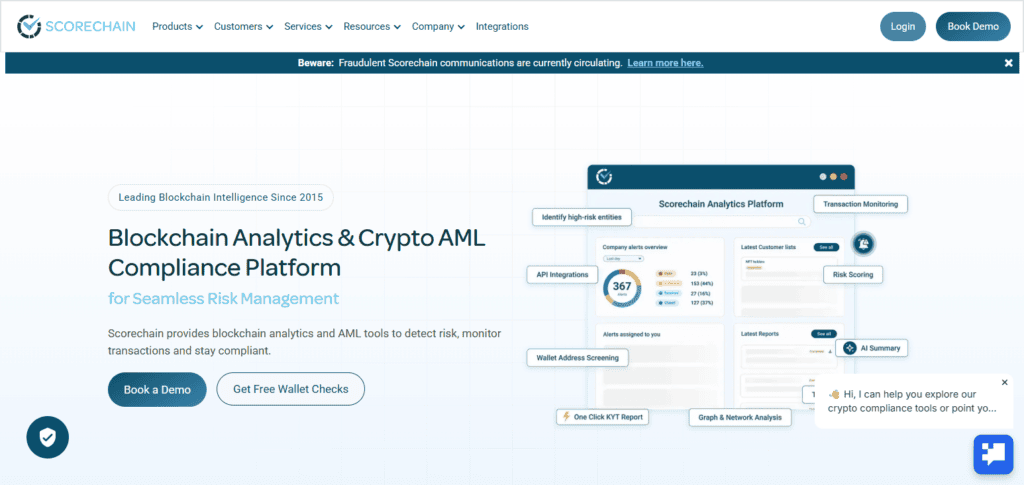
Scorechain is designing compliance dashboards and automating risk detection and reporting to benefit exchanges, financial institutions, and digital asset providers. Its enhancements will also aid in managing and mitigating risks in the blockchain space.
Scorechain Features
- Wallet Risk Scoring: Scores activities of a wallet based on the likelihood of compliance issues.
- Transaction Monitoring: Analyzes crypto transfers to identify potentially suspicious behavior.
- AML Monitoring Automation: Minimizes the amount of compliance-related manual tasks through automated monitoring.
- Regulatory Reporting Automation: Generates compliance reports for financial authorities and audit requests.
- Blockchain Intelligence Tools: Provides analysis of electronic crypto transactions and mitigates risk.
| Pros | Cons |
|---|---|
| User-friendly blockchain compliance dashboard. | Fewer advanced investigation features compared to larger platforms. |
| Provides effective wallet risk scoring capabilities. | May not cover every blockchain ecosystem. |
| Automates AML monitoring and compliance tasks. | Advanced features may require premium plans. |
| Generates useful regulatory reports and audit documents. | Limited biometric identity verification options. |
| Suitable for crypto exchanges and financial institutions. | Smaller market presence compared to major providers. |
6. Crystal Blockchain
Crystal Blockchain is a monitoring and compliance tool for cryptocurrency exchanges focusing on analytic capabilities.
Crystal Blockchain combines a regulatory reporting capability with an analytic solution to aid in tracking sanctioned transactions and assessing compliance risk. Regulatory reporting and risk assessment are facilitated through fraud detection and wallet analysis.
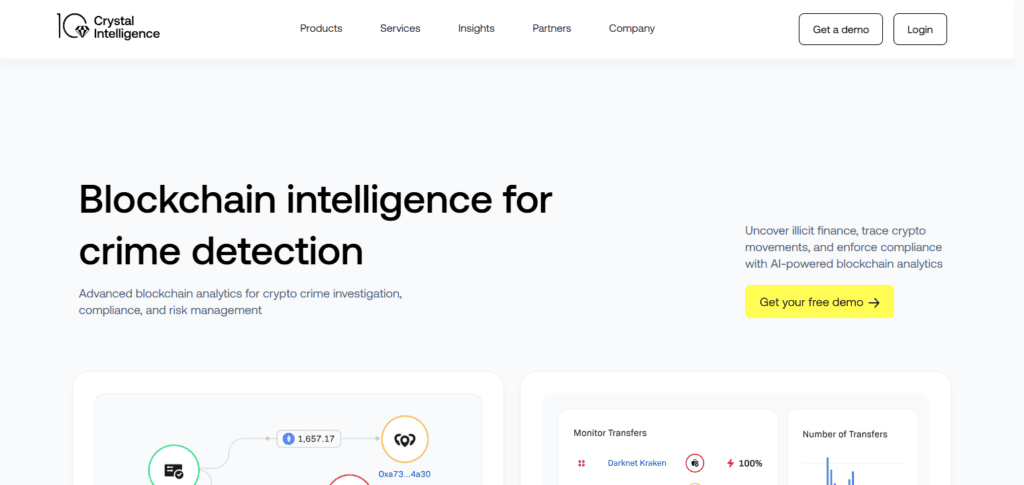
Crystal Blockchain has also focused its development on the assessment and improvement of basic compliance standards, such as AML compliance. These enhancements enable exchanges to address and manage their compliance concerns more effectively.
Crystal Blockchain Features
- Crypto Monitoring: Analyzes specific blockchain transactions to monitor for suspicious behavior.
- Visual Transaction Analytics: Transaction data is analyzed and presented in an easy-to-use graphical format.
- Risk Assessment Tools: High-risk crypto transfers and wallets are automatically assessed.
- Compliance Reporting: Aids in the preparation of compliance documentation and audit requests.
- Multi-Blockchain Analytics: Transaction analysis is not limited to a single Blockchain.
| Pros | Cons |
|---|---|
| Provides detailed visual blockchain analytics. | Interface may require training for beginners. |
| Helps investigators track complex crypto transactions. | Primarily focused on blockchain analysis rather than KYC. |
| Supports multiple blockchain networks and assets. | Enterprise features may have higher costs. |
| Offers strong risk identification and reporting tools. | Requires technical knowledge for advanced investigations. |
| Improves transparency in crypto compliance operations. | May need additional compliance platforms for full coverage. |
7. Merkle Science
Using blockchain intelligence technology, Merkle Science helps cryptocurrency exchanges mitigate fraud, money laundering, and financial crime. Their platform has transaction monitoring, risk detection, wallet screening, and other investigative solutions.
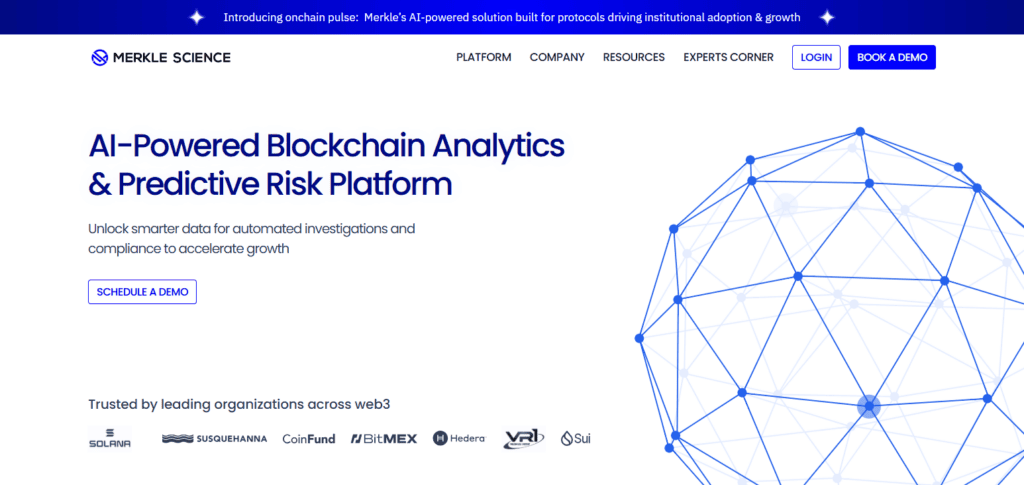
With their analysis of patterns within blockchain, Merkle Science helps businesses spot problematic transactions before they become regulatory issues. Their platform uses advanced analytics and automated features, as well as modern threat intelligence, to assist crypto exchanges and financial institutions with global regulatory compliance.
Merkle Science Features
- Blockchain Crime Intelligence: Monitors fraud, scams, and financial crime on crypto blockchains.
- Monitoring Transactions in Real-Time: Transaction monitoring is performed on the blockchain and case alerts are immediately triggered.
- Behavior Technology: Pattern-based wallet behavior is monitored to identify illicit activity.
- AML Compliance Technology: Global standards of anti-money laundering compliance are monitored.
- Automated Risk Notifications: Alerts for security and compliance issues are automatically generated.
| Pros | Cons |
|---|---|
| Strong blockchain threat intelligence capabilities. | Pricing information is not always publicly available. |
| Detects fraud, scams, and financial crime activities. | Best suited for organizations with compliance teams. |
| Provides real-time transaction monitoring and alerts. | Requires technical expertise for advanced analysis. |
| Uses behavior analysis to identify risky wallet activities. | May need integration with other KYC providers. |
| Supports global AML compliance requirements. | Implementation can require additional resources. |
8. ComplyAdvantage
As an AML screening and compliance risk management solution, ComplyAdvantage offers AI-driven technology to cryptocurrency exchanges and financial services businesses. Their platform aids businesses in managing regulatory risk and detecting financial crime as well as monitoring transactions and screening customers.
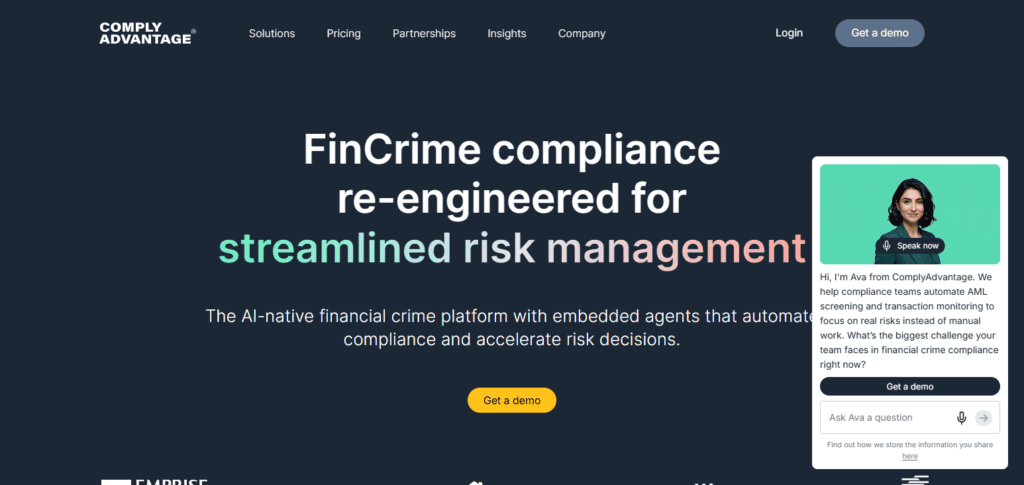
By employing AI with real-time data, ComplyAdvantage bolsters the detection of fraud and the ease of compliance. Automated, rapid identification of risk coupled with a streamlined customer due diligence is the core of their latest solutions for regulated digital asset market businesses.
ComplyAdvantage Features
- AI-Based AML Modules: Sophisticated compliance modules are based on AI.
- Risk Assessment Modules: Customer profiling modules include financial crime risk assessment.
- Real-Time Monitoring: Constant checks on customer transaction behavior.
- Fraud Prevention Technology: Automates detection of abnormal behavior for clients.
- Compliance Data Intelligence: Provides risk data to enhance decision quality.
| Pros | Cons |
|---|---|
| Uses AI-powered AML screening technology. | Less specialized in blockchain transaction analysis. |
| Provides real-time customer and transaction risk monitoring. | Crypto exchanges may need additional blockchain tools. |
| Helps automate financial crime prevention processes. | Advanced AI features can increase costs. |
| Provides updated compliance intelligence data. | Requires proper configuration for accurate results. |
| Supports global regulatory compliance programs. | Not designed exclusively for cryptocurrency businesses. |
9. Sumsub
Sumsub provides secure onboarding solutions to cryptocurrency exchanges through KYC and compliance-as-a-service. Their platform integrates document verification, biometric authentication, fraud and AML monitoring, and prevention.
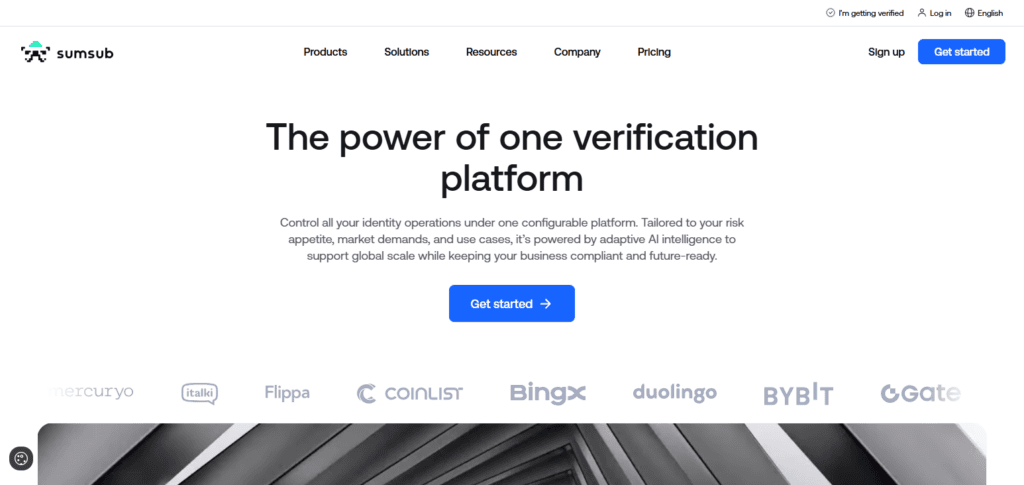
With Sumsub, crypto businesses are able to manage identity risk and meet regulatory compliance of jurisdiction. With automated compliance and the ability to rapidly verify identity, businesses using their services can focus on secure account practices and ease the detection of fraudulent accounts.
Sumsub Features
- Automated KYC Verification: Uses AI to facilitate customer identity verification.
- Biometric Authentication: Enhances security through facial recognition.
- Fraud Prevention Tools: Identifies counterfeit identities, monitors activity for accounts.
- AML Compliance Automation: Eases the burden of compliance for exchanges.
- Global Identity Verification: Provides tools for safe verification for users across different regions.
| Pros | Cons |
|---|---|
| Combines KYC, AML, and identity verification solutions. | Blockchain investigation features are limited. |
| Provides AI-powered fraud detection technology. | High-volume verification can increase costs. |
| Supports biometric authentication and document checks. | Requires additional blockchain analytics tools. |
| Helps exchanges automate customer onboarding. | Verification accuracy depends on document quality. |
| Supports global identity verification requirements. | Some regional verification methods may vary. |
10. Onfido
Onfido provides online identity verification and biometric compliance services for crypto exchanges and financial service providers. Its advanced fraud prevention and KYC compliance systems use AI identity checks and facial and document biometrics.
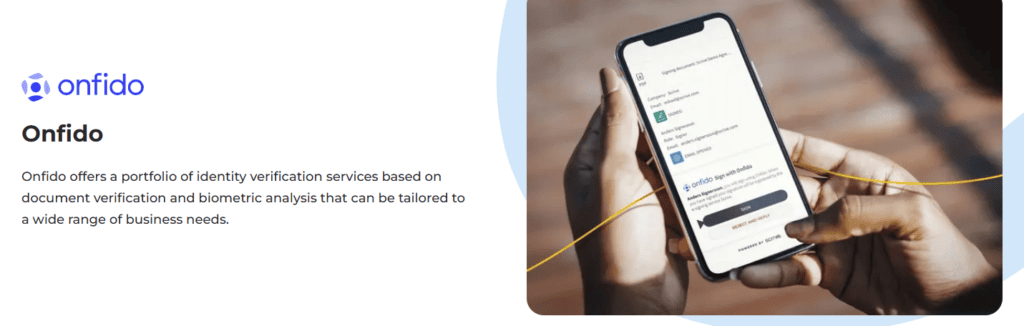
Onfido’s platform enables exchanges to build safe onboarding systems that adhere to international financial compliance. Using automated verification and sophisticated identity intelligence and threats to digital identity, Onfido is continually enhancing its systems.
Onfido Features
- AI Identity Verification: Relies on AI to perform accurate identity verifications.
- Facial Biometric Checks: Face authentication provides secure customer verification.
- Document Verification: Supports the review of identity documents to deter fraud.
- Digital Identity Security: Safeguards exchanges from identity and account fraud.
- Compliance-Friendly Onboarding: Provides solutions that enable KYC compliance and regulatory standards.
| Pros | Cons |
|---|---|
| Advanced AI-powered identity verification technology. | Mainly focused on KYC, not blockchain compliance. |
| Strong biometric authentication improves security. | Requires integration with AML monitoring platforms. |
| Helps prevent fake identities and account fraud. | Pricing may become expensive at large scale. |
| Provides secure document verification solutions. | Limited cryptocurrency-specific risk analysis features. |
| Improves compliance-friendly customer onboarding. | Depends on image and document quality for verification accuracy. |
Future Trends in Exchange Compliance Platforms
- AI Mechanisms and Compliance Monitoring: AI can further strengthen the instant analysis of suspicious transactions, risks and make real-time compliance calls directly on the crypto exchanges.
- Instant Analysis for Blockchain Risk Intelligence: Sophisticated analytics may normalize the instantaneous identification of suspicious wallets, trafficking, and newly conceived financial threats.
- Regulatory Notices and Automated Compliance Platforms: Compliance platforms are poised to increase reporting automation, thus decreasing the burden of manual reporting and increasing compliance reporting accuracy.
- Machine Learning and Detection Models for Fraud: The use of machine learning models will make the identification of frauds, especially crypto-related frauds, and money laundering-transactions easier.
- Convergence of Compliance and Multi-chain Technologies: Platforms will support an increased number of blockchains, allowing exchanges to surveil/monitor more digital assets within various ecosystems.
- DID Technologies in Compliance Platforms: The use of decentralized identification in compliance platforms will make the KYC process more user-friendly and privacy preserving.
Conclusion
In conclusion, the best exchange compliance platforms. Best exchange compliance platforms are key to crypto exchanges in sustaining security, transparency, and regulatory compliance. These platforms are rich with advanced features like; blockchain monitoring, AML protection, KYC verification, and AI-based risk detection.
These resources help to minimize the likelihood of fraud and improve trust. Digital assets are on the rise. Quality compliance systems will best assist exchanges in compliance with mandates while improving the safety of trading systems globally.
FAQ
Exchange Compliance Platforms are tools that help crypto exchanges manage AML, KYC, transaction monitoring, and regulatory compliance processes.
They help prevent fraud, detect suspicious transactions, reduce financial risks, and meet global regulatory requirements.
Popular platforms include Chainalysis, Elliptic, TRM Labs, CipherTrace, Scorechain, Crystal Blockchain, and Sumsub.
Important features include blockchain monitoring, wallet screening, AML checks, KYC verification, risk scoring, and regulatory reporting.