

I’ll talk about the top CyberConnect rivals for on-chain identity in this post, examining the top platforms that are revolutionizing decentralized digital identity. We will contrast their salient characteristics, identification solutions, blockchain technologies, privacy capabilities, and user ownership.
These rivals provide various methods for creating safe, portable, and user-controlled Web3 identities, ranging from decentralized social networks to verifiable credentials and reputation systems.
How We Select the Top CyberConnect Rivals for On-Chain Identity
- Platforms that provide decentralized digital identity generation and management are known as identity solutions.
- Special Features: Cutting-edge technologies for reputation, credentials, profiles, and verification.
- Blockchain Technology: Support for smart contracts and identification infrastructure based on blockchain technology.
- User Ownership: The capacity to autonomously maintain and control one’s own digital identities.
- Privacy & Security: Features that enable secure identity verification and safeguard user data.
- Interoperability: The ability to work with various Web3 applications and decentralized ecosystems.
- Reputation management tools that support digital reputation, trust, and verifiable credentials.
- Developer Support: Tools and infrastructure for creating decentralized identity apps.
Key Points & Best CyberConnect Competitors for On-Chain Identity
| Competitor | Explanation |
|---|---|
| Lens Protocol | Decentralized social networking protocol enabling users to own profiles, connections, and content. |
| Farcaster | Decentralized social network supporting portable identities, user-owned accounts, and applications. |
| LUKSO | Blockchain ecosystem providing Universal Profiles for digital identities, assets, and interactions. |
| Bluesky | Decentralized social platform using portable accounts and interoperable identity infrastructure. |
| Ethereum Name Service (ENS) | Decentralized naming system connecting readable usernames with Ethereum addresses and identities. |
| Ethereum Attestation Service (EAS) | On-chain attestation infrastructure enabling verifiable credentials, reputation, and identity claims. |
| Galxe | Web3 credential platform helping users build verifiable identities through achievements and participation. |
| Privado ID | Privacy-focused identity solution enabling users to manage and verify decentralized credentials securely. |
| Civic | Digital identity platform providing reusable identity verification and privacy-preserving authentication solutions. |
| Ethos | On-chain reputation network enabling users to establish trust through community-backed reviews. |
10 Best CyberConnect Competitors for On-Chain Identity
1. Lens Protocol
Lens Protocol is a decentralized social networking protocol that gives users ownership of their social connections and blockchain-based digital identities. Users can construct mobile social profiles that link to many decentralized apps using its primary identification solution. User-owned profiles, social graphs, content creation, following, and interoperable social interactions are some of its distinctive features.
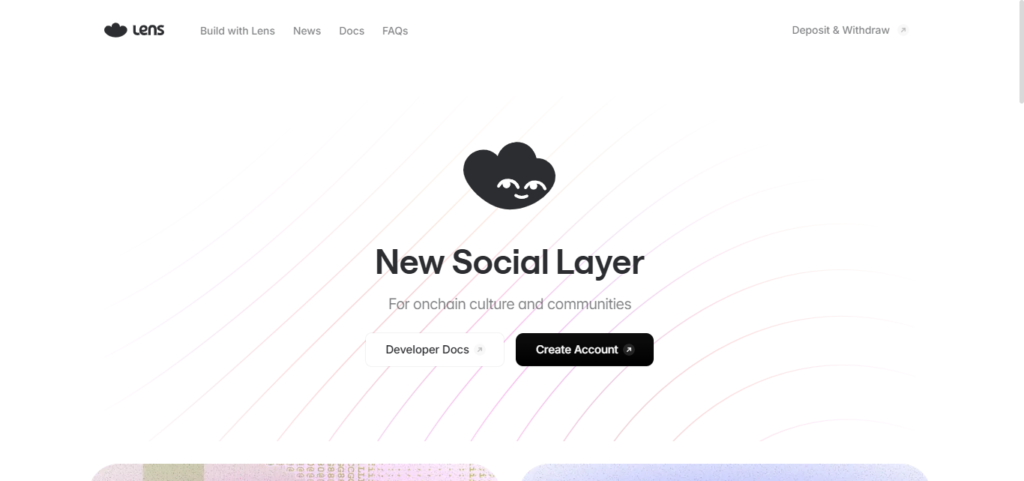
Lens supports scalable decentralized apps by utilizing zkSync ZK Stack technology via Lens Network and Ethereum-based infrastructure. Instead of relying solely on centralized platforms, users have more control over their profiles, contacts, and social data. Lens is a formidable rival to CyberConnect thanks to its ownership-focused architecture.
Lens Protocol Key Feature
| Key Feature | Explanation |
|---|---|
| Decentralized Profiles | Allows users to create blockchain-based profiles for decentralized social networking. |
| User-Owned Social Graph | Gives users ownership of followers, connections, and social relationships across applications. |
| Interoperable Applications | Enables developers to build social applications using shared identity and profile infrastructure. |
| Blockchain-Based Ownership | Uses Lens Network and ZK Stack technology to support scalable, user-controlled social identities. |
2. Farcaster
A decentralized social networking platform called Farcaster gives users portable digital identities for usage in a variety of apps. Farcaster IDs (FIDs), which link individuals to their accounts and social networks, are its primary identity solution. Portable accounts, decentralized social interactions, account recovery, delegated application keys, and permissionless application development are among of the unique characteristics.
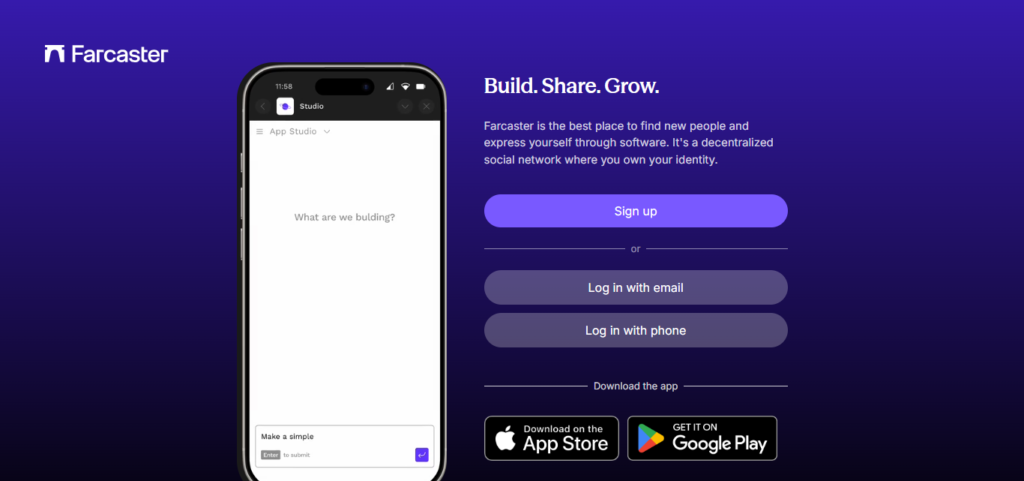
Farcaster manages accounts and registers identities using Ethereum-compatible smart contracts on Optimism’s OP Mainnet; its network infrastructure handles social media posts. Cryptographic keys and linked addresses allow users to keep control over their identities. Farcaster is now a formidable rival to CyberConnect’s decentralized identification ecosystem thanks to this combination.
Farcaster Key Feature
| Key Feature | Explanation |
|---|---|
| Farcaster ID (FID) | Provides unique digital identifiers connected to users’ blockchain-based accounts. |
| Portable Social Identity | Allows users to access multiple Farcaster applications using the same identity. |
| Decentralized Authentication | Uses cryptographic signatures, key management, and smart contract registries for authentication. |
| User-Controlled Accounts | Supports identity ownership, key rotation, and application permissions without sharing master keys. |
3. LUKSO
LUKSO is a Layer 1 blockchain intended for decentralized communities, social applications, digital identification, and creators. Universal Profiles, its primary identity solution, gives users blockchain-based accounts with digital assets, profile information, and personal data. Customizable profiles, asset management, smart contract accounts, permission management, and reusable identities across compatible apps are among the special features.
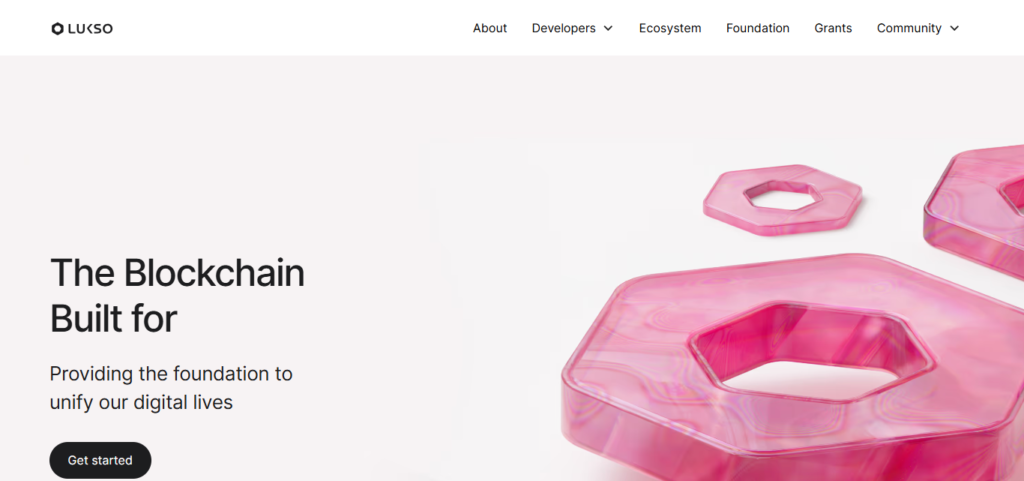
LUKSO makes use of its own LUKSO Standards Proposals, such as LSP0, LSP3, and LSP6, as well as infrastructure that is compatible with Ethereum virtual machines. Through specialized key-management systems, users retain ownership of their profiles and regulate account permissions. LUKSO is a significant rival of CyberConnect thanks to this integrated identification infrastructure.
LUKSO Key Feature
| Key Feature | Explanation |
|---|---|
| Universal Profiles | Provides smart contract-based digital identities for individuals, organizations, and applications. |
| Customizable Identity | Allows users to personalize profiles with names, images, metadata, and digital assets. |
| Smart Contract Infrastructure | Uses Ethereum-compatible Layer 1 blockchain technology and LSP standards. |
| Permission Management | Enables users to control account access through customizable permissions and key management. |
4. Bluesky
Based on the AT Protocol, Bluesky is a decentralized social networking site that gives users portable digital identities and account ownership. Decentralized Identifiers (DIDs) and customisable usernames known as handles are used in its primary identity solution. Account portability, interoperable social profiles, decentralized data repositories, and independent hosting providers are some of the special features.

Bluesky mainly uses federated infrastructure and cryptographic identifiers instead of on-chain identification smart contracts, in contrast to conventional blockchain-based identity platforms. Through protocol-supported methods, users can switch hosting providers without losing their identity or related data. Bluesky can compete with CyberConnect in the decentralized digital identity market thanks to its portable identity architecture.
Bluesky Key Feature
| Key Feature | Explanation |
|---|---|
| Decentralized Identifiers | Uses Decentralized Identifiers (DIDs) to establish unique and persistent digital identities. |
| Portable Usernames | Supports customizable handles that can be updated and linked to account identifiers. |
| AT Protocol Infrastructure | Uses the Authenticated Transfer Protocol (AT Protocol) for decentralized social networking. |
| Account Portability | Supports identity migration between hosting providers while maintaining account continuity. |
5. Ethereum Name Service (ENS)
A decentralized naming protocol called Ethereum Name Service (ENS) converts complicated blockchain addresses into comprehensible names like alice.eth. Its primary identity solution links digital profile data and human-readable usernames to Ethereum wallet addresses. Decentralized domain registration, reverse resolution, subdomains, profile information, and support for numerous bitcoin addresses are among the special features.
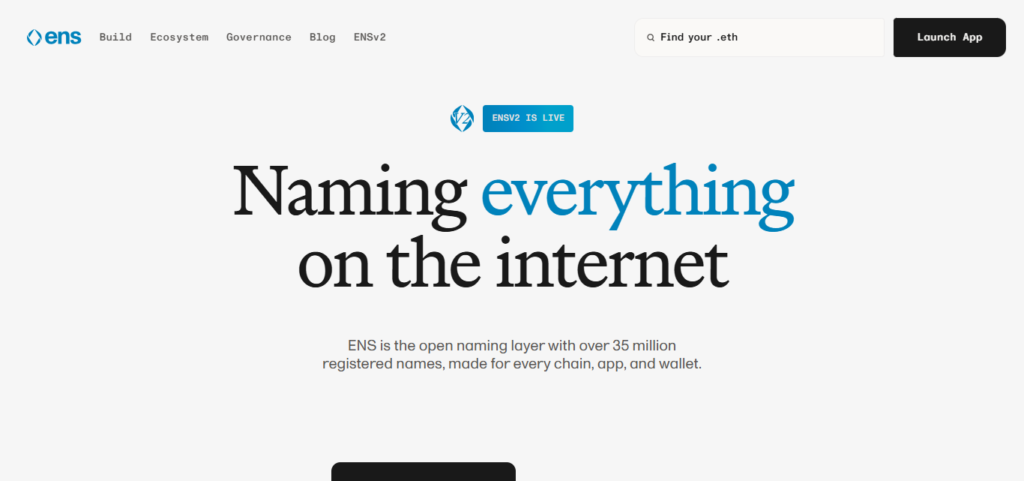
Smart contracts on the Ethereum blockchain are used by ENS to control domain ownership and registration. Through their wallets, users can manage related records, such as avatars, social handles, and website details, in addition to controlling their registered names. ENS is a significant rival to
Ethereum Name Service (ENS) Key Feature
| Key Feature | Explanation |
|---|---|
| Human-Readable Names | Converts complicated blockchain wallet addresses into simple names such as alice.eth. |
| Decentralized Naming | Provides blockchain-based domain registration and management through Ethereum smart contracts. |
| Multi-Chain Address Records | Allows users to associate multiple cryptocurrency addresses with one ENS name. |
| Digital Identity Profiles | Supports profile information, avatars, social handles, and decentralized website records. |
6. Ethereum Attestation Service (EAS)
An open-source platform called the Ethereum Attestation Service (EAS) allows users and apps to provide digital attestations that can be verified. Through structured attestations, its primary identity solution enables users to create trustworthy credentials, reputation records, and identity-related claims.
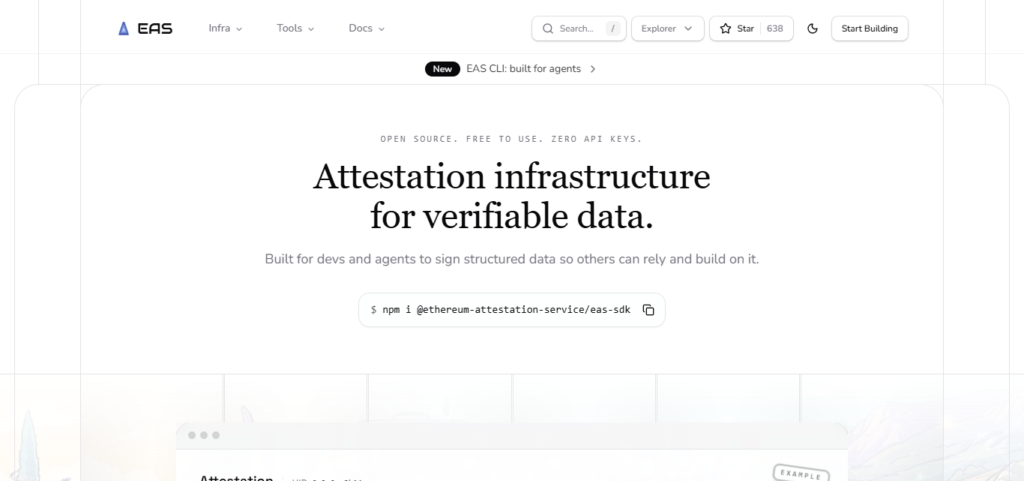
Customizable schemas, credential verification, reputation systems, governance records, and on-chain or off-chain attestations are some of the distinctive characteristics. EAS mainly employs its Schema Registry and Attestation contracts to implement smart contracts on Ethereum-compatible blockchain networks.
Without relying on a single centralized identity provider, users and developers can generate and validate claims. EAS is a competitive CyberConnect option for decentralized identification applications because of its adaptable verification architecture.
Ethereum Attestation Service (EAS) Key Feature
| Key Feature | Explanation |
|---|---|
| Verifiable Attestations | Enables users and applications to create verifiable claims about digital identities. |
| Customizable Schemas | Allows developers to define structured formats for credentials and identity information. |
| On-Chain Verification | Uses blockchain smart contracts to record and verify digital attestations. |
| Decentralized Trust | Supports credential verification without requiring users to depend on centralized authorities. |
7. Galxe
Galxe is a Web3 identity and credential platform that uses verified accomplishments and activities to assist users in creating digital identities. Galxe Account, Galxe Passport, and Galxe identification Protocol, which link users’ wallets, social accounts, and credentials, comprise its primary identification solution. Reusable identity verification, credential issuance, reputation tracking, Sybil resilience, and zero-knowledge proof-based verification are among the special characteristics.
Galxe’s identity infrastructure allows cross-platform credential verification, and it supports a number of blockchain networks, including Ethereum-compatible ecosystems. Users have the ability to regulate credential sharing, manage their identification information, and, if supported, remove access. Galxe is a formidable rival to CyberConnect thanks to its credential-based identification ecosystem.
Galxe Key Feature
| Key Feature | Explanation |
|---|---|
| Decentralized Identity | Provides self-sovereign identity infrastructure for managing digital credentials and profiles. |
| Zero-Knowledge Proofs | Allows users to prove specific information without revealing unnecessary personal details. |
| Verifiable Credentials | Supports issuing, managing, and sharing credentials across compatible applications. |
| Privacy and Ownership | Gives users control over their identity information and credential-sharing permissions. |
8. Privado ID
A decentralized identity infrastructure called Privado ID was created to offer verifiable credentials and safe digital identification. Through decentralized identifiers (DIDs), its primary identity solution allows users to obtain, manage, and display credentials.
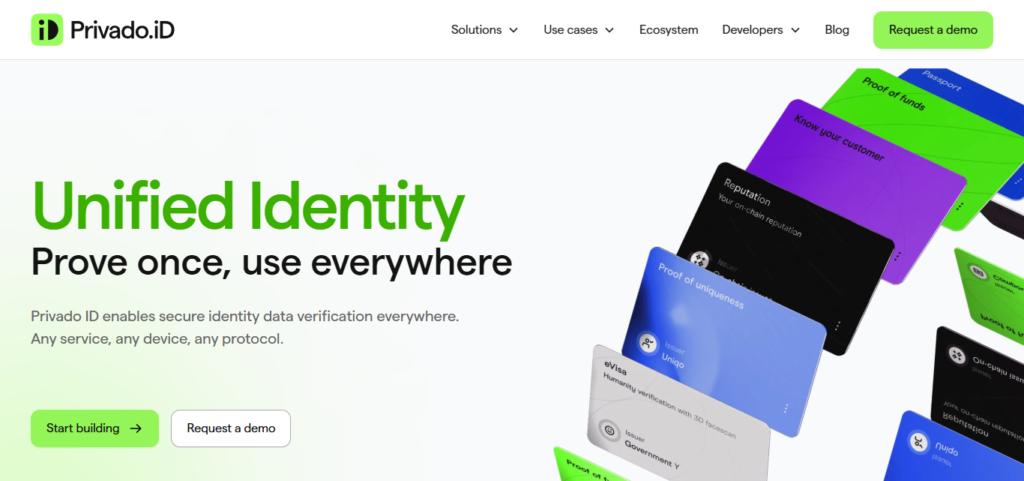
Zero-knowledge proofs, selective disclosure, privacy-preserving verification, credential portability, and identity wallets are some of the special characteristics. Privado ID creates trustworthy connections between users, credential issuers, and applications by utilizing blockchain technology and cryptographic verification.
Both on-chain and off-chain credential verification over compatible networks are supported by its technology. By deciding which credentials and personal information to reveal, users have more control over their identity information. Because of its emphasis on privacy, Privado ID is a formidable rival to CyberConnect.
Privado ID Key Feature
| Key Feature | Explanation |
|---|---|
| Self-Sovereign Identity | Enables users to create, manage, and control their decentralized digital identities. |
| Zero-Knowledge Verification | Allows users to prove identity attributes without disclosing complete personal information. |
| Verifiable Credentials | Supports credentials for identification, KYC, age verification, and reputation. |
| Cross-Platform Verification | Enables credential verification across different applications and blockchain networks. |
9. Civic
Civic is a provider of digital identity and authentication technologies with an emphasis on identity verification and safe user access. Civic Pass, which provided verification tools to separate real users from bots and illegitimate participants, has been its primary identity solution. Identity verification, uniqueness checks, liveness detection, and access control for Web3 apps were among the special features.

Civic has collaborated with blockchain-based ecosystems to facilitate user verification and decentralized application authentication. Through verification credentials, users could access services without having to repeatedly provide personal information.
But in 2025, Civic canceled Civic Pass and turned its attention to Civic Auth, which included embedded wallets and simplified login. As a result, it is not a direct current on-chain identity substitute but rather a similar identity competitor.
Civic Key Feature
| Key Feature | Explanation |
|---|---|
| Digital Authentication | Provides identity-focused authentication tools for secure access to digital applications. |
| Civic Auth | Offers streamlined login and embedded wallet capabilities for Web3 applications. |
| Wallet Integration | Helps developers integrate wallet functionality into user onboarding and authentication experiences. |
| Simplified User Access | Reduces login complexity through integrated authentication and account setup processes. |
10. Ethos
Ethos is an on-chain reputation network created to help people in the Web3 ecosystem build credibility and trust. Its primary identity solution uses trustworthiness ratings, community reviews, vouchers, and attestations to build reputation-based profiles. Peer-to-peer trust verification, reputation scoring, community-backed recommendations, account linkage, and methods for spotting rogue actors are some of its distinctive characteristics.
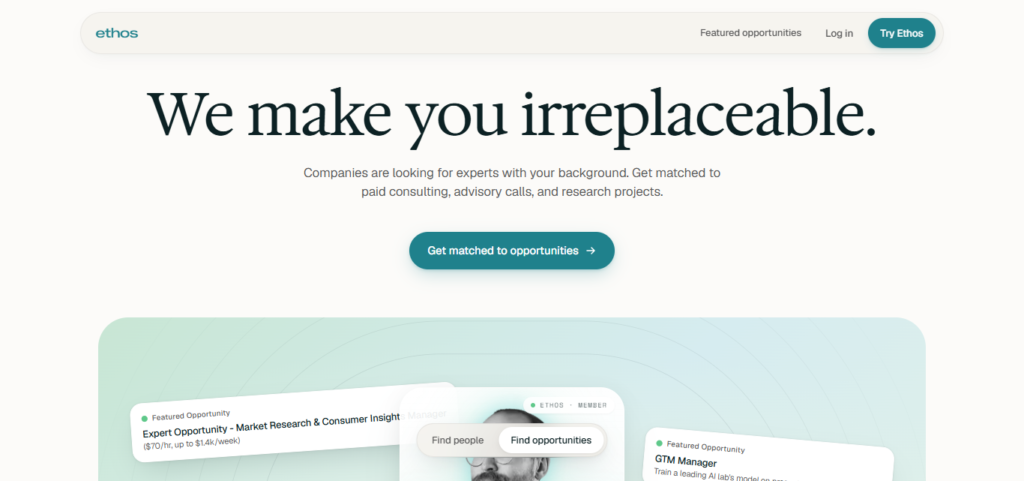
Ethos uses a blockchain-based infrastructure, and its WHUF token on Base facilitates actions connected to reputation. Through community involvement, users can keep pseudonymous identities while developing publicly verifiable reputations. For applications that need decentralized trust and credibility, its reputation-focused identification approach offers an alternative to CyberConnect.
Ethos Key Feature
| Key Feature | Explanation |
|---|---|
| On-Chain Reputation | Enables users to establish publicly verifiable credibility through blockchain-based reputation records. |
| Community Reviews | Allows community members to review and evaluate other users’ trustworthiness. |
| Vouching Mechanism | Enables users to support trusted individuals through WHUF-backed reputation contributions. |
| Credibility Scoring | Calculates reputation scores using reviews, vouches, slashes, and identity attestations. |
Conclusion
To sum up, the top CyberConnect rivals for on-chain identification offer cutting-edge solutions for user ownership, decentralized identity management, privacy, and verification. Web3 users and developers can benefit from many capabilities provided by platforms
like Lens Protocol, Farcaster, LUKSO, ENS, and Privado ID. Your identification needs, blockchain compatibility, security, interoperability, and long-term digital identity objectives all play a role in selecting the best option.
FAQ
On-chain identity platforms help users create, manage, and verify digital identities using blockchain technology.
Yes, Lens Protocol offers user-owned social profiles, decentralized connections, and interoperable identity infrastructure.
Farcaster provides unique Farcaster IDs, portable social accounts, and cryptographic authentication across applications.
ENS converts complex wallet addresses into readable names and supports blockchain-based identity profiles.