

In this article, I will discuss the Best Farcaster Rivals for Decentralized Social Graphs. Let’s look at the best platforms and protocols shaping the future of decentralized social networking.
I’ll go through their key features, technologies, social graph ownership, interoperability, and best use cases to help readers understand how each alternative compares with Farcaster and what makes it different.
Key Points & Best Farcaster Rivals for Decentralized Social Graphs
| Platform / Protocol | Architecture / Chain | Key Strength | Primary Ecosystem / Clients |
|---|---|---|---|
| Lens Protocol | Ethereum L2 / ZK-Chain | On-chain NFT profiles and composable social graphs | Hey (formerly Lenster), Orb, Lenstube |
| Bluesky (AT Protocol) | Federated / DID-based | Algorithmic choice and seamless account portability | Bluesky app, Leaflet, Firefly |
| Nostr | Cryptographic Key / Relay | Lightweight, censorship-resistant, and zero blockchain bloat | Damus, Primal, Amethyst |
| Cyber (CyberConnect) | Cyber L2 (Ethereum) | AI-integrated social context and cross-chain identity | Link3, Cyber ecosystem apps |
| Mastodon (ActivityPub) | Federated Servers | Open-source, ad-free communities with independent moderation | Mastodon, Pixelfed, Lemmy |
| DeSo | Dedicated Layer-1 | Built specifically for on-chain storage and creator monetization | Diamond, Focus, Desofy |
| Tapestry | Solana | High-speed, sub-second social graph API for Solana apps | Solana consumer dApps |
| Hive | Dedicated Layer-1 | Feeless posting using renewable Resource Credits | PeakD, Ecency, 3Speak |
| RSS3 | Open Information Layer | Aggregates and indexes open social activity across Web3 protocols | Follow, Web3 social feeds |
| Minds | Ethereum / Open Source | Crypto-rewarded open-source social networking with ad-revenue sharing | Minds web and mobile apps |
10 Best Farcaster Rivals for Decentralized Social Graphs
1. Lens Protocol
Lens Protocol is a decentralized social graph that allows people to port their identity, relationships and content across apps, rather than having to recreate an audience on every platform. It is modeled around user controlled profiles and composable actions like following, publishing, collecting and community interactions.
Developers are able to build different types of social experiences on a common infrastructure, and creators can maintain connections that outlive any particular app. This is why Lens is a good comparison for Web3 communities and creator tools for Farcaster.
Its main difference is its focus on programmable social relationships and onchain ownership for independent apps. Portability and user experience are determined by the apps and infrastructure that power Lens.
Lens Protocol Best Use Case
- Decentralized Social Applications: Perfect for developers creating social platforms where users can own their profiles, followers and content.
- Creator Communities: Great for creators who want to grow their audience and stay social across compatible apps.
- Web3 Social Networking: A good fit for blockchain communities requiring programmable social interactions and user-controlled identities.
- Composable Social Experiences: Ideal for developers building apps that want to reuse social capabilities such as following, publishing, and aggregating content.
Lens Protocol Key Feature
| Key Feature | Explanation |
|---|---|
| User-Owned Profiles | Allows users to maintain social profiles and relationships within the Lens ecosystem, supporting greater control over their digital identities. |
| Composable Social Graph | Provides reusable social features, enabling developers to build applications around profiles, followers, and social interactions. |
| Content Publishing | Supports publishing, collecting, and interacting with content across compatible applications. |
| Developer Infrastructure | Offers tools and infrastructure for developers to create decentralized social applications and integrate social functionality. |
2. Bluesky (AT Protocol)
Bluesky is a social app that runs on the AT Protocol, an open framework for interoperable social apps. The protocol standardizes identity, following, posting and other records. Users’ repositories are hosted on personal data servers and relays distribute network activity.
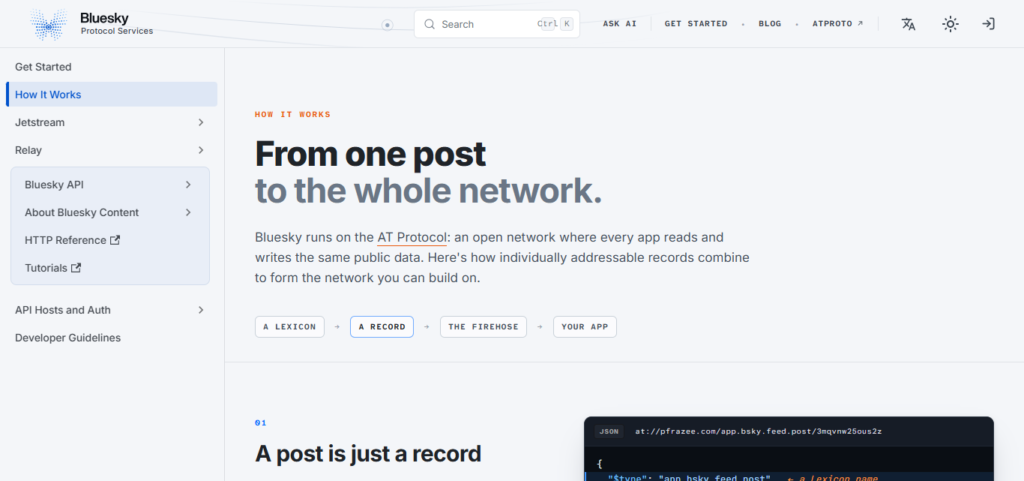
Developers are able to build alternate clients, custom feeds, and services using publicly shared data. A key goal is account portability, allowing users to move between hosting providers without having to rebuild their social presence.
Bluesky is more about federated data network and portable accounts while Farcaster is more about blockchain identity and tokenized interactions. Its graph is available across compatible AT Protocol apps, but portability is implementation dependent.
Bluesky Best Use Case
- Custom Social Platforms: Designed for developers who want to build their own social networking applications on shared protocol infrastructure.
- Custom Content Feeds: Perfect for users who want personalized feeds and more control over content discovery.
- Portable Social Identities: Good for people who want to move between compatible services and don’t want to lose their established identity.
- Open social networking: best for communities that want interoperability, independent hosting, and a different approach than traditional centralized platforms.
Bluesky (AT Protocol) Key Feature
| Key Feature | Explanation |
|---|---|
| Portable Identity | Supports account portability, allowing users to migrate between compatible hosting providers while maintaining their identity. |
| Custom Feeds | Enables users and developers to create personalized content feeds using different discovery and recommendation systems. |
| Open Social Protocol | Uses AT Protocol to connect independent applications through shared identity and data standards. |
| Personal Data Servers | Allows users’ account repositories to be hosted separately from individual social applications, supporting data portability. |
3. Nostr
Nostr isn’t a company or an application, it’s an open social protocol. Users post cryptographically signed events via independent relay servers, and various client apps allow them to read, write, follow accounts and interact. This is not identity tied to one platform .
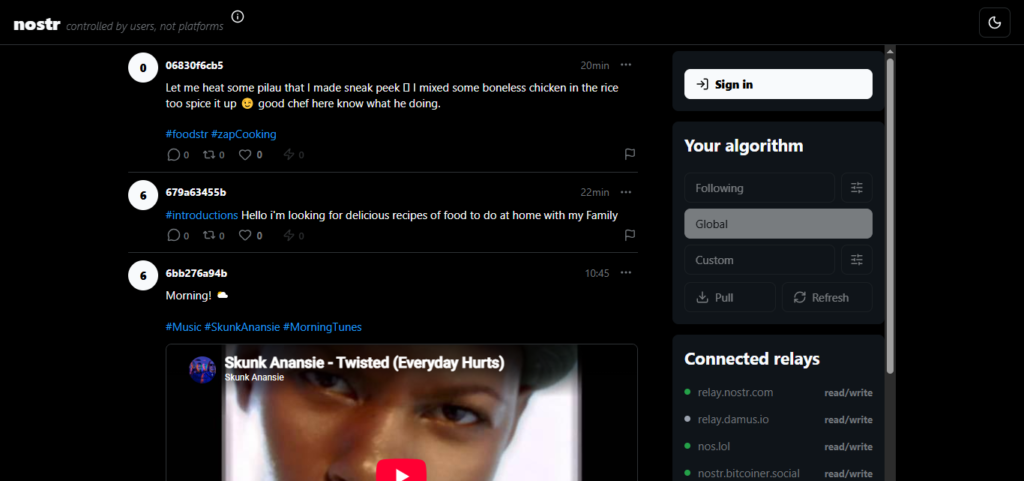
The public key is an account , and the private key authorizes messages . Users can connect to different relays, switch clients and still be the same identity. Nostr supports short posts, and replies, but also long-form writing and direct messaging — via community-developed standards. Nostr, however, is all about being simple, censorship resistant, and having a variety of clients (relay coverage and data availability may vary).
Nostr Best Use Case
- Decentralized Social Networking: Perfect for those who want to grow their social circles without being constrained to a single platform.
“Private-key identity: This is great for users who want cryptographic control over their accounts and digital identities. - Standalone Social Apps: Ideal for developers creating light social clients, messaging apps, and content-sharing applications.
- Censorship-Resistant Communication: Great for users who want to publish and communicate using independent relay servers.
Nostr Key Feature
| Key Feature | Explanation |
|---|---|
| Cryptographic Identity | Uses public and private key pairs to establish user identities and authenticate social interactions. |
| Independent Relays | Distributes messages and social content through independent relay servers instead of one centralized infrastructure. |
| Signed Events | Uses cryptographically signed events to support publishing, replies, reactions, and other social activities. |
| Multiple Client Applications | Allows users to access the network through different applications while retaining their Nostr identity. |
4. Cyber (CyberConnect)
Cyber, the brainchild of the team behind the former CyberConnect, is an Ethereum Layer 2 on the OP Stack built for social apps and AI use cases. It aims to move social and identity-related primitives closer to the blockchain and enable developers to build with EVM-compatible tools.
This makes it relevant to Farcaster as both support Web3 social experiences outside of a single centralized app But cyber is no longer just the original social graph CyberConnect. Now it’s positioned as an L2 with CYBER as the ecosystem token. The benefit of it is the compatibility with Ethereum development tools . The social-network value depends on applications built on the chain .
Cyber (Cyber Connect) Best Use Case
- Web3 Application Development. Best for developers building decentralized applications on Ethereum-compatible infrastructure.
- Blockchain-Based Ecosystems: Ideal for projects requiring an EVM-compatible network for decentralized apps and transactions.
- AI & Web3 Integration: Good for developers looking to build applications that use blockchain infrastructure to deliver AI-related services.
- Decentralized Infrastructure: This is the best choice for projects that want an Ethereum-aligned Layer 2 environment and access to its developer ecosystem.
Cyber (CyberConnect) Key Feature
| Key Feature | Explanation |
|---|---|
| Ethereum Layer 2 | Provides an Ethereum-aligned Layer 2 environment built using the OP Stack. |
| EVM Compatibility | Supports Ethereum-compatible development tools, making it easier for developers to build blockchain applications. |
| CYBER Token | Uses the CYBER token within its ecosystem for network-related utility and participation. |
| Web3 Infrastructure | Provides blockchain infrastructure for developers exploring decentralized applications and AI-related use cases. |
5. Mastodon (ActivityPub)
Mastodon is a decentralized social network of independently operated servers, known as instances. It uses ActivityPub, a protocol standardized by the W3C that allows servers to exchange posts, follows, replies and other social activities. People can join an instance, follow users on other participating servers, and interact throughout the larger fediverse.
This creates a distributed social graph that is independent of the infrastructure of a single company. Unlike Farcaster, Mastodon is built on federated server communities, not blockchain accounts or onchain social primitives.
You get the benefits of open standards, community moderation and interoperability between ActivityPub services, but you get what you get in terms of discovery and experience depending on the server you choose and its local policies.
Mastodon (ActivityPub) Best Use Case
- Community Social Networks: For communities seeking their own independently managed social networks.
- Federated Communication: Great for those who want to interact with people on other ActivityPub compatible servers.- Open-Source Social Platforms: Best for organizations that want to create their own social networks, where they can make the rules of moderation.
- Decentralized Content Sharing: Great for people and communities looking to bypass centralized social media platforms.
Mastodon (ActivityPub) Key Feature
| Key Feature | Explanation |
|---|---|
| Federated Architecture | Connects independently operated servers that communicate through the wider ActivityPub network. |
| ActivityPub Support | Uses an open social networking protocol that enables communication between compatible platforms and servers. |
| Community Moderation | Allows individual server administrators to establish moderation rules and manage their communities. |
| Cross-Server Following | Enables users to follow and interact with accounts hosted on different participating servers. |
6. DeSo
DeSo is a blockchain for social applications. Identity, profiles, posts, comments, likes, follows, and creator activity all exist on the public network. Its architecture is built to handle the massive amount of data generated by social platforms, not to see social interactions as occasional financial transactions. Developers are able to build applications on shared social data, and creators can use social tokens, tipping and NFTs to build direct audience relationships.
DeSo is a Farcaster rival because it merges a social graph with blockchain-native publishing and monetization. Its unique strength is that it can put many social actions onchain, but users and developers need to consider network fees, storage design and ecosystem adoption.
DeSo Best Use Case
- Blockchain Social Networks: Great for developers building social apps with profiles, posts, comments and followers onchain.
- Monetization for creators: Best for creators who want to explore social tokens, tipping, and blockchain based monetization features.
- Decentralized Content Publishing: Good for applications that require public social content and interactions.
- Web3 Community Development: Best for projects that are building blockchain native communities with inbuilt social and financial capabilities.
DeSo Key Feature
| Key Feature | Explanation |
|---|---|
| Blockchain-Based Social Data | Stores social activities such as profiles, posts, comments, and follows on its blockchain infrastructure. |
| Creator Monetization | Supports social tokens, tipping, and other blockchain-based opportunities for creator engagement. |
| Decentralized Identity | Provides blockchain-based user profiles and identities that can be used across compatible applications. |
| Social Application Development | Offers infrastructure for developers to create applications using shared social data and network features. |
7. Tapestry
Tapestry is a social protocol and developer infrastructure that enables social data to be reused across applications, specifically on Solana. APIs and its tools allow developers to tap into profiles, follows, likes, comments and other social data, so you don’t have to build a separate social database for each app.
Tapestry also describes a unified social layer connecting data across Solana, Farcaster, Lens, Bluesky and other networks. This makes it useful alongside Farcaster instead of a pure consumer-network replacement: an app can take advantage of existing identities and relationships instead of starting with an empty graph. Its advantage is cross-platform social data integration. Coverage is a function of supported sources and indexing.
Tapestry Best Use Case
- Cross-Platform Social Graphs: Best for developers wanting to link social relationships across different apps and protocols.
- Social Apps on Solana: Best for projects that are building social experiences on the Solana infrastructure.
- Social Data Integration – Good for apps that want to access profiles, followers, likes and comments through shared infrastructure.
- Social Tools for Developers: Best for teams that want to add social features without creating a new social graph.
Tapestry Key Feature
| Key Feature | Explanation |
|---|---|
| Unified Social Graph | Aims to connect social relationships and identities across multiple applications and networks. |
| Social Data APIs | Provides developer tools to access social information such as profiles, follows, likes, and comments. |
| Solana Integration | Focuses on social application infrastructure within the Solana ecosystem. |
| Cross-Platform Connectivity | Helps applications integrate social information from supported ecosystems, reducing the need to build separate social databases. |
8. Hive
Hive is a community-governed blockchain and a public social and identity layer for Web3 applications. It supports human-readable accounts, posts, comments, votes, communities and payments, with transactions designed to be feeless through its resource-credit model. The network uses delegated proof of stake, where elected block producers produce blocks roughly every three seconds.
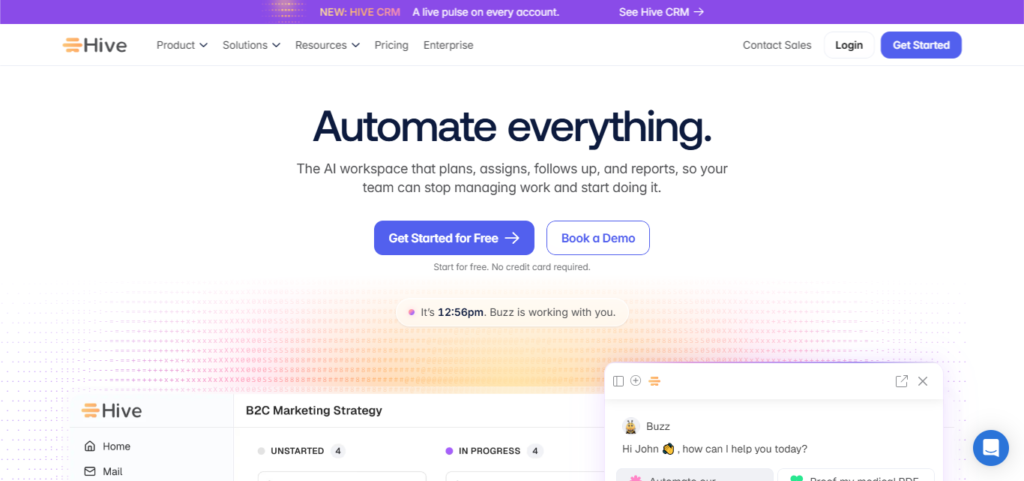
Social apps on Hive can share account and content data and creators can earn token rewards for publishing and curation. Hive is a blockchain-native environment, unlike Farcaster, where social activity and rewards are integrated into the chain. Strengths: Low friction publishing and community apps. Governance and reward dynamics drive participation.
Hive Best Use Case
- Reward-Based Social Network: Ideal for creators who want to earn blockchain-based rewards for publishing content and participating in a community.
- Decentralized Blogging: Ideal for bloggers and writers looking to publish content on a blockchain-based network.
- Community Engagement: Best for online communities where comments, voting, discussions and content curation are key.
- Web3 Social Applications: A good fit for developers building apps that integrate social interactions, blockchain accounts, and digital rewards.
Hive Key Feature
| Key Feature | Explanation |
|---|---|
| Delegated Proof of Stake | Uses a delegated proof-of-stake consensus mechanism to support blockchain operations and network governance. |
| Feeless Transactions | Uses resource credits instead of conventional per-transaction gas fees for many network interactions. |
| Content Rewards | Supports token-based rewards for content creation, voting, and community curation. |
| Social Communities | Provides blockchain-based accounts, blogging, comments, discussions, and community interaction features. |
9. RSS3
RSS3 is an open protocol for structuring and distributing information from decentralized networks and other sources of open data. It’s not a social app per se, but indexes activity, and translates information from different protocols into a common format that developers are able to use.
This can include onchain, social, and other public Web3 data, helping applications discover information across ecosystems. RSS3 is relevant to Farcaster because interoperable social products need to pull and organize activity across multiple networks.
It helps with data accessibility and cross-protocol integration, but doesn’t help with owning a follower graph or social feed in isolation. Developers need to look at source coverage, index latency and supported schemas.
rss3 Best Use Case
- Decentralized Data Indexing: For developers looking to query structured data across the different blockchain and social ecosystems.
- Cross-Protocol Data Integration: Good for apps that aggregate public activity from multiple decentralized networks and curate it.
- ** Web3 Analytics: ** Useful for projects interested in on-chain activity, digital identity, and social interaction.
- Social Data Infrastructure: Ideal for developers building dashboards, discovery tools, and applications that require interoperable Web3 data.
RSS3 Key Feature
| Key Feature | Explanation |
|---|---|
| Decentralized Data Indexing | Collects and organizes information from supported decentralized networks and public data sources. |
| Cross-Protocol Integration | Helps developers access information from different blockchain and social ecosystems through structured data. |
| Open Data Infrastructure | Provides tools for applications that need accessible and standardized Web3 information. |
| Social Activity Tracking | Helps applications retrieve and organize supported social activities and onchain interactions across networks. |
10. Minds
Minds is an open-source social network focused on user control, audience ownership, transparent feeds, and creator rewards. It offers profiles, posts, comments, groups and messaging, with the ability to customize feeds and earn token rewards for contributions.
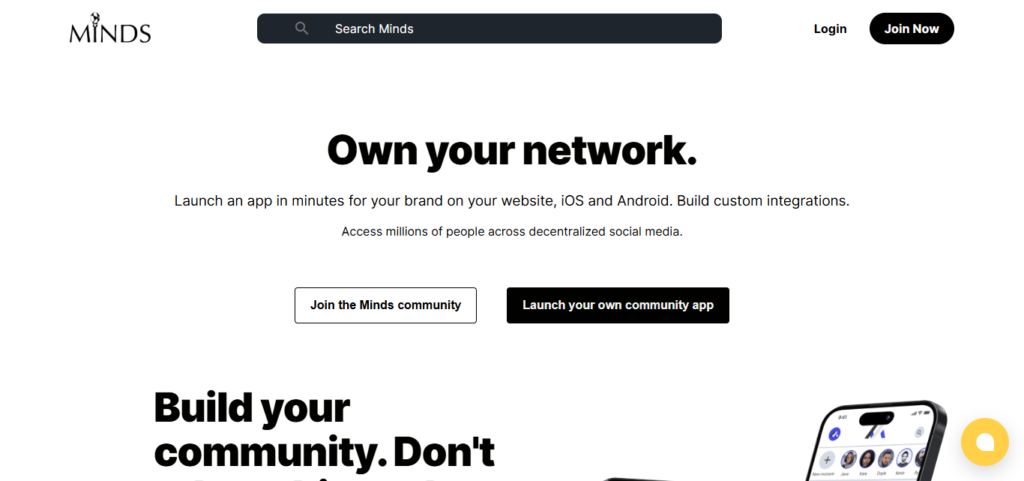
Its creators also record support for open protocols like Nostr, allowing users to link activity to a broader decentralized ecosystem. Minds is fundamentally different from Farcaster in that it is first and foremost a social network with its own community and product experience
rather than a protocol-first ecosystem focused on composable social identity. Attraction is creator monetization and open-source development, but users need to separate platform features from portability provided by supported protocols.
Minds Best Use Case
- Social networking for creators: Great for creators who want to post content, build an audience, and interact with rewards.
- Community Management: Perfect for communities that need discussion areas, user profiles, and features for community interaction.
- Open-Source Social Platforms: Useful for developers and organizations that want to customize social networking software.
- Alternative Social Media: Ideal for those who prefer an open social platform with an emphasis on user control, content sharing, and community engagement.
Minds Key Feature
| Key Feature | Explanation |
|---|---|
| Open-Source Architecture | Provides an open-source social networking platform that supports transparency and community-driven development. |
| Creator Rewards | Offers token-based reward mechanisms designed to encourage content creation and audience engagement. |
| Community Features | Supports profiles, groups, comments, posts, and messaging for social interaction. |
| Content Discovery | Provides content feeds and discovery features that help users explore posts and engage with different communities. |
How We Chose the Best Farcaster Competitors for Decentralized Social Graphs
- Decentralization: We assess the degree of decentralization enabled in social networking on each platform.
- Social Graph Ownership: We examine the ownership users have over their profiles, followers and social connections.
- Key Features: Content sharing, messaging, communities, social interaction.
- Interoperability: We assess the ease with which platforms can interact with other decentralized networks and applications.
- Technology: We look at the protocols, the blockchain infrastructure and the tools that power each platform.
- User Experience: We consider accessibility, usability and overall networking experience.
- Developer Support: We review APIs, documentation and tools for building social applications.
- Unique Advantages: We look for features and capabilities that make each platform different than Farcaster.
Conclusion
To summarize Choosing the Best Farcaster Rivals for Decentralized Social Graphs depends on what you need, whether you prioritize user-owned identities, social graph portability, content sharing or developer flexibility.
Different platforms like Lens Protocol, Bluesky, Nostr, DeSo, and Mastodon approach decentralized networking differently. Users and developers may look for suitable alternatives to Farcaster by comparing their key features, technologies and use cases.
FAQ
Yes, both support decentralized social networking and user-owned social connections.
Bluesky uses AT Protocol for portable identities and custom feeds.
Yes, Nostr connects users through cryptographic identities and independent relays.
Lens Protocol, DeSo, and Hive support blockchain-powered social networking.