

In this article, I will discuss the Best Squid Router Competitors for Web3 Swaps. We will compare some of the leading cross-chain platforms including LI.FI, deBridge, Across Protocol, Rango Exchange, Stargate Finance, and more.
You’ll get to know their main features, supported blockchains, fees, transaction speeds, security measures, pros and cons to help you choose the best solution for your Web3 swapping needs.
Key Points & Best Squid Router Competitors for Web3 Swaps
| Competitor | Explanation |
|---|---|
| LI.FI / Jumper Exchange | Aggregates bridges and decentralized exchanges to optimize cross-chain swap routes, pricing, and execution. |
| deBridge | Enables fast cross-chain swaps through intent-based execution and decentralized solver liquidity networks. |
| Across Protocol | Provides intent-based bridging focused on fast settlements, competitive fees, and capital efficiency. |
| Rango Exchange | Aggregates decentralized exchanges and bridges across EVM, Cosmos, Solana, and Bitcoin ecosystems. |
| Stargate Finance | Uses unified liquidity pools to facilitate native-asset transfers across multiple blockchain networks. |
| Symbiosis | Enables cross-chain token swaps by connecting liquidity sources across diverse blockchain ecosystems. |
| Socket / Bungee | Aggregates bridge providers and swap routes, helping users compare cross-chain transfer options. |
| 1inch Fusion Plus | Extends 1inch swap technology with cross-chain swaps powered by resolvers and intents |
| Relay Link | Offers streamlined cross-chain transfers using relayer-based execution and fast transaction settlement infrastructure. |
| Router Protocol / Nitro | Provides cross-chain infrastructure designed to enable interoperable asset transfers between supported blockchain networks. |
10 Best Squid Router Competitors for Web3 Swaps
1. .FI / Jumper Exchange
LI.FI is a cross-chain aggregator with support for dozens of networks including major EVM chains, Solana and a growing list of newer layer-2s. It compares routes across many bridges and DEXs and chooses the best one for cost, speed or reliability.
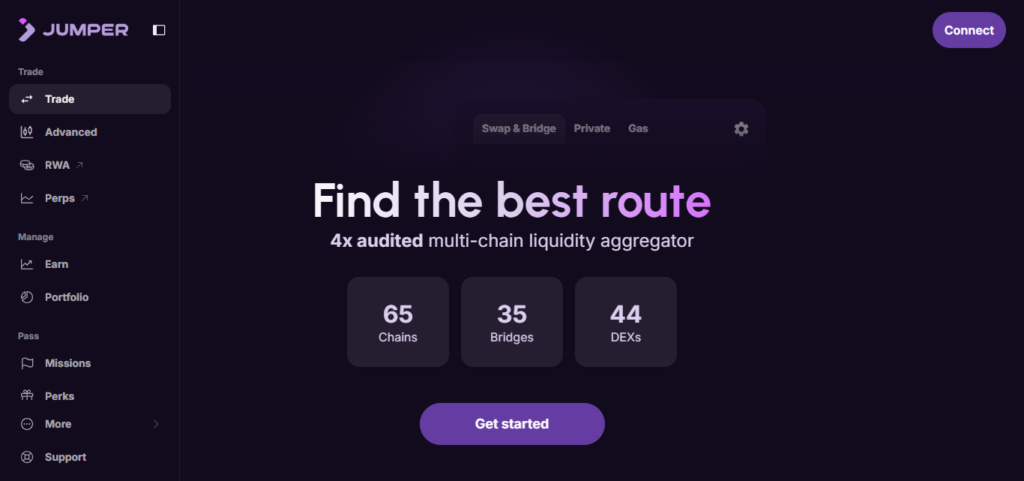
Jumper is the retail app, devs integrate its API or SDK. Fees include underlying bridge and DEX costs, gas and a small service fee configurable by integrators. Transfers usually clear in seconds to a few minutes, depending on the route. Security: Audited contracts, non-custodial design and vetted bridge partners.
LI.FI / Jumper Exchange Pros & Cons
| Pros | Cons |
|---|---|
| Aggregates multiple bridges and DEXs to find competitive cross-chain swap routes. | Route availability varies by token, blockchain, liquidity, and integrated protocols. |
| Provides a user-friendly interface through Jumper Exchange for cross-chain swaps. | More routing options can make transaction comparisons difficult for beginners. |
| Offers developer APIs and SDKs for wallet and dApp integrations. | Depends on underlying bridges and protocols, inheriting their potential security risks. |
| Supports multiple blockchain ecosystems through one routing integration. | Complex routes may involve multiple transactions and additional gas costs. |
2. deBridge
deBridge supports major EVM networks as well as Solana and other growing ecosystems. Its flagship product is the deBridge Liquidity Network (DLN), an intent-based solution in which market makers fulfilll orders on the destination chain. This allows for cross-chain swaps and messaging with high capital efficiency.
The price is competitive for big trades and includes a small protocol fee, market-maker spread and gas. Makers are the ones providing the liquidity, so transfers often settle in seconds to a few minutes. Security is provided by audits, a network of validators that confirm messages, a bug bounty program and a non-custodial structure.
deBridge Pros & Cons
| Pros | Cons |
|---|---|
| Uses solver-based execution to facilitate fast cross-chain transfers and swaps. | Available routes depend on solver participation and supported token pairs. |
| DLN avoids relying on conventional pooled bridge liquidity for order fulfilment. | Users must understand solver execution and transaction-specific pricing. |
| Supports cross-chain swaps and messaging for decentralized applications. | Network coverage may be narrower than some broad aggregators. |
| Provides transparent transaction quotes before users submit orders. | Gas costs and solver pricing can make some routes expensive. |
3. Across Protocol
Across is targeting major networks in the Ethereum ecosystem including Ethereum, Arbitrum, Optimism, Base, Polygon and a number of other layer-2s. It is an intent-based bridge where relayers front funds to users on the destination chain and get paid later from liquidity pools. Fees are a combination of a relayer fee, an LP fee and gas and are usually low on popular routes.
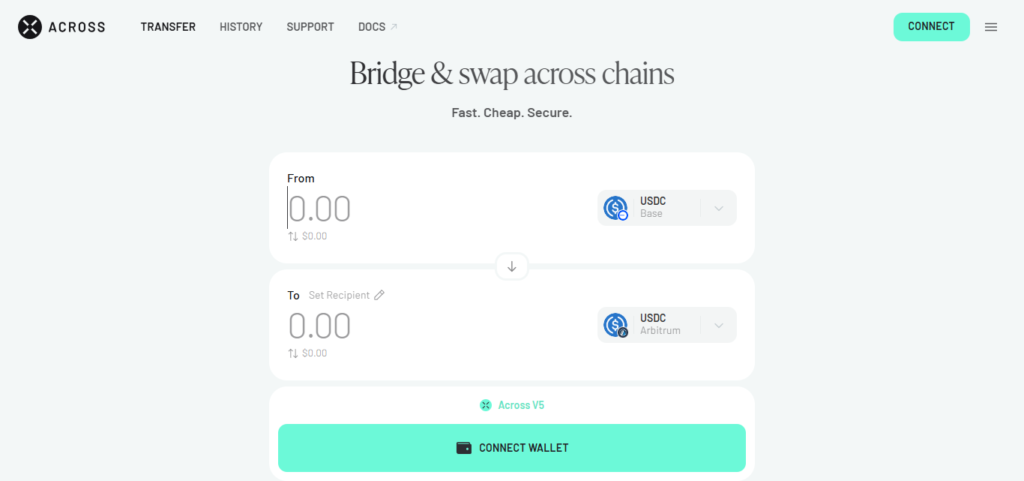
Transfers normally take from a few seconds to a few minutes. Safety is guarantyd by the UMA optimistic oracle which validates and disputes fills and has undergone several audits, thus enjoying a solid reputation for security and efficiency.
Across Protocol Pros & Cons
| Pros | Cons |
|---|---|
| Intent-based transfers enable relayers to deliver assets quickly across supported networks. | Coverage is more focused than some multi-chain aggregation platforms. |
| Designed for capital efficiency and competitive bridging costs. | Relayer availability and route liquidity can affect execution. |
| Supports Ethereum Layer 2 ecosystems and selected additional networks. | Complex swaps may require separate routing or destination-side swap functionality. |
| Uses optimistic verification and additional settlement mechanisms. | Settlement and dispute mechanisms introduce risks users should understand. |
4. Rango Exchange
Rango covers one of the broadest ranges of ecosystems including EVM chains, Solana, Cosmos-based networks, Tron and others. It’s a multi-chain aggregator that compares many DEXs and bridges and offers routes for both cross-chain and same-chain swaps. Its wallet-friendly user interface and dev SDK make it easy for apps to embed.
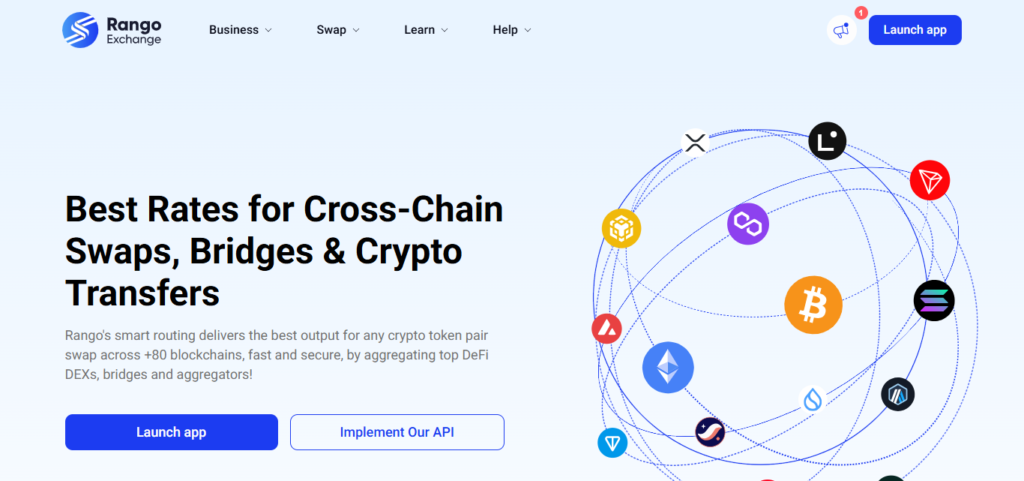
The costs are driven by the underlying protocol fees, network gas and a small Rango fee and are displayed before you confirm. Depending on which bridge you take it can take from less than a minute to several minutes. Security is based on non-custodial execution, audits and vetted protocols that it routes through.
Rango Exchange Pros & Cons
| Pros | Cons |
|---|---|
| Aggregates bridges and DEXs across EVM and non-EVM ecosystems. | Some routes may involve multiple steps and longer completion times. |
| Helps users discover routes across diverse blockchain networks. | Final pricing depends on the underlying bridge and exchange providers. |
| Useful for ecosystems such as Cosmos, Solana, and UTXO-based networks. | Route availability and token support differ across networks. |
| Simplifies cross-chain swaps through a unified interface. | Users still need to evaluate third-party protocol security. |
5. Stargate Finance
Powered by LayerZero, Stargate supports a broad set of EVM networks and some non-EVM chains via the LayerZero messaging layer. Its main strength is unified liquidity pools that allow for native-asset transfers without wrapped tokens, meaning users receive real assets on the destination chain.
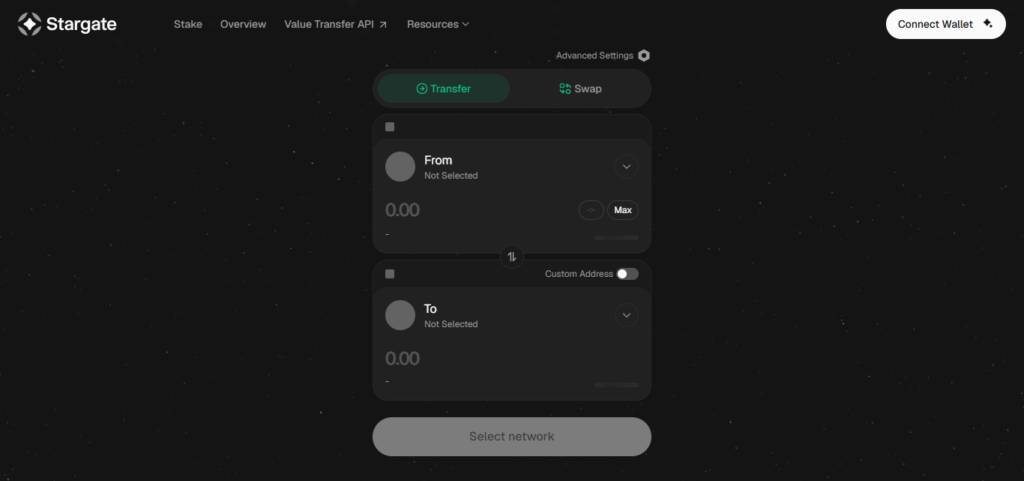
Usually a small fixed percentage based on pool balance + LayerZero messaging + gas fees. On average, transfers take between one and a few minutes. LayerZero’s configuration of verifiers, regular audits and a long operating history provides security, making it a popular choice for stablecoin and major-token bridging.
Stargate Finance Pros & Cons
| Pros | Cons |
|---|---|
| Uses unified liquidity pools for supported cross-chain asset transfers. | Transfers are limited to supported networks, assets, and liquidity routes. |
| Provides infrastructure for native-asset transfers between connected chains. | Liquidity imbalances can affect fees and route availability. |
| Integrates with LayerZero messaging infrastructure. | Security depends on messaging configuration and deployed smart contracts. |
| Useful for applications requiring cross-chain liquidity movement. | Not designed to aggregate every available bridge or DEX route. |
6. Symbiosis
Symbiosis supports many EVM networks and has ventured into non-EVM ecosystems like Bitcoin, Tron and TON. It is a multichain liquidity protocol that combines swaps and bridging, letting users move between any supported assets in one flow.
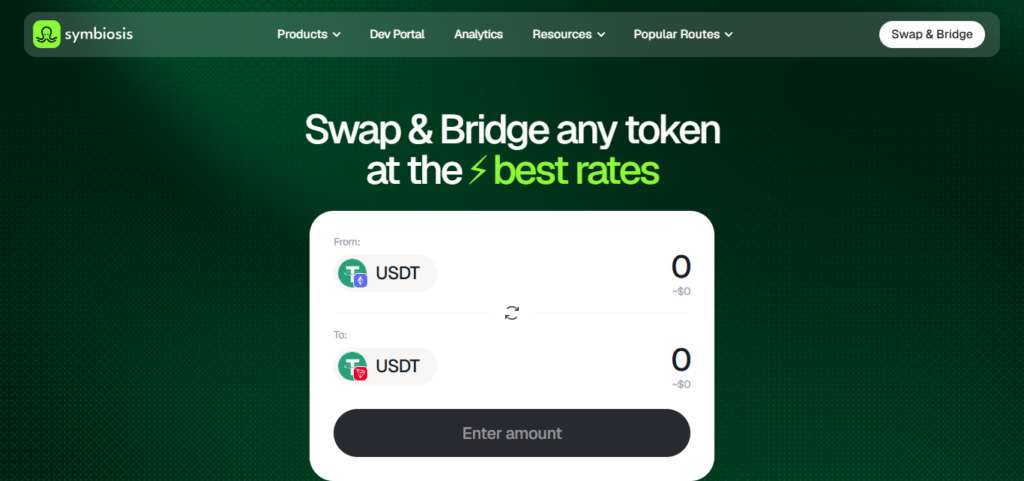
Quotes are upfront, and pricing includes bridge fees, DEX swap costs and gas. Transfers usually take a few minutes, but times may vary depending on the route and congestion on the network. Security based on audited intelligent contracts, a decentralized relayer and signer set based on multi-party computation, and bug bounty programs are other notable options for broader asset coverage.
Symbiosis Pros & Cons
| Pros | Cons |
|---|---|
| Combines cross-chain liquidity and swaps through a unified interface. | Supported tokens and routes vary across connected blockchain networks. |
| Helps users exchange assets without manually selecting separate bridges. | Complex routes may increase costs and transaction completion times. |
| Provides cross-chain infrastructure for decentralized applications and wallets. | Pricing depends on liquidity, gas, and underlying execution providers. |
| Supports multiple blockchain ecosystems, including selected non-EVM networks. | Third-party integrations and smart contracts introduce additional security considerations. |
7. Socket / Bungee
Socket is a cross-chain infrastructure protocol, and Bungee is its consumer app. They support a large number of EVM networks and some additional ecosystems through aggregated bridges, together. Its main features are route comparison, swaps, bridging and a flexible API for wallets and dApps.
The costs are composed of underlying bridge fees, DEX costs, gas and optional integrator fees. The best route is chosen based on price or speed. Usually transfers take from a few seconds to a few minutes. Security is grounded in audited contracts, a non-custodial design, and a modular approach where each bridge’s risk model applies, meaning users get diversified routing.
Socket / Bungee Pros & Cons
| Pros | Cons |
|---|---|
| Aggregates bridge providers to compare cross-chain transfer routes. | Actual performance depends on the selected bridge and available liquidity. |
| Offers developer infrastructure and a user-facing interface through Bungee. | Some routes may involve multiple transactions or additional gas expenses. |
| Helps applications simplify cross-chain transaction experiences. | Security varies according to the underlying bridge and protocol integrations. |
| Provides flexibility by connecting different bridging solutions. | Coverage and token availability may differ from competing aggregators. |
8. 1inch Fusion Plus
1inch Fusion+ supports the major EVM networks and has expanded to include other chains such as Solana. It is an intent-based, self-custodial swap protocol, where professional resolvers bid in an auction to fulfilll cross-chain orders. The users sign an order and do not pay gas directly. The resolvers have already considered the cost of execution and build in the quoted price.
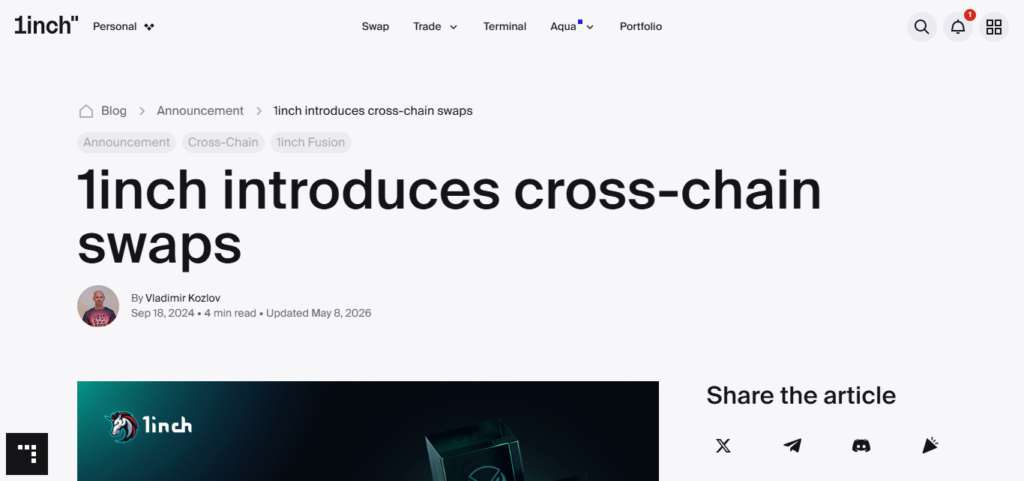
The auction structure means that pricing is generally competitive, while 1inch’s aggregation provides deep liquidity. Swaps take a minute or two to close, usually. Security uses atomic, escrow-based swaps with hashlocks and timelocks, so funds are protected in case a resolver fails.
1inch Fusion+ Pros & Cons
| Pros | Cons |
|---|---|
| Uses resolver-based execution for cross-chain swaps through an intent-based model. | Resolver availability can affect execution and route competitiveness. |
| Escrow and timelock mechanisms help protect eligible cross-chain swap flows. | Supported routes and token pairs are more limited than universal aggregators. |
| Can simplify swaps without requiring users to manage every bridging step. | Complex cross-chain execution may take longer than single-chain swaps. |
| Offers pricing through resolver competition and order execution. | Costs can be reflected in execution pricing even when users avoid upfront gas. |
9. Relay Link
Relay supports multiple EVM Layer-2s and mainnets, and has added non-EVM ecosystems like Solana and Bitcoin. It is a fast, intent-based cross-chain payment and swap network where solvers fulfilll requests on the destination chain in a near-instantaneous fashion.
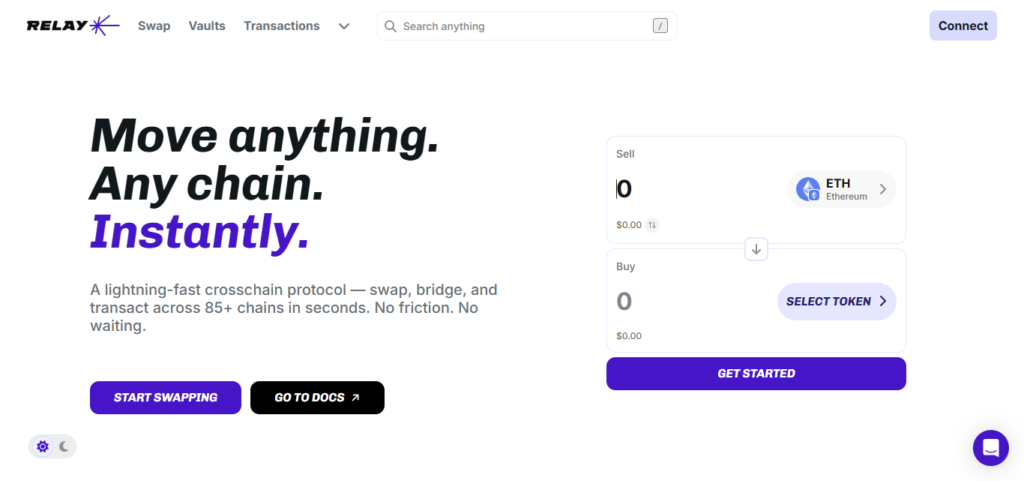
Wallets and apps that want a quick and easy integration love Relay. Fees are a small relayer fee + gas + sometimes a swap spread, usually clearly shown before signing. Transfers usually take seconds, making it one of the fastest options. Security is built on audited contracts, a non-custodial design and a solver model that settles repayment after delivery.
Relay Link Pros & Cons
| Pros | Cons |
|---|---|
| Focuses on fast cross-chain transfers and streamlined swap execution. | Execution speed varies with route, liquidity, and network conditions. |
| Uses solver or relayer infrastructure to facilitate destination-side delivery. | Available token pairs depend on current integrations and liquidity. |
| Offers integration options for wallets and decentralized applications. | Pricing may include implicit execution costs that require quote comparison. |
| Provides a simple experience for cross-chain transactions. | Users must assess the underlying execution and security model. |
10. Router Protocol / Nitro
In addition to EVM networks and Solana, Router Protocol’s Nitro bridge supports several other ecosystems. It is a cross-chain liquidity and messaging platform based on its own chain, which supports swaps, transfers, and cross-chain calls. Users receive routes that combine liquidity, DEX swaps and bridging into one transaction.
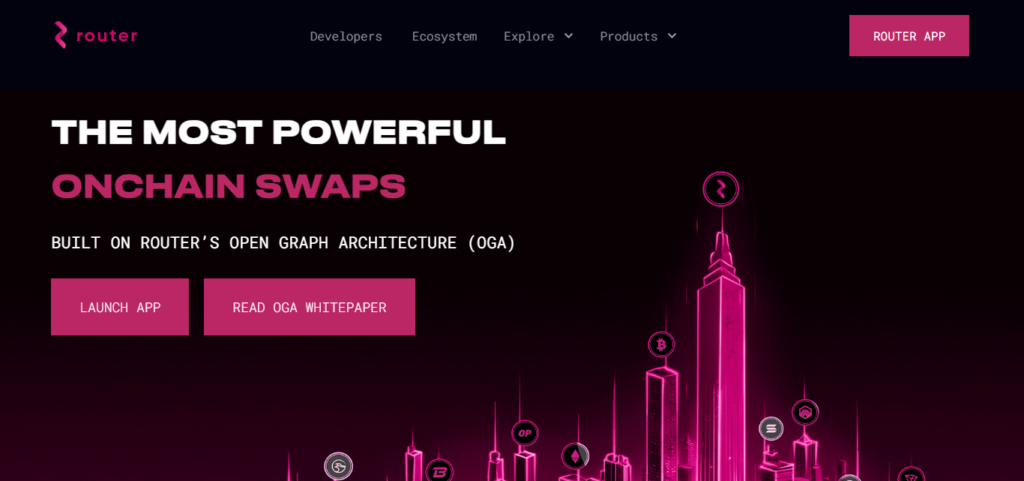
Fees include bridge costs, swap fees and gas, with quotes provided before confirmation. The speed varies depending on the route and can be from under a minute to several minutes. Security is achieved through audits, a validator-based verification system on the Router Chain and a non-custodial approach, making it suitable for developers who need flexible cross-chain logic.
Router Protocol / Nitro Pros & Cons
| Pros | Cons |
|---|---|
| Provides cross-chain infrastructure for transferring assets between supported blockchain networks. | Supported assets and routes vary across chains and product versions. |
| Aims to simplify bridging through a streamlined transaction interface. | Actual transfer times depend on the underlying route and network conditions. |
| Offers interoperability tools for applications operating across multiple chains. | Users should independently review current audits and contract information. |
| Can serve applications requiring cross-chain asset movement. | Pricing and liquidity may be less competitive on certain routes. |
Conclusion
To summarize, the Best Squid Router Alternatives for Web3 Swaps are LI.FI, deBridge, Across Protocol, Rango Exchange, Stargate Finance, Symbiosis, Socket/Bungee, 1inch Fusion+, Relay and Router Protocol/Nitro.
Each platform has different advantages in terms of cross-chain routing, blockchain support, transaction speed and pricing. Carefully compare their features, fees, liquidity, and security mechanisms to pick the most appropriate solution for your Web3 swapping needs.
FAQ
LI.FI, Rango Exchange, Symbiosis, and Socket/Bungee aggregate cross-chain routes across multiple blockchain ecosystems, depending on supported networks and assets.
Across Protocol, deBridge, and Relay focus on fast execution through relayer or solver-based infrastructure, although actual completion times vary.
Across Protocol and LI.FI may offer competitive routes, but fees depend on gas prices, liquidity, bridge costs, and the selected transaction path.
LI.FI offers extensive route aggregation and developer tools, while the better option depends on supported chains, pricing, integrations, and security requirements.