

In this article I’ll be covering the Top Houdini Swap Rivals for Private Swaps focusing on platforms that provide privacy focused transactions, decentralized exchanges, cross-chain swapping, and accountless conversions.
We’ll compare their privacy tech, supported assets and networks, fees, transaction requirements, limitations and key features, to help readers understand how each alternative stacks up to Houdini Swap and find suitable options.
Key Points & Top Houdini Swap Rivals for Private Swaps
| Houdini Swap Rival | Explanation |
|---|---|
| Hinkal Protocol | Enables private transactions and swaps while reducing exposure of transaction details. |
| Aztec Network | Privacy-focused Ethereum layer supporting private transactions and programmable decentralized applications securely. |
| Railgun | Uses zero-knowledge proofs to provide private DeFi transactions and asset transfers. |
| Godex | Non-custodial exchange offering cryptocurrency swaps without requiring traditional account registration procedures. |
| GhostSwap | Provides decentralized token swapping with privacy-oriented features for cryptocurrency users. |
| Baltex | Offers decentralized trading with privacy features designed to limit transaction visibility. |
| Rubic (Private Mode) | Provides cross-chain swaps while private features help reduce transaction exposure. |
| ChangeNOW | Simplifies cryptocurrency swaps without mandatory accounts, supporting numerous assets and networks. |
| Maya Protocol | Enables decentralized cross-chain swaps through liquidity pools without centralized intermediaries. |
| Incognito Chain (pNetwork) | Provides privacy-focused blockchain transactions designed to shield cryptocurrency activity and balances. |
10 Top Houdini Swap Rivals for Private Swaps
1. Protocol Hinkal
Privacy technology: Hinkal utilizes a private-balance architecture in which funds are held in a shielded smart-contract balance, and relayers submit transactions, so the user’s public wallet is not exposed as the sender of the transaction.
In addition, Hinkal uses Chainalysis KYT screening and viewing keys for selective disclosure, giving it a compliance-oriented privacy model. Private swap capability: Users can swap out of their private balance, and the swapped assets will flow back to the private balance.
Hinkal supports both same-chain and cross-chain private swap. Supported chains/assets Hinkal currently supports Ethereum, Solana, TRON and major EVM networks. Stablecoins and other supported assets are available, depending on the network.
Fees depend on the network and the swap route, so check the live quote before confirming. Limits/KYC: Hinkal says they do not run conventional KYC but deposits are screened for transaction risk. Privacy
limitations Deposits and withdrawals to public addresses are still visible and privacy is dependent on the supported route and surrounding on-chain activity Best use case: Hinkal is particularly well suited to users looking for private stablecoin transfers, payments and swaps without moving entirely to a separate privacy blockchain.
| Feature | Explanation |
|---|---|
| Private Transactions | Shields transaction details while keeping assets usable across supported networks. |
| Private Swaps | Enables users to swap supported assets through its privacy-focused infrastructure. |
| Multi-Chain Support | Supports multiple blockchain ecosystems for broader private transaction functionality. |
| Non-Custodial Design | Lets users maintain control of their assets throughout the process. |
2. Aztec Network
Aztec uses zero-knowledge cryptography and client-side proving. This means that private transaction inputs are processed locally and the network is only sent a proof, not the underlying private information.
Private swap capabilityA ztec is not a direct Houdini-style swap service but a privacy-centric programmable network, so private swaps are contingent on applications and protocols built on its ecosystem.
Supported chains/assets Aztec is a privacy focused Ethereum Layer-2 and assets are bridged from Ethereum and applications decide which tokens are supported.
Its native AZTEC token and Fee Juice are part of the fee system of the network. Fees: All transactions are subject to fees, payable via Fee Juice. Private fee payment options are also available Limits/KYC
This will be application specific as Aztec is an infrastructure layer and not a centralized exchange. Privacy Limitations: Interactions are not necessarily private. Public calls, transaction events, fees, and other network level information may still be visible.
| Feature | Explanation |
|---|---|
| Zero-Knowledge Privacy | Uses zero-knowledge technology to protect private transaction information. |
| Private Smart Contracts | Enables developers to build applications containing private programmable logic. |
| Ethereum Layer 2 | Provides privacy functionality within an Ethereum-compatible Layer-2 environment. |
| Private DeFi | Supports privacy-focused decentralized applications and financial interactions. |
3. Railgun
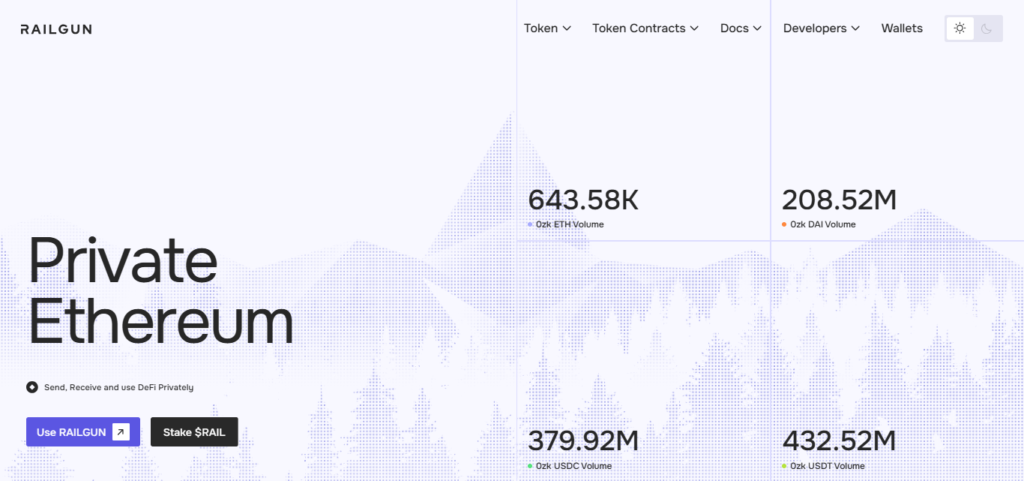
Privacy technology: Railgun uses zero-knowledge cryptography, private balances and shielded pools to hide transaction details such as sender, receiver, token type and amount from typical public blockchain observers Private Swap Functionality: Users can lock assets and then privately interact with DeFi, and integrated wallets can offer private DEX swapping.
Supported chains/assets: Railgun is deployed on Ethereum, BNB Chain, Polygon and Arbitrum, with supported ERC-20 assets and other compatible assets depending on the deployment. Fees: Protocol fee of 0.25% for shielding and unshielding. Relayer fees will depend on gas costs and the relayer chosen.
Limits/KYC: Railgun is non-custodial and doesn’t operate like a centralized exchange where you undergo the usual account-opening KYC process. Privacy limitations: Privacy strength depends in part on the size and activity of the private pool. Rare assets and small privacy sets may offer less practical privacy.
| Feature | Explanation |
|---|---|
| Zero-Knowledge Proofs | Uses ZK cryptography to hide sensitive transaction information. |
| Shielded Balances | Allows users to hold supported assets inside private balances. |
| Private DeFi | Enables private interactions with decentralized finance applications. |
| Multi-Chain Support | Operates across several EVM-compatible blockchain networks. |
4. Godex
Privacy technology: Godex does not use a dedicated zero-knowledge privacy pool, but follows the non-custodial exchange model. The privacy benefit is largely in that it doesn’t use regular exchange accounts and requires less personal data to make regular trades.
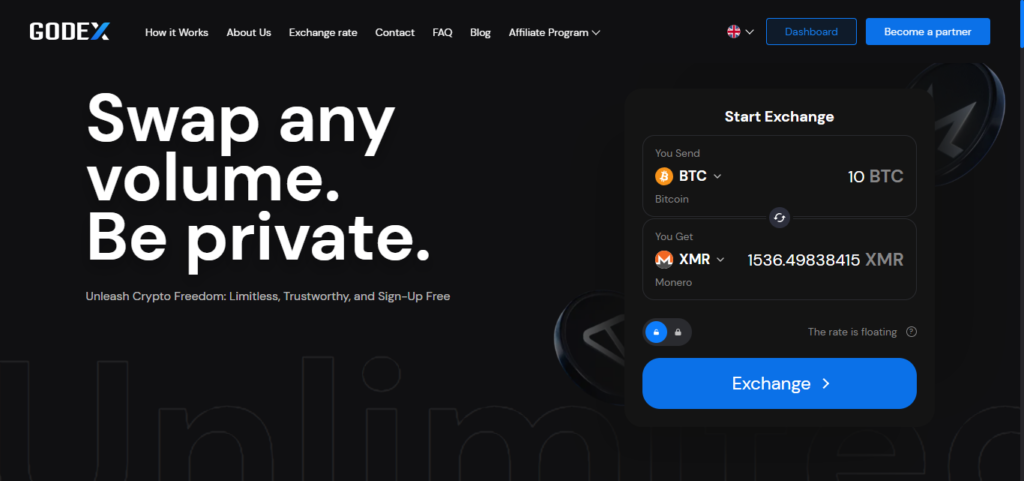
Private swap feature: Enables users to exchange one cryptocurrency for another without the need to set up a traditional trading account. Supported chains/assets Godex supports many cryptocurrencies, with assets and routes available depending on market liquidity at a given moment.
Fees Unlike many other trading platforms, Godex does not have a fixed maker/taker structure. Instead, it charges fees based on exchange rate spreads and network-related costs. Godex currently says it does not need an account, email or ID for swaps, and claims there is no KYC trigger for transaction-size
| Feature | Explanation |
|---|---|
| Accountless Swaps | Allows cryptocurrency exchanges without maintaining a traditional trading account. |
| Non-Custodial Exchange | Users retain control of funds during the exchange process. |
| Multiple Cryptocurrencies | Supports a broad selection of digital assets for swapping. |
| Simple Interface | Provides a straightforward swap process for quick cryptocurrency conversions. |
5. GhostSwap
GhostSwap is a privacy tech that should be evaluated primarily on the basis of transaction-routing and privacy, and not on the basis of the assumption that it will deliver the same zero-knowledge privacy model as Railgun or Aztec.
Private swap function: Its value as a Houdini alternative is in providing cryptocurrency exchange function designed for more transaction discretion. Supported chains/assets: Availability may vary with liquidity and integrations, so check the exact supported networks and assets with the current live interface.
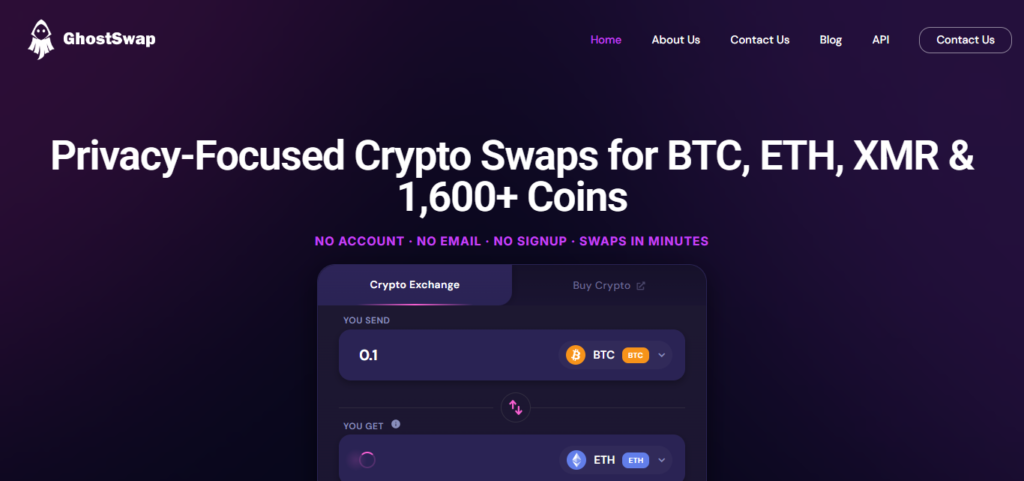
Fees: Swap costs vary based on the asset pair, network and quoted route, so the live transaction quote is the figure to compare. Limits/KYC: Please review the current transaction limits & identity-verification requirements for the specific route before swapping.
Privacy limitations: A privacy-oriented swap service does not automatically make transactions completely anonymous; deposits, withdrawals, blockchain activity and service-side information can still create links.
| Feature | Explanation |
|---|---|
| Privacy-Focused Swaps | Designed to provide cryptocurrency exchange functionality with greater transaction discretion. |
| Decentralized Trading | Supports cryptocurrency swapping without relying entirely on traditional exchanges. |
| Multi-Asset Support | Provides access to multiple cryptocurrency assets depending on availability. |
| User-Controlled Funds | Focuses on allowing users to maintain control over their cryptocurrency. |
6. Baltex
Baltex provides a dedicated Private Exchange workflow which reduces the public linkability of a crypto deposit and its eventual payout, and its Efficient Mode allows an intermediary currency to be used to add additional privacy to transactions.
Private swap feature: Baltex also offers a novel non-custodial DEX layer that enables users to swap one cryptocurrency with another through a privacy-focused process. Supported chains/assets: Supported assets and networks depend on the selected Baltex service and available liquidity.
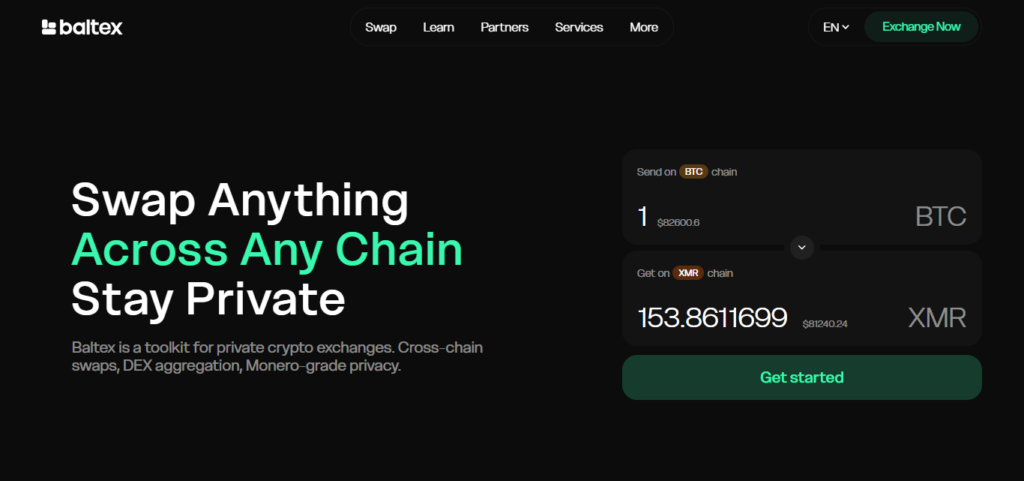
Fees: Private Exchange transactions are subject to fees and transaction limits. Exact costs depend on selected route. Baltex’s private service is subject to AML/KYC requirements and transaction conditions and thus should not be treated as KYC-free in all cases.
Its privacy model restricts public linkability but does not remove service-level compliance checks or guaranty complete anonymity. Best use case: Baltex is suitable for users who want privacy-enhanced swapping but still want to stay in a more compliance-aware exchange environment.
| Feature | Explanation |
|---|---|
| Private Exchange | Provides a dedicated workflow designed to improve transaction privacy. |
| Efficient Mode | Can route transactions through intermediary assets for additional privacy. |
| Non-Custodial Trading | Allows users to retain control of cryptocurrency during transactions. |
| DEX Functionality | Provides decentralized trading capabilities alongside its privacy-focused services. |
7. Darkmode Rubic
Darkmod Rubic Private Mode is an aggregator of privacy, not a single privacy protocol, guiding users through supported privacy providers and providing information about the privacy route, cost and execution time It offers private swaps and transfers, allowing users to shop for privacy routes without manually searching for individual providers.
Supported chains/assets: Rubic’s wider platform supports dozens of networks and thousands of assets, while availability of Private Mode depends on the particular privacy provider and asset pai Fees: Private-route fees vary by provider
Rubic’s published comparison shows that different privacy routes can have materially different costs. Limits/KYC: This depends on the provider and the route used.
Users should check the provider’s terms and conditions before executing. Limits to privacy: Private Mode does not mean anonymity, the underlying provider can still see transaction-side information and deposits and withdrawals are still observable
| Feature | Explanation |
|---|---|
| Private Swap Aggregation | Connects users with available privacy-focused swap routes. |
| Cross-Chain Swaps | Supports cryptocurrency exchanges across multiple blockchain networks. |
| Route Comparison | Helps users compare available routes, costs and execution times. |
| Broad Asset Access | Provides access to numerous tokens through integrated blockchain networks. |
8. ChangeNOW
ChangeNOW is more of a non-custodial cryptocurrency exchange service and not a zero-knowledge privacy protocol. Its proposition of privacy is largely from accountless swapping and its non-custodial exchange model. Private swap feature. Users don’t need to keep an exchange trading balance to swap supported cryptos.
Supported chains/assets ChangeNOW supports a large range of cryptocurrencies and networks, availability depends on current exchange infrastructure. Fees: The total price is shown using the quoted exchange rate plus any applicable network or service charges, so the live quote needs to be verified for each swap.
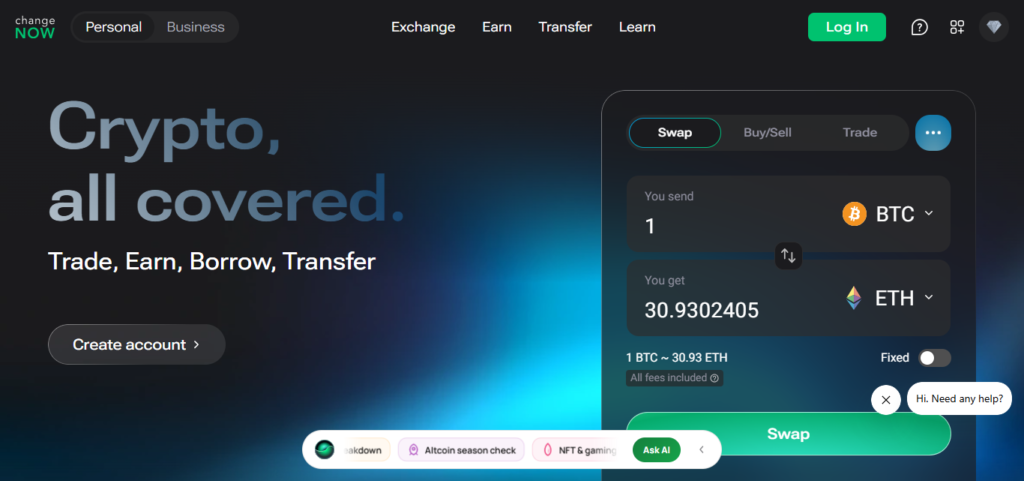
Limits/KYC ChangeNOW may request identity verification depending on the circumstances of the transaction or because of risk controls or applicable limits. It should therefore not be promoted as guarantyd no-KYC at all amounts.
Limitations on Privacy Accountless swapping is not cryptographic privacy: blockchain movements are still publicly visible and a service can store information related to the transaction. Best use case: ChangeNOW is perfect for those who want to convert cryptocurrencies conveniently and fast, with a wide selection of assets and no need to open a regular exchange account.
| Feature | Explanation |
|---|---|
| Accountless Exchange | Allows users to exchange cryptocurrencies without maintaining a conventional account. |
| Non-Custodial Swaps | Users can exchange assets without depositing funds into a trading account. |
| Large Asset Selection | Supports numerous cryptocurrencies and blockchain networks. |
| Simple Conversion | Provides a straightforward interface for cryptocurrency-to-cryptocurrency exchanges. |
9. Maya Protocol
Maya Protocol is primarily a decentralized cross-chain liquidity protocol, not a dedicated privacy mixer or privacy layer. It uses liquidity nodes and native cross-chain swaps, eliminating the need for a centralized exchange intermediary
Private swap capability: Maya is able to provide cross-chain swaps and its ecosystem has also been used for privacy-centric interoperability for shielded assets such as Zcash.
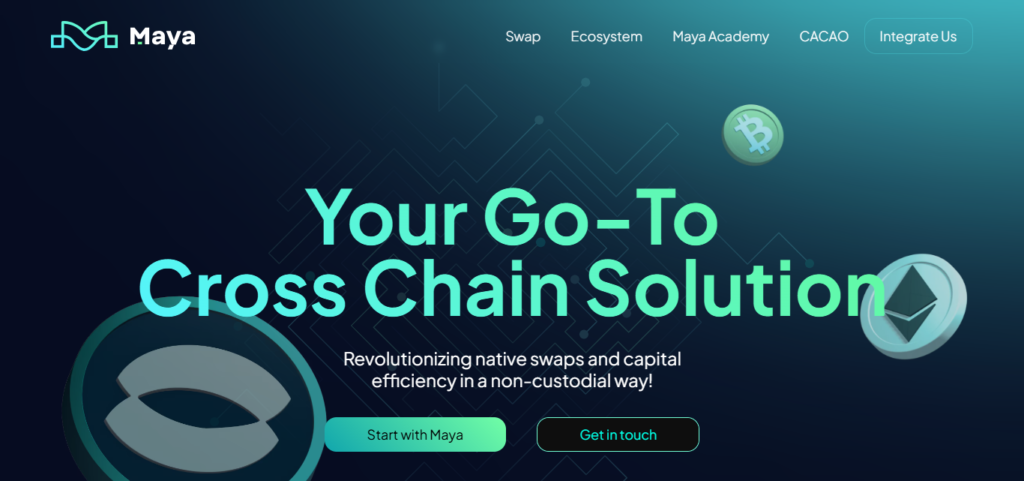
Supported chains/assets: The protocol is designed for native cross-chain asset swaps, supported chains and assets based on the current MAYAChain integration set. Costs: Fees are network and protocol related swap fees, the exact amount depends on the route and liquidity conditions.
Limits/KYC: Maya says its non-custodial swaps don’t require KYC. Privacy limitations: Maya itself cannot be viewed as a universal privacy layer. Regular cross-chain transactions can still leak information about the blockchains. Privacy is also dependent on the specific asset and route.
| Feature | Explanation |
|---|---|
| Cross-Chain Swaps | Enables native cryptocurrency exchanges between supported blockchain networks. |
| Decentralized Liquidity | Uses liquidity providers and nodes rather than centralized exchange infrastructure. |
| Non-Custodial Architecture | Users maintain control of assets during cross-chain transactions. |
| Native Asset Swapping | Designed to swap native assets without relying exclusively on wrapped tokens. |
10. Incognito Chain (pNetwork)
Incognito was built on privacy-preserving blockchain transactions and private asset representations, allowing users to interact with assets in a privacy-centric environment.
Private swap capability The architecture has historically focused on the private transfer and consumption of wrapped representations of external assets, including private trading and DeFi functionality.
Supported chains/assets: The supported assets rely on the active Incognito ecosystem and bridges, so you should check the current availability before publishing. Fees: Depending on the asset and route, users might incur network, bridge, and transaction fees.
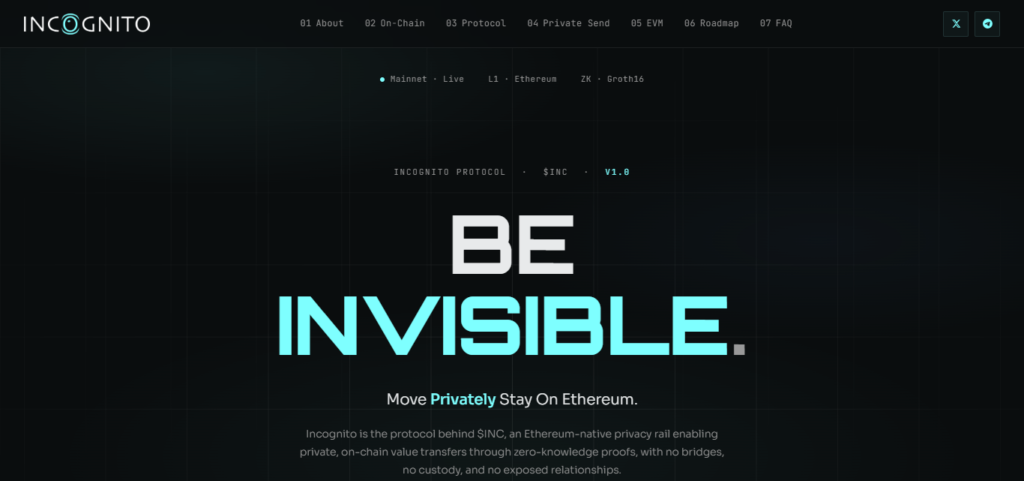
Limits/KYC: It is dependent on the particular bridge, application or service you use. There is no universal KYC. Privacy constraints: When assets move into or out of the privacy network, privacy can be lost because bridge deposits and withdrawals can be publicly visible on the source or destination blockchain.
Best use case: Incognito is best suited for users seeking privacy focused asset representation and transactions, not a simple instant-swap experience.
| Feature | Explanation |
|---|---|
| Privacy-Focused Network | Provides infrastructure designed to protect blockchain transaction information. |
| Private Assets | Supports privacy-oriented representations of assets from external networks. |
| Private Transactions | Enables users to transfer supported assets within its privacy ecosystem. |
| Cross-Chain Connectivity | Connects external blockchain assets with privacy-focused functionality. |
Conclusion
To summarize, Choosing the Top Houdini Swap Rivals for Private Swaps boils down to privacy technology, supported assets, blockchain coverage, fees, KYC requirements, and transaction limits.
Hinkal, Railgun, Aztec, Rubic, Maya Protocol and others offer different ways to swap privately or without an account. By comparing these factors, users can know the strengths, privacy model, and practical suitability of each platform before completing cryptocurrency transactions.
FAQ
Hinkal Protocol, Railgun, and Aztec Network use privacy-focused technologies such as zero-knowledge cryptography and shielded transaction mechanisms.
Some platforms offer accountless or non-custodial swapping, including Godex and ChangeNOW, although verification requirements can vary by transaction.
Rubic, Maya Protocol, and several other platforms support cross-chain functionality, allowing users to exchange assets across supported blockchain networks.
KYC requirements differ between services. Some may operate without traditional account registration, while others can request verification based on transaction, compliance, or risk requirements.