

This article discusses the best exchange liquidity providers that allow crypto exchange firms to maximize the efficiency of trading, improve market depth, and elevate the rapidity of execution.
I will provide an overview of the dominant liquidity providers, their significant traits, the cryptocurrencies they support, pricing schemas, pros and cons, and other relevant information.
This article aims to assist liquidity providers in selecting the best provider to build a trustworthy, scalable, and expandable trading platform for the year 2026.
Introduction to Exchange Liquidity Providers
Exchange liquidity providers ensure there are enough buy and sell orders in the market. This provides for an efficient and smooth marketplace for trading. In cryptocurrency, liquidity means the ease of buying or selling an asset in the market.
High liquidity also means there is less price slippage and a better overall trading experience. Here, we cover some the best exchange liquidity providers and how they assist companies in developing scalable trading platforms.
Key Factors To Choose the Best Exchange Liquidity Providers
- Trading Volume and Liquidity Depth: High trading volume and liquidity depth result in less slippage and shorter execution times.
- Range of Cryptocurrencies and Trading Pairs: High liquidity allows a larger number of trading pairs to be offered.
- Trading Costs: Liquidity providers should offer low commissions with low spreads.
- API and Technology Infrastructure: A low latency technology infrastructure with good APIs is required.
- Security, Compliance, and Reliability: Regulatory compliance and good security are required for the protection of the assets.
- International Market Liquidity: Exchange liquidity providers should have international market liquidity and provide liquidity to all exchanges.
Key Points & Best Exchange Liquidity Providers
| Exchange Liquidity Provider | Short Explanation |
|---|---|
| B2Broker | Provides deep crypto liquidity solutions with advanced technology for exchanges and brokers globally. |
| LMAX Group | Offers institutional-grade liquidity with transparent execution and high-performance trading infrastructure. |
| Cumberland DRW | Delivers crypto liquidity, market making, and institutional trading services worldwide. |
| Jump Trading | Supplies algorithmic liquidity and market-making solutions across digital asset markets. |
| Wintermute | Provides automated liquidity and market-making services for cryptocurrency exchanges globally. |
| Alameda Research | Previously provided crypto liquidity and trading services across multiple exchanges. |
| GSR | Creates liquidity solutions with algorithmic trading and digital asset expertise. |
| Binance | Offers extensive liquidity through global trading volumes and multiple asset markets. |
| Coinbase Prime | Provides institutional liquidity access with secure crypto trading infrastructure. |
| SFOX | Aggregates liquidity from multiple sources for professional crypto traders. |
10 Best Exchange Liquidity Providers
1. B2Broker
Operating since 2014, B2Broker is a top-tier institutional liquidity provider that concentrates on multi-asset solutions for crypto exchanges, brokers, and fintechs. They have extensive liquidity pools, crypto CFDs, and spot and margin liquidity. B2Broker covers 100+ cryptocurrencies.
Trading costs are based on customized liquidity solutions and the trading volumes. B2Broker ecosystem with B2Core and B2BinPay helps businesses to launch tailor-made trading solutions with the needed IT infrastructures.
B2Broker Pros & Cons
| Pros | Cons |
|---|---|
| Provides deep multi-asset liquidity for crypto businesses. | Customized pricing can be expensive for small companies. |
| Supports 100+ cryptocurrencies and multiple trading products. | Requires technical expertise for full integration. |
| Offers scalable infrastructure for exchanges and brokers. | Mainly designed for institutional clients. |
| Includes B2Core and B2BinPay ecosystem support. | Setup process may require significant development time. |
| Provides reliable API connectivity and white-label solutions. | Advanced features may increase operational complexity. |
2. LMAX Group
Starting in 2010, LMAX Group offers institutional-grade liquidity with regulated trading venues for Brokers, Exchanges, and Financial Institutions. With the LMAX Digital platform, LMAX offers institutional clients crypto liquidity for Bitcoin, Ethereum, and other crypto, with execution of transparent orders.
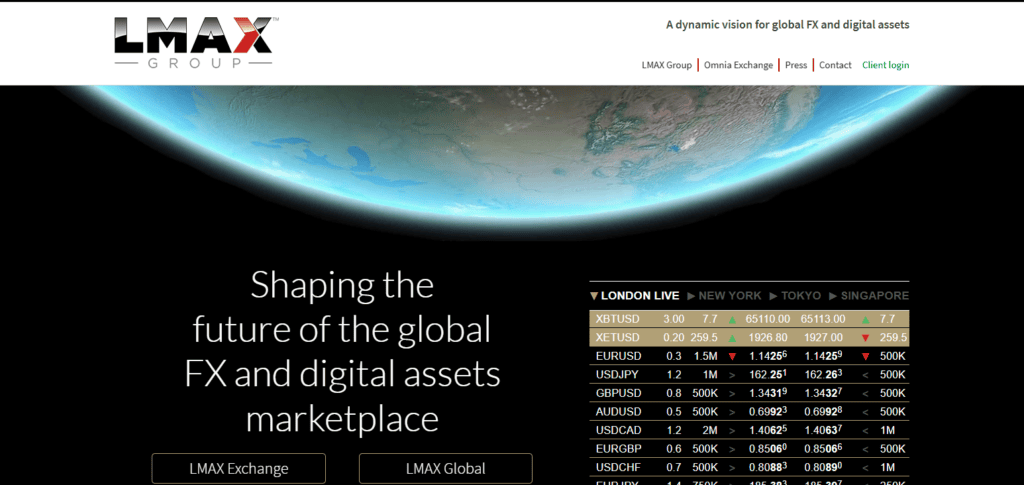
LMAX group also values fast trade matching with tighter spreads and guaranteed access to the market. Trading costs are based on a negotiation deal with the institutions based on their liquidity needs and trading volumes. LMAX is also improving the digital infrastructure of assets for the professional trading community.
LMAX Group Pros & Cons
| Pros | Cons |
|---|---|
| Offers institutional-grade liquidity with transparent execution. | Limited cryptocurrency coverage compared with major exchanges. |
| Provides fast trade matching and low-latency infrastructure. | Not suitable for retail traders or small businesses. |
| Operates regulated trading venues with strong credibility. | Requires institutional-level onboarding requirements. |
| Delivers competitive spreads for professional traders. | Pricing details are not publicly available. |
| Provides reliable market access for financial institutions. | Higher entry barriers for new platforms. |
3. Cumberland DRW
Starting in 2014, Cumberland DRW liquifies a great share of the institutional crypto markets and offers deep markets and custom liquidity solutions to Exchanges, Funds, and Financial Institutions. Cumberland covers the main cryptocurrencies and the emerging digital assets.
Unlike retail liquidity that has a fixed price, Cumberland DRW liquidity costs are negotiated based on the size of the deal and the market. Cumberland’s great network in the institutional space offers a lot of assurance to their partners.
Cumberland DRW Pros & Cons
| Pros | Cons |
|---|---|
| Provides deep liquidity for large crypto transactions. | Mostly available for institutional clients only. |
| Strong experience in digital asset markets. | No public fee structure available. |
| Supports OTC trading and customized liquidity solutions. | Requires direct partnership agreements. |
| Trusted by funds and financial institutions. | Less accessible for smaller exchanges. |
| Handles high-volume crypto transactions efficiently. | Limited information about retail-focused services. |
4. Jump Trading
Started in 1999, Jump Trading came into crypto in 2021. Jump trading is an algorithm based liquidity and market making service. Also a trader of digital assets, Jump Trading provides services to help balance markets across digital exchanges. Jump Trading does business with several major digital currencies.

They include Solana, Bitcoin, Ethereum, and many other blockchain assets. Jump trading does business primarily based on private contracts. Jump trading also uses very sophisticated quantitative models and high frequency trading to make markets balanced. Jump trading helps trading markets keep a balance, especially for digital exchanges.
Jump Trading Pros & Cons
| Pros | Cons |
|---|---|
| Uses advanced quantitative trading models. | Services are mainly focused on institutions. |
| Provides high-frequency market-making capabilities. | Limited public information about pricing. |
| Supports major cryptocurrencies like BTC, ETH, and SOL. | Complex technology may not suit beginners. |
| Improves market depth and trading efficiency. | Requires specialized technical integration. |
| Has decades of trading industry experience. | Private contracts reduce pricing transparency. |
5. Wintermute
Founded in 2017, Wintermute is an algorithm-based trading firm and provider of digital liquidity. Wintermute services market making on digital asset exchanges and provides liquidity to DeFi protocols and blockchain projects. Wintermute trades several hundreds of digital currencies including BTC, ETH, many stable coin currencies and DeFi trading tokens.
Wintermute’s liquidity services are offered around 24/7 trading, and are based on low cost spreads and high trading efficiency. Trading services from Wintermute are most partnered platforms, trading volume based, and liquidity based.
Wintermute Pros & Cons
| Pros | Cons |
|---|---|
| Provides automated 24/7 crypto liquidity services. | Pricing depends on customized partnerships. |
| Supports hundreds of digital assets. | Mainly targets professional crypto businesses. |
| Strong expertise in DeFi and blockchain markets. | Market volatility can impact liquidity performance. |
| Helps new tokens improve market accessibility. | Limited public details about service packages. |
| Uses advanced algorithmic trading systems. | Requires technical knowledge for integration |
6. Alameda Research
Founded in 2017 and now defunct, Alameda Research traded a large portion of the global crypto liquidity market. They made markets and provided OTC trading across many digital assets. Alameda actively traded Solana and other stable coins, Ethereum, and Bitcoin.

Trading agreements were made mostly based on contractual agreements between the parties and other liquidity market players. In the wake of it’s collapse in 2022, Alameda Research stopped trading and is no longer a liquidity provider.
Alameda Research Pros & Cons
| Pros | Cons |
|---|---|
| Previously offered large-scale crypto liquidity services. | Company is no longer operational. |
| Supported major assets like BTC, ETH, and SOL. | Lost industry trust after 2022 collapse. |
| Had strong connections across crypto markets. | Cannot provide current liquidity services. |
| Provided market-making and OTC trading solutions. | Significant reputational damage remains. |
| Was once a major global crypto trading firm. | Historical information only, not a current option. |
7. GSR
GSR, founded in 2013, is a global crypto market maker with liquidity services. They employ automated trading solutions, OTC services, and tailor-made market-making. GSR supports thousands of digital assets on both centralized and decentralized markets.
This includes BTC and ETH, along with the latest emergent tokens. Their pricing is contingent on a partnership model, trading volumes, and desired liquidity. GSR enhances the efficiency of markets using their algorithms and institutional know-how.
GSR Pros & Cons
| Pros | Cons |
|---|---|
| Offers advanced algorithmic market-making solutions. | Mostly focused on institutional partnerships. |
| Supports thousands of digital assets. | Pricing depends on individual agreements. |
| Provides OTC and exchange liquidity services. | Not designed for casual traders. |
| Has over a decade of crypto market experience. | Limited public information on service costs. |
| Supports both centralized and decentralized markets. | Integration may require technical resources. |
8. Binance
Binance is a cryptocurrency exchange that started in 2017 and has become one of the largest exchanges due to its global digital asset market liquidity and userbase.
Binance is able to offer trading on hundreds of cryptocurrencies due to its liquidity and infrastructure, including BTC, ETH, BNB, stablecoins, and various DeFi tokens.
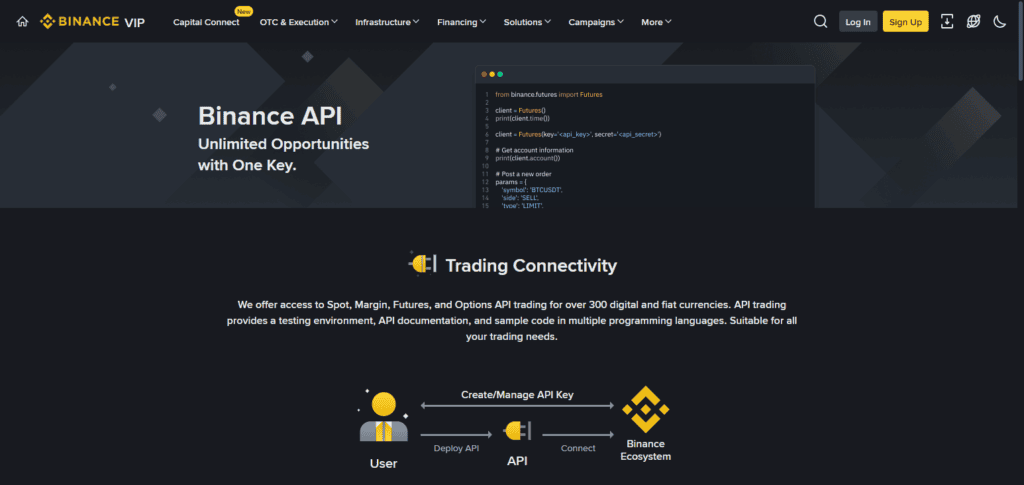
Trade fees start around 0.10% with further discounts available through the use of BNB or increased trading volumes. With deep order books and a global userbase Binance is a major source of market liquidity.
Binance Pros & Cons
| Pros | Cons |
|---|---|
| Provides one of the deepest crypto liquidity markets globally. | Faces regulatory challenges in some regions. |
| Supports hundreds of cryptocurrencies and trading pairs. | Centralized exchange dependency creates platform risks. |
| Offers competitive trading fees starting around 0.10%. | Not a dedicated institutional liquidity provider only. |
| Has massive user base and trading volume. | Availability varies by country regulations. |
| Provides advanced API and trading infrastructure. | Security risks exist due to large-scale operations. |
9. Coinbase Prime
Launched in 2021, Coinbase Prime offers liquidity, custody, and trading for institutional clients. Coinbase Prime was built for hedge funds, financial institutions, and crypto companies to have secure access to large and deep markets. For institutions, trading consists of a tailored volume based fee.
Coinbase Prime has a compliance focused infrastructure which makes them a preferred liquidity partner for regulated crypto companies.
Coinbase Prime Pros & Cons
| Pros | Cons |
|---|---|
| Provides secure institutional crypto liquidity solutions. | Higher fees compared with some competitors. |
| Strong compliance and regulatory infrastructure. | Mainly designed for institutional customers. |
| Offers custody, trading, and execution services. | Supports fewer cryptocurrencies than global exchanges. |
| Trusted by financial institutions and crypto companies. | Requires strict onboarding procedures. |
| Provides reliable fiat and crypto market access. | Less flexible for smaller businesses. |
10. SFOX
SFOX launched in 2014 and offers a crypto prime brokerage service. It merges liquidity from different exchanges to provide a single source for clients. It helps professional traders and institutions access better pricing via smart order routing.
SFOX offers major digital assets, including BTC and ETH. Pricing structures of SFOX change depending on the transaction volume, the type of account, and the liquidity sourced.
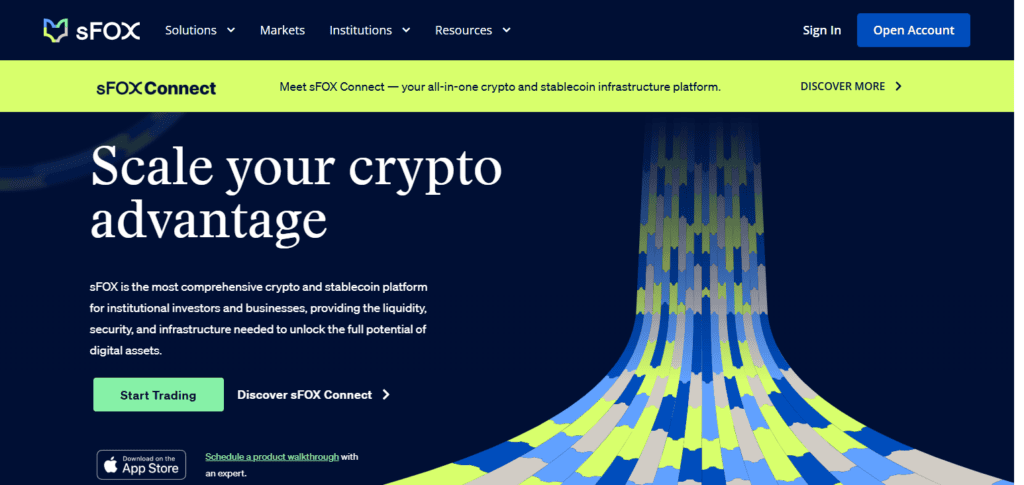
The main features of the SFOX platform are institutional execution and trading access combined with the elements of effective portfolio management.
SFOX Pros & Cons
| Pros | Cons |
|---|---|
| Aggregates liquidity from multiple exchanges. | Limited cryptocurrency selection compared with large exchanges. |
| Uses smart order routing for better pricing. | Smaller market presence than major providers. |
| Designed for professional traders and institutions. | Mainly focused on institutional users. |
| Provides efficient execution and portfolio management tools. | Pricing varies based on account conditions. |
| Helps reduce dependence on single exchanges. | May not suit high-growth exchange platforms. |
Cocnlsuion
In cocnlsuion Selecting Premier Exchange Liquidity Providers is vital for the development of high-performing, dependable, and competitive trading platforms. Leading providers enhance execution quality through liquidity depth, technology, broad support of the cryptocurrency spectrum, and safe infrastructures.
Firms need to examine costs, compliance, and connectivity vs. the liquidity provided before making a selection. The appropriate liquidity provider enables exchanges to attain increased performance, confidence of users, and sustainability.
FAQ
Exchange liquidity providers supply buy and sell orders to improve market depth, trading speed, and price stability.
Liquidity providers help exchanges reduce slippage, maintain tighter spreads, and provide smooth trading experiences for users.
Top providers include B2Broker, LMAX Group, Cumberland DRW, Jump Trading, Wintermute, GSR, Binance, Coinbase Prime, and SFOX.
They earn through trading spreads, commissions, liquidity fees, market-making agreements, and institutional pricing models.