


This article will focus on Ethereum’s Post-Merge Institutional Adoption and how Ethereum’s shift to Proof-of-Stake impacted its role within Global Finance.
Ethereum’s drastic reduction in energy consumption and its alignment with ESG mandates positions Ethereum to be a sustainable, scalable, and institution-ready blockchain.
This advancement enables banks, asset managers, and governments to adopt Ethereum as a critical component of their financial infrastructure.
Overview
The Merge, Ethereum’s migration to Proof-of-Stake, has greatly increased institutional adoption, with significant financial players viewing Ethereum as an infrastructural backbone for tokenized assets, ESG-compliant investments, and decentralized finance.
Ethereum is projected to capture more than 50% of the market for tokenized assets by 2025, fundamentally changing how institutions manage and allocate their capital.
What is “The Merge” in Ethereum?
Ethereum’s Merge was an important milestone in blockchain technology as it changed how Ethereum operates at the most fundamental level.
For the first time in history, Ethereum implemented the Proof of Stake consensus mechanism instead of the Proof of Work mechanism.

Not only did this reduce Ethereum’s energy consumption by over 99% making it a much more sustainable blockchain, but it also addressed long standing ESG blockchain concerns.
Ethereum, therefore, has now become a credible, compliant, and Future ready technology solution for institutional investors, banks, and asset managers.
Ethereum Post-Merge: A New Institutional Era
A New Beginning
The merger of Ethereum’s Proof of Work to Proof of Stake Ethereum’s energy consumption reduces burns energy by over 99%.
This makes Ethereum’s Proof of Stake merger more efficient than environmental concerns. Ethereum’s merger makes it more appealing to ESG
(Environmental, Social and Governance) bound institutions. This post-merge Ethereum compliance symbolises scalability and readiness for institutions.
Drivers for Compliance
With the GENIUS act expected to go into place in 2025, there is expected to be regulation for compliance of digitally tokenized assets.
This, alongside Ethereum’s bank-integrated JPMorgan, and others, has allowed transactions of over $300B to be processed, and has positioned Ethereum as the go to chain for digitally tokenized real estate, treasuries and private equity.
Market Impact
| Metric (2025) | Ethereum | Competitors |
|---|---|---|
| Tokenized Asset Market Share | 55% | Bitcoin < 20%, Others < 25% |
| DeFi Value Locked | 65% | Rest of chains combined 35% |
| Institutional Staking Adoption | 70% | Minimal on other chains |
| Treasury Tokenization | BlackRock’s BUIDL fund held 41% of tokenized treasuries | Smaller funds |
Why Institutions Prefer Ethereum
Energy Efficiency → Meets ESG requirements.
Smart Contract Flexibility → Asset tokenization can be applied to various types.
Liquidity & Yield → Staking offers predictable returns, which is appealing to pension funds and insurers.
Network Effects → DeFi protocols, stablecoins, and dApps are predominantly situated on Ethereum, lessening the risk of fragmentation.
Why did The Merge matter for institutions?
Although many institutions add ESG (Environmental, Social, Governance) goals to their investment strategies, they are obligated to follow rigid regulations on Socially Responsible Investing (SRI) and are thus limited in their investments.
As a result, Ethereum has been considered non-adoptable by institutions due to the large energy consumption associated with the Proof-of-Work model.
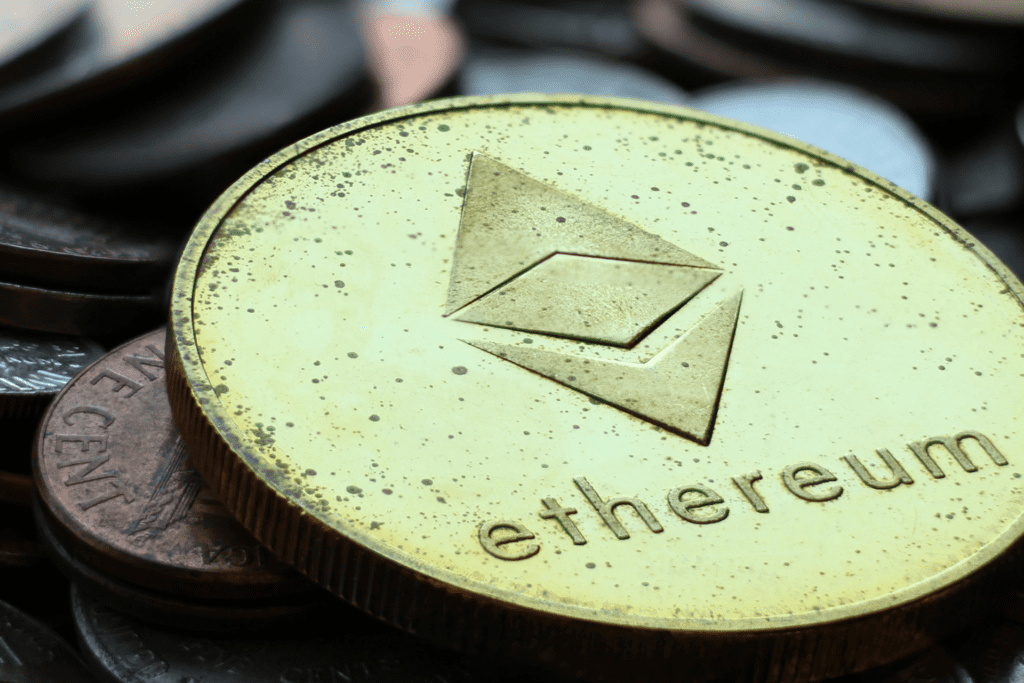
Ethereum’s move to Proof-of-Stake in 2022 enabled a more than 99% reduction in energy consumption and made Ethereum’s blockchain environmentally sustainable.
Ethereum then became compliant with global sustainability standards and institutions like banks, asset managers, and pension funds started adopting
Ethereum due to its compliance with their regulations and tokenized asset/decentralized finance usage.
Risks & Challenges
Smart Contracts: As long as there are bugs and exploits, some level of risk will always be present.
Regulatory Divergence: While there is some clarity emerging from the U.S. and EU, there is still a lack of consistency from the emerging markets.
Competition: Alternative chains (e.g., Solana, Avalanche) offer faster throughput but do not have the institutional trust of Ethereum.
Future Outlook For Ethereum In Institutions?

Tokenization Dominance Ethereum will spearhead the tokenization of treasuries, real estate, and commodities, digitalizing the framework of finance.
Institutional Staking Staking yields will bring pension funds and insurers into the fold of predictable income streams and lower risk financing.
Ethereum ETFs Ethereum ETFs will bring in more revenue than Bitcoin, proving a strong interest for institutions in a diverse portfolio in Blockchain.
Ethereum Legitimization Legitimization of Ethereum will come with the global framework which will provide a solid basis for banks, asset managers, and the sovereign funds of the world.
Integration of TradFi and DeFi The integration of DeFi and TradFi will occur when Ethereum becomes a part of the settlement systems, custodians, and exchanges.
Cocnlsuion
To conclude, the evolution of Ethereum following the Merge has positioned it as a pillar of institutional finance.
Its sharp reduction in energy consumption, compliance with ESG requirements, and ability for scalable tokenization of financial instruments has made Ethereum the blockchain of choice for banks, asset managers, and governments.
Ethereum’s role in finance will be global asset registry systems, staking yields, and frictionless integration with TradFi.
FAQ
Banks use Ethereum for tokenized assets, settlement systems, and cross-border payment infrastructure.
Ethereum leads in tokenizing treasuries, real estate, and private equity, offering programmable smart contracts.
Yes, staking provides predictable yields, appealing to pension funds, insurers, and asset managers.
Ethereum dominates due to security, developer ecosystem, and regulatory trust, despite faster competitors like Solana.