


In this article, I will discuss the Best DePIN Platforms for Buying and Selling GPU Compute that are transforming decentralized cloud infrastructure.
These platforms enable users to rent, share, and monetize GPU power globally for AI, rendering, and computing tasks.
You will learn how leading networks like Render, io.net, and Akash are reshaping scalable, cost-efficient, and decentralized GPU computing ecosystems worldwide.
Key Points & Best DePIN Platforms for Buying and Selling GPU Compute
Render Network Specialized DePIN platform enabling decentralized GPU rendering for animation, VFX, and digital content creators.
io.net Aggregates global idle GPUs to provide scalable, low-cost computing power for AI workloads efficiently.
Akash Network Decentralized cloud marketplace offering CPU and GPU compute through competitive bidding and flexible pricing.
Golem Network Peer-to-peer computing network allowing users to rent unused GPU and CPU power globally.
Flux Web3 infrastructure network providing decentralized cloud services with GPU compute for scalable applications and hosting.
Nosana Network GPU-focused DePIN platform optimized for CI/CD pipelines and AI inference using distributed computing resources.
Livepeer Decentralized video transcoding network using GPU nodes to process and stream video content efficiently.
Swan Chain AI-focused DePIN platform enabling distributed GPU compute for training and deploying large machine learning models.
Theta EdgeCloud Hybrid cloud and DePIN system offering GPU computing power for AI, video, and edge workloads.
Exabits Emerging decentralized compute network connecting GPU providers with AI developers for scalable distributed processing tasks.
10 Best DePIN Platforms for Buying and Selling GPU Compute
1. Render Network
Render Network, a premier decentralized platform to optimize GPU performance, enables users to provide freely available idle GPU power or connect with users needing high-performance graphic rendering.
Used heavily in animation, visual effects and 3D content creation industries — where rendering needs are incredibly high.
Itt decreases costs by decentralizing rendering tasks compared to the price of traditional cloud services. This means artists and studios can request scalable GPU resources on demand, without the need to spend hundreds of thousands of dollars on hardware components.
Using Blockchain technology to enable secure transactions and provide equitable rewards for the nodes, the network becomes a global decentralized ecosystem for digital creators that is efficient & transparent.
| Pros | Cons |
|---|---|
| Highly optimized for GPU rendering workloads | Limited to rendering-focused use cases |
| Strong adoption in VFX and animation industry | Can be expensive during peak demand periods |
| Decentralized cost-efficient compute access | Requires technical understanding for setup |
| Secure blockchain-based payment system | Dependency on GPU provider availability |
2. io.net
io. net is a third-generation, fast-assembling decentralized GPU compute network for machine learning workloads. It combines unsued GPU resources from data centers, miners and individual contributors into one global compute layer.
This provides developers with access to low-cost, scalable compute power to train AI models, inference and other large-scale simulations.
The platform lowers dependency on centralized cloud providers like AWS and Google Cloud. Consider the ease-of-use that io. net that allows for scale-out, low latency and cheaper use of the GPU using AI Startups and research organizations.
| Pros | Cons |
|---|---|
| Excellent for AI and machine learning workloads | Still evolving infrastructure stability |
| Aggregates massive global GPU supply | Network performance can vary by region |
| Lower cost compared to centralized clouds | Limited long-term track record |
| Scalable for large AI training tasks | Competition for high-performance GPUs |
3. Akash Network
Akash Network is a decentralized cloud marketplace on which users can buy and sell GPU and CPU. This is a fully open-source cloud infrastructure where providers will be bidding against each other through auctions for the lowest prices.
This drive leads to much lower compute cost than other cloud platforms. This means that developers can easily deploy containerized applications and have the ability to scale flexible.
Akash has become particularly favored by blockchain projects and AI developers who require inexpensive GPU compute.
It features a decentralized architecture for guaranteeing censorship resistance, high-availability and higher resource utilization at various global data centers.
| Pros | Cons |
|---|---|
| Very affordable decentralized cloud pricing | Complex deployment for beginners |
| Open-source and highly flexible | Performance depends on provider quality |
| Strong censorship resistance | GPU availability not always consistent |
| Good for containerized applications | Requires Kubernetes familiarity |
4. Golem Network
Golem Network is one of the oldest decentralized computing platform that allows users to rent unused CPU and GPU resources. It forms a p2p marketplace to globally distribute rendering, simulations and data processing tasks.
This mitigates the cost associated with centralized cloud providers, but it does more. Golem is popular as a platform for scientific research, CGI rendering, and computational heavy workloads.
It has a modular structure that helps developers build custom applications on the blockchain network. Decentralized computing power Golem also did well at the time of writing because this means not only a more uniform distribution of resources.
| Pros | Cons |
|---|---|
| One of the oldest decentralized compute networks | Slower adoption of modern GPU-heavy workloads |
| Strong peer-to-peer infrastructure | Limited high-end GPU specialization |
| Supports scientific and rendering tasks | Performance inconsistency across nodes |
| Allows monetization of idle hardware | Interface can feel outdated |
5. Flux
Flux is a Web3 network offering decentralized cloud computing services based on workloads such as GPUs. It offers a complete ecosystem for hosting applications, running nodes and deploying scalable dApps (decentralized applications).
Particularly suited for GPU compute workloads, Flux is very useful for AI training, gaming infrastructure and high-performance rendering purposes.
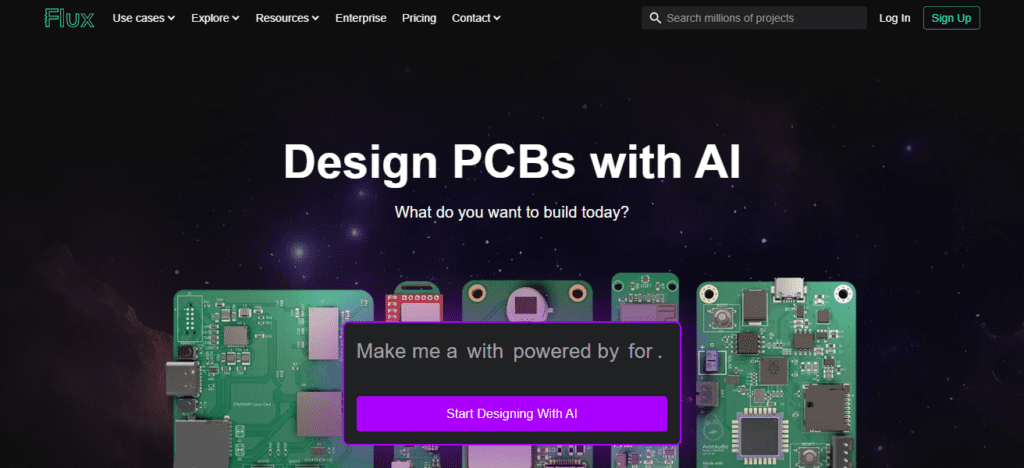
A single global platform provides workload distribution across its many nodes promoting uptime and resiliency through redundancy.
With the storage and compute layers also leveraged by Flux, even a full decentralized cloud alternative. Developers looking for censorship-resistant and scalable infrastructure solutions have widely used its ecosystem.
| Pros | Cons |
|---|---|
| Full Web3 cloud ecosystem | Complex ecosystem for new users |
| Strong redundancy and uptime | Requires staking and node participation knowledge |
| Supports dApps, AI, and GPU workloads | Resource-intensive node setup |
| Decentralized hosting and storage integration | Hardware requirements can be high |
6. Nosana Network
Nosana Network is a purpose-built DePIN platform optimized for GPU compute workloads — both in DevOps and AI.
Its primary use case is for CI/CD pipelines where developers run tasks [e.g. continuous integration and deployment tasks] in a decentralized environment.
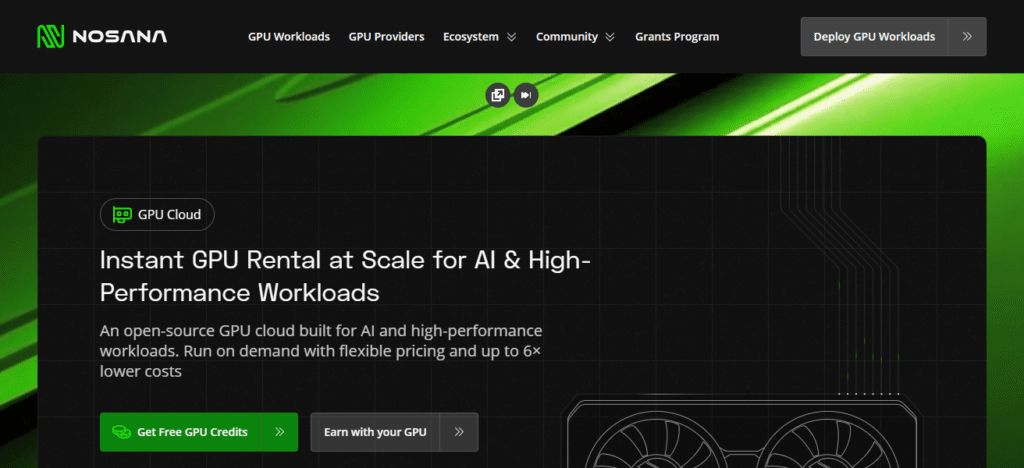
Nosana significantly decreases the infrastructure costs and increases performance for testing and deploying using distributed GPU nodes.
It’s AI inference tasks are also supported and it can be used for machine learning applications. Node operators are compensated on the platform for providing computing power
Which helps maintain equilibrium in supply and demand. Nosana is flourishing with AI-driven dev teams and CROSS-Chain
| Pros | Cons |
|---|---|
| Optimized for CI/CD and AI workloads | Still in early growth stage |
| Fast decentralized deployment pipelines | Smaller node network compared to competitors |
| Cost-effective GPU compute access | Limited global coverage |
| Strong focus on developers | Ecosystem still expanding |
7. Livepeer
Livepeer is a decentralized video streaming & transcoding network powered by GPU compute. It allows broadcasters to transcode videos and stream content at a fraction of the cost of conventional cloud providers.
Scalable and Reliable Distributing the transcoding task to ingest nodes on real-time from all over the world (using global GPU) for live stream & massive-scale consumption video on demand.
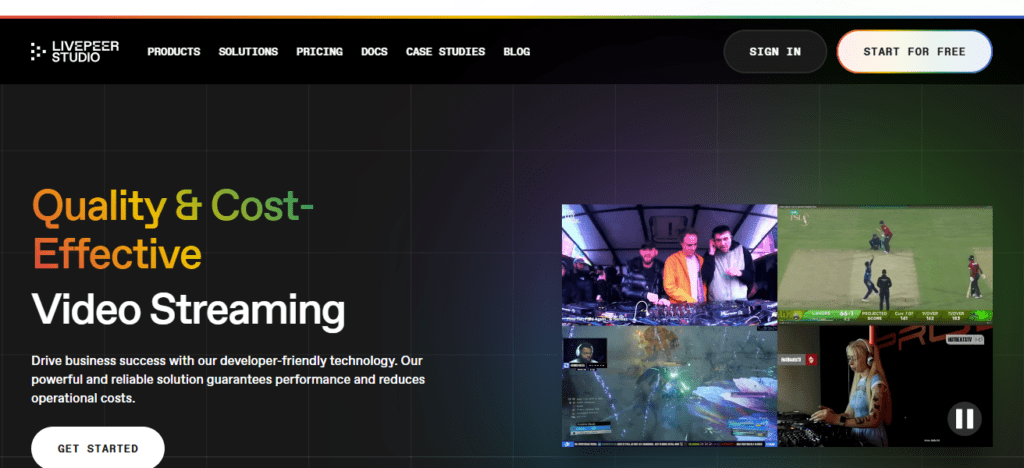
Livepeer Livepeer is the leading platform for media and entertainment streaming, as well as Web3 streaming applications. It has a blockchain based incentive system in place that incentivizes node operators by rewarding them for contribution of compute power.
Livepeer decentralizes video infrastructure to make the distribution of digital media more affordable, scalable and resilient to censorship.
| Pros | Cons |
|---|---|
| Highly efficient video transcoding network | Primarily focused on video workloads only |
| Reduces streaming infrastructure costs | GPU usage not general-purpose |
| Strong adoption in Web3 media | Competition from centralized streaming services |
| Scalable global node network | Requires technical integration effort |
8. Swan Chain
Swan Chain — a DePIN platform aimed at AI, offering distributed GPU compute ownership. It allows developers to train, fine-tune and deploy large-scale machine AI models on decentralized infrastructure.
This makes sure the availability of AI workloads at lower costs by linking various world wide GPU providers. Which is especially well-suited to generative AI, deep learning and data-heavy research applications.
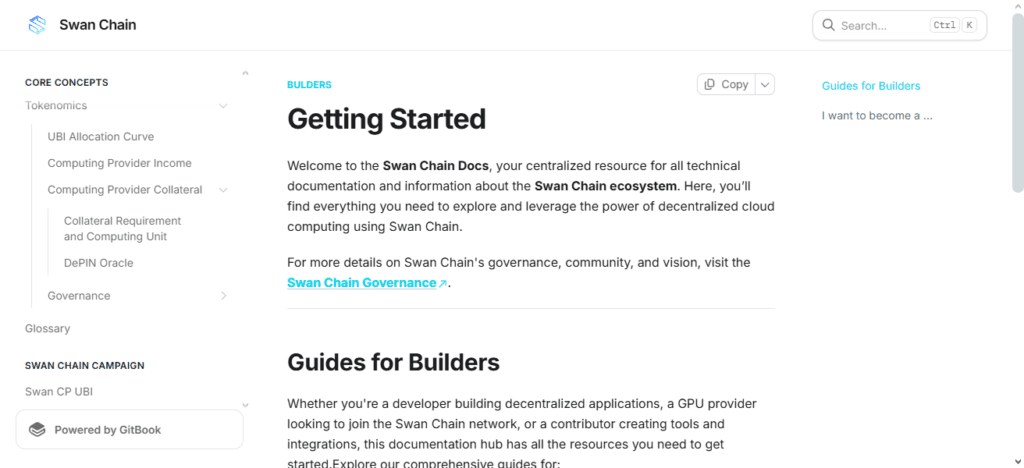
The platform increases the independence from centralized cloud providers with ubiquitous access to scalable compute resources.
Swan Chain also rewards those providing their GPU power which builds a strong foundation for decentralized computations and AI innovation.
| Pros | Cons |
|---|---|
| Designed for AI and ML workloads | Newer platform with limited maturity |
| Strong decentralized GPU availability | Ecosystem still developing |
| Good for large model training | Network reliability still improving |
| Encourages AI innovation | Adoption not yet mainstream |
9. Theta EdgeCloud
Theta EdgeCloud blends edge computing and the DePIN architecture into a hybrid decentralized cloud platform. It offers general-purpose GPU compute resources for AI, video processing and high-performance computing workloads.
The apply this on a worldwide distribution of fringe hubs to diminish idleness and work. Used in streaming, gaming and AI inference.
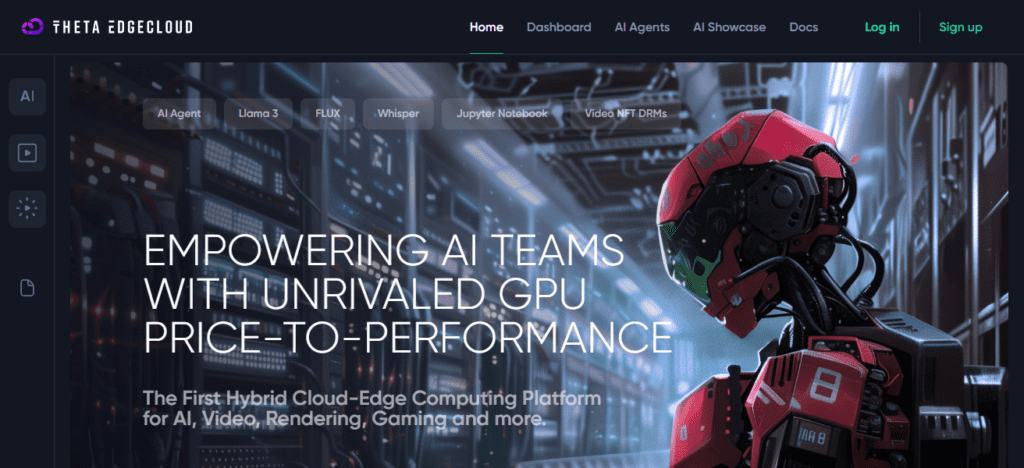
The Theta EdgeCloud connects into the wider Theta ecosystem, with blockchain-based rewards and decentralized storage.
With its hybrid model, it brings together all the benefits of centralized efficiency with decentralized resilience, making for a compelling competitor to existing cloud GPU providers.
| Pros | Cons |
|---|---|
| Hybrid edge + decentralized architecture | Can be complex to understand |
| Low latency for streaming and AI tasks | Requires participation in Theta ecosystem |
| Strong video and gaming infrastructure | GPU capacity depends on node distribution |
| Reliable enterprise-grade performance | Not fully decentralized in all layers |
10. Exabits
Exabits is a new decentralized compute network that brings together GPU providers with AI developers in need of scalability infrastructure.
This emphasizes high-performance distributed computing for machine learning, simulations and data-heavy workloads.
Exabits aims to make a well-established global GPU node network affordable and accessible for state-of-the-art computational workloads.
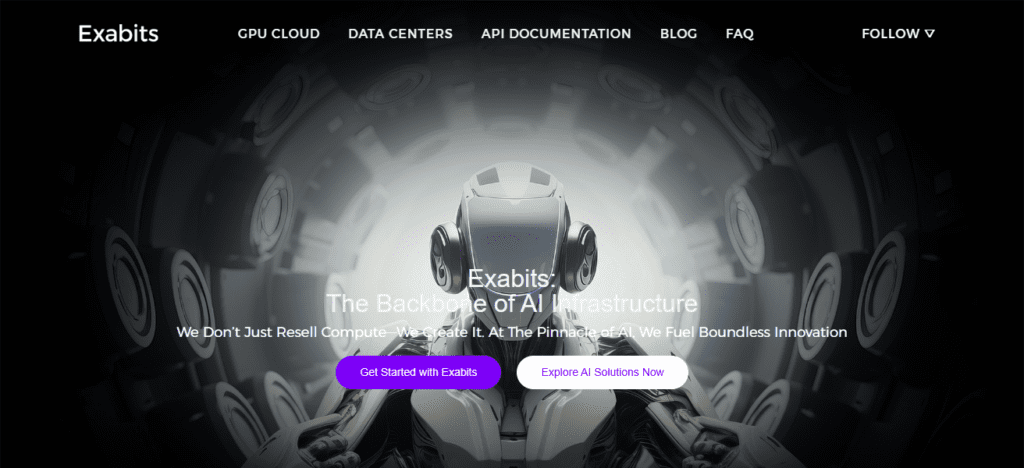
It is a highly scalable platform, allowing developers to increase compute capacity as needed. It also provides another incentive for owners of GPU in optimizing their stuck hardware.
Exabits aims to be a next-generation DePIN product that bolsters the swift development of AI-enabled applications and decentralized cloud environments.
| Pros | Cons |
|---|---|
| Flexible and scalable GPU compute access | Early-stage ecosystem development |
| Strong focus on AI workloads | Limited real-world adoption data |
| Incentivizes GPU monetization | Network size still small |
| Good for distributed machine learning | Potential instability during scaling phase |
Conclsuion
Overall, we see DePIN platforms leading to the decentralization of GPU compute enabling global, cost-effective, scalable compute power.
Networks like Render, io. net, and Akash top the charts for innovation in AI, rendering and cloud. These involve decentralized models making use of this idle GPUs and even monetizing them
Which increases users to earn by offering these hardware processing towards other providers in need for high-performance computing across the globe.
FAQ
DePIN GPU platforms are decentralized networks that allow users to rent or sell GPU computing power globally.
io.net and Akash Network are widely used for scalable AI and machine learning GPU compute tasks.
Yes, Render Network mainly focuses on 3D rendering, animation, and VFX workloads using distributed GPUs.
Yes, platforms like Golem, Render, and Flux allow users to monetize unused GPU and CPU resources.