

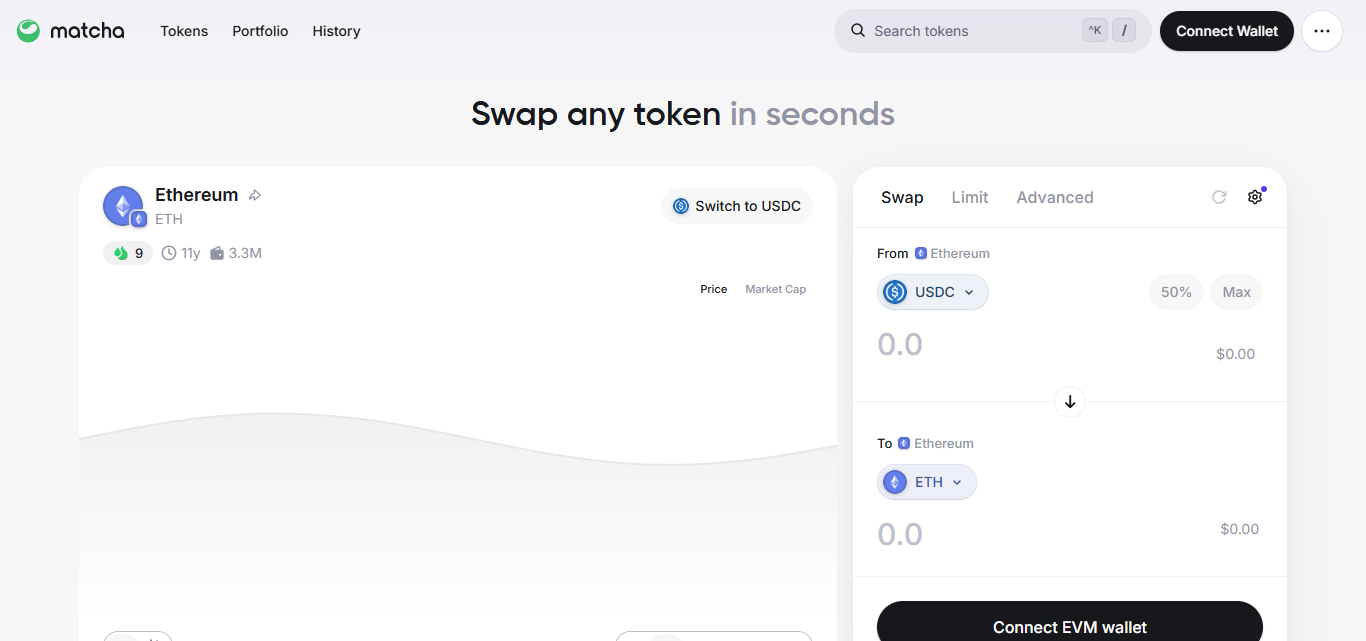
In this article, I will cover the Best Matcha Alternatives for Smart Order Routing. I will look at leading platforms that help traders find competitive swap prices, access diverse liquidity sources, and optimize trade execution.
We’ll compare their routing technology, supported chains, token availability, trade splitting, fees, and unique features to help readers find suitable alternatives for their decentralized finance trading needs.
Key Points & Best Matcha Alternatives for Smart Order Routing
- 1inch Network: Aggregates decentralized exchanges to find competitive token swap rates and optimize trade execution.
- Jupiter: Solana-based aggregator routing swaps across liquidity sources for efficient pricing and execution.
- Velora: Decentralized trading protocol aggregating liquidity to improve swap pricing and execution efficiency.
- CoW Swap: Uses batch auctions and solver competition to secure efficient trades and reduce MEV exposure.
- Odos: Splits trades across liquidity sources to optimize pricing, routing efficiency, and execution outcomes.
- KyberSwap: Aggregates decentralized exchange liquidity to identify competitive rates across supported blockchain networks.
- OpenOcean: Combines centralized and decentralized exchange liquidity to optimize cross-platform cryptocurrency swap execution.
- LI.FI: Aggregates cross-chain bridges and decentralized exchanges to route swaps between blockchain networks efficiently.
- Rango Exchange: Routes cross-chain swaps through multiple bridges and exchanges to simplify multi-network asset transfers.
- Balancer: Provides programmable liquidity pools that support customizable trading strategies and efficient decentralized swap execution.
10 Best Matcha Alternatives for Smart Order Routing
1. 1inch Network
1inch Network is a popular alternative to Matcha. Its Pathfinder algorithm compares liquidity sources and optimizes token swaps. Supported Blockchains: The swap supports Ethereum, BNB Chain, Arbitrum, Base, Polygon, Optimism, Avalanche, and Solana, but availability depends on the swap mode.
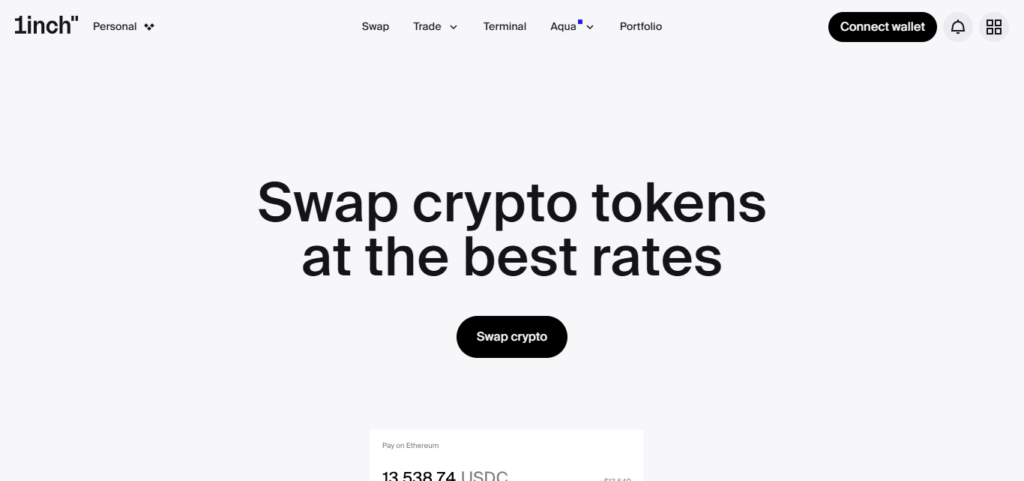
Trade Splitting: Pathfinder can split orders across multiple routes and liquidity pools. Fees and Trading Costs: Users may incur network gas and applicable infrastructure fees. Supported Tokens and Trading
Pairs: Availability is dependent on network and token liquidity Swap Price Optimization: Pathfinder takes into consideration prices, liquidity, and gas costs. Smart Order Routing Technology: It optimizes paths. Maker/taker fees vary by execution mode and order structure.
1inch Network Feature
| Feature | Explanation |
|---|---|
| Pathfinder Algorithm | Finds efficient swap routes across multiple liquidity sources. |
| Trade Splitting | Divides trades across pools when beneficial for execution. |
| Multi-Chain Support | Offers swaps across several supported blockchain networks. |
| Price Optimization | Evaluates routes to improve output and account for gas costs. |
2. Jupiter
Jupiter is a powerful Matcha alternative for traders looking for optimized swaps within Solana’s decentralized finance ecosystem. Supported Blockchains: Core swap routing is focused on Solana; other products may have other network support.
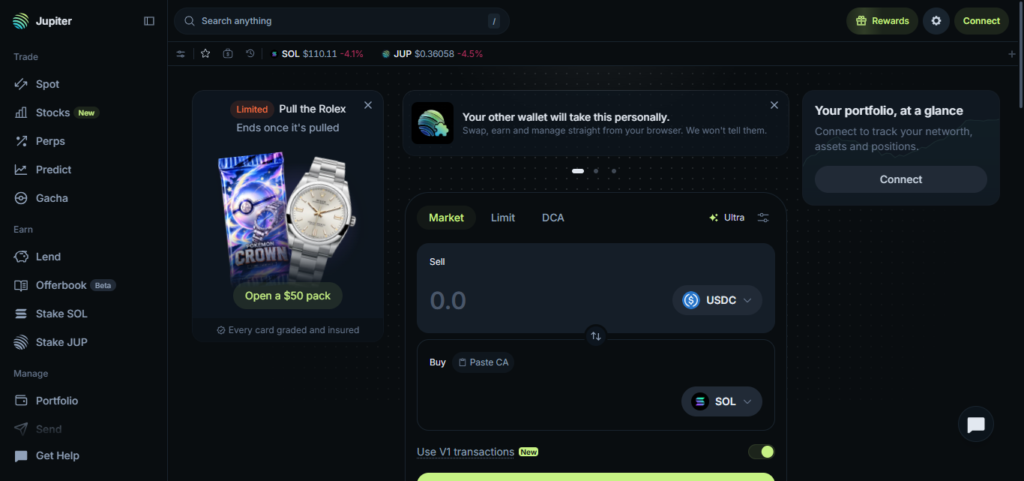
Trade Splitting: Metis routing engine supports multi-hop and split routes across decentralized exchanges. Fees and Trading Costs: Users should compare network costs, applicable platform fees and price impact. Supported Tokens and Trading Pairs Jupiter routes eligible Solana tokens based on liquidity and market availability. Swap Price Optimization: Its swap API can compare competing routing engines.
Smart Order Routing Technology: Metis and supported market-maker routes improve execution. The maker/taker fee is dependent on the product you are choosing and for normal swaps it is not necessarily a traditional order-book fee model.
Jupiter Feature
| Feature | Explanation |
|---|---|
| Metis Routing Engine | Searches routes across integrated Solana liquidity sources. |
| Split Routing | Combines multiple routes to improve swap execution. |
| Liquidity Aggregation | Connects decentralized exchanges and other supported liquidity sources. |
| Swap Optimization | Compares available routes to find competitive token swap rates. |
3. Velora
Velora is a good alternative for traders who want to move away from Matcha’s decentralized exchange aggregation. Supported Blockchains: List the supported networks with the latest updates from Velora’s official DeFi documentation.
Trade Splitting: Verify whether the routing product you selected splits orders across the liquidity sources that are available. Fees and Trading Costs: Take into account gas costs, quoted output and any charges by the integrator or protocol.

Supported Tokens & Trading Pairs: Availability based on network integrations and liquidity. Swap Price Optimization: Don’t just look at headline prices, look at the final estimated output. Smart Order Routing Technology: Assess the aggregator’s route determination and liquidity discovery. Maker/taker fees should only be given when the relevant product explicitly publishes them. Don’t rely on a flat fee schedule.
Velora Feature
| Feature | Explanation |
|---|---|
| Liquidity Aggregation | Connects supported decentralized exchanges to source liquidity. |
| Route Discovery | Identifies potential trading paths across available liquidity sources. |
| Swap Execution | Helps applications access aggregated liquidity through its trading infrastructure. |
| Price Comparison | Evaluates available routes to seek competitive swap outcomes. |
4. CoW Swap
CoW Swap is different from Matcha in that it uses batch auctions and competition among solvers to trade tokens in a decentralized manner. Supported Blockchains: List supported networks for the specific CoW Swap interface you are listing. Trade Splitting: If supported, strategies from the solvers may aggregate liquidity sources or arrange execution to improve the outcome of the trade.
Fees & Trading Costs: Check the quoted output, the gas arrangements and any applicable protocol or interface charges. Supported Tokens and Trading Pairs: Eligible pairs are based on token support and liquidity.
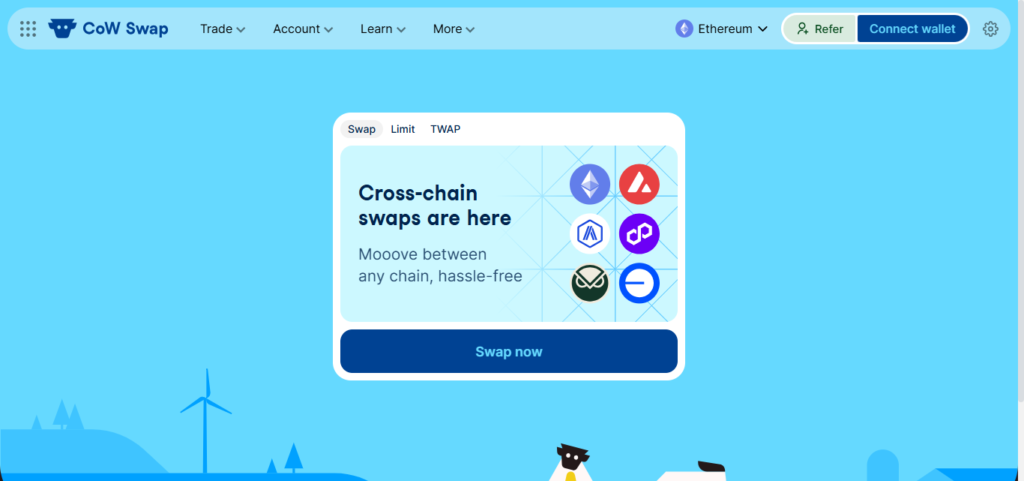
Price optimization of swaps: batch auction can match compatible trading intention and seek for competitive execution. Smart Order Routing Technology Solvers compete to find optimal settlement paths. Maker/taker fees are not necessarily a conventional fixed order-book schedule; please check current order terms.
CoW Swap Feature
| Feature | Explanation |
|---|---|
| Batch Auctions | Groups orders to discover efficient settlement opportunities. |
| Solver Competition | Lets competing solvers search for favorable trade execution. |
| MEV Protection | Uses protocol mechanisms designed to reduce harmful MEV exposure. |
| Coincidence of Wants | Matches compatible trading intentions when suitable opportunities exist. |
5. Odos
Odos is a Matcha alternative that specializes in multi-source liquidity aggregation and intelligent routing for decentralized token swaps. Supported Blockchains Please refer to Odos’s current supported-network documentation as availability may vary by product. Trade Splitting: When it improves execution, its routing method can split a swap across liquidity pools and trading paths.
Fees & Trading Costs: Check network gas, any integration fees and get estimated final token output. Supported Tokens and Trading Pairs: Supported tokens depend on chain support and liquidity in the pools. Swap Price Optimization Route calculations are made to achieve favorable execution, based on price impact and transaction costs.

Smart Order Routing Technology: Odos looks at combinations of liquidity sources instead of one exchange. Check the maker/taker fees for that integration. Don’t assume they are standard.
Odos Feature
| Feature | Explanation |
|---|---|
| Smart Order Routing | Searches combinations of liquidity pools for efficient execution. |
| Trade Splitting | Distributes swaps across multiple pools when advantageous. |
| Multi-Route Optimization | Evaluates alternative paths to improve estimated output. |
| Liquidity Aggregation | Connects supported decentralized exchanges and liquidity providers. |
6. KyberSwap
KyberSwap is a liquidity aggregator that competes with Matcha by using dynamic trade routing across its integrated decentralized exchanges. Supported Blockchains: It supports EVM chains like Ethereum, Arbitrum, Base, BNB Chain, and Polygon, depending on availability at the time.
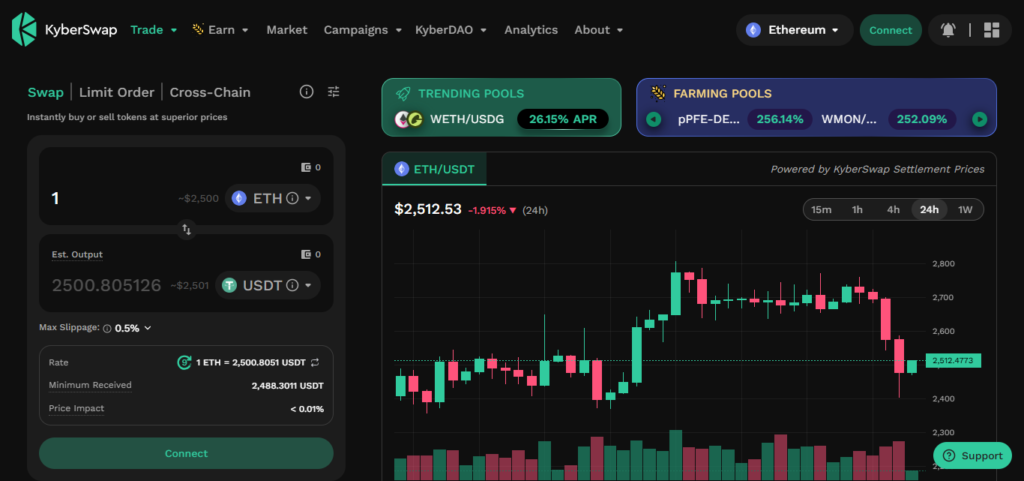
Trade Splitting: Its routing engine can split and reroute orders to liquidity sources. Fees & Trading Costs: Blockchain gas and pool trading fees may apply; special network fees may apply. Supported Tokens and Trading Pairs ERC-20 assets can be traded where supported and liquidity is sufficient.
Swap Price Optimization The engine will compare rates and price impact. Smart Order Routing System: Dynamic routing provides the best route. Maker/taker fees by product; limit orders may have different terms than swaps.
KyberSwap Feature
| Feature | Explanation |
|---|---|
| Dynamic Routing | Finds trading paths across integrated liquidity sources. |
| Multi-DEX Aggregation | Compares rates from supported decentralized exchanges. |
| Trade Splitting | Can distribute orders across pools to improve execution. |
| Price Impact Management | Evaluates liquidity and price impact when selecting routes. |
7. OpenOcean
OpenOcean is a multi-chain aggregator for traders looking for alternatives to Matcha across a wide range of decentralized liquidity sources. Supported Blockchains: It supports over 40 chains including Ethereum, BNB Chain, Arbitrum, Base, Solana and Sui (check for current availability, according to its documentation).
Trade Splitting: Can split orders across exchanges when that improves execution. Fees and Trading Costs: Gas fees are included in the route calculations, however users should check for any platform or other integration fees.
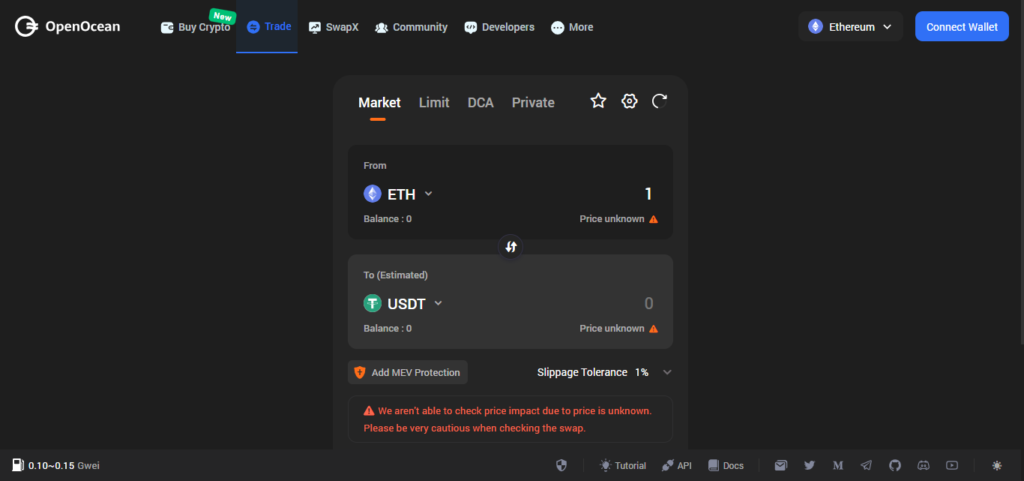
Tokens and Trading Pairs Supported Supported chains, listings and liquidity are subject to availability. Swap Price Optimization: Quote comparison for output, gas efficiency, route quality Smart Order Routing Technology researches multiple paths & routes with intermediate-tokens. The maker/taker fee will depend on the trading product.
OpenOcean Feature
| Feature | Explanation |
|---|---|
| Cross-Exchange Aggregation | Connects supported centralized and decentralized trading venues. |
| Multi-Chain Swaps | Supports trading across multiple integrated blockchain networks. |
| Route Optimization | Compares available routes and estimated transaction costs. |
| Split-Route Execution | Can combine liquidity sources for competitive trade outcomes. |
8. LI.FI
LI.FI is a cross-chain aggregation protocol that enables applications to discover swap and bridging paths across decentralized finance ecosystems. Supported Blockchains: Network support across multiple EVM and non-EVM ecosystems will be based on integrated providers.
Trade Splitting Routing capabilities depend on the selected bridge, exchange and execution path. Fees and Trading Costs: Please take into account network gas, bridge fees, swap fees and any integrator fees displayed in the quote. Supported Tokens and Trading Pairs Availability depends on source and destination chains, tokens and provider liquidity.
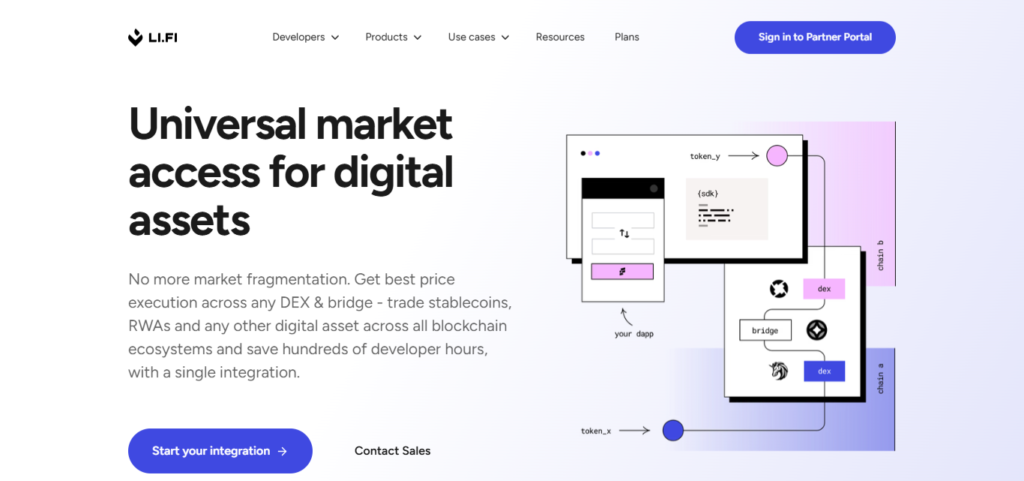
Compare the estimated amounts received and total transfer costs. Swap Price Optimization. Smart Order Routing Solutions LI.FI collects routes from connected DEXs and bridges. There is no one LI.FI fee schedule on maker/taker fees, it’s provider specific.
LI.FI Feature
| Feature | Explanation |
|---|---|
| Cross-Chain Routing | Finds routes for transfers between supported blockchain networks. |
| Bridge Aggregation | Connects multiple bridging providers through one integration. |
| DEX Aggregation | Combines supported swap providers for token conversions. |
| Route Comparison | Evaluates available paths, costs, and expected received amounts. |
9. Rango Exchange
When Matcha alternatives are required to support transfers across multiple blockchain ecosystems, Rango Exchange is a cross-chain aggregator to consider. Supported Blockchains: Integrations include EVM networks, Solana, Cosmos-based ecosystems, and other supported networks; see current integration status.
Trade Splitting: The composition of the route is determined by the exchange and bridge providers you choose. Fees & Trading Costs: Take into account swap fees, bridge fees and gas on respective networks. Supported Tokens and Trading Pairs: The availability of a token depends on the liquidity of the source chain and support of the destination chain.
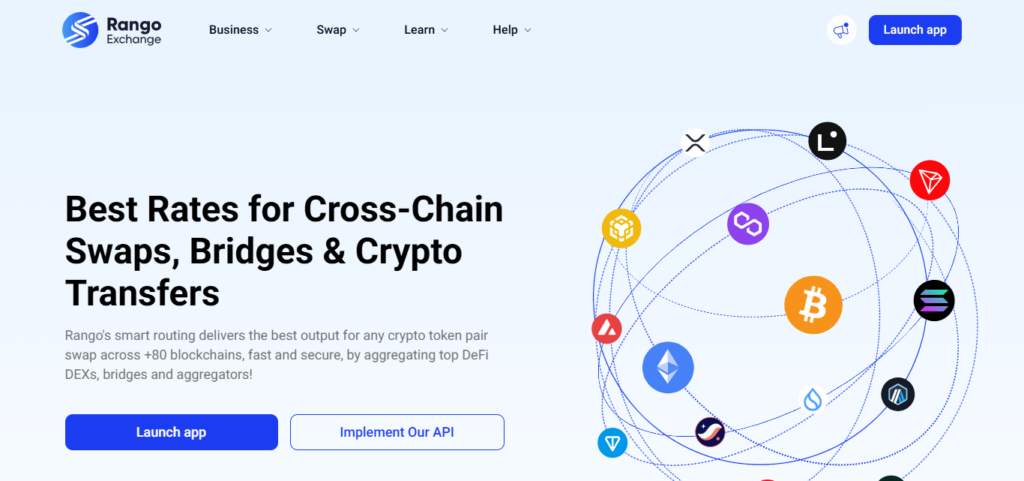
Swap Price Optimization: Compare estimated output, route reliability and total transaction costs. Smart Order Routing Technology Rango uses exchange and bridge integrations to find suitable cross-chain routes. Maker/taker fees are set by the underlying provider and are not a Rango-wide fee.
Rango Exchange Feature
| Feature | Explanation |
|---|---|
| Cross-Chain Aggregation | Connects swap and bridge providers across supported networks. |
| Route Discovery | Finds paths for transferring assets between different blockchains. |
| Multi-Provider Integration | Combines compatible exchanges, bridges, and liquidity sources. |
| Cost Comparison | Helps compare estimated outputs and costs across routes. |
10. Balancer
Balancer differs from Matcha in that it is not just a swap aggregator, but rather a programmable automated market maker pools and liquidity infrastructure provider. Supported Blockchains: See Balancer’s deployment documentation for live networks and pool availability.
Trade Splitting: Not all Balancer pools will be splitting orders themselves, but there may be compatible interfaces or aggregators which offer multi-pool routing. Fees and Trading Costs. Traders generally incur pool swap fees and blockchain gas costs, which vary by pool and network .
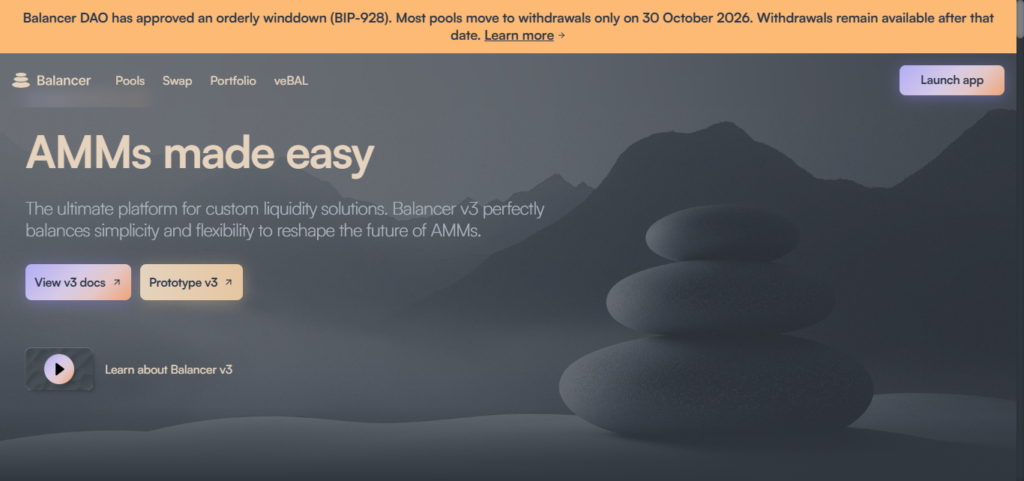
Tokens & Pairs Supported: The available pairs are subject to the pool composition and liquidity. Swap Price Optimization Execution prices depend on pool weights and liquidity conditions. Smart Order Routing Technology: Compatible routers can compare pools and build efficient pathways. Maker/taker fees are not one size fits all Balancer fee model; Pool fees are the primary consideration.
Balancer Feature
| Feature | Explanation |
|---|---|
| Automated Market Maker | Enables token swaps through programmable liquidity pools. |
| Customizable Pools | Supports different pool configurations and liquidity strategies. |
| Flexible Pool Weights | Allows supported pools to use different token weightings. |
| Pool-Based Pricing | Determines swap prices using pool balances, weights, and fees. |
Why Consider Matcha Alternatives?
- Access to Various Blockchain Networks: Access more blockchains, tokens and a whole range of liquidity ecosystems.
- Better Swap Quotes & Execution . Compare Swap prices and improve potential trade execution efficiency.
- Trade Splitting and Liquidity Aggregation: Access liquidity pools to potentially execute trades more efficiently.
- Cross-Chain Swaps and Bridge Aggregation: Transfer assets across supported blockchains using integrated bridges and exchanges.
- Unique Trading & Liquidity Features: Explore batch auctions, contests of solvers, and customizable AMM pools.
Conclusion
Conclusion The best Matcha alternatives for smart order routing depend on your trading goals, supported blockchains, access to liquidity and transaction costs. Platforms like 1inch, Jupiter, CoW Swap, Odos and LI.FI supports different routing techniques and functionalities.
Compare swap quotes, gas fees, price impact, and security before you trade. By considering these aspects, you can pick a suitable platform for efficient decentralized exchange transactions.
FAQ
1inch, Jupiter, CoW Swap, Odos, and KyberSwap offer different routing capabilities.
It compares liquidity sources to identify potentially better prices and execution routes.
1inch, OpenOcean, LI.FI, and Rango support multiple blockchain ecosystems.
1inch, Odos, and KyberSwap can split trades across available liquidity sources.