

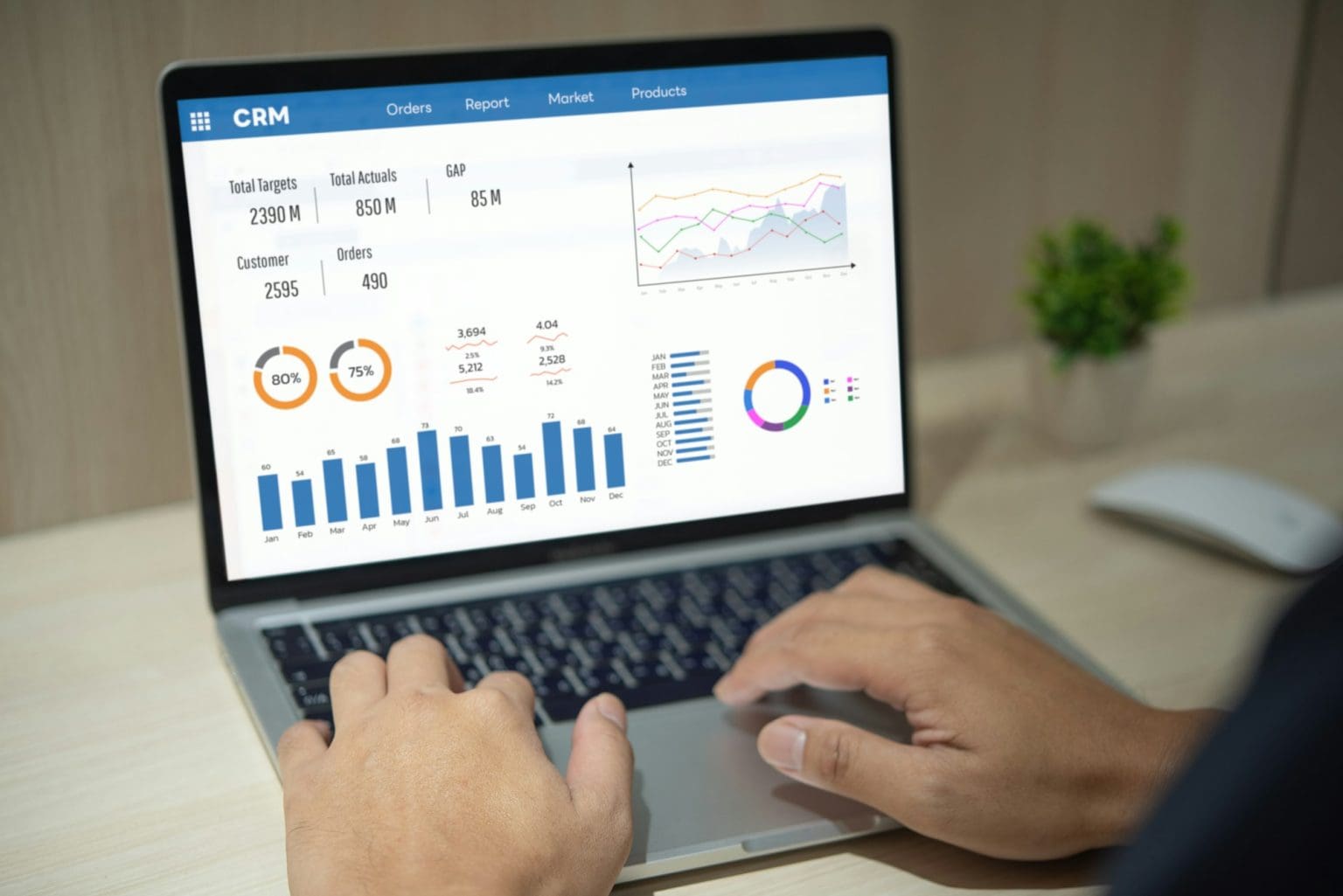
In this article, I will talk about the most useful AI tools for operational intelligence that assist companies in analyzing information, automating tasks, and streamlining decision-making processes.
These sophisticated AI tools give companies the ability to monitor activities in real-time, improve processes, and streamline operational performance.
Companies that use artificial intelligence to anticipate future events and lower their expenses while remaining competitive in the heavily data-driven commercial world.
Key Points & Best AI Tools for Operational Intelligence
| AI Tool | Key Point |
|---|---|
| Lindy AI | Automates team coordination with smart task assignment and workflow tracking |
| GenFuse AI | End-to-end workflow automation using AI-driven process orchestration |
| UiPath | Robotic process automation for repetitive back-office tasks |
| DataRobot | Predictive analytics with automated machine learning for operational forecasting |
| C3 AI | Enterprise-scale AI applications for supply chain and asset optimization |
| IBM Watson | Natural language insights to enhance decision-making and customer operations |
| Tableau with AI | Visual intelligence dashboards for real-time operational monitoring |
| Zoho AI | Business process intelligence integrated into CRM and operations |
| Microsoft Copilot for Business | Embedded AI assistance across documents, spreadsheets, and workflows |
| Automation Anywhere | Cloud-native automation for scaling operational efficiency |
10 Best AI Tools for Operational Intelligence
1. Lindy AI
Lindy AI is designed to help automate workflows and processes. Think of it as your very own virtual employee. It can help with scheduling, customer communications, follow-ups and data tracking.
Lindy AI takes the integration with your tools already in place, like email, CRM tools and calendars to help your operations team to further minimize their manual, manual work.
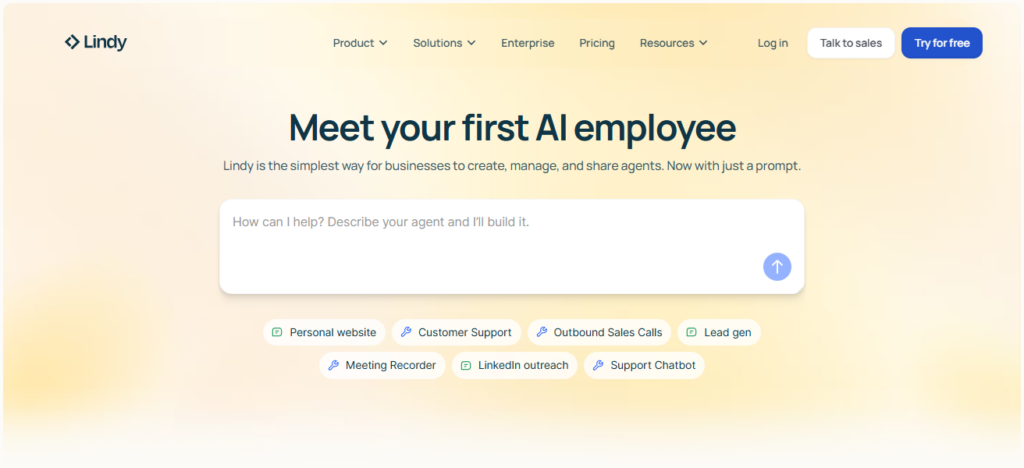
Lindy AI is designed to improve the efficiency, visibility and operational intelligence in your organization with the increased workload.
Features Lindy AI
Task Automation: Automation allows for the seamless handling of tasks such as sending emails, following up, and alerting users to tasks and appointments.
Smart Integration: Enables users to handle activities without the hassle of switching applications. Employees can work in flowing networks without losing time, whether for sending emails, making appointments, or interacting with CRM tools.
Adaptive learning: Improves accuracy of tasks in real time through learning.
Real Time Alerts: Reduces delays through operational reminders.
| Pros | Cons |
|---|---|
| Automates daily operational tasks efficiently | May have limited deep analytics compared to full BI tools |
| Integrates with calendars, CRM, and email seamlessly | Newer tool — smaller community and fewer integrations |
| Reduces manual workload and error | AI learning curve for non-technical users |
| Improves task visibility and follow-up | Pricing may be high for small teams |
2. GenFuse AI
GenFuse AI integrates data, automation, and analytical operational intelligence. GenFuse AI helps organizations bridge disparate data sources and convert them into actionable insights.
GenFuse AI facilitates intelligent process automation, predictive analytics, and optimization of workflows.
Organizations use it to pinpoint operational bottlenecks, predict outcomes, and enhance the precision of their decisions.
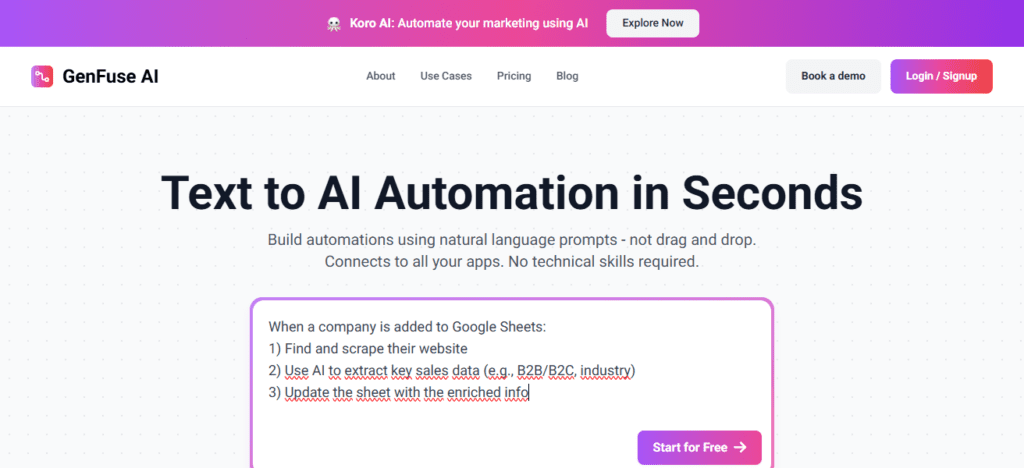
Its scalable architecture fits organizations looking to achieve operational efficiency and ever-improving performance through data.
Features GenFuse AI
Unified Data Platform: Access to and visibility of disparate and integrated data sources.
Predictive analytics: Leverages AI to predict future behaviours and outcomes in the operational scope.
Workflow Intelligence: Analyses operational processes to identify gaps and recommend rationalized workflows.
Scalable Architecture: Supports mid-sized to large operational architecture and adds capabilities as the company grows.
| Pros | Cons |
|---|---|
| Unifies data from multiple sources effectively | Complex setup for non-technical teams |
| Offers predictive analytics and workflow optimization | Can be expensive for small businesses |
| Improves real-time operational insights | Smaller marketplace of add-ons and plugins |
| Scales with enterprise needs | Requires strong data governance to perform best |
3. UiPath
UiPath is a major platform for robotic process automation, incorporating advanced operational intelligence through automation of repetitive tasks
While machine learning analyzes workflows, identifies, and enhances inefficiencies in business processes.
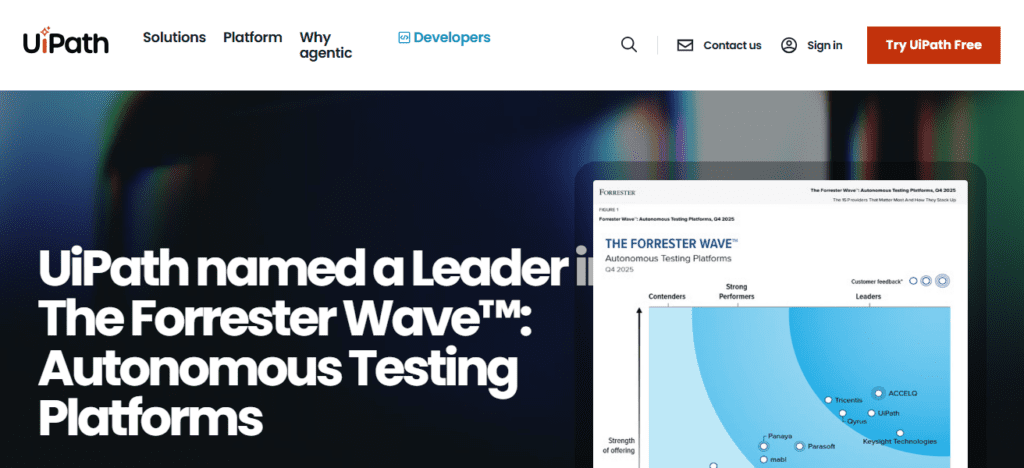
The company’s AI Center offers intelligent document processing and predicts process mining, and predictive insights.
Companies use UiPath to enhance productivity, reduce errors, and obtain real-time visibility of operational performance in finance, people, supply chain, and IT.
Features UiPath
Robotic Process Automation (RPA): Enables the use of automation bots to replicate user activities and to perform processes and tasks automatically.
Process Mining: Provides visualization of processes to pinpoint areas for improvement.
AI Center: Container for integrated automation and ML (machine learning) for user processes.
Bot Orchestration: Assign bots to teams and controls the use of bots across the teams.
| Pros | Cons |
|---|---|
| Market-leader in RPA with robust AI capabilities | Licensing costs can be high |
| Excellent process mining and automation | Some features require advanced technical skills |
| Strong community and ecosystem | Implementation can take time |
| Integrates with many enterprise tools | Needs dedicated RPA governance to avoid sprawl |
4. DataRobot
DataRobot is a fully automated machine learning platform that has been enhanced with AI to facilitate predictive analytics and decision-making faster than normal.
It automates the entire AI workflow from data prep to model deployment and model monitoring. Companies can use the platform to predict the flow of information, realitime-analyze and optimize the efficiency of their operations.
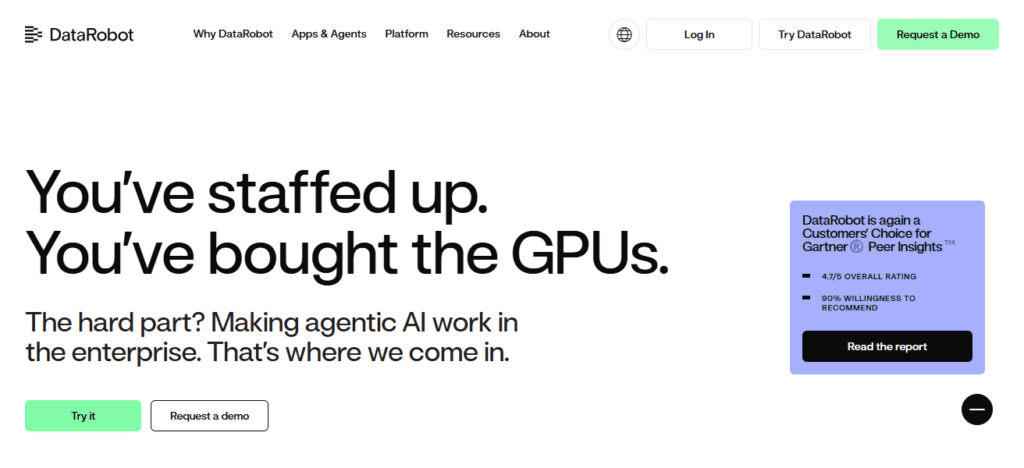
DataRobot’s explainable AI functionality gives teams sufficient detail to understand the predictions, allowing busitness leaders to use the insights and operational efficiency in their businesses at scale.
Features DataRobot
AutoML: Automates the generation, selection, and optimization of models.
Predictive insights: Enables accurate forecasting to aid operational decision making.
Model monitoring: Provides real time monitoring of deployed models to identify insights on operational effectiveness and automation for decision shaping.
Explainable AI: Offers transparency around AI’s predictions for trust and regulatory expectations.
| Pros | Cons |
|---|---|
| Automated end-to-end machine learning | Requires quality data for best results |
| Predictive insights improve operations | Can be expensive for small teams |
| Explainable AI improves trust in outcomes | Learning curve for non-data scientists |
| Fast model deployment and monitoring | Integration with legacy systems can be complex |
5. C3 AI
C3 AI offers enterprise-level AI operational applications in numerous industries including manufacturing, energy, defense, and supply chain.
The platform employs advanced analytics, predictive modeling, as well as data from IoT, in order to streamline and operationalize processes.
C3 AI assists organizations in identifying failures prior to their occurring, minimizing downtime, and bettering resource use.
The AI suite offers scalability and future potential to assist businesses, in refining complex operational data to achieve measurable and significant business results.
Features C3 AI
Enterprise AI Suite: Offers fully integrated solutions for enterprise-grade AI.
IoT Integration: Merges sensor and machine data.
Predictive Maintenance: Predicts equipment failures.
Advanced Analytics: An AI-driven analytical engine that generates operational intelligence.
| Pros | Cons |
|---|---|
| Enterprise-grade predictive analytics | Can be costly for mid-sized companies |
| Strong IoT and operational use cases | Implementation may need specialist support |
| Reduces downtime with predictive maintenance | Platform complexity can be challenging |
| Scales across industries | Longer deployment timelines |
6. IBM Watson
IBM Watson offers operational intelligence enhanced by advanced technologies such as predictive analytics, automation, and natural language processing.
Organizations are able to gain important operational insights through the analysis of large amounts of structured and unstructured data.
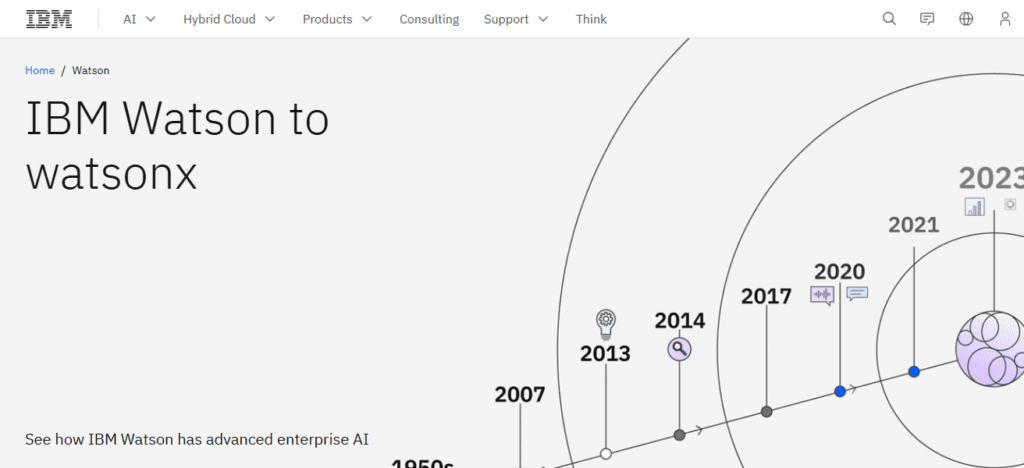
Watson supports use cases like predictive maintenance, risk management, customer service improvement, and process automation.
IBM Watson is ideal for organizations looking for trustworthy, transparent, and within the governance and security parameters, explainable AI for operational decision making, due to the strong data governance and security capabilities.
Features IBM Watson
Natural Language Processing: Analyzes and gains comprehension of language and text data.
Predictive Analytics: Anticipates future business activities using sophisticated data sets.
Cognitive Automation: Adds reasoning enhancement to operational processes.
Data Security & Governance: Advanced enterprise-level compliance and safety features.
| Pros | Cons |
|---|---|
| Powerful analytics and NLP | Can be expensive for small businesses |
| Handles structured & unstructured data | Steeper learning curve |
| Strong enterprise security & governance | Setup and tuning take time |
| Trusted brand with broad use cases | Some tools may overlap with IBM suite |
7. Tableau with AI
AI Tableau Pulse and Einstein AI facilitate improvements in operational analytics by offering advanced visualizations combined with predictive data analytics.
It allows a seamless interaction with operational data and offers insights, projections, and explanations generated by AI.
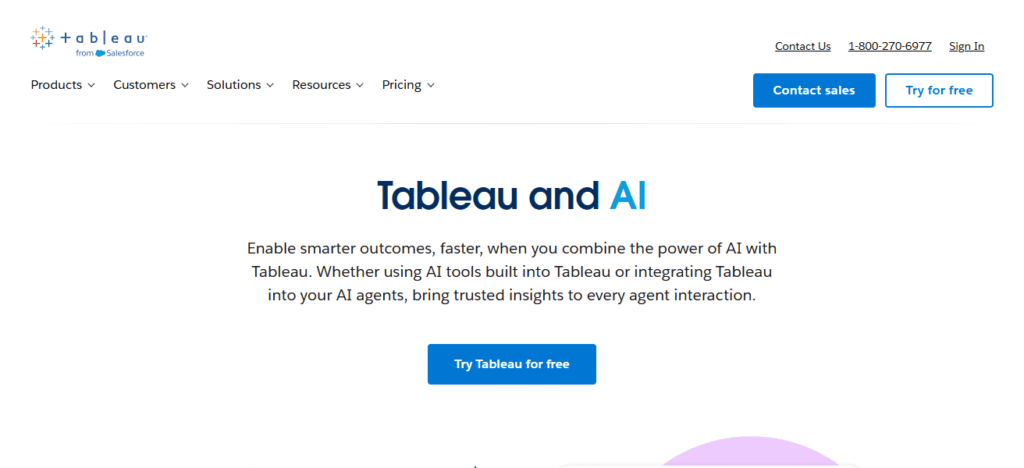
Organizations can detect patterns, irregularities, and areas lacking efficiency. Complex datasets are simplified thanks to Tableau’s AI, enabling organizations to make more precise, data-driven choices quickly.
Features Tableau with AI
AI-Driven Visual Insights: Automatically visualizes data for trend analysis.
Predictive Forecasts: Utilizes AI to predict future outcomes.
Anomaly Detection: Identifies operational outliers for further investigation.
Interactive Dashboards: Provides operational data for tailored self-service analysis.
| Pros | Cons |
|---|---|
| Excellent visualization + AI insights | Requires good data sources |
| Intuitive for non-technical users | AI features upgrade cost |
| Intelligent trends and anomaly detection | Less deep automation than RPA tools |
| Strong community and ecosystem | May need training for best usage |
8. Zoho AI
Zia, or Zoho AI, has incorporated operational intelligence into Zoho’s entire business ecosystem. Organizations use it for automating workflows, operational data analysis, and automated predictive data generation.
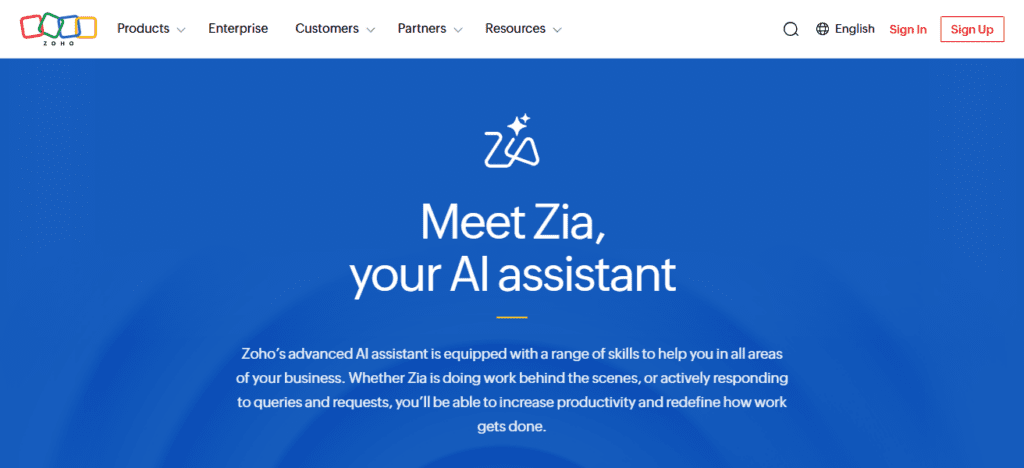
Zoho calculates predictive sales, detects operational anomalies, performs customer sentiment analysis, and processes data optimally.
By providing AI functionality in CRM, finance, and HR as well as operational tools, Zoho AI helps small and medium enterprises improve functionality and operational decision-making.
Features Zoho AI (Zia)
Predictive Recommendations: Forecast and recommend future trends.
Sentiment & Pattern Analysis: Offers customer interaction analysis.
Workflow Automation: Streamlines repetitive tasks within Zoho applications.
Contextual AI Alerts: Real-time data-driven alerts.
| Pros | Cons |
|---|---|
| Seamless within Zoho business apps | Best features mostly within Zoho suite |
| Cost-effective for SMBs | Limited compared to large enterprise platforms |
| Predictive insights and automation | Fewer third-party integrations |
| Easy to use with low learning curve | Advanced analytics limited |
9. Microsoft Copilot for Business
Microsoft Copilot for Business integrates AI-driven operational intelligence seamlessly into everyday applications such as Outlook, Excel, Teams, and other Microsoft 365 tools.
Employees can use it to analyze information, produce recurring reports, provide real-time meeting summaries, and generate insights on demand.
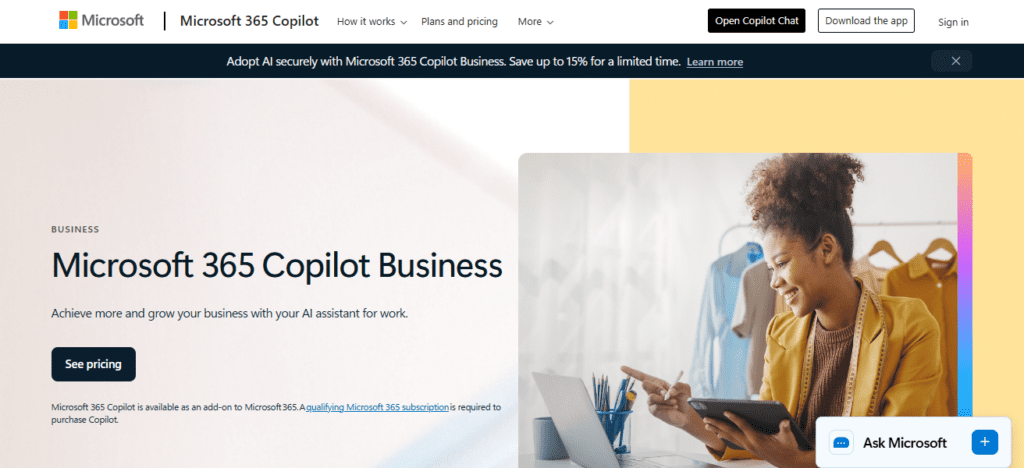
Copilot enhances productivity and streamlines operational decision-making by merging enterprise data with AI reasoning.
Without complicated AI implementation, organizations can gain fast insights, automate manual processes, and collaborate more effectively.
Features Microsoft Copilot for Business
AI Writer & Analyst: Creates text and provides data summaries.
Microsoft 365 Integration: Collaborates with Teams, Excel, Outlook, and beyond.
Natural Language Querying: Utilizes non-technical language to query.
Assistive Tasks: Streamlines report generation, slide creation, and scheduling.
| Pros | Cons |
|---|---|
| AI insights inside everyday apps | Requires Microsoft 365 ecosystem |
| Improves productivity and collaboration | Privacy concerns if not configured correctly |
| Natural language AI assistance | Limited deep operational automation |
| Reduces manual reporting | Subscription required |
10. Automation Anywhere
Automation Anywhere is able to provide operational intelligence by comning together RPA, AI, and analytics.
This platform allows busniesses to automate complicated processes and see how these processes are performing and where there are operational gaps.
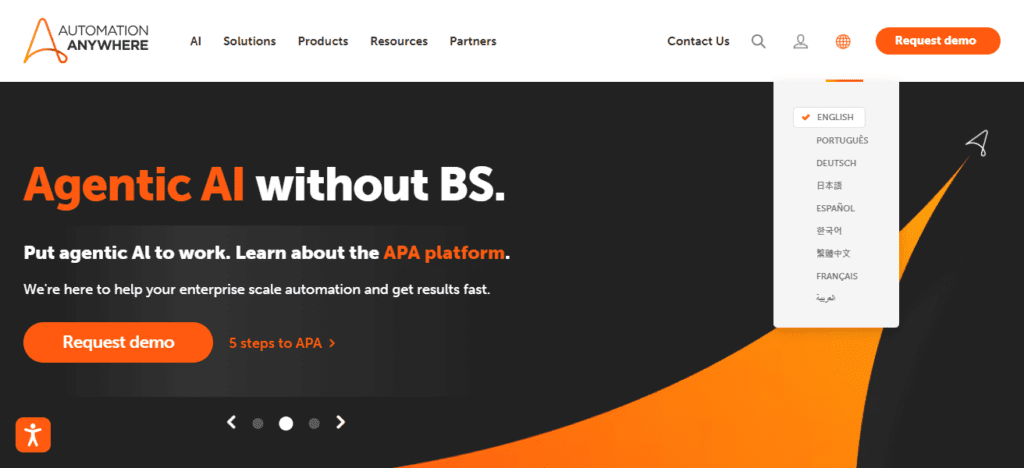
Automation Anywhere is able to help businesses decrease their costs, increase accuracy, and optimize workflows through process discovery, cognitive automation, and real time analytics. This platform is used by a variety of industries, including finance, healthcare, and manufacturing.
Features Automation Anywhere
Intelligent RPA: Merges technology-augmented automation with robotics.
Automation Opportunity Analysis: Studies and evaluates processes for automation.
Cognitive Automation: Focuses on unstructured data using machine learning and NLP.
Real-Time Insight: Monitors business-critical KPIs and performance metrics of bots.
| Pros | Cons |
|---|---|
| Combines RPA with AI analytics | Enterprise costs can be high |
| Smart process discovery | Setup and maintenance need specialist teams |
| Improves accuracy and efficiency | Learning curve for citizen developers |
| Real-time operational metrics | Integration challenges with heavily custom systems |
How We Choose Best AI Tools for Operational Intelligence
Data Integration Capability: Integrating and synchronizing data from various systems, tools, and data sources in real-time.
Advanced Analytics & AI: Taking actionable insights produced through automation and the use of machine learning and predictive analytics.
Operational Automation: Enabling the automation of workflows, repetitive tasks, and decision-making processes.
Scalability & Performance: Ability to accommodate expanding data and enterprise level functioning.
Ease of Use: Simple dashboards, low to no code functions, and a short learning curve.
Real-Time Insights: Continuous operation monitoring and the delivery of immediate alerts.
Security & Compliance: Effective data management, privacy, and compliance with law.
Integration Ecosystem: Ability to work with existing business application and cloud systems.
Cost vs Value: Costing commensurate with features, return on investment, and business requirement.
Vendor Reliability: Established track record, customer service, and ongoing support.
Cocnlsuion
In closing, optimal operational intelligence AI tools allow companies to convert data into operational insight, automate tasks, and streamline workflow.
Organizations can improve analytics, lessen operational uncertainties, and foster enduring advancement by integrating the appropriate AI systems.
In a dynamic digital environment, picking a scalable, dependable, and simple to implement solution will guarantee ongoing operational success.
FAQ
AI tools for operational intelligence use data analytics, machine learning, and automation to monitor, analyze, and optimize business operations in real time.
They help organizations improve efficiency, reduce costs, predict issues, and make faster, data-driven operational decisions.
Manufacturing, finance, healthcare, retail, logistics, IT services, and energy sectors benefit the most from these tools.
Yes, many AI tools offer scalable and cost-effective solutions suitable for small and mid-sized businesses.
Some enterprise tools require technical skills, but many modern platforms offer low-code or no-code interfaces for ease of use.