

This article will analyze decentralized identity (DID) development companies within Web3 focusing on the foremost innovators revolutionizing digital identity on the blockchain.
These companies are developing secure and privacy-oriented solutions that empower users with complete control of their data.
They are pioneering the future of trust and identity in decentralized systems using zero-knowledge proofs and verifiable credentials.
What is Decentralized Identity (DID) Development Companies?
A small number of companies that work with decentralized identity (DID) technologies are developing solutions that allow users to store, manage, and control their personal information on their own.
Unlike conventional digital identity solutions that are owned, controlled, and managed by centralized authorities, and offer little to no privacy, block-chain based DID solutions are secure and privacy-preserving.
Such companies create, build, and deploy decentralized identity (ID) technologies, including self-sovereign digital ID wallets, and identity verification systems and processes designed to allow users to authenticate and prove their identity to others without involving any third-party intermediaries and without losing ownership and control of their data.
How To Choose Decentralized Identity (DID) Development Companies in Web3
Experience in Web3 & Blockchain – Choose those companies that have proven experience in blockchain technology, smart contracts, and decentralization to ensure reliable DID.
Security & Privacy Standards – As such DID solutions have sensitive personal information, ensure that such a company complies with robust and stringent security protocols.
Customizable Solutions – Pick those companies whose DID solutions are flexible and can be sculpted in accordance and to the specifications of your project’s requirements.
Compliance & Regulatory Knowledge – Confirm such companies know the relevant international data privacy laws like GDPR and that such identity solutions are compliant.
Client Portfolio & Case Studies – Assess their capabilities in successfully delivering such DID solutions based on the testimonials and previous projects of such clients.
Support & Maintenance – Choose companies whose DID solutions ensure your DID system will be kept in robust and secure bounds.
Integration Capability – Make sure such a company can provide access to DID solutions that work with other Web3 technology programs, applications, or business systems.
Key Point & Best Decentralized Identity (DID) Development Companies in Web3 List
| Company | Key Feature | Unique Advantage |
|---|---|---|
| SpruceID | Open-source identity solutions | Strong focus on user-centric DID management |
| Iden3 | Zero-knowledge proofs | Privacy-preserving identity verification |
| Civic Technologies | Mobile-friendly identity wallets | Fast KYC and identity authentication |
| Dock.io | Data ownership & sharing | Enables professional credential exchange |
| Bloom Protocol | Credit scoring with blockchain | Combines identity with decentralized finance |
| SelfKey | Identity wallet & marketplace | Self-sovereign identity for global users |
| KILT Protocol | Verifiable credentials framework | Tailored for enterprise and decentralized apps |
| Ontology (ONT ID) | Multi-chain identity ecosystem | Integrates with multiple blockchain networks |
| Evernym (Avast/Gen) | Sovrin-based DID solutions | Trusted, enterprise-grade decentralized identity |
| Trinsic | DID APIs & developer tools | Easy integration for Web3 applications |
1. SpruceID
Because of its significant emphasis on user-centric, open-source identity solutions, SpruceID is among the top Decentralized Identity (DID) development firms in Web3.
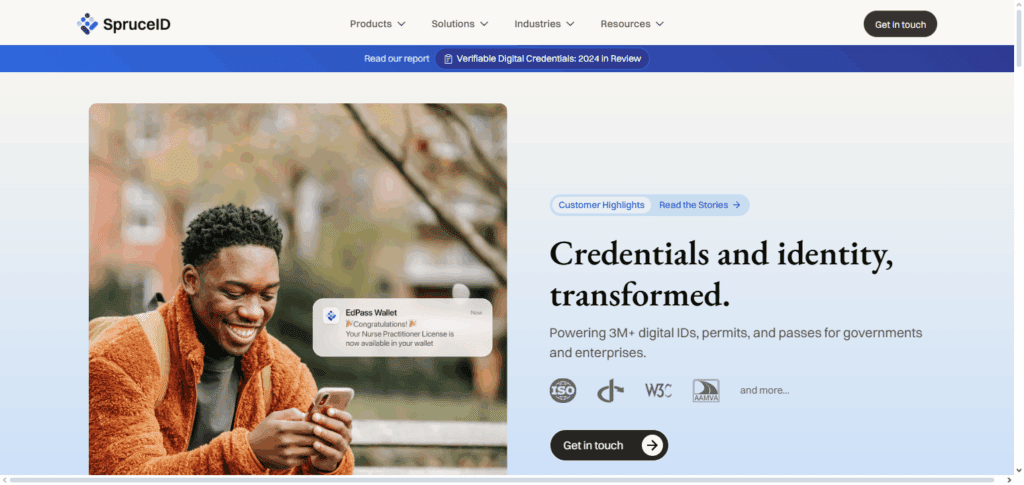
It gives people and businesses the ability to safely maintain their digital identities without depending on centralized authority. In order to facilitate the smooth integration of DID solutions into Web3 applications while guaranteeing privacy, security, and verified credentials, SpruceID offers incredibly adaptable tools and protocols.
It is perfect for companies looking for scalable, decentralized identity systems because of its focus on developer-friendly frameworks and compatibility with various blockchain networks. SpruceID stands apart in the developing Web3 ecosystem thanks to its blend of security, openness, and usability.
SpruceID
Features
- Decentralized and open-source identity framework.
- Verifiable credential and interoperable DID tools.
- Good documentation and developer-friendly SDKs.
Pros
- Works with various Web3 applications and is very adaptable.
- Privacy as well as ownership of user data is important.
- Multi-chain agnostic.
Cons
- Complete integration needs considerable developer experience.
- No out-of-the-box offerings for enterprise-grade solutions.
- Other companies offer this service with an older ecosystem.
2. Iden3
Iden3 has certainly made a name for themselves as one of the top DID development companies implementing zero-knowledge proof technology.
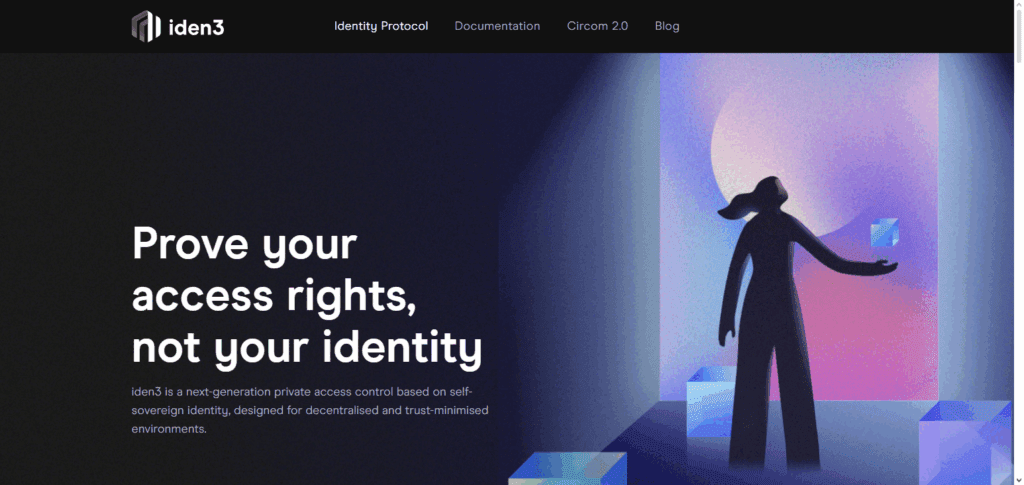
Being able to access this privacy-preserving technology and verifying attributes of the user’s identity without exposing any sensitive information adds increased legitimacy to Web3. Developers using Iden3’s modular infrastructure for building scalable, trustless identity systems will find that they can easily be integrated to any decentralized network.
This advanced framework provides a slew of revolutionary solutions, including self-sovereign data control and zk- based verification. Iden3 has certainly set the standard high for DID ecosystems, allowing for privacy, interoperability and geater options for developers.
Iden3.
Features
- Identity system with zero-knowledge proofs.
- Verifiable credential infrastructure designed for scaling.
- Web3 zk-friendly identity protocol.
Pros
- Protection of one’s privacy is great.
- Trustless identity verification is useful.
- Works very well with zk-rollups.
Cons
- Not beginner-friendly because of the complex architecture.
- They’re early in the industry, this field lacks mass user adoption.
- Enterprises have a shortage of ready-to-use tools.
3. Civic Technologies
Because of its significant emphasis on safe, user-friendly identity verification through mobile-first solutions, Civic Technologies stands out as one of the top Decentralized Identity (DID) development businesses in Web3.
Using encrypted on-device storage instead of centralized servers, Civic’s ecosystem enables users to securely manage and share their identity data. For Web3 sites, exchanges, and dApps, onboarding is easy because to its identity wallet and frictionless KYC capabilities.
Additionally, Civic places a strong emphasis on compliance-ready verification, which allows companies to adhere to legal requirements while protecting user privacy. Civic is a pioneer in decentralized identification thanks to its combination of enterprise-grade identity solutions, strong security, and accessibility.
Civic Technologies
Features
- An identity wallet housed in a mobile device.
- Tools for instant KYC verification.
- Device-based data storage that is secure.
Pros
- Mobile user experience is great.
- Regulatory compliance is of high importance.
- A good fit for Web3 platforms and exchanges.
Cons
- There is a lack of customization for developers.
- Mobile hardware security is very important and can often limit the system.
- Some pure decentralized applications may not suit KYC-intensive applications.
4. Dock.io
Because of its strong emphasis on developing verifiable credentials that are safe, impenetrable, and simple to issue, Dock.io is considered one of the top Decentralized Identity (DID) development businesses in Web3.
Users have total control over their data thanks to Dock’s blockchain-powered infrastructure, which enables enterprises to create and manage digital identities without depending on centralized authority.
Because of its platform’s great scalability, it can be used by businesses, academic organizations, and Web3 applications that require quick and dependable credential issuing. The distinctive strength of Dock.io is its smooth toolkit, which makes DID integration easier for developers while guaranteeing long-term interoperability, privacy, and compliance.
Dock.io
Features
- Document issuance on the Blockchain
- Autonomous data ownership, and controlled data sharing
- Identity tools for enterprises
Pros
- Designed for large institutions.
- Management of the data credential life cycle is seamless.
- Management of tamper-proof, and verifiable data.
Cons
- Most of the target clientele is enterprises.
- Less room for experimentation on web3 applications.
- Needs some technical onboarding.
5. Bloom Protocol
Because of its exceptional capacity to combine identity verification with decentralized credit scoring, Bloom Protocol is regarded as one of the top Web3 Decentralized Identity (DID) development businesses.

Bloom allows users to prove their creditworthiness while retaining complete control over their identity and financial information, in contrast to traditional systems that depend on centralized databases.
Its blockchain-based credentialing system guarantees safe, unchangeable identity records that are compatible with Web3 services, DeFi apps, and lending systems. Bloom is a unique solution for decentralized identification and financial inclusion in the Web3 ecosystem because of its emphasis on privacy-preserving verification, user empowerment, and worldwide accessibility.
Bloom Protocol
Features
- Credit scoring with decentralized identity
- Management of personal data in an encrypted form
- Financial identity credentials that can be verified
Pros
- Use case is strong in lending and fintech.
- Facilitates creditworthiness checks in DeFi.
- Financial data ownership is solely the users.
Cons
- Focus is primarily on finance-related identity.
- Global adoption is still in its infancy.
- Full utility may rely on other ecosystem partners.
6. SelfKey
Although there are many companies in Web3 SelfKey stands out as one of the best Decentralized Identity systems due the ability to self-sovereign and manage one’s own self-controlled data ecosystem.
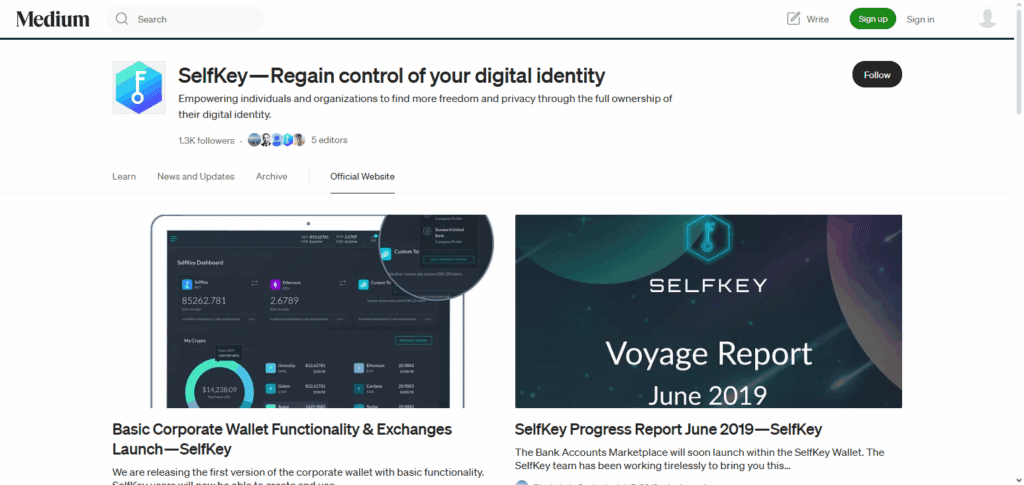
SelfKey offers an identity wallet which permits customers the ability to manage their data and not be chained to the centralized systems where many data vulnerabilities exist.
SelfKey has created an innovative marketplace which permits the user to engage in many different services such as financial, legal, and immigration services with digital identities self-sovereign on each user. SelfKey offers an exceptional solution to decentralized identity which stands out among the competition.
SelfKey
Features
- Self-sovereign identity wallet.
- Data stored in a decentralized way.
- Global services marketplace.
Pros
- Full control of your identity.
- Access to a variety of 3rd party offerings
- Low friction onboarding for users with no technical background
Cons
- Marketplace adoption is uneven across different regions.
- Other DID wallets with similar offerings on the marketplace.
- Limited tools focused on enterprises.
7. KILT Protocol
KILT Protocol is one of the best companies specializing in the development of Decentralized Identities (DIDs) within Web3 due to the privacy-preserving digital credentials, protected by the robust framework to isssued, managed, and verified.
On the Polkadot ecosystem, KILT allows anyone, whether an individual (or an enterprise) to issue, manage, and verify credentials without sensitive personal data being disclosed.

The real innovation is in the ownership of the internal custodianship of the individual layer, decoupling the noexternal agency, thereby enabling the individual to retain full control.
Additionally, KILT is one of the best companies, providing cross chain strong interoperability, and custom digital workflows, within Web3, privacy-preserving scalable solutions and trustless credentials are in high demand.
KILT Protocol
Features
- A framework for verifiable credentials
- Polkadot-based identity system
- Credential issuing workflows are flexible
Pros
- There is a significant amount of interoperability
- There is increased privacy
- Identity governance is friendly to enterprises
Cons
- There needs to be an adoption of Polkadot
- There is a technical learning curve
- There are a limited amount of pre-existing UI tools
8. Ontology (ONT ID)
There BYONT’s does best in the entire Web3 space is offer Decentralized Identity (DID) development solutions. Ontology has built a trusted multi-blockchain DID with embedded security. Customers are able to develop, oversee, and verify their digital IDs across different blockchains, allowing for fully operational inter-blockchain decentralized tech.
Ontology DID provides strong crypto protection and the ability to flex real world IDs so organizations can meet borderless DID deployments without sacrificing safeguards. Unique features like credential verification, biometric security, frozen data vaults, and inter chain remote access to data vaults give Ontology DID the best and largest in the Web3 space, the size and cross chain demand.
Ontology (ONT ID)
Features
- There are decentralized identities across multiple chains
- There is integration of biometric authentication
- There are tools to be able to verify credentials
Pros
- There is a strong appeal for enterprises and governments
- There is functionality across multiple blockchain ecosystems
- There is a strong infrastructure for identities
Cons
- This can be complex for smaller Web3 projects
- There is a feeling of being overwhelmed in a larger ecosystem
- Some sort of regulatory adaptation is required in some contries
9. Evernym (Avast/Gen)
Evernym is considered one of the best companies developing Decentralized Identity (DID) in Web3 along with Avast/Gen, because of its trailblazing efforts in the creation of self-sovereign identity standards.
Evernym is built on the Sovrin network and provides digital identity systems that focus on privacy and security as users and organizations need to verify documents and as well as credentials without revealing other unnecessary information.
Evernym’s technology provides high emphasis on trust and compliance as well as interoperability making it a good fit for Web3, goverments and enterprises Evernym is is top in the industry core value of security, transparency, and global standards compliance that differentiates it from other companies in the decentralized identity.
Evernym created ecosystems for decentralized identity by offering a The Optimum em it and exploit verified credentials and self sovereignty without compromising the core value of control.
Evernym (Avast/Gen)
Features
- There is an SSI framework which is Sovrin-based
- There are DID tools that are made for enterprises
- There is a privacy-focused verification for credentials
Pros
- There is a level of trust from institutions and governments
- There is a strong level of compliance and standards that are put in place
- The infrastructure is robust and secure
Cons
- There is less support for Web3 due to newly formed protocols
- There is more of a focus to bigger enterprises rather than smaller projects
- The integration of it needs high technical support
10. Trinsic
Trinsic has one of the most developer-friendly platforms allowing secure identity systems to be built and integrated with ease. This has placed Trinsic as one of the most far-reaching companies developing Decentralized Identity (DID) in Web3.
Companies can use Trinsic’s APIs to easily issue, store and verify digital credentials without going through the hassle of building a complicated blockchain infrastructure.
Trinsic’s emphasis on cross-platform compatibility allows for the easy use of multiple DID standards, as well as other Web3 programs.
Trinsic’s cloud-based solution is first of its kind in the industry, allowing quck and easy implementations that keep end users in control of their data in a fully decentralized system while businesses scale their identity management systems.
Trinsic
Features
- There are did APIs that are cloud based
- There is an easy process for the issuance and verification of credentials
- There is interoperability with the major DID standards
Pros
- There is a higher level of flexibility for developers
- Rapid deployment is possible and there is no need for deep blockchain knowledge
- There is a scalable infrastructure for identities
Cons
- Cloud Dependency Can Impact Purity of Decentralization
- Pricing Is Scalable
- Trust Is Required For Trinsic Managed Services
Conclusion
Given the prevalence of Decentralized Identity (DIDs) data development companies in Web3 who take the lead in transforming privacy, security, and data ownership ecosystems in the digital world,
Decentralized added DIDs data development companies are building the data development ecosystems to remove the digital world’s center of gravity to replace data development ecosystems to become Web3 with hyper-verifiable data multiplied in block chain digital data creation (The data creation Wiki) and secured to become + DIDs data development digital hyperbuilding block chains (Web 3).
These companies broaden and deepen the ecosystems of digital data DIDs as hyper digital block DIDs & Web3 DIDs [11]. The widening and DIDs developed digital Web3 environments combined with the data development ecosystems create and expand + DIDs to become hyper Decentralized Identity (DIDs) data development companies in Web3.
FAQ
They use techniques like zero-knowledge proofs, selective disclosure, encryption, and decentralized storage. These methods ensure users only share necessary information without exposing their entire identity.
Many DID companies offer APIs and SDKs that help integrate decentralized identity with traditional Web2 systems, enabling hybrid authentication models and gradual transitions to Web3.
Yes. DID systems leverage cryptographic methods, blockchain immutability, and user-controlled data storage. This minimizes risks of hacking, identity theft, and unauthorized access compared to centralized identity solutions.