

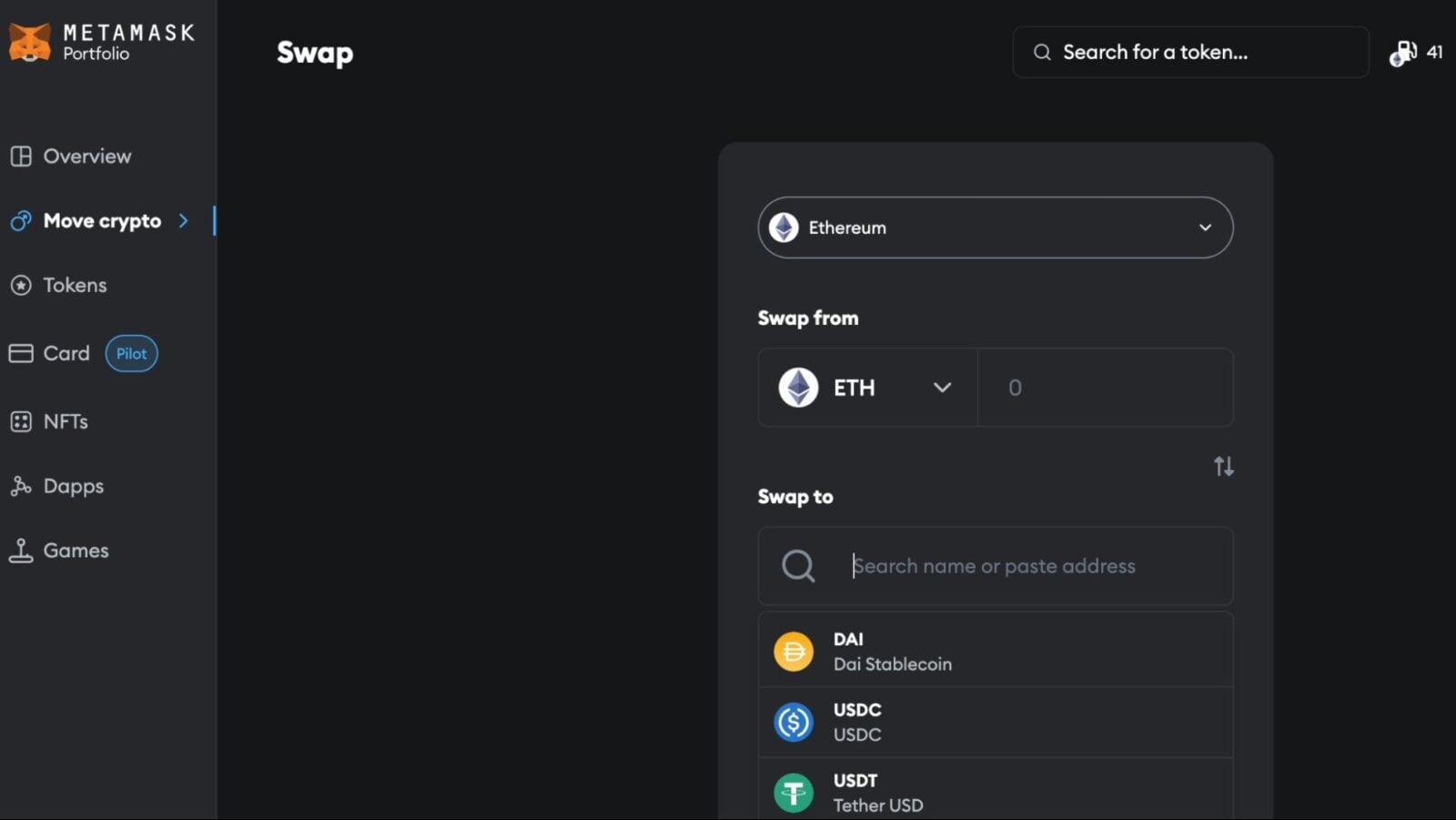
In this article, I will talk about the Top Rubic Competitors for Cross-Chain Swaps. These are the best platforms that help the users transfer the digital currencies across different blockchain networks.
We will review the main features, supported blockchains, transaction fees, swapping speed, security measures, and unique benefits of each alternative to Rubic, to help readers find the best cross-chain swap solutions for their specific needs.
Key Points & Top Rubic Competitors for Cross-Chain Swaps
| Competitor | 12-Word Explanation |
|---|---|
| LI.FI | Aggregates cross-chain bridges and decentralized exchanges to optimize routes, costs, and execution. |
| Rango Exchange | Connects multiple blockchains and liquidity sources to simplify cross-chain swaps for users. |
| deBridge | Enables fast cross-chain transfers and swaps with efficient liquidity routing and settlement. |
| Across Protocol | Provides capital-efficient cross-chain transfers using optimistic verification and liquidity-provider incentives. |
| Stargate | Enables omnichain asset transfers with unified liquidity pools and predictable finality guarantees. |
| Symbiosis Finance | Aggregates decentralized liquidity across networks, enabling convenient swaps between diverse blockchain assets. |
| Jumper | Simplifies cross-chain token swaps by comparing routes across bridges and decentralized exchanges. |
| Bungee | Aggregates bridge routes to help users transfer tokens across supported blockchain networks. |
| Chainflip | Provides decentralized cross-chain swaps between major blockchain assets without traditional wrapped tokens. |
| Wormhole Portal | Facilitates cross-chain token transfers using Wormhole messaging infrastructure across supported blockchain networks. |
10 Top Rubic Competitors for Cross-Chain Swaps
1. LI.FI
LI.FI is a cross-chain liquidity aggregator that connects decentralized exchanges, bridges and solver networks to make token swaps across different blockchains simple. Depending on current route and asset availability, its network reach includes major EVM chains & ecosystems like Solana, Bitcoin, Sui, Tron, and Stellar.
LI.FI compares the available routes to help users balance transaction cost, estimated execution time and expected output. The fees may include blockchain gas, bridge or solver fees and swap fees.
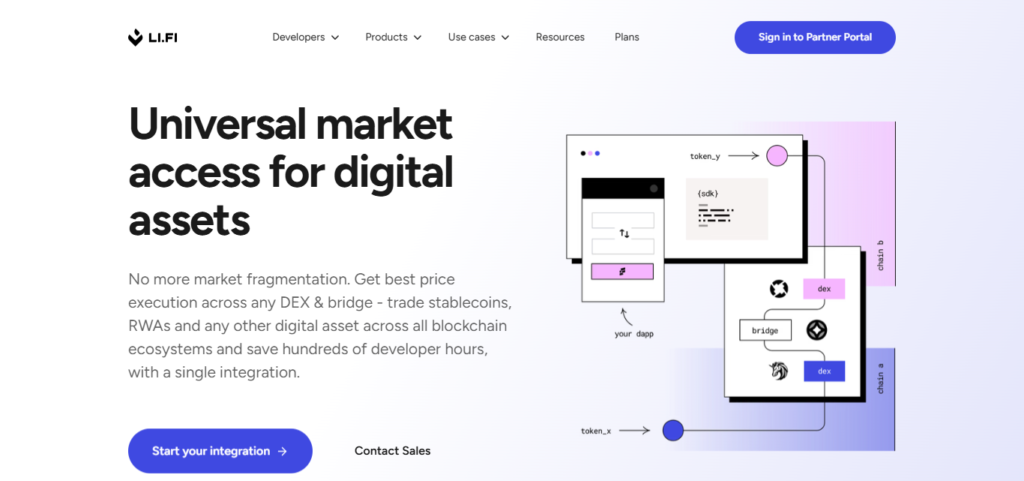
The actual speed depends on the chosen route and network conditions. It’s security method involves the assessment of integrated protocols and route estimates; nevertheless, users need to independently verify contract audits, bridge risks, and transaction specifics.
LI.FI — Key Features
| Feature | Explanation |
|---|---|
| Cross-Chain Aggregation | Combines bridge and DEX routes to facilitate cross-chain swaps. |
| Multi-Chain Support | Connects multiple EVM and non-EVM blockchain ecosystems. |
| Route Optimization | Compares available routes based on estimated output, costs, and speed. |
| Developer APIs | Provides APIs and SDKs for integrating cross-chain functionality into applications. |
| Swap Quoting | Displays estimated transaction outcomes before users execute swaps. |
| Integration Flexibility | Supports wallets, decentralized applications, and other Web3 products. |
2. Rango Exchange
Rango Exchange is a cross-chain swap aggregator that combines decentralized exchanges, bridges, and other liquidity protocols through one interface, API, and SDK. Depending on the tokens and routes selected, it has network coverage for EVM chains, Bitcoin, Solana, Cosmos, TON and other ecosystems it supports. Rango’s routing engine examines all other paths for swaps to find good rates and execution options.
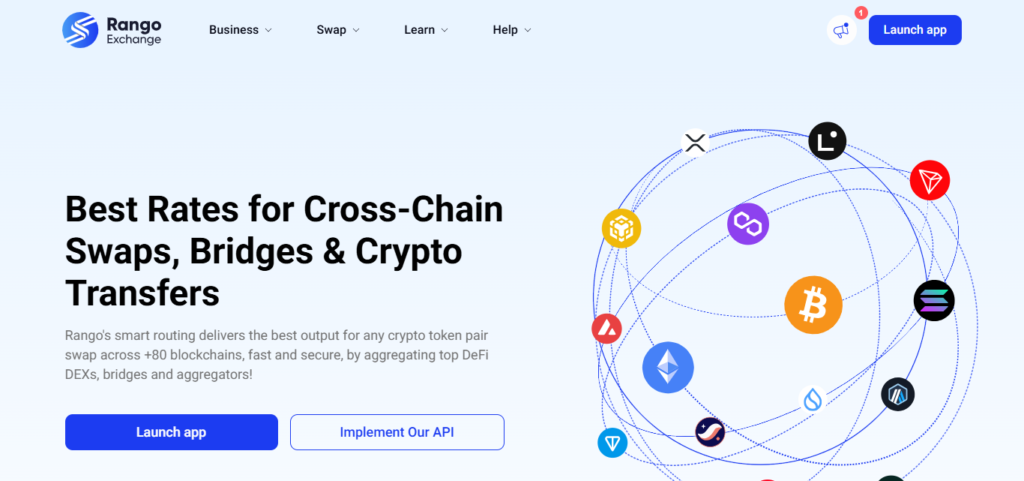
Transaction costs can include network gas, Rango fees and fees from the underlying swap or bridge provider. Completion times will vary based on network congestion and route complexity. Rango says its smart contract system and backend have been audited and penetration tested. Users are recommended to check current audit information and determine the security of individual integrations.
Rango Exchange — Key Features
| Feature | Explanation |
|---|---|
| Multi-Chain Aggregation | Connects liquidity sources and bridging protocols across blockchain ecosystems. |
| Broad Ecosystem Coverage | Supports selected EVM, Bitcoin, Cosmos, Solana, and other networks. |
| Route Discovery | Searches integrated routes for available cross-chain swaps. |
| API and SDK | Enables developers to incorporate cross-chain functionality into applications. |
| Transaction Estimation | Provides route details and estimated swap outcomes. |
| Multiple Swap Pathways | Supports different bridging and exchange mechanisms through integrations. |
3. deBridge
deBridge is a cross-chain infrastructure for asset transfer and swap execution on supported blockchain networks. The network is available on major EVM ecosystems and select non-EVM networks, but the tokens and routes are based on existing integrations. The protocol employs cross-chain messaging and liquidity infrastructure to coordinate transactions between the source and destination chains.
Transaction fees may involve protocol fees, source-chain gas, and costs associated with the route chosen. The speed of execution is not guaranteed, it is subject to network conditions, transaction verification, and destination-chain processing.
For security, users should check the latest audits, validation and messaging architecture, contract deployments and incident disclosures of deBridge. Before you confirm, always check the amount going to the destination and the transfer route.
deBridge — Key Features
| Feature | Explanation |
|---|---|
| Cross-Chain Transfers | Facilitates asset transfers between supported blockchain networks. |
| Cross-Chain Swaps | Enables swaps through supported routes and liquidity infrastructure. |
| Messaging Infrastructure | Supports communication and transaction coordination across chains. |
| Liquidity Routing | Uses available liquidity infrastructure to facilitate cross-chain execution. |
| Developer Integration | Provides tools for applications requiring cross-chain functionality. |
| Transaction Coordination | Coordinates source-chain actions with destination-chain execution. |
4. Across Protocol
Across Protocol aims to enable cross-chain transfers using an intent-based architecture, liquidity providers and relayers to facilitate transfers between supported networks. Ethereum-based coverage includes connected Layer 2 ecosystems. Other network availability depends on ongoing protocol integrations.
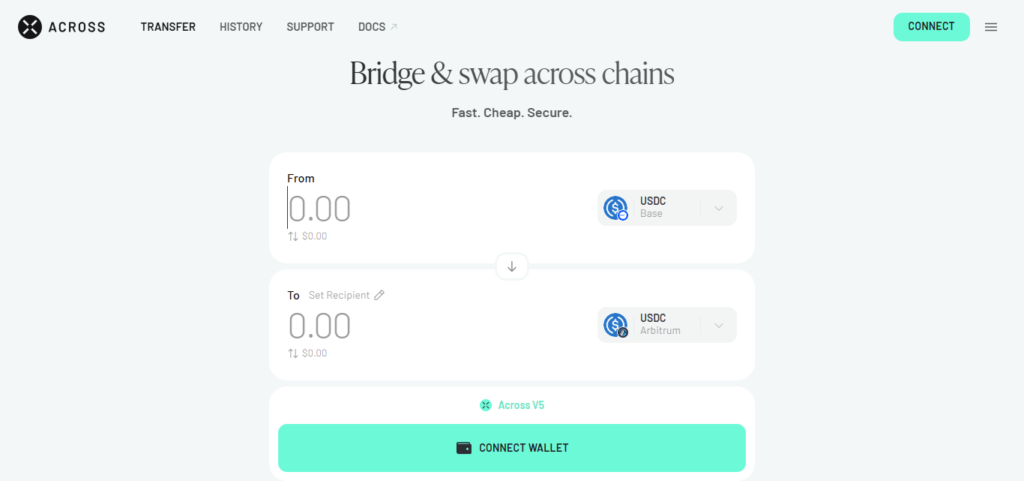
Across aims to make transfers capital efficient by using relayers to deliver assets on the destination chain and settle transactions through its verification mechanism. Fees may include a protocol fee and source-chain gas, with quoted fees varying depending on route, asset, liquidity and demand.
Transfers are meant to be quick but actual transfer times will depend on relayer availability and network conditions. Users should review Across’s security documentation, audits, dispute resolution processes, and supported routes before sending any funds.
Across Protocol — Key Features
| Feature | Explanation |
|---|---|
| Intent-Based Transfers | Uses an intent-based model to simplify cross-chain asset transfers. |
| Relayer Network | Relayers help deliver assets on supported destination chains. |
| Liquidity Efficiency | Uses liquidity providers to facilitate efficient cross-chain transfers. |
| Fast Execution Design | Supports rapid transfers when liquidity and network conditions permit. |
| Optimistic Verification | Uses a dispute-based verification approach for cross-chain settlement. |
| Ethereum Ecosystem Support | Focuses on Ethereum and connected Layer 2 networks, subject to current integrations. |
5. Stargate
Stargate is a cross-chain liquidity transport protocol, with unified liquidity pools and native asset transfers between supported blockchains. Depending on the asset and pool available for a given transfer, its coverage will include major EVM-compatible networks and some Layer 2 ecosystems.
Stargate’s liquidity model intends to facilitate the movement of supported assets across networks without depending exclusively on conventional wrapped-token routes. These can include protocol fees, source-chain gas, and any applicable liquidity or rebalancing fees.
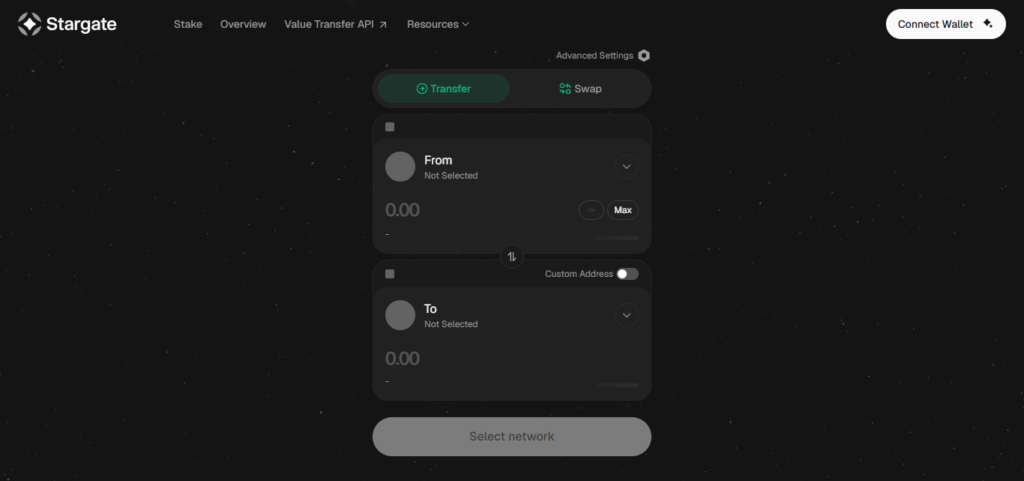
The speed of the transfer is dependent on network confirmation, destination liquidity and processing by the protocol. Users should verify the current quote and not assume instant settlement. Security: Review the current audits of Stargate, the deployment of its smart-contracts, risks of its pools and the security assumptions of the cross-chain messaging infrastructure.
Stargate — Key Features
| Feature | Explanation |
|---|---|
| Unified Liquidity | Uses shared liquidity pools across supported blockchain networks. |
| Native Asset Transfers | Facilitates transfers of supported assets between connected chains. |
| Cross-Chain Composability | Supports applications that build cross-chain functionality around its infrastructure. |
| Liquidity Pool Infrastructure | Maintains pools that facilitate eligible cross-chain transfers. |
| Transfer Quoting | Provides transaction information for supported transfer routes. |
| LayerZero Integration | Uses LayerZero messaging infrastructure for cross-chain communication. |
6. Symbiosis Finance
Symbiosis Finance is a cross-chain swap platform that connects supported blockchain ecosystems and sources of liquidity, helping users swap assets via a single interface. It has network coverage across multiple EVM and non-EVM networks, with specific token pairs and routes for transfer depending on the current integrations.
The platform allows swaps and cross-chain transfers via available liquidity and bridging methods. The fees can include source-chain gas, destination-chain execution costs, liquidity provider fees and any platform/route fees that may be applicable.
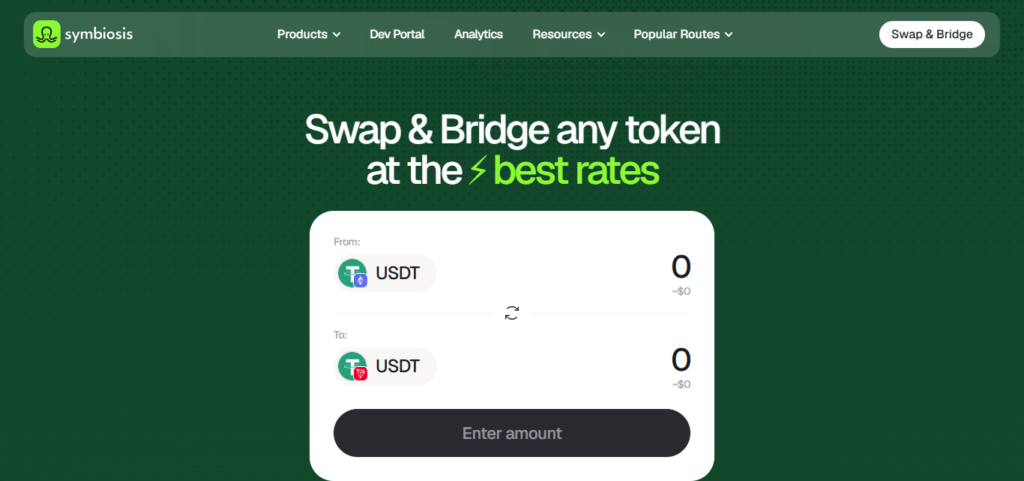
The speed of the transaction depends on which bridge you choose, the congestion of the network and the number of steps to make the swap. Please check the latest independent audits, contract addresses, bridge dependencies and official risk disclosures for security before using the service.
Symbiosis Finance — Key Features
| Feature | Explanation |
|---|---|
| Cross-Chain Swaps | Enables token exchanges across supported blockchain ecosystems. |
| Multi-Chain Coverage | Connects selected EVM and non-EVM networks. |
| Liquidity Aggregation | Uses integrated liquidity sources to facilitate swap execution. |
| Route Selection | Identifies available paths based on supported assets and networks. |
| Unified Interface | Simplifies cross-chain swapping through a single user interface. |
| Wallet Compatibility | Supports compatible Web3 wallets for transaction execution. |
8. Jumper
Jumper is a cross-chain swap interface powered by aggregation technology that enables users to compare routes across integrated bridges and DEXes. It supports a variety of different blockchain ecosystems, with specific chains, assets and transfer options depending on the integrations currently available via its routing infrastructure.
Before choosing the route, Jumper allows users to view the estimated output, fees and time of the transaction. Costs include blockchain gas, bridge fees, swap fees, and price impact, so the cheapest route isn’t always the fastest.
The execution times depend on the selected providers and network conditions. Aggregation does not solve the underlying protocol risks, so users need to check route details, connected contracts, audit information and security of each bridge involved.
Jumper — Key Features
| Feature | Explanation |
|---|---|
| Bridge Aggregation | Compares integrated bridge options for cross-chain transfers. |
| DEX Integration | Uses supported decentralized exchange routes for token swaps. |
| Route Comparison | Helps users evaluate estimated output, fees, and transaction times. |
| Multi-Chain Swapping | Supports swaps across connected blockchain ecosystems. |
| User-Friendly Interface | Simplifies route discovery and cross-chain transaction execution. |
| Transaction Estimates | Displays available quote information before users confirm transactions. |
9. Bungee
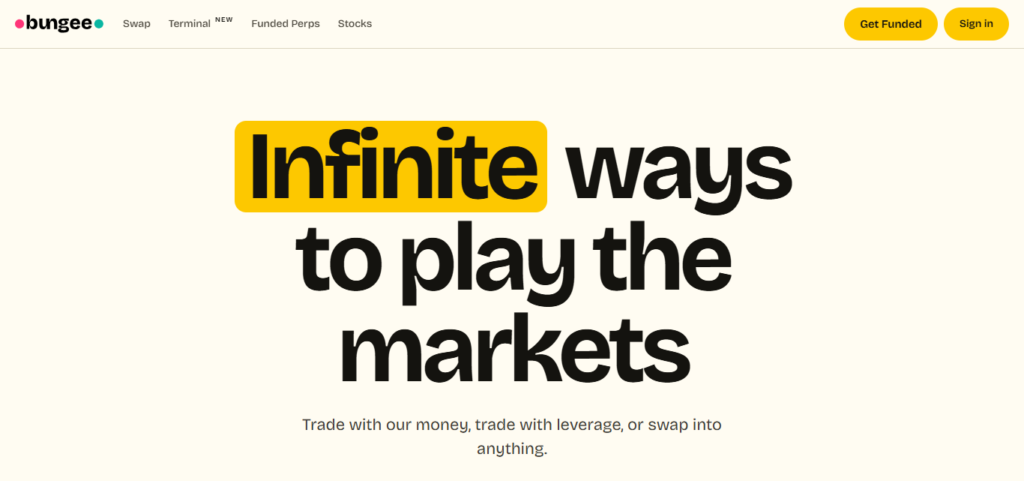
Bungee is a cross-chain bridge and swap interface that’s plugged into Socket’s aggregation infrastructure to help users find routes between the supported blockchains. It supports tokens on several EVM chains and other ecosystems where compatible routes exist.
Token support varies by integration. Bungee compares bridging options, to help the users in evaluating expected output, transaction costs and estimated completion times. Fees can include network gas, fees of the bridge provider, swap fees, and any potential price impact.
The final costs are determined by the selected route and market conditions. Transfers can finish at different speeds depending on the underlying bridge and destination network. Users should review current audits, bridge-specific security assumptions, contract addresses, and transaction details because an aggregator inherits risks from its integrated protocols.
Bungee — Key Features
| Feature | Explanation |
|---|---|
| Bridge Aggregation | Connects multiple bridging providers through a unified interface. |
| Route Optimization | Helps identify suitable transfer routes across supported networks. |
| Cross-Chain Transfers | Facilitates asset movement between integrated blockchains. |
| Swap Integration | Supports swap functionality through compatible routes and liquidity sources. |
| Developer Infrastructure | Builds on Socket-related aggregation infrastructure for cross-chain applications. |
| Cost Comparison | Helps users compare estimated costs and outcomes across available routes. |
10. Chainflip
Chainflip is a decentralized cross-chain swap protocol that allows swapping of native assets between supported blockchain networks without the need for users to rely exclusively on regular wrapped tokens. Its coverage includes major networks such as Bitcoin, Ethereum and Polkadot ecosystems with available assets and trading pairs subject to current protocol support.
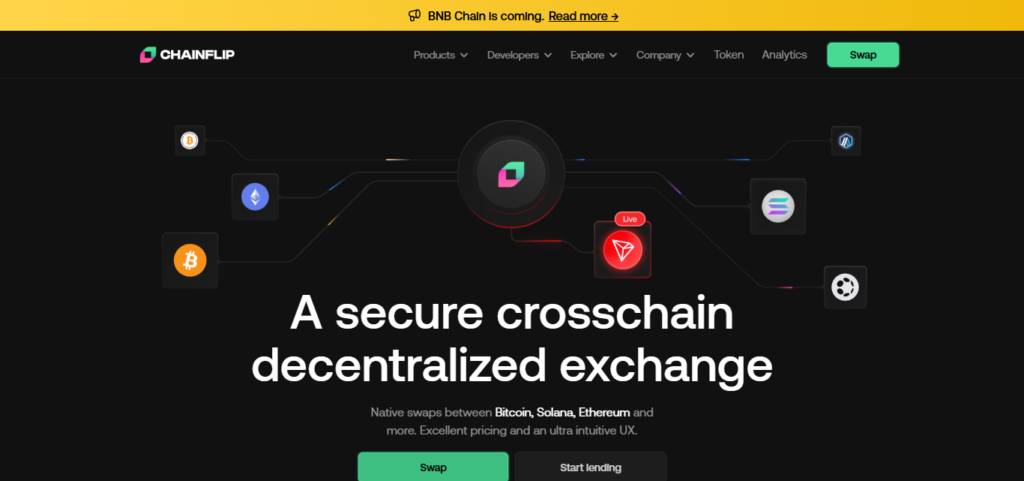
Chainflip uses liquidity pools and a validator-based network to coordinate cross-chain swaps. Transaction costs may include swap fees, costs of liquidity and gas or network costs related to the transaction process.
How fast it gets done varies with source chain confirmations, validator processing times, liquidity and destination chain conditions. As always, users should conduct their own research into Chainflip’s validator model, protocol audits, liquidity mechanisms and official risk documentation before making significant swaps.
Chainflip — Key Features
| Feature | Explanation |
|---|---|
| Native-to-Native Swaps | Enables supported assets to be exchanged across chains without relying exclusively on wrapped tokens. |
| Decentralized Validators | Uses a validator network to coordinate protocol operations. |
| Liquidity Pools | Uses protocol liquidity pools to facilitate supported swaps. |
| Cross-Chain Trading | Supports swaps between selected blockchain-native assets. |
| Automated Market Making | Uses protocol-specific liquidity and pricing mechanisms for swap execution. |
| No Traditional Wrapped-Asset Requirement | Supports native-asset swap pathways where compatible markets are available. |
Conclusion
To summarize, the best Rubic competitors for Cross-Chain Swaps offer various advantages for moving digital currencies from one blockchain network to another. Platforms like LI.FI, Rango, deBridge, Across Protocol, and Chainflip offer different approaches to routing, liquidity, and interoperability.
Before you settle on a platform, be sure to compare the networks it supports, transaction fees, speed of execution and security measures to find the most suitable cross-chain swapping solution for your needs.
FAQ
LI.FI, Rango, Jumper, and Bungee aggregate multiple bridges and decentralized exchanges.
LI.FI, Rango, Symbiosis, and Wormhole connect users across numerous supported blockchain ecosystems.
Across Protocol prioritizes efficient transfers through relayers, liquidity providers, and intent-based architecture.
Chainflip facilitates native-asset swaps without depending exclusively on traditional wrapped tokens.