

I’ll go over why stablecoins are taking the place of conventional remittance services in this post. Because they enable quicker, less expensive, and more secure transactions, stablecoins are revolutionizing cross-border payments.
They are becoming a more popular option for sending money abroad in today’s digital economy since, in contrast to traditional remittance services, they offer worldwide accessibility, lower fees, and financial inclusion for underbanked communities.
What is Stablecoins?
One kind of cryptocurrency called a stablecoin is made to keep its value constant by tying its price to a reserve asset, which is typically a commodity like gold or a fiat currency like the US dollar. Stablecoins, in contrast to erratic cryptocurrencies like Bitcoin or Ethereum, seek to minimize price swings, making them appropriate for regular transactions, remittances, and asset storage. https://en.wikipedia.org/wiki/Stablecoin
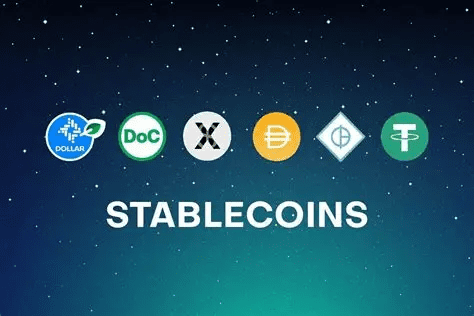
Without depending on conventional banks, they provide quick, transparent, and safe transactions via blockchain networks. Examples include USDC, USDT, and DAI, each of which uses a different mechanism—algorithmic, crypto-backed, or fiat-backed—to enable global, affordable, and effective digital payments while preserving stability.
Why Stablecoins Are Replacing Traditional Remittance Services
Cost of Transactions
Stablecoins remove the intermediaries (i.e., banks and money transfer services) and associated fees.
Time of Transactions
An instant cross-border payment using Stablecoins is preferable to waiting days for a traditional payment.
Bank-less System
A user who does not have a bank account is nevertheless able to send and receive money, as is the case with Stablecoins.
Trust
The blockchain is an immutable ledger. Smart contracts are used to execute and record transactions, meaning that there is no opportunity for manipulation.
Reach
People that do not have bank accounts and are in remote locations are not banked, and therefore have little access to services.
Volatility
Being pegged to a stable asset (i.e., this is done by Stablecoins that are pegged to the USD) eliminates the large price swings associated with regular cryptocurrencies.
Ease of Use
Utilizing a Fintech app is rapid and simple, and will now include the use of Stablecoins due to recent developments.
Benefits of Using Stablecoins for Remittances
Instant Transfers – Money transfer services take 1 to 5 days to reach the remittance’s receiver. Stablecoin remittances take only minutes.
Lower Costs – Compared to traditional remittance services and banks, transaction costs and fees are significantly lower.
Global Accessibility – Even people living in remote areas and underbanked regions are able to receive and send money with the help of a digital wallet and the internet.
Increased Security – Blockchain technology is a fraud prevention mechanism.
Transparent – Transactions are recorded in a public ledger, making them easy to track and audit.
Financial Inclusion – People without traditional banking services can send and receive money.
Stable Value – Stablecoins significantly reduce the risks of value fluctuations since they are pegged to stable fiat currencies, unlike traditional cryptocurrencies.
Digital Platforms Integration – Transactions, payroll, and payments can be done using stablecoins, and they can also be integrated into financial technology applications.
How Stablecoins Transform Remittances
Instant Cross-Border Transfers
Since Stablecoins operate using BlockChain technology, they facilitate near-instant transfers borderless.
Lower Transaction Costs
Stablecoins remove banks and money transfer operators from the equation, cutting costs significantly for both senders and receivers.
Financial Inclusion
People from rural areas or other digitally underdeveloped areas can receive global payments through the use of digital wallets, negating the need for a bank account.
Transparency and Security
For trust and security, the fraud rate decreases and the recorded transactions on the BlockChain ledger can’t be changed.
Programmable Payments
Through smart contracts, Stablecoins can be programmable, set to be paid conditionally, automated, or used to pay repeatedly to either an enterprise or a single user.
Reduced Currency Risk
Since stablecoins are pegged to stable commodities like the USD, users are no longer exposed to the risks of volatility with other crypto currencies.
Integration with Modern Fintech
Modern Remittance services, and payment wallets, and other payment technologies/ platforms have incorporated the use of Stablecoins.
Challenges with Traditional Remittance Services
High Transaction Fees –
Most banks and money transfer operator services charge high fees for their services, especially for services that require cross-border transfers.
Slow Processing Times
Remittances for businesses that operate cross-border services can take 1 – 5 business days, which can be very inconvenient for the people waiting for those funds.
Limited Accessibility
Traditional banking services are often unavailable to people who are underbanked as well as those people who live in remote areas.
Hidden Fees and Bad Exchange Rates
The rates of currency conversion often aren’t as good as they’re advertised. This means that the amount of money that the receiver actually gets is often less than the amount of money that the sender spends to have the funds converted.
Lack of Transparency
Users often do not have a good sense of where their money is at any point in time and they may not be able to see the fees that will be charged for using a service.
Fraud Risks
Fraud and financial crimes can be very hard to detect and are a major problem within the remittance industry.
Cascade Failure
Errors can be made at any of the banks and payment operators that a transfer route passes through which can heighten an adverse outcome of a payment route.
Risks and Considerations
Regulatory Uncertainty
Stablecoins can be used differently based on a country’s current regulations. As a country’s regulation changes, they can alter how legally and how easily stablecoins can be used.
Technology Dependence
Transfers can’t be made unless users have access to the internet, a working smartphone and a digital wallet app. Transfers can even be disrupted by outages or cyber attacks.
Counterparty Risk
Issuing stablecoins that rely on a central issuer can have their coins unbacked due to the central issuer going out of business.
Volatility in Some Stablecoins
Market conditions for some partially backed or algorithmic stablecoins can result in volatility of prices.
Limited Adoption in Some Regions
There is a limited number of merchants and financial services that will allow stablecoins to be used.
Cybersecurity Threats
While blockchain is unhackable, wallets and exchanges that can be hacked which can result in loss of funds.
User Error
Errors on the blockchain can be irreversible such as sending funds to an incorrect address.
Future Outlook
Stablecoins have the potential to drastically alter the international remittance scene. They promise quicker, less expensive, and easier cross-border payments as use increases, particularly in underbanked areas.
Sending and receiving money will be easy with integration with fintech platforms and digital wallets, and possible cooperation with central bank digital currencies (CBDCs) might further validate their use.
Technological developments and clearer regulations should increase security and confidence, which will promote widespread use. Stablecoins may overtake traditional banks and money transfer companies as the go-to option for international remittances over the course of the next ten years, thereby advancing global financial inclusion.
Pros & Cons
| Pros | Cons |
|---|---|
| Instant Transfers – Funds are sent and received within minutes. | Regulatory Uncertainty – Legal frameworks are still evolving in many countries. |
| Low Transaction Fees – Cheaper than traditional banks and money transfer operators. | Technology Dependence – Requires internet access and a digital wallet. |
| Global Accessibility – Works in underbanked or remote regions. | Cybersecurity Risks – Wallets and exchanges can be hacked if not secured properly. |
| Transparency & Security – Blockchain ensures secure and traceable transactions. | Counterparty Risk – Some stablecoins depend on centralized issuers for reserves. |
| Stable Value – Pegged to fiat currencies, reducing volatility. | Limited Adoption – Not universally accepted by all merchants or financial platforms. |
| Financial Inclusion – Empowers unbanked populations to access global payments. | User Error Risk – Mistakes like sending to wrong addresses are irreversible. |
| Integration with Digital Platforms – Easily compatible with fintech apps and payment systems. | Volatility in Some Stablecoins – Algorithmic or partially backed coins may fluctuate under stress. |
Conclusion
Because stablecoins solve the main drawbacks of conventional money transfer systems, they are quickly revolutionizing the remittance sector. They are particularly beneficial for underbanked people since they provide cross-border payments that are quicker, less expensive, and easier to obtain.
Stablecoins offer a dependable substitute for banks and money transfer providers thanks to their improved security, transparency, and compatibility with digital wallets. Stablecoins have the potential to become the preferred means for international remittances in the future, encouraging financial inclusion and changing the way money transfers across borders globally, even though there are still technological and regulatory obstacles to overcome.
FAQ
Stablecoins are cryptocurrencies pegged to stable assets like the US Dollar or gold, designed to maintain a consistent value while enabling fast, secure, and low-cost digital transactions.
They reduce transaction fees, enable near-instant cross-border transfers, and provide accessibility for people without traditional bank accounts.
Yes, blockchain technology ensures secure and transparent transactions, but users must safeguard wallets and use trusted platforms.
Yes, all that’s needed is a digital wallet and internet access to send or receive funds.
They offer lower costs, faster transfers, global accessibility, and protection against currency volatility, making them ideal for everyday remittances.