

This article will cover the Top Real-World Blockchain Use Cases that will shape various industries in 2026.
Using blockchain technology, global industries such as finance, healthcare, supply chains, AI accountability, and even identity management are gaining efficiency, trust, and transparency.
These use cases emphasize the power of decentralized technology in transforming everyday systems to provide safe and secure solutions for the future.
Key Points & Top Real-World Blockchain Use Cases In 2026
| Use Case | Key Point |
|---|---|
| Trust as a Service | Blockchain acts as the backbone for digital trust, eliminating middlemen and automating secure transactions across industries. |
| Tokenization of Assets | Real estate, fine art, and other illiquid assets are digitized into tokens, enabling fractional ownership and global trading. |
| AI Accountability | Provides immutable audit trails for AI decisions, ensuring transparency and compliance in autonomous systems. |
| Smart Contracts Efficiency | Enterprises achieve ROI gains (often 40%+) by reducing settlement times and eliminating manual paperwork. |
| Financial Services | Banks use blockchain to streamline transfers, reduce fraud, and cut down on record-keeping costs. |
| Healthcare Records | Patient data is securely stored and shared via blockchain, ensuring privacy, accuracy, and interoperability. |
| Supply Chain Transparency | Tracks goods from origin to consumer, reducing fraud and ensuring authenticity in industries like food and pharmaceuticals. |
| Entertainment & Media | Blockchain enables fair royalty distribution, anti-piracy measures, and direct artist-to-fan monetization. |
| Government & Voting Systems | Secure, tamper-proof voting and public record management enhance trust in democratic processes. |
| Identity Management | Decentralized digital IDs empower individuals to control their data while reducing identity theft. |
Top Real-World Blockchain Use Cases In 2026
1. Trust as a Service
Trust as a Service is an emerging concept in 2026, which incorporates trust, blockchain, and digital transaction assurance.
Digital trust is an area with growing interest and use, as it negates the need for a third party in a transaction, thanks to distributed record keeping and decentralized verification.

Digital compliance, enhanced by the use of blockchain, is a protection mechanism for fraud, as it provides the digital trust required by businesses and governments.
The principle of Trust as a Service is vital for use in any blockchain-based system in the finance, healthcare, and logistics industries.
Trust as a Service Features
- Makes a record of each transaction which cannot be changed or erased.
- Cost savings in all transactions by removing middle agents.
- All industries are provided with a greater level of transparency.
- Legal and contractual obligations are satisfied in a greater capacity.
| Pros | Cons |
|---|---|
| Eliminates intermediaries, reducing costs | Implementation can be complex and expensive |
| Provides immutable records for transparency | Requires strong regulatory frameworks |
| Enhances trust in critical industries | Scalability challenges in large networks |
2. Tokenization of Assets
Tokenization is the process of converting an asset’s ownership right into a digital Blockchain-based representation of the asset.
Tokenization can be used for both physical and digital assets and, as a result, can be used for Real Estate, Fine Art, and IP.
With the advent of Tokenization, assets of high value can be made available to the masses (democratization of assets).
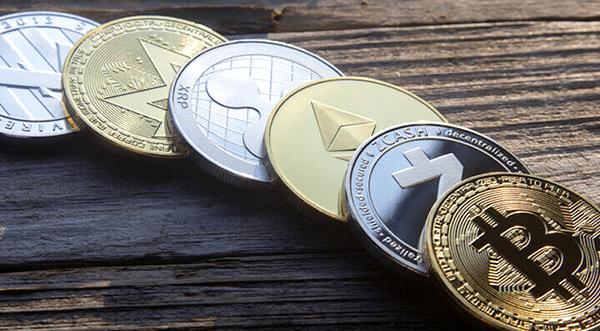
By 2026, Tokenization has become a common practice with multiple platforms facilitating the process of safe and secure trading.
Tokenization also helps improve the defining of ownership, reduces disputes and fraud, and increases the speed (liquidity) at which ownership can be transferred.
Tokenization of Assets Features
- Assets, be they physical or digital, are converted and registered as tokens in a blockchain.
- Marketable securities can also be tokenized for greater fractionalization.
- Proof of ownership is diminished in value as tokens can be digitally created to easily defraud or dispute ownership.
| Pros | Cons |
|---|---|
| Enables fractional ownership of high-value assets | Legal frameworks still evolving |
| Increases liquidity in traditionally illiquid markets | Risk of market volatility |
| Democratizes investment opportunities | Requires robust investor protection |
3. AI Accountability
Some of the decisions made by AI systems can be very complicated and/or result in actions taken by people that can have potentially very serious outcomes.
In order to be able to assign responsibility for the decisions made by AI systems, Blockchain can be used.
A single ledger that is immutable can be used to record the entire process of the AI and all of the inputs and outputs.
When this is done, Courts and other enforcement and oversight bodies can review the outcomes of cases to see exactly how the process was accomplished.

By 2026, Blockchain has proven to be very effective in example Placed of pure Services and where the potential for loss is high, like Health, Finance, and Defense, and Purse able to provide proof that AI is not biased and not in compliance with the laws and regulations.
Accountability of AI to the public and to make sure that AI is ethical and in compliance will use the Blockchain technology that is already in place.
AI Accountability Features
- AI acts as the decision-making motivation and all of its actions are recorded for the purpose of auditing.
- All actions of AI are to be compliant with applicable laws and if they are not, by whom and the rationale will be recorded.
- Publicly-held transparency means the absence of unwritten and undisclosed biases.
- Trust in AI is not easily developed, and the extensive auditing of its actions is necessary to develop it in the public sphere.
| Pros | Cons |
|---|---|
| Provides audit trails for AI decisions | High storage demands for large datasets |
| Ensures compliance and transparency | Slows down AI processes due to recording overhead |
| Builds public trust in AI systems | Complexity in integrating with diverse AI models |
4. Smart Contracts Efficiency
Smart contracts run on a blockchain and trigger automatically without human involvement. They are expected to be popular in 2026 for use in a variety of contracts including insurance claims and supply chain contracts.
They are highly efficient in admin cost savings, error reduction, and decreased time to settle contracts. Companies have reported automating contracts with up to 40% reduction of ROI.

Smart contracts also improve security. Smart contracts make sure that there are no disputes by being executed when certain conditions that are agreed upon by all parties are met.
Smart Contracts Efficiency Features
- All contracts have automatically self-executed the necessary codicils governing its operation.
- All forms of transactions associated with any forms of commerce are eliminated.
- All forms of transactions associated with any forms of commerce are also eliminated.
- Disputes and all forms of errors are also removed.
| Pros | Cons |
|---|---|
| Automates agreements, reducing human error | Bugs in code can cause costly errors |
| Cuts administrative costs significantly | Difficult to modify once deployed |
| Speeds up settlement times | Legal recognition varies across jurisdictions |
5. Financial Services
Financial services are being further improved by blockchain technology. Payments are processed more quickly, and record-keeping and accounting fraud are simplified.
In 2026, settlement times for cross-border transactions are expected to take just a few minutes. With transparent records, fraud detection is guaranteed and reporting of compliance is improved.

The DeFi platforms, which allow individuals to lend, borrow, and trade without the use of a third party, also enable the financial services to be decentralized.
The financial services are accessible for the first time in most of the unbanked regions of the world. The DeFi platforms are also more cost-effective for financial institutions and consumers.
Financial Services Features
- All forms of commerce have resulted in greater speed and lowering of cost.
- Transparency in recording has also resulted in a lowering of fraudulent acts and an increase in the recording of fraudulent acts.
- The recording of judgments has resulted in an improvement of recording obligations in compliance to laws.
- Access to finances has also been increased.
| Pros | Cons |
|---|---|
| Faster cross-border transactions | Regulatory uncertainty in many regions |
| Reduces fraud with transparent ledgers | Integration with legacy banking systems is challenging |
| Expands access via DeFi platforms | Risk of hacks in decentralized platforms |
6. Healthcare Records
Patient data proves difficult to manage in healthcare systems around the world; data needs to be both managed securely and managed efficiently.
Since blockchain is decentralized and creates an immutable ledger of histories, it solves the existing problems with patient data in a healthcare system.
Using blockchain, in 2026 hospitals and clinics will be able to share patient data across networks.

Health information will remain protected, regulated, and compliant to patient healthcare information regulations.
Patient test results will not be repeated and patient demographics will improve in accuracy and healthcare collaboration will further improve.
Authorized and secure access to medical data will be maintained with the use of blockchain technology.
Healthcare Records Features
- Securely stores patient information on decentralized ledgers.
- Patients control who can access their medical records.
- Improves partnerships between different healthcare professionals.
- Reduces redundant testing and improves accuracy of diagnoses.
| Pros | Cons |
|---|---|
| Secure, tamper-proof patient data | Requires universal adoption across providers |
| Enhances collaboration among healthcare systems | Privacy concerns if mismanaged |
| Reduces duplication of tests | High initial infrastructure costs |
7. Supply Chain Transparency
Supply chains are broken down into different sectors and representatives, making it difficult to track a product’s circulation.
However, Blockchain technology solves this problem by offering a comprehensive account of the circulation of a product.
In 2026, the food, pharmaceutical, and luxury industries will tackle the problem of product verification and fraud with the help of blockchain.

These industries will help maintain and manage ethical supply chains. These products will be efficiently transported, and counterfeit goods will be removed from the markets.
Products gained from blockchain technology will help the business world save money. The use of blockchain technology in the products will help the business world comply with environmental and ethical guidelines.
Supply Chain Transparency Features
- Monitors products in real time from source to end customer.
- Reduces global trade fraud and counterfeiting.
- Improves logistical and inventory management.
- Promotes sustainability through proof of responsible procurement.
| Pros | Cons |
|---|---|
| Tracks goods from origin to consumer | Implementation across global supply chains is complex |
| Reduces fraud and counterfeit products | Requires cooperation among multiple stakeholders |
| Strengthens sustainability efforts | Data accuracy depends on proper input |
8. Entertainment & Media
By offering fair ways to pay royalties and fight piracy, Blockchain is disrupting entertainment & media.
By 2026, due to blockchain platforms, artists & creators will be able to directly approach consumers to monetize their work, without relying on 3rd party distributors.
Because of smart contracts, royalties will automatically be paid every time a piece of content is consumed, thus resolving disputes and delays.
In addition to other piracy and fraud prevention measures, Blockchain will protect Piracy and fraud Intellectual Property rights, which will elminate the unauthorized use of the work of others.

With this system creators will be able to set the price for their work and fans will able to directly interact & engage creators.
This will be a positive change for the media & entertainment industry, & further innovation will be created in the distribution of content.
Entertainment & Media Features
- Smart contracts enable fair distribution of royalties.
- Enforcement of copyright protects rights of creators.
- Monetization from direct interaction between artists and fans.
- Transparency on audience engagement and revenue.
| Pros | Cons |
|---|---|
| Fair royalty distribution via smart contracts | Adoption by major platforms is slow |
| Protects intellectual property rights | Piracy may still exist outside blockchain ecosystems |
| Direct artist-to-fan monetization | Technical barriers for smaller creators |
9. Government & Voting Systems
To improve transparency and trust in systems of governemnt, public systems, and service delivery, blockchains improve trust systems for public service systems.
By 2026, a number of pilot programs and initial implementations of voting via blockchain technology planned across different continents and are expected
To resolve the issues of election fraud (vote tampering) and election integrity (people being able to verify whether their vote was counted without losing their vote’s anonymity).
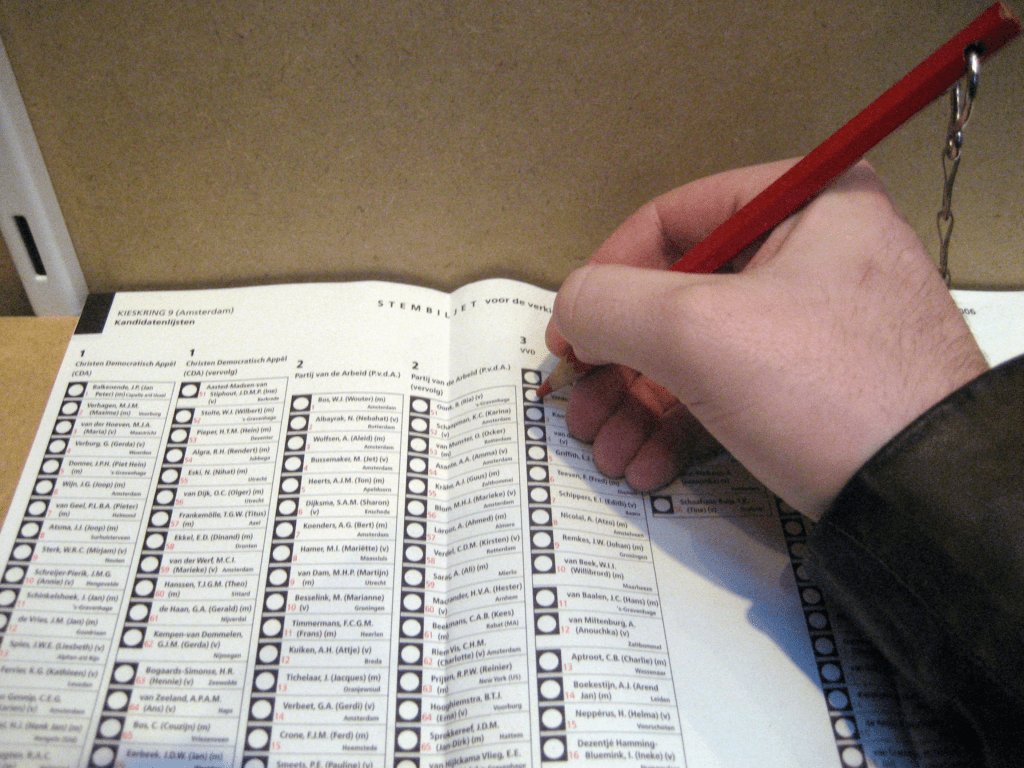
With this same technology, it is expected that government systems and structures (personal identification systems
land records systems, and public records management systems) will improve the integrity and efficiency of their service delivery processes.
In addition, this will help eliminate corruption and improve the efficiency of their government service delivery processes.
Government & Voting Systems Features
- Elections provide voting systems that are secure from manipulation.
- Increased accountability in management of public records.
- Less corruption in registries and governmental services.
- Strengthens public trust in democratic systems.
| Pros | Cons |
|---|---|
| Tamper-proof voting increases trust | Risk of cyberattacks if not secured properly |
| Enhances transparency in public records | Requires massive infrastructure investment |
| Reduces corruption in registries | Political resistance in some regions |
10. Identity Management
With the rising use of the internet and digital technology, there is the increasing risk of identity theft and data breaches.
One of the ways to protect identities is by using a decentralized identity management system. By 2026, people will use digital identification based on blockchain technology
Allowing them to manage and control their identification and personal information, as well as determine who can access it and for what reason.
Because it is based on blockchain technology, digital identification is usable for banking, healthcare, and travel verification.
By giving individuals control of their identification, everyday transactions using digital technology become more secure and private.
Identity Management Features
- Individuals control decentralized digital identities.
- Decrease in identity fraud and data theft.
- Offers easily transferable digital IDs across different systems.
- Improves confidentiality and control.
| Pros | Cons |
|---|---|
| Empowers individuals with control over data | Adoption requires global standardization |
| Reduces identity theft | Risk if private keys are lost or stolen |
| Portable across platforms | Complexity for non-technical users |
Conclsuion
To summarize, by 2026, the evolution of blockchain technology positioned the platform as a foundation of digital trust, reliability, transparency, and efficiency across various sectors.
The platform’s use for I tokenized assets, AI accountability, and applications in the management of healthcare, finance, and government systems is being innovative in the management of data, identity, and value.
These practical use cases demonstrate the unparalleled transformation of the blockchain technology in secure, decentralized, and adaptable systems.
FAQ
It’s the use of blockchain to provide secure, transparent, and tamper-proof records, eliminating intermediaries and building digital trust.
Tokenization converts physical or digital assets into blockchain tokens, enabling fractional ownership, easier trading, and improved liquidity.
Blockchain records AI decisions on immutable ledgers, ensuring transparency, compliance, and ethical oversight of automated systems.
Smart contracts are self-executing agreements that reduce paperwork, cut costs, and speed up settlements by automating processes.