


I’ll go over how colleges use blockchain technology to protect credentials in this post. Conventional paper-based diplomas are vulnerable to delays, fraud, and difficulties with verification.
Digital diplomas and certificates can be issued in a safe, tamper-proof, and readily verifiable manner thanks to blockchain technology. Employers and institutions may promptly and transparently verify academic achievements, and students take control of their credentials.
What is Blockchain?
Blockchain is a decentralized digital ledger that securely, openly, and impenetrably stores data across a network of computers. Every record, referred to as a “block,” is connected to the one before it, creating a chain that is difficult to change or remove.
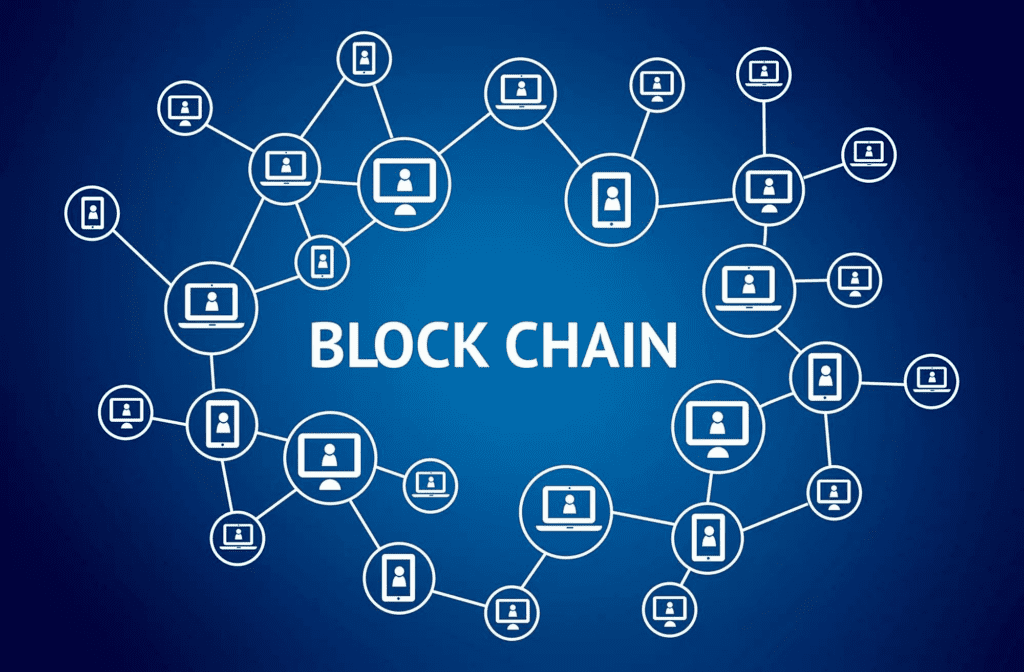
Multiple parties can independently validate transactions or information thanks to this technology, which also ensures data integrity and does away with the necessity for a central authority.
Blockchain is perfect for applications like supply chain management, digital identities, and financial transactions because of its three main characteristics: immutability, transparency, and security.
How Universities Use Blockchain to Secure Credentials

Step 1: Student Enrollment and Course Completion
- Student enrollment, course participation, and grading along with other information, are kept inside the system of the universities, which are used to track all records kept in the system.
Step 2: Credential Creation
- Digital diplomas and certificates are made by a university after a student has finished a course or a program.
- The credential consists of the student’s name, type of degree, date of completion, and other unique information.
Step 3: Credential Tokenization on Blockchain
- The blockchain has a cryptographic token or “hash” representation of the digital credential.
- Each credential has a unique block associated with it that is time-stamped, which guarantees that it cannot be changed.
Step 4: Student Access via Digital Wallet
- Secure digital wallets or online portals provided to students give access to their blockchain credential.
- They can use their credential, which can be stored and shared, to demonstrate their qualifications to employers or other educational institutions.
Step 5: Verification by Third Parties
- Other universities or employers can directly access the blockchain to verify credentials without having to reach out to the university that issued the credentials.
- Administrative delays are reduced, and there is less potential for fraud, as the verification is instantaneous and cannot be changed.
Step 6: Lifetime Management of Records
- Students have continuous access to their credentials, enabling them to take control of their academic records spanning different institutions and their professional careers.
- Universities can add further credentials (e.g, micro-certifications or ongoing education) to the same blockchain record.
Step 7: Ongoing Modifications and Protection
- Blockchain provides certainty regarding the security, unchangeable nature, and verifiability of all credentials.
- Universities are able to modify smart contracts for automatic verification and continue to be compatible with the other universities’ systems.
Benefits of Blockchain Credentials
Security – since it is impossible to forge certificates and diplomas on the blockchain.
Verification Is Real-Time – credentials can be verified by employers and institutions in real-time without reaching out to the university.
Traceability – through the blockchain, every credential can be fully accountable through multiple timestamps and records.
Ownership of Credentials – learner wallets are safe to give them control of their credentials.
No Borders – the world is the learners oyster in regard to sharing and verifying diplomas and certificates.
Cost Saving – less time spent on record keeping and more time spent on other important tasks because it automates record keeping.
Lifelong Learning – micro and macro credentials can be easily added to the learner’s record, promoting ongoing learning.
Challenges with Traditional Credential Systems
Fraud and Forgery Risk
Diplomas and certificates can be easily altered, making verification efforts useless.
Sudden Verification
Investigations rely on time-consuming credential checks.
Minimal Control Over Records
Universities keep students records, so students can never see how many records they have.
Loss of Records
It is easy to lose a records with so many paper credentials.
High Costs of Administration
Keeping paper records requires a lot of time from workers.
Documents Are Not International
It is nearly impossible to keep and use records of paper credentials.
Modern Learning is Difficult to Prove
Proof of learning is important, and certificates are not enough.
How do blockchain credentials work?
Credential Creation – A university creates a digital diploma or certificate when a student completes a course or program.
Encryption and Tokenization – The record undergoes a process of tokenization which encrypts the data.
Recording on Blockchain – The token is time-stamped and recorded on a decentralized and unchangeable blockchain.
Student Access – The student can access their diploma or certificate through an online portal or secure digital wallet.
Instant Verification – The diploma or certificate can be verified on the blockchain by employers or institutions.
Permanent Record – A diploma or certificate can be verified and accessed at any time, and can be supplemented by credentials in the future.
Real-World Examples
Massachusetts Institute of Technology (MIT)
Graduates get a digital diploma on the blockchain that they can verify through their digital wallets.
University of Nicosia (Cyprus)
Students obtain fully blockchain-secured degree certificates. They can verify the credentials directly via the Internet, without intermediaries.
Holberton School (Global)
Students can own their certificates. Holberton uses blockchain to document and share coder bootcamp certificates.
Swinburne University of Technology (Australia)
Students can get overseas digital credentials that are secure and consist of untouchable academic records through partnering blockchain companies.
University of Melbourne (Australia)
Certificates of completion of courses and other micro-credentials are issued using blockchain. The system has simple and instant verification.
Are blockchain credentials recognized by employers?
Indeed, because blockchain credentials offer a safe, unchangeable, and instantaneously verifiable record of a candidate’s academic accomplishments, businesses are beginning to acknowledge them more and more.
Blockchain-based credentials, in contrast to conventional paper diplomas, can be verified online without getting in touch with the issuing institution, cutting down on fraud risks and delays. These digital credentials are now widely accepted as trustworthy evidence of education and skill by progressive organizations and institutions.
Challenges and Considerations
Significant Cost of Implementation
Building blockchain analysis and smart contract & system integration with already existing ones is costly.
Technology Challenges
Building blockchain technology, digital identity management, and cryptography all involve advanced skills.
Incompatibility
Schools have different blockchains and this makes verification across different schools hard.
More Privacy Issues
Using blockchains to store personal data of students is subject to strict compliance to privacy laws.
More Resistance
Employers and institutions that are traditional are most likely to resist new verification methodologies.
Resistance to Change
Some blockchains have performance issues when transaction loads are very high or when many students are being dealt with.
Lack of Clear Regulatory Structures
The world is transforming when it comes to the law guiding the use of blockchain technology in the education system and digital credentials.
Future Outlook
With the adoption of distributed ledger technology (or blockchain), higher education credentials are expected significant advancements in the issuance, verification, and management of academic records worldwide.
The internationally recognized, cross-border degree verification systems and credentials are expected to be developed with the adoption of blockchain technology by more universities. Students, the first ever life-long learners, will retain the rights to their records and administrative and fraud liabilities of universities will be diminished.
The verification of records will also be automated by Smart contracts, and DeIdent systems. Finally, blockchain will enhance and automate verification systems with becoming more advanced and more affordable. Associated with improvement of Smart contracts and DeIdent systems, The average cost of verification systems will decrease with the improvement of Smart Contracts and DeIdent systems.
The citation of credentials will be viable with the adoption of blockchain to accompany degrees with post- graduates, CPD(classroom professional development), and trade (vocational) education. Blockchain has the capacity to center education credentials around the student and to make the system global, transparent, and to support the needs of students.
Conclusion
The way academic certificates are issued and managed by universities is being completely transformed by blockchain. It solves the main issues with conventional paper-based systems by offering digital diplomas and certificates that are safe, impenetrable, and instantaneously verifiable. Employers and institutions gain from quick, accurate verification, and students take responsibility of their credentials.
The long-term benefits—better security, transparency, and worldwide accessibility—make blockchain a game-changing solution for higher education, despite implementation costs and technological issues. As usage increases, it offers a future in which students have complete control over their academic performance, it is widely trusted, and it is simple to share.
FAQ
Blockchain credentials are digital diplomas or certificates stored on a secure, decentralized ledger. They are tamper-proof, easily verifiable, and fully owned by the student.
Universities issue digital certificates that are cryptographically recorded on a blockchain. Each credential has a unique identifier, and verification can be done instantly without contacting the issuing institution.
Leading examples include MIT, University of Nicosia, Holberton School, Swinburne University of Technology, and University of Melbourne, among others.
No. Each credential is cryptographically secured and recorded on an immutable blockchain, making forgery or tampering virtually impossible.