

With an emphasis on blockchain-based currencies, play-to-earn schemes, DAO governance, smart contracts, and decentralized marketplaces, I will go over how cryptocurrency drives gaming economies outside of NFTs in this post.
We’ll look at how these developments turn gaming from a form of enjoyment into a worldwide business opportunity by fostering genuine ownership, open transactions, cross-game compatibility, and sustained digital economies.
Understanding Gaming Economies
The financial systems that function inside video games, where users produce, distribute, and trade virtual commodities, currencies, and services, are referred to as gaming economies. In-game currency, skins, weapons, characters, and digital awards that have worth within the game world are examples of these economies.
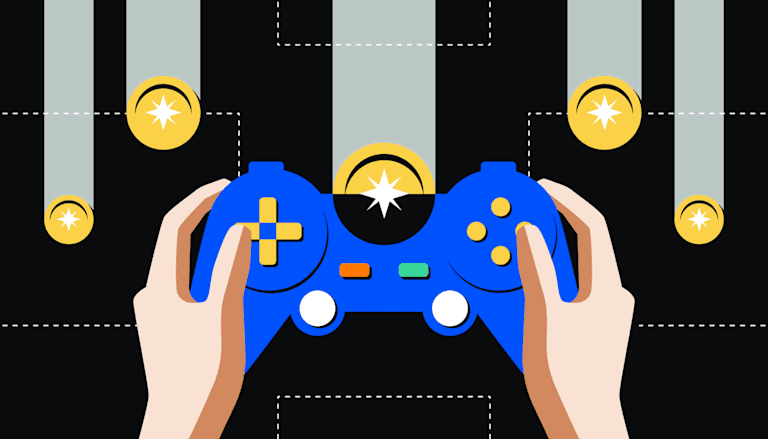
Developers have complete control over price, transactions, and supply in traditional models. As blockchain technology and cryptocurrency integration gain traction, gaming economies are developing to incorporate player ownership, decentralized tokens, and real-world value exchange, enabling players to more freely earn, trade, and profit from their in-game activities.
How Crypto Powers Gaming Economies Beyond NFTs
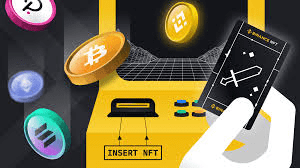
Step 1. Develop Blockchain Based-In Game-Currencies
Game developers create crypto tokens, meaning they develop a currency that can be used throughout the game. Since these tokens are public, players have the chance to use the currency in the “real” world, which does not happen with regular game coins.
Step 2. Incorporate Digital Wallets
Players are able to link their crypto wallets to the game in order to keep their tokens and crypto assets safe. This is a game-changing use of crypto wallets since players will have more control of their tokens, money, and assets than they would by the game offering login systems to keep track of these.
Step 3. Establish Play-to-Earn Models
Games, such as Axie Inifinity, incentivized players to earn game tokens and trade or sell them outside the market by setting up crypto based rewards systems. Players can gain crypto tokens by completing quests, winning battles, or joining in on game events.
Step 4. Use Smart Contracts as an Automated Reward System
Unlike other contracts, smart contracts are able to automatically provide rewards to tournaments, and to players for staking. This system pays and rewards players with no other employee involvement, eliminating the chance of biases when it comes to awarding players.
Step 5. Facilitate Peer-to-Peer Trading System
Blockchain technology simplifies and boosts trade game items and tokens, as opposed to players always having to trade with the system. This increases the circulation of tokens and items in the game.
Step 6: Incorporating Stablecoins for Payments
Some games use stablecoins to mitigate volatility risks. This creates seamless in-game purchasing, subscription payments, and transacting across borders without the risk of losing money due to fluctuations in token prices.
Step 7: Activating DAO Governance
Players can use governance tokens to influence the direction of the game. In Decentraland, for example, players can vote on game updates, rules, and changes to the in-game economy.
Step 8: Increasing Cross-Game Interoperability
Multiple blockchain tokens can be used in different games. The Sandbox and similar virtual worlds show how shared metaverses/boundless ecosystems can allow the transfer of game assets and currencies across different games.
Step 9: Increasing Security and Ownership
Blockchain allows for the verification of ownership of game assets, which decreases the occurrences of fraud, duplication, and chargebacks. Players can gain true ownership of their in-game earnings.
Step 10: Bridging to the Real Economy
Finally, in-game cryptocurrencies and tokens can be withdrawn to real-world markets, creating a real economic incentive to play games. This also moves the focus of gaming away from NFTs and more toward other economic markets.
Play-to-Earn (P2E) and Earn-to-Play Models
Play and Earn Model
In the Play and Earn Model, gamers earn in-game tokens or cryptocurrencies by completing interactive gaming activities. Players can earn rewards by completing quests, winning games, staking their game assets, or building the game ecosystem.
Creation of Value
Unlike conventional gaming models, rewards in the P2E gaming model can be converted or traded on cryptocurrency exchanges, like in the case of Axie Infinity, which allowed players to win tokens, thereby, allowing them to gain tokens with real-world monetary value.
Earn and Play Model
In the Earn and Play Model, the focus is on spending the rewards (tokens or in-game currencies) earned from the game back into the game. Instead of solely taking out cash, players opt to spend the earned rewards to unlock features, level up characters, or gain access to VIP content.
Contract Players to Game Models
In both models, players are awarded tokens to increase engagement, retention, and growth of the ecosystem of the game. Well-defined rewards increase confidence and commitment in the models.
Hit the Goldilocks Zone
In game design, hitting the Goldilocks zone simply means getting the reward balance right. Set too low, the reward will be meaningless and players will experience token depletion and in-game economy collapse. Set too high, the reward will be achieved too fast, leading to token inflation. Deflation and rebalancing will create a poor gaming experience.
P2E Models and Financial Inclusion
Due to the banking limitations and the low availability of jobs in some countries regarding access to jobs, P2E models can create economic opportunities and earn revenue by gaming in a previously unavailable economical gaming model.
Risks and Challenges
Sustainable models that prioritize gameplay experience rather than focus on capturing short-term monetization opportunities are positioned to withstand market volatility, regulatory uncertainty, and over-speculation.
Cross-Game Asset Interoperability
Common Standards on the Blockchain
Common standards for fungible and non-fungible tokens on the same blockchain facilitate interoperability and the use of assets in several games within a single ecosystem.
Digital Assets Are More Portable
Gamers can stretch the use of their tokens, skins, or avatars on multiple platforms and across several virtual worlds.
Wallets Are Integrated
Players can use a single crypto wallet across multiple games for easier management of digital currencies, rewards, and collectibles.
Metaverse World
The Sandbox and similar virtual worlds aim to connect experiences so that games, events, and other digital spots become interlinked and assets can be transferred.
Ownership Remains
Players can transfer and trade their assets across various platforms because the blockchain infrastructure allows for on-chain player-controlled assets.
Cross-Game Assets on Marketplaces
A marketplace that allows for interoperability of assets also allows for decentralized trading, which facilitates greater economic activity and trade within different gaming ecosystems.
More Value
Assets that are useable in a greater number of games get more functional and financial value than assets that are restricted to a single game environment.
Technical and Compatibility Challenges
Interoperability can only be achieved when developers work together, design standards are openly shared and adopted, and blockchain systems are designed for horizontal scalability.
Security and Digital Identity
Wallet-Based Gaming Authentication
Instead of using traditional username and password methods, players use blockchain wallets to access their accounts. This process eliminates fraud and hacking to players’ accounts, as wallet access is cryptographically secured.
True Ownership of Gaming Assets
Record on-chain assets like tokens and other in-game items. Centralized servers cannot take away ownership.
Immutable Blockchain Records
With the use of blockchain records, fraud and falsely disputed payments, along with chargeback fraud, are eliminated.
Advanced Security Technology
Games using secure blockchain technology keep in-game purchases, rewards, and trades safe using security and encryption technology.
Self-Sovereign Identity (SSI)
Players can manage their identity as SSI eliminates the need to use third-party services. Identity systems on the blockchain help players to keep their information private and secure.
Interoperability of Digital Identities
Blockchain-based identities allow players to use their digital identity across many decentralized ecosystems, enabling them to skip account creation for multiple games.
Data Leak Protection
There are little to no risks of mass data leaks or identity theft as data about users is not stored in centralized databases.
Challenges and Risks
Volatile Tokens
Game rewards could lose value instantly due to market price fluctuations of the tokens. The real-world value of game rewards could decrease due to market price drops.
Legal Issues
Different jurisdictions have distinct regulations for cryptocurrencies. Legal regulations may affect the distribution and exchange of tokens and impact the long-term viability of blockchain games.
Lack of Scalability
Gameplay can be negatively affected by network latency due to congestion. Microtransactions common in games may be a challenge for some of the more used blockchain technologies.
Transaction Fees
Transaction fees vary greatly on different blockchain technologies. High transaction fees and gas fees on blockchain technologies may make small purchases in games unappealing.
Security Concerns
Players face financial risks from under-audited projects. Value can be lost due to wallet hacks, phishing scams, and bugs in smart contracts.
Imbalances in Game Economies
In-game economies can collapse due to poor design and planning of the economy in a game leading to inflation, oversupply of tokens, or rewards systems that cannot sustain themselves.
Issues with User Experience
Technical barriers will remain that will limit the systems`s integration with the masses in the future.
Speculation in the Market
Strong speculation will lead to a situation where the game will be played to make a profit rather than for entertainment. This will lead to a decrease in game engagement and will hurt the ecosystem.
Future of Crypto-Powered Gaming Economies

Deeper integration of blockchain, artificial intelligence, and decentralized finance is necessary to build player-driven, sustainable ecosystems in the future of crypto-powered game economies. Next-generation games will give utility tokens, interoperable assets, and community governance more importance than speculative NFTs alone.
Early examples of user-owned virtual economies may be seen on platforms like Decentraland and The Sandbox, but further advancements will probably increase scalability, lower costs, and improve user experience.
Crypto game economies may develop into fully operational online marketplaces where users can earn, sell, and take part in governance across several virtual worlds as regulations become more clear and technology advances.
Conclusion
With the introduction of decentralized currencies, smart contracts, player control, and actual ownership of digital assets, cryptocurrency is revolutionizing gaming economies that go well beyond NFTs.
In order to build sustainable digital ecosystems, contemporary blockchain games use fungible tokens, play-to-earn mechanisms, stablecoin payments, and DAO-based decision-making in addition to collectible NFTs. Platforms such as Axie Infinity,
The Sandbox, and Decentraland demonstrate how cryptocurrency facilitates peer-to-peer commerce, transparent transactions, and worldwide income prospects. Crypto-powered game economies are developing into player-owned, international markets that combine entertainment with actual economic activity as technology develops.
FAQ
It refers to blockchain features other than NFTs, such as fungible tokens, play-to-earn rewards, smart contracts, DAO governance, stablecoin payments, and decentralized marketplaces that power full gaming economies.
Games issue fungible tokens that function as in-game currency. Players earn, spend, or trade them, and in some cases, exchange them on external crypto platforms for real-world value.
Sustainability depends on strong tokenomics, balanced rewards, and active user demand. Projects like Axie Infinity showed rapid growth but also highlighted the importance of economic balance.
Blockchain uses cryptographic verification, reducing fraud and chargebacks. Wallet-based authentication gives players direct control over assets without relying on centralized databases.
Decentralized Autonomous Organizations (DAOs) allow players to vote on updates, policies, and economic changes, increasing community participation in platforms like Decentraland.