


This article lists the Best Liquid Staking Platforms. Liquid staking allows crypto investors to stake and earn rewards while keeping their assets liquid. The platforms I discuss help users optimize yield while keeping their assets flexible and provide a means of further participation in DeFi ecosystems.
I describe the top platforms, the features on each, the benefits provided, and how to select the most enticing liquid staking option.
Key Poinst & Best Liquid Staking Platforms
- Lido Finance: Lido offers liquid staking for Ethereum enabling tradable stETH rewards tokens globally
- Rocket Pool: Rocket Pool provides decentralized Ethereum staking with rETH liquid staking tokens available
- Coinbase Staking: Coinbase Staking enables simple liquid staking with trusted custodial infrastructure support globally
- Binance Staking: Binance Staking offers flexible liquid staking options with high yield products available
- Kraken Staking: Kraken Staking provides secure liquid staking services for multiple crypto assets globally
- Marinade Finance: Marinade Finance enables Solana liquid staking with mSOL token rewards system efficiently
- Jito: Jito offers Solana liquid staking combined with MEV optimized reward mechanisms today
- Frax Ether: Frax Ether provides innovative Ethereum liquid staking with frxETH yield system efficiently
- Ankr: Ankr delivers decentralized liquid staking infrastructure supporting multiple blockchain networks globally widely
- StakeWise: StakeWise offers Ethereum liquid staking with transparent yield and rewards structure platform
10 Best Liquid Staking Platforms
1. Lido Finance
Dominant in Ethereum liquid staking, Lido Finance offers traditional staking flexibility by pairing staked ETH with liquid staked as stETH. Lido’s continuous validator set updates improves staking decentralization, while modular architecture increases security risk controls.
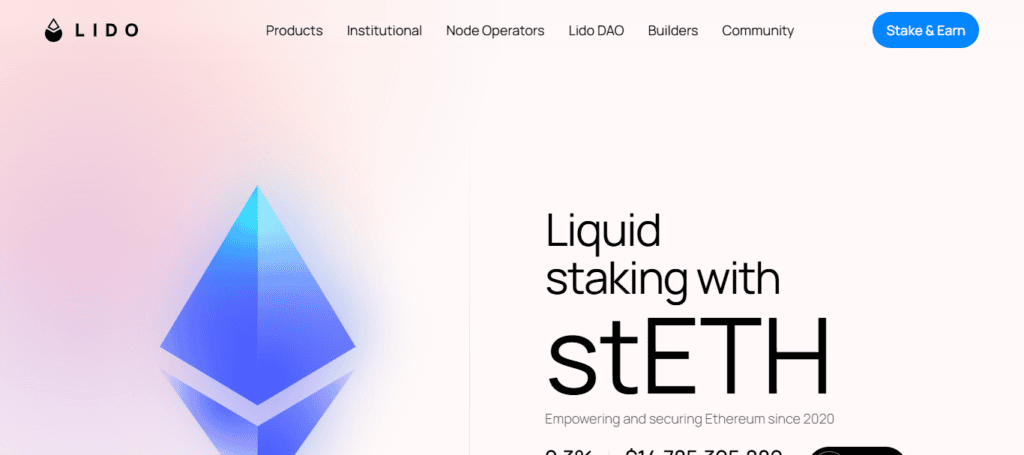
Compounding yields in staked ETH are enhanced due to the DeFi protocol integrations within Lido such as Aave and Curve. Lido is a prudent choice for Ethereum liquid stakers who want to maintain investment flexibility and Lido is a perennial favorite for stakers. Lido balances risk, return and user flexibility in a holistic staking approach.
Lido Finance – Pros & Cons
| Pros | Cons |
|---|---|
| Highly liquid stETH usable across DeFi protocols | Large market share raises centralization concerns |
| Strong Ethereum ecosystem integration (Aave, Curve) | Smart contract risk still exists |
| Easy staking with no technical setup required | Validator selection is semi-centralized |
| Continuous staking rewards with auto-compounding exposure | Regulatory scrutiny in some jurisdictions |
| High liquidity and deep trading markets globally | Fees slightly higher than some competitors |
2. Rocket Pool
Rocket Pool aims to simplify Ethereum staking entry barriers by providing tradable staking tokens, rETH, that also reward their holders. It’s decentralized system of distributed node operators creates a censorship resistant and trustless staking architecture.
A recent protocol update also enhanced the trustless staking experience by further improving incentives and lowering the minimum stake for node operators.
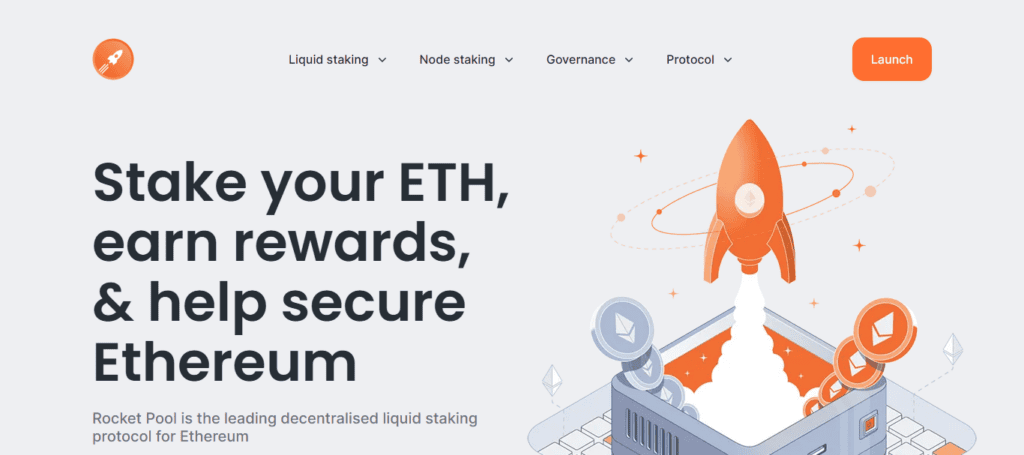
Rocket Pool’s smart contract system offers a secure and trustless system. Within the bounds of Ethereum’s liquid staking systems, Rocket Pool’s system is decentralized finance’s and self-custody staking’s future in Ethereum’s thriving ecosystem.
Rocket Pool – Pros & Cons
| Pros | Cons |
|---|---|
| Fully decentralized Ethereum staking protocol | Higher technical complexity for node operators |
| rETH remains liquid and DeFi-compatible | Smaller liquidity compared to Lido |
| Permissionless node operator system | Slower user onboarding experience |
| Strong Ethereum decentralization support | Gas fees can be high during network congestion |
| Lower minimum staking requirement vs solo staking | Limited multi-chain support |
3. Coinbase Staking
Coinbase concentrates on a smooth liquid staking experience within its safe system, and its beginner-friendly design gives Coinbase an edge among its US competition. With custody solutions and internal controls, users can stake their assets on Ethereum with peace of mind.

Coinbase protects users by providing a compliant (and insured) insurance infrastructure. Rewards are regularly distributed, and recent changes to Coinbase include further regional availability and yield reporting improvements. Coinbase’s integration allows users to trade and stake in one place.
Users who select Coinbase in favor of security and compliance over the lack of control of its competitors tend to prefer Coinbase Staking.
Coinbase Staking – Pros & Cons
| Pros | Cons |
|---|---|
| Extremely beginner-friendly interface | Centralized custody model |
| Strong regulatory compliance and security | Limited decentralization compared to DeFi platforms |
| Trusted global brand reputation | Higher fees than decentralized alternatives |
| Easy fiat on-ramp and withdrawals | Restricted staking availability in some regions |
| Seamless integration with Coinbase exchange | Less control over staking strategies |
4. Binance Staking
There are opportunities to stake a huge variety of assets in the liquid staking system of Binance, and there are flexible earning products that are also liquid. It continues to expand staking even further to shortcuts to Ethereum and the BNB Chain.
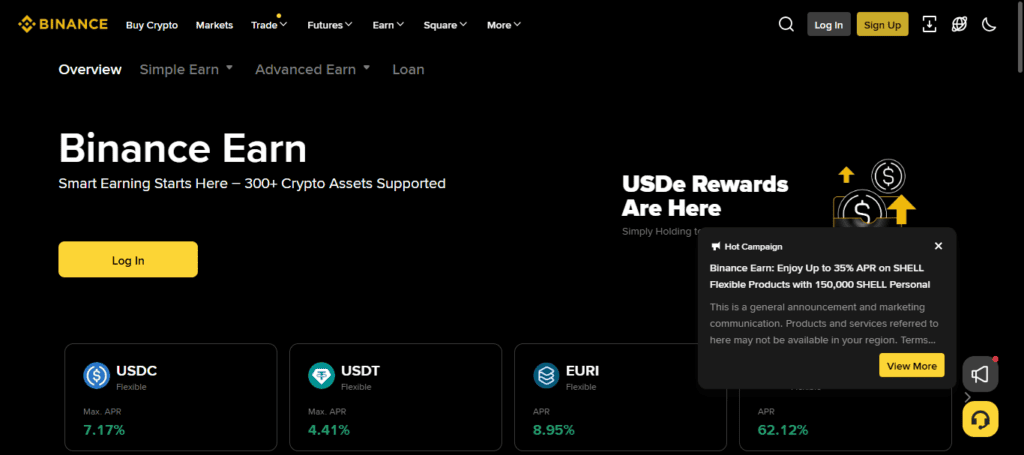
Recent changes to Binance have focused on optimizing yield and some Auto-Subscribe staking features. The deep liquidity of pools and flexible products makes it attractive to users of all variations, although users should keep in mind constant regulatory scrutiny. Despite this, the convenience and variety of products makes it easy to use Binance Staking.
Binance Staking – Pros & Cons
| Pros | Cons |
|---|---|
| High liquidity and wide asset support | Regulatory uncertainty in some countries |
| Multiple flexible staking and earning products | Centralized exchange risk |
| Competitive yield options for users | Less transparent validator structure |
| Easy access for retail traders globally | Platform restrictions in certain regions |
| Advanced auto-subscribe earning features | Custodial control of assets |
5. Kraken Staking
Offering staking services for digital assets like Ethereum and Solana, Kraken prioritizes safety and transparency.
Their positive reputation and focus on safety and compliance make users more likely to trust them. Kraken makes earning staking rewards passive. They have recently improved streamlined reward tracking dashboards and expanded staking in more jurisdictions.
While focusing on custodial staking, liquid staking, and decentralized tokens are not really their focus, they have a lot of good things to offer like reliability, institutional-grade infrastructure, and security. Because Kraken has staked crypto assets in confidence and has a good reputation for positive, safe, compliant crypto staking, users trust Kraken.
Kraken Staking – Pros & Cons
| Pros | Cons |
|---|---|
| Strong security and long operational history | Limited liquid staking token variety |
| Transparent reward distribution system | Mostly custodial staking model |
| Regulated exchange with high trust level | Fewer DeFi integrations compared to rivals |
| Supports multiple major crypto assets | Slower innovation in liquid staking features |
| Simple interface for passive income users | Limited yield optimization strategies |
6. Marinade Finance
Marinade Finance is a liquid staking platform offered on the Solana blockchain. Users can stake SOL tokens and receive mSOL, a liquid staking derivative that is awarded mSOL and are continuously rewarded. One of the things that makes Marinade really great is the decentralized layering over a wide range of validators.

Marinade Finance also features automatic compounding and advanced validator selection. Marinade Finance is the most popular staking option on Solana, and for good reason. Their low fees highly combine their services and the DeFi integrations are excellent. Marinade Finance is a strong pillar in staking infrastructure and assists in the growth of Solana DeFi.
Marinade Finance – Pros & Cons
| Pros | Cons |
|---|---|
| Native Solana liquid staking solution | Limited to Solana ecosystem only |
| mSOL widely used in Solana DeFi | Validator performance dependency |
| Low fees and fast transactions | Network risk tied to Solana stability |
| Strong decentralization via validator delegation | Less institutional adoption vs Ethereum platforms |
| Auto-compounding yield features | Smaller global liquidity than ETH platforms |
7. Jito
The Jito platform aims to bring a more lucrative way of staking on Solana through Liquid Staking and MEV (Maximal Extractable Value) optimization.
Users receive JitoSOL, which is unique in that it rewards users with both staking rewards and MEV rewards. Compared to standard staking, this innovative feature boosts the profitability for users of this DeFi strategy.
Advanced validation optimization and MEV redistribution have been the focus of Jito’s design in its latest product iterations.
The design of the Jito platform also helps users further optimize profitability as it helps to increase overall system throughput. As a result of Jito’s innovative approach to staking rewards, Jito is experiencing widespread adoption in the Solana ecosystem.
The other staking platforms on Solana focus mainly on infrastructure and throughput, while Jito aims to fill the yield gap with sophisticated DeFi strategies. It helps staking rewards at a higher level compared to other staking platforms.
Jito – Pros & Cons
| Pros | Cons |
|---|---|
| Combines staking rewards + MEV yield | Complex mechanism for beginners |
| Higher potential returns via JitoSOL | Dependent on MEV market conditions |
| Strong Solana ecosystem integration | Limited blockchain support |
| Improves validator efficiency | Relatively newer platform with evolving model |
| Rapid adoption in Solana DeFi | Higher technical risk exposure |
8. Frax Ether
Liquid Staking on Ethereum is a hybrid of liquid staking (Frax Ether, or frxETH) created by Frax Finance, and staking in its separate form of staked ETH. This method optimizes yield efficiency on an even greater level.
Users of the Frax Ether system can interact with different DeFi applications while maintaining their liquidity, unlike in most liquid staking systems, where users provide liquidity and tie up their assets.
Balancing staked ETH with frxETH (and vice versa) maintains a balance of liquidity with staking rewards. Frax Ether ideates beyond the typical framework of staking systems. Users of Frax Ether are more advanced DeFi users who have an appreciation for the constant innovation Frax Ether brings to its system.
Frax Ether – Pros & Cons
| Pros | Cons |
|---|---|
| Innovative dual-token ETH staking system | Complex structure for new users |
| High capital efficiency design | Ecosystem still expanding |
| Strong DeFi integration within Frax ecosystem | Dependency on Frax protocol stability |
| Flexible yield optimization strategies | Higher smart contract complexity |
| Advanced algorithmic financial model | Less mainstream adoption than Lido |
9. Ankr
Ankr gives its users a system of decentralized liquid staking across various blockchains such as Ethereum, BNB Chain, and Polygon. Users can participate in DeFi applications while staking and earning rewards. Ankr places high importance on the usability and scalability of their staking APIs. Recently,
Ankr has improved their systems for multi-chain validator staking. Ankr’s infrastructure-first mentality encourages various types of users, such as developers and institutions, to use their product.
Ankr is a vital player for Web3 developers as integrating staking across their services has never been easier. In the coming future, Ankr will help construct the multi-chain decentralized liquidity services for staking and yield services.
Ankr – Pros & Cons
| Pros | Cons |
|---|---|
| Multi-chain liquid staking support | Less dominant in Ethereum staking market |
| Developer-friendly staking APIs | Variable yields across networks |
| Strong Web3 infrastructure focus | Competition from larger platforms |
| Supports multiple ecosystems (ETH, BNB, Polygon) | Some services rely on external validators |
| Easy integration for dApps | Lower brand trust vs top exchanges |
10. StakeWise
StakeWise provides a modular system for Ethereum liquid staking that encourages transparency. StakeWise’s users receive tokens that represent their staked ETH and rewards separately. This liquid dual-token system increases transparency and makes tracking staking performance easier.
Recent updates focused on improvement of Vaults as well as risk management systems. StakeWise is the preferred system for people participating in DeFi that like to manage their staking rewards and collateral in a granular manner.

Having made integrations across Ethereum’s DeFi systems to maximize liquidity, StakeWise’s clarity, modularity, and user experience design in liquid staking systems places them above their competitors.
StakeWise – Pros & Cons
| Pros | Cons |
|---|---|
| Transparent dual-token reward system | Smaller liquidity compared to Lido |
| Strong Ethereum DeFi integration | Limited multi-chain expansion |
| Flexible staking reward management | Lower adoption outside ETH ecosystem |
| Vault-based staking architecture | Requires deeper user understanding |
| High transparency and control | Less marketing visibility |
Key Factors To Choose a Liquid Staking Platform
- Security and smart contract audits: Look for verified audited platform that are secure from hacks and vulnerabilities.
- Supported blockchains (Ethereum, Solana etc.): Confirm staking features are available across many chains for more flexible staking.
- APY and reward structure: The structure and frequency of rewards and yield as well as how and when reward are compounded must be compared.
- Liquidity and token usability in DeFi: Confirm token can be traded in DeFi and outside.
- Centralized vs decentralized model: Custodial vs Non-custodial systems need to be carefully considered.
Conclusion
In summary, the most lucrative of the liquid staking platforms mean that you can earn passive income while maintaining the use of your crypto assets in DeFi markets. When deciding which platform to choose, the criteria are the security, the blockchains available, the APY, and the level of decentralization.
Liquid staking platforms are going to be around for a long time and will continue to be one of the most important innovations to come into the decentralized finance and crypto investing space.
FAQ
Top platforms include Lido Finance, Rocket Pool, Coinbase, Binance, and Kraken.
Yes, but risks exist like smart contract bugs, platform centralization, and market volatility.
APY is the annual percentage yield earned from staking rewards and compounding returns.
Lido Finance is popular for high liquidity, stETH utility, and strong DeFi integration.