


This article explores best intent-focused cross-chain abstraction APIs that can assist developers in creating smoother blockchain environments.
These APIs simplify cross-chain interactions through intent-based approaches, automated routing, and interoperability frameworks. From better asset transfers to integrated decentralized apps, these platforms bring down complexity and boost user experience throughout numerous blockchain networks.
Key Points & Best Intent-Centric Cross-Chain Abstraction APIs
| Best Intent-Centric Cross-Chain Abstraction APIs | Explanation |
|---|---|
| Across Protocol API | Enables fast cross-chain transfers using intents and decentralized relayers. |
| LI.FI API | Aggregates bridges and DEXs for seamless cross-chain transactions. |
| Socket API | Provides intent-based routing across multiple blockchain networks efficiently. |
| UniswapX API | Uses intents to optimize decentralized exchange order execution. |
| 1inch Fusion API | Offers intent-driven swaps with professional resolver networks. |
| Connext API | Supports cross-chain communication through modular intent-based infrastructure. |
| Router Protocol API | Enables secure blockchain interoperability using abstraction-focused solutions. |
| Squid Router API | Simplifies cross-chain swaps through Axelar-powered intent execution. |
| deBridge API | Facilitates cross-chain transactions with flexible intent-based messaging. |
| Hyperlane API | Provides permissionless interoperability for intent-driven blockchain applications. |
10 Best Intent-Centric Cross-Chain Abstraction APIs
1. Across Protocol API
Across Protocol API is a great example of a Best Intent-Centric Cross-Chain Abstraction APIs. Their architecture allows bridge users to focus on outcomes rather than the complex bridge transactions.
Across Protocol API uses decentralized relayer networks to perform cross-chain transfers, reducing the time and costs for users and improving the UX. Cross-chain operations are made even more secure with Across Protocol API’s optimistic validation framework.
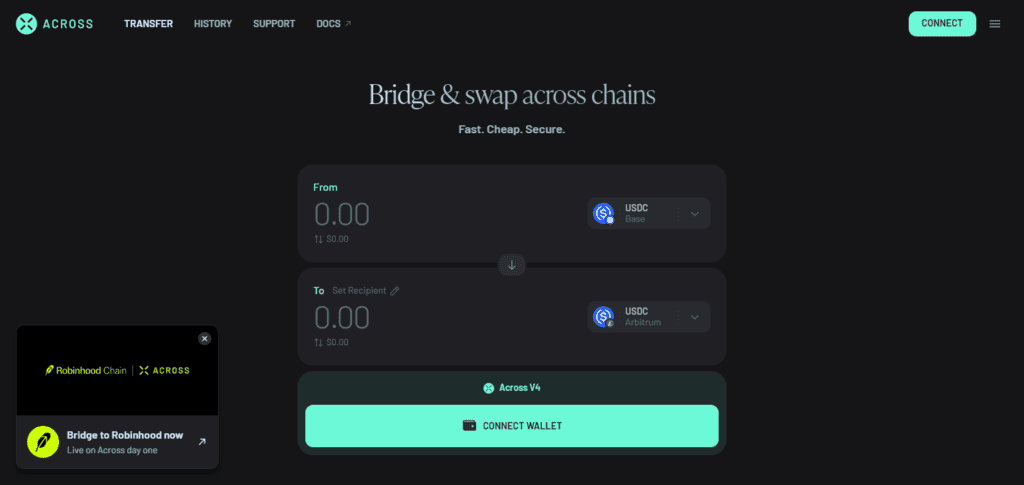
Its support across many blockchain networks makes it perfect for developers looking to build cross-chain applications that allow users to perform cross-chain transfers without an understanding of the underlying complexities of blockchain networks.
Across Protocol API Features
- Intent-based cross-chain transactions allow for simplified user transaction requests.
- Decentralized relays ensure swift and secure transaction execution.
- An optimistic verification model enhances cross-chain security and reliability.
- Cross-chain asset movements are supported across different blockchain networks.
- Liquidity management solutions reduce transaction costs.
- Web3 application development is eased with developer-centric APIs.
| Pros | Cons |
|---|---|
| Fast cross-chain transfers using intent-based transaction execution. | Limited support compared with some larger interoperability networks. |
| Decentralized relayers improve speed and transaction efficiency. | Relayer dependency can affect transaction availability. |
| Reduces complexity for users managing multiple blockchains. | Optimistic verification may require additional waiting periods. |
| Supports multiple blockchain ecosystems for asset movement. | Advanced features may require technical integration knowledge. |
| Lower transaction costs through optimized execution methods. | Liquidity availability can vary across supported networks. |
2. LI.FI API
As part of a Best Intent-Centric Cross-Chain Abstraction APIs, LI.FI API is an aggregation API that provides access to various bridge networks, DEXs, and routing protocols. It empowers developers to create user interfaces using one unified interface that allows users to perform cross-chain swaps.
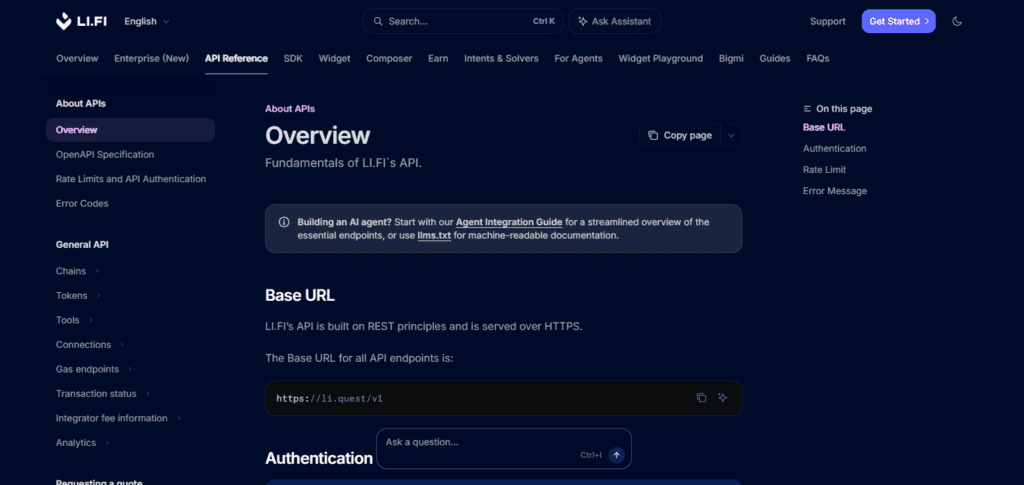
LI.FI logs paths for users based on optimal transactions that consider liquidity and cost. LI.FI abstracts the complexities of blockchain interaction, letting users focus on the intent of the bridge swaps. It helps Web3 applications seamlessly integrate cross-chain transactions across multiple networks.
LI.FI API Features
- Always multiple bridges and decentralized exchanges are found on this single platform.
- Optimal routing with respect to liquidity and transaction fees is utilized.
- Cross-chain swaps can be done conveniently available across different blockchain networks.
- The user experience is enhanced by abstracting the complex interactions of different bridges.
- APIs are user-centric and flexible for decentralized applications development.
| Pros | Cons |
|---|---|
| Aggregates multiple bridges and DEXs in one platform. | Dependency on external bridges may introduce risks. |
| Automatically selects optimized routes for transactions. | Complex routing logic may increase integration challenges. |
| Supports many blockchain networks and assets. | Some routes may have higher fees during congestion. |
| Simplifies cross-chain swaps for Web3 applications. | Requires continuous updates for new ecosystem support. |
| Provides flexible APIs for developers. | Security depends on connected protocols and bridges. |
3. Socket API
When it comes to Best Intent-Centric Cross-Chain Abstraction API, Socket API provides a solution with intelligent routing based on user intent across multiple blockchain ecosystems. The API supports apps in selecting optimal routes on bridges and liquidity.
Socket API reduces fragmentation by lying on top of a unified cross-chain infrastructure for developers. Its API offers end users asset transfer and app communications without the burden of network switching and complicated transactions. It is highly useful for developing decentralized applications with the complex cross-chain requirement.
Socket API Features
- Intent-based cross-chain asset transfer across multiple blockchain ecosystems is enabled.
- Bridges and liquidity providers are interconnected via a unified infrastructure.
- Complex cross-chain asset transfer transactions are simplified for decentralized applications.
- Solutions to the issue of blockchain fragmentation and infresponsiiveness of interoperability solutions are offered.
| Pros | Cons |
|---|---|
| Provides intelligent routing across multiple blockchain networks. | Requires integration knowledge for advanced features. |
| Reduces blockchain fragmentation through unified infrastructure. | Performance depends on connected liquidity providers. |
| Enables seamless asset transfers between ecosystems. | Limited customization for some transaction flows. |
| Supports scalable decentralized application development. | Cross-chain failures may occur due to external dependencies. |
| Improves user experience with automated routing. | New networks may require additional support time. |
4. UniswapX API
With Best Intent-Centric Cross-Chain Abstraction APIs, UniswapX API allows users to express their intent of the desired outcome of a trade rather than dealing with the details of execution. The protocol employs a network of fillers who compete for the right to fulfill a trade, therefore improving the price and the efficiency of the execution.
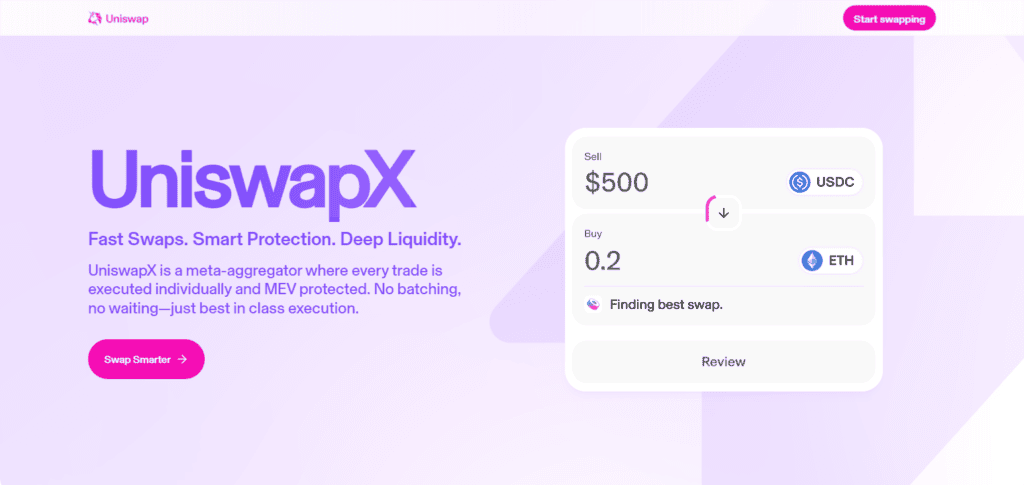
As compared to other decentralized exchanges, they have addressed the order routing complexities and reduced trade execution. With the UniswapX API, developers are able to create applications with a trading platform that offer execution improvement and access to better liquidity in a simplified decentralized trading environment.
UniswapX API Features
- Our API supports intent-based trading for the removal of the need for managing transactions.
- Orders get executed by competition fillers.
- Improvement of swaps is possible with better liquidity access.
- User complexity is reduced with our solution for decentralized exchanges.
- Development of advanced trading applications is supported.
- Our API offers flexible mechanisms for order execution to developers.
| Pros | Cons |
|---|---|
| Enables intent-based trading with simplified execution. | Mainly focused on swap-related use cases. |
| Improves pricing through competitive filler networks. | Depends on filler participation and availability. |
| Reduces manual transaction management for users. | May have limited support for complex DeFi operations. |
| Provides efficient decentralized exchange functionality. | Requires understanding of intent-based order systems. |
| Helps developers build advanced trading applications. | Execution quality depends on market liquidity conditions. |
5. 1inch Fusion API
With Best Intent-Centric Cross-Chain Abstraction APIs, the 1inch Fusion API offers a solution with intent based swaps with a user-friendly professional resolver network. It allows traders to express their intent and a resolver handles the execution.
The API’s methodology ensures that the execution of swaps is done at the optimal price without the user incurring the traditional gas fee. 1inch Fusion’s APIs offer automated and optimized trading experiences in DeFi. Developers can use the API to facilitate applications and services that offer smooth swaps and improved liquidity aggregation across DeFi.
1inch Fusion API Features
- Uses the fastest routes through professional resolver networks for optimized execution.
- Optimizes automated liquidity with cost-effective routing.
- Simplifies swaps to enhance the DeFi trading experience.
- Automates and secures transaction processing.
- Integrates readily with applications in decentralized finance.
| Pros | Cons |
|---|---|
| Provides gasless swaps through resolver networks. | Mostly optimized for token swapping activities. |
| Finds competitive prices across liquidity sources. | Resolver availability can impact execution speed. |
| Improves DeFi trading experience with automation. | Advanced integration may require technical expertise. |
| Offers secure and efficient transaction execution. | Limited functionality outside decentralized trading. |
| Reduces user complexity in swap operations. | Market conditions can affect swap efficiency. |
6. Connext API
Best Intent-Centric Cross-Chain Abstraction APIs include Connext API. Connext API provides an easy to use developer-friendly modular infrastructure solution for Inter-Chain communication. Blockchain developers can design programs for transfers of digital assets and data across varying Blockchain networks with ease.
Connext API provides secure messaging and build bridges to facilitate cross-Chain communication, thus minimizing the reliance of application users to complex processes. Use of their intent driven infrastructure results in applications that empower users to achieve a specific end result with little to no reliance on the intricacies of Blockchain and distributed operations.
Connext API Features
- Offers modular infrastructure for secure, multi-chain communication.
- Enables secure data and asset communication.
- Provides a bridge between multiple blockchains.
- Streamlines the development of cross-chain applications.
- Offers secure messaging and bridge functionalities.
- Helps developers build intent-focused Decentralized Applications (dApps).
| Pros | Cons |
|---|---|
| Provides modular cross-chain communication infrastructure. | Requires developers to understand interoperability concepts. |
| Supports secure asset and data transfers. | Network coverage may vary across blockchains. |
| Enables flexible decentralized application development. | Some transactions may require additional configuration. |
| Reduces complexity of multi-chain interactions. | Security depends on bridge architecture implementation. |
| Supports scalable Web3 interoperability solutions. | Liquidity limitations can affect certain transfers. |
7. Router Protocol API
Best Intent-Centric Cross-Chain Abstraction APIs Include Router Protocol API. Router Protocol API provides blockchain interoperability in a secure manner through abstraction. It is used to communicate among disparate blockchain networks, thereby enabling execution of cross-chain operations in a seamless manner.
The Router Protocol API allows developers to build applications in which users are able to connect with different systems using simplified arrangements. The API provides secure messaging, asset transportation, and multi-chain integration while lessening barriers for Web3 users and developers.
Router Protocol API Features
- Offers a secure medium for cross-chain communications.
- Allows cross-chain messaging and asset transfers.
- Offers interoperability with a focus on abstraction.
- Simplifies the development process of multi-chain applications.
- Eliminates barriers for Web3 developers.
- Offers scalable solutions for decentralized applications.
| Pros | Cons |
|---|---|
| Enables secure communication between blockchain networks. | Smaller ecosystem compared with major protocols. |
| Supports cross-chain messaging and asset transfers. | Adoption may vary among developers. |
| Provides abstraction-focused interoperability solutions. | Integration can require technical blockchain knowledge. |
| Helps create multi-chain decentralized applications. | Performance depends on network conditions. |
| Reduces barriers for Web3 application development. | Limited resources compared with established competitors. |
8. Squid Router API
Squid Router API is another member of the Best Intent-Centric Cross-Chain Abstraction APIs. It uses the Axelar intent execution to simplify cross-chain swaps. Squid allows both application users and developers to avoid the management of bridges and liquidity routes.

Squid ensures fast, safe, and seamless cross-chain operations by managing the administration of resource consuming operations. The API is best suited for applications that require inter-chain projects in a decentralized manner, as it allows a simplified single platform interface for interaction with all Blockchain networks.
Squid Router API Features
- Offers simple cross-chain swaps with Axelar technology.
- Automates liquidity and bridge management.
- Offers extensive coverage of blockchain networks for transaction processing.
- Offers fast and secure inter-blockchain communication and regional swapping.
- Offers a simplified user experience with the applications.
- Offers efficient intent-based transaction processing.
| Pros | Cons |
|---|---|
| Simplifies cross-chain swaps using Axelar infrastructure. | Depends heavily on Axelar network performance. |
| Automates complex bridge and liquidity processes. | Supported chains may be limited compared with aggregators. |
| Provides fast interoperability between blockchain networks. | Transaction costs can change based on network fees. |
| Improves user experience with simple workflows. | Developers may need Axelar-specific knowledge. |
| Supports decentralized application integrations. | Complex transactions may require additional monitoring. |
9. deBridge API
Examples of Best Intent-Centric Cross-Chain Abstraction APIs are deBridge APIs. These APIs enable cross-chain transactions using flexible intent-based messaging infrastructure. deBridge APIs help developers build cross-chain communication and asset transfer solutions.
The API abstracts the complexity of cross-chain transactions away from the end user. The API makes the execution of transactions, secure message passing, and the interconnection of blockchains faster. For decentralized applications (DApps) that require uninterrupted, multi-chain services, the deBridge API offers a solution.
deBridge API Features
- Offers flexible, intent-based cross-chain communications.
- Enables secure blockchain communication and asset transfer.
- Offers customized interoperability solutions.
- Simplifies multi-chain transactions.
- Improves transaction reliability and speed.
- Enables scalable decentralized applications.
| Pros | Cons |
|---|---|
| Enables flexible cross-chain messaging capabilities. | Requires technical understanding for customization. |
| Supports secure asset transfers between networks. | Ecosystem adoption is still developing. |
| Provides customizable interoperability solutions. | Network support may differ across blockchains. |
| Improves blockchain connectivity for applications. | Transaction speed depends on network conditions. |
| Helps build reliable multi-chain applications. | Limited awareness compared with larger protocols. |
10. Hyperlane API
Also belonging to the category of the Best Intent-Centric Cross-Chain Abstraction APIs is Hyperlane API. This API provides an interoperability infrastructure for intent-driven blockchain applications. Hyperlane allows developers to build solutions that connect disparate blockchain networks without using a trusted central entity.
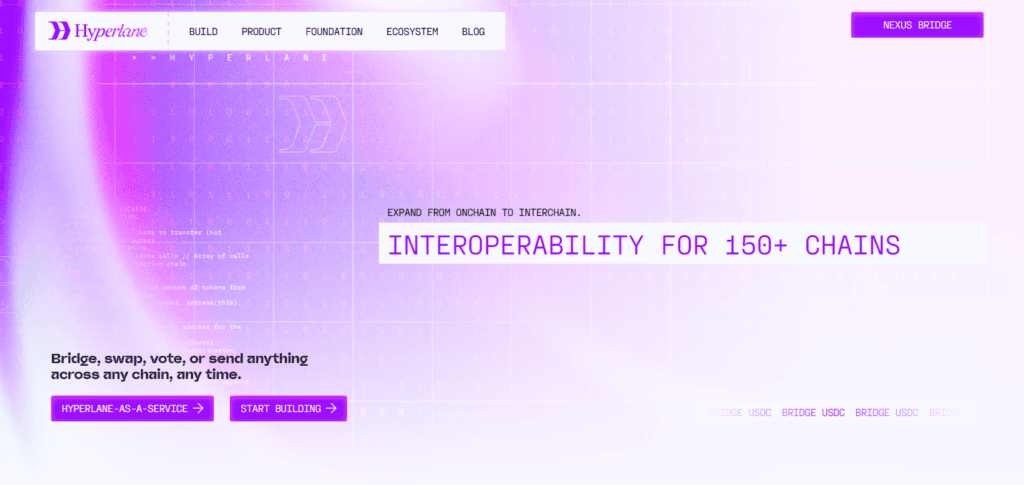
The Hyperlane API provides a communication infrastructure that is secure, optional, and cross-chain. Hyperlane strives to streamline and simplify blockchain interactions for developers to create applications that allow end users to accomplish their desirable end-to-end outcomes on various platforms without going through onerous
Hyperlane API Features
- It allows scalable messaging across blockchain networks.
- It gets rid of the need to rely on centralized interoperability providers.
- Offers a decentralized infrastructure for cross-chain communication
- It simplifies intent-driven blockchain interactions for users.
| Pros | Cons |
|---|---|
| Provides permissionless blockchain interoperability infrastructure. | Requires developer expertise for implementation. |
| Supports customizable security models. | Security configuration can be complex. |
| Enables scalable cross-chain messaging solutions. | Adoption varies across blockchain ecosystems. |
| Allows developers to connect multiple networks easily. | More customization may increase development effort. |
| Supports flexible Web3 application architectures. | New users may face a learning curve. |
Conclusion
In Short, The Best Intent-Centric Cross-Chain Abstraction APIs Are Innovating Blockchain Interoperability By Making Complex Transactions Easier And Enhancing User Experiences. Platforms Like Across, LI.FI, Socket, UniswapX, And Hyperlane Facilitate Smooth Cross-Chain Communications
With Automated Execution And Smart Routing. As Web3 Adoption Expands, These APIs Will Be Critical For Developing Scalable, Effective, And User-Focused Decentralized Applications That Operate In Multiple Blockchain Environments.
FAQ
Intent-centric APIs simplify blockchain interactions by executing user goals automatically across networks.
They reduce complexity, improve efficiency, and enable seamless multi-chain transactions.
Users specify desired outcomes while protocols handle routing and execution processes.
Popular options include Across, LI.FI, Socket, UniswapX, and Hyperlane APIs.