


This article focuses on Best Layer-2 Scaling Solutions for Businesses and how they improve efficiency and cost reduction and speed up transactions on the Blockchain.
Solutions such as Polygon and Arbitrum, as well as zkSync and Immutable X, allow businesses to scale their operations without friction and help seamlessly incorporate Blockchain technology into their operations in a practical, safe, and sustainable manner.
Key Points & Best Layer-2 Scaling Solutions For Businesses
| Layer-2 Solution | Key Point for Businesses |
|---|---|
| Polygon (MATIC) | Offers sidechains and zk-rollups; widely adopted for DeFi, NFTs, and enterprise apps with low fees and high throughput. |
| Arbitrum | Uses optimistic rollups; strong Ethereum compatibility, making it ideal for businesses scaling dApps without major code changes. |
| Optimism | Focuses on simplicity and cost efficiency; supports Ethereum smart contracts with reduced gas fees. |
| Immutable X | Tailored for NFTs and gaming; provides instant trade confirmation and zero gas fees for minting. |
| Loopring | zk-rollup based; enables high-speed decentralized exchanges and payment solutions with low transaction costs. |
| StarkNet | Built on zk-STARKs; highly scalable and secure, suitable for enterprises needing advanced cryptographic assurances. |
| zkSync | zk-rollup solution; emphasizes fast, low-cost payments and transfers, ideal for fintech and e-commerce. |
| Shibarium | Community-driven L2; supports token ecosystems and DeFi projects with reduced transaction costs. |
| Metis | Combines optimistic rollups with decentralized governance; designed for DAOs and enterprise collaboration platforms. |
| Boba Network | Hybrid compute capabilities; allows businesses to integrate off-chain data and APIs into smart contracts. |
10 Best Layer-2 Scaling Solutions For Businesses
1. Polygon (MATIC)
Polygon is one of the most popular Layer-2 scaling solutions. It uses sidechains and zk-rollups to improve the scalability of Ethereum.
This makes it easier for businesses to expand and improve their operations, as it offers low transaction expenses, high throughput, and substantial developer support.
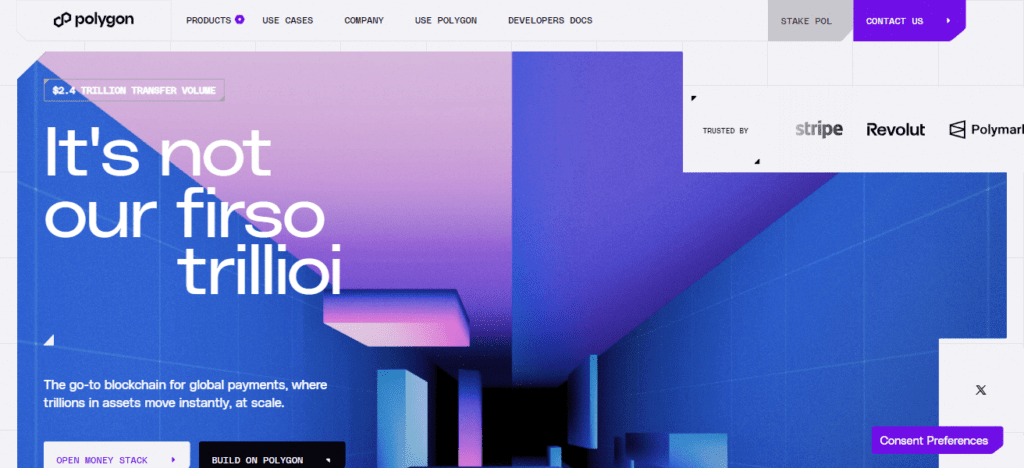
It is also transferable to the DeFi, NFT and Enterprise Applications, which makes it adaptable for many use cases.
Since Polygon is Ethereum compatible, businesses can migrate their dApps with ease. Most enterprise partners also value it as it provides a good balance of scalability and usability. Businesses can also worry less about high costs and slow transaction speeds.
Polygon (MATIC) Features
- Offers multiple scaling solutions such as sidechains and zk-rollups.
- Ecosystem supports DeFi, NFTs, and enterprise use-case adoption.
- Positive sustainable business use-case low transaction fees and high throughput.
- Plug-and-play Ethereum compatibility making dApp migration simple.
| Pros | Cons |
|---|---|
| Widely adopted with strong ecosystem | Can face congestion during peak demand |
| Low fees and high throughput | Security depends on Ethereum mainnet |
| Easy migration for Ethereum dApps | Competition from other L2 solutions |
| Strong corporate partnerships | Complexity of multiple scaling approaches |
2. Arbitrum
Arbitrum uses optimistic rollups, enabling the scaling of Ethereum apps, keeping gas fees low, along with strong security.
Because of its high Ethereum smart contract compatibility, businesses can move their old apps with minimal changes.
Arbitrum’s extensive ecosystem supports DeFi, gaming, and enterprise solutions. Arbitrum is fraud-proof, ensuring trust and integrity. Its active developer community fosters innovation.
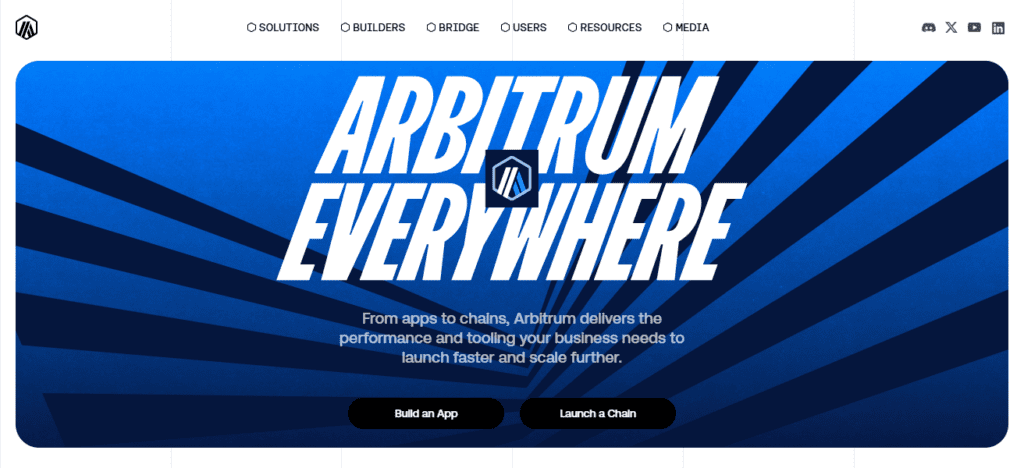
Arbitrum provides businesses with a simple and affordable way to scale their operation and manage high transactions.
Arbitrum Features
- Diversifying ecosystem focuses on DeFi, gaming, and enterprise applications.
- For scalability and cost reduction it uses optimistic rollups.
- Ethereum smart contracts have high compatibility.
- Trust and security are enhanced via a fraud-proof system.
| Pros | Cons |
|---|---|
| High Ethereum compatibility | Fraud-proof delays finality |
| Lower gas fees than Ethereum | Still evolving ecosystem |
| Strong developer adoption | Limited NFT/gaming focus compared to others |
| Reliable for DeFi scaling | Centralized sequencer concerns |
3. Optimism
Optimism is a top Layer-2 solution with optimistic rollups for quick and affordable transactions. The goal of simplicity and cost efficiency is a selling point for organizations building apps on Ethereum.
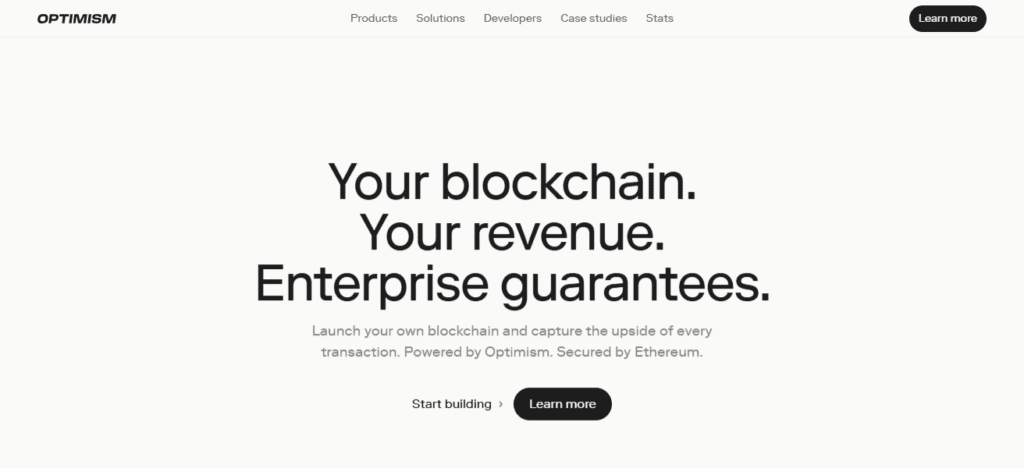
Optimism is able to use existing smart contracts and therefore saves costs on integration. The DeFi and enterprise use cases of their rapidly expanding ecosystem give Optimism a great deal of utility. With the advanced gas fee, Optimism is able to use existing smart contracts.
The open-source development provides businesses with the trust and transparency while scaling their blockchain solutions.
Optimism Features
- Transactions are quicker and cheaper in cost due to optimistic rollups.
- Past Ethereum applications are easily integrated.
- Cost efficiency and developer usability drive the focus.
- Ecosystem growth is supported in DeFi and enterprises.
| Pros | Cons |
|---|---|
| Simple integration with Ethereum | Fraud-proof mechanism slows withdrawals |
| Cost-efficient transactions | Smaller ecosystem than Polygon/Arbitrum |
| Open-source and transparent | Limited enterprise partnerships |
| Rapidly growing adoption | Security trade-offs vs zk-rollups |
4. Immutable X
Immutable X has been customized for NFTs and gaming and allows for instant confirmation and minting without gas fees.
Digital collectibles and gaming companies can leverage its easy and scalable solution for trading. Immutable X has proven its security for high volume transactions through its zk-rollups technology.
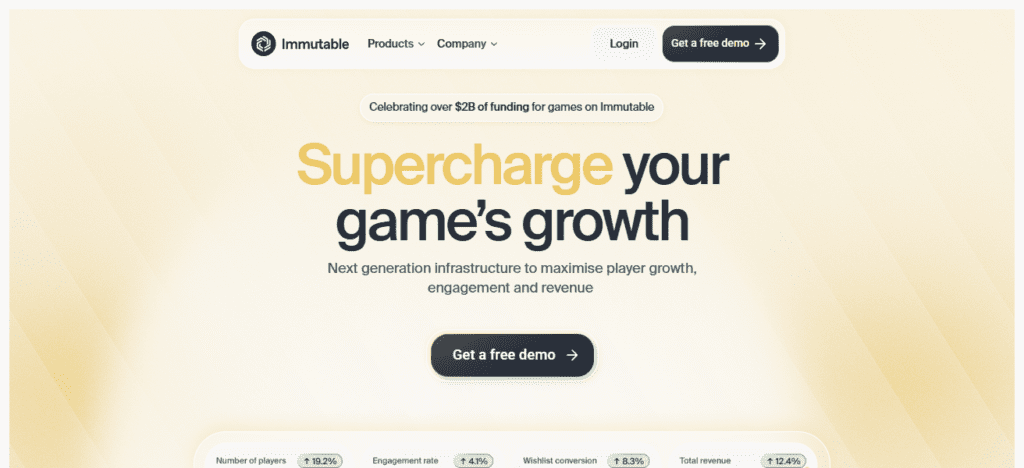
Enterprise potential can been seen through collaborations with major gaming and NFT peer to peer trading marketplaces.
Immutable X allows companies to seamlessly integrate NFTs into their operations, cut costs and enhance user experience and is therefore, a leader in digital assets.
Immutable X Features
- Gaming and NFT scalability is secured using zk-rollups.
- Minting and trading NFTs incurs zero gas fees.
- User experience is enhanced via instant trade confirmations.
- Collaborations with gaming studio and marketplace giants.
| Pros | Cons |
|---|---|
| Zero gas fees for NFTs | Focused mainly on NFTs/gaming |
| Instant trade confirmations | Less versatile for other industries |
| Strong partnerships with gaming studios | Smaller ecosystem compared to Polygon |
| zk-rollup security | Limited enterprise adoption outside gaming |
5. Loopring
Loopring is a zk-rollup based Layer-2 solution that focuses on decentralized exchanges and payments.
It enables companies to carry out thousands of transactions at a much lower cost than Ethereum. For fintech companies and enterprises investigating blockchain for payments
Loopring is a very attractive option, as its technology enables safe, scalable and efficient trading. Its decentralized exchange protocol enables companies to create high liquidity and low fee exchange platforms.
Loopring decentrlized exchange provides an easy option for companies to incorporate blockchain payments, lower costs and improve user experience through instant and inexpensive transactions.
Loopring Features
- Secure and scalable exchanges are made possible via zk-rollup technology.
- Transactions cost low for high volume.
- Decentralized trading and payment systems is the primary focus.
- Perfect for payment solutions in blockchain and fintech.
| Pros | Cons |
|---|---|
| High-speed decentralized exchange support | Niche focus on trading/payment |
| zk-rollup security | Smaller developer ecosystem |
| Low transaction costs | Limited enterprise partnerships |
| Efficient for fintech | Less versatile for non-financial apps |
6. StarkNet
StarkNet offers scalability to businesses through its unique built zk-STARK technology. StarkNet offers businesses a safe and decentralized platform to launch their complex applications.
Enterprises consisting of high-quality blockchain requirements can observe the StarkNet’s priorities of scalability and security.
Claims of StarkNet’s zero-knowledge proof technology enable the efficient processing and verification of trust, leading to cost reduction.
StarkNet provides its services to businesses that deal with finance, supply chain, and enterprise applications.
StarkNet employs cutting-edge technology and is an exceptional choice of businesses that wish to secure and scale their blockchain.
StarkNet Features
- Advanced cryptographic security powered by zk-STARKs.
- Highly scalable. Fit for enterprise-grade applications.
- Efficient computation and verification using zero-knowledge proofs.
- Applicable to finance and supply chain, and complex business applications.
| Pros | Cons |
|---|---|
| Advanced zk-STARK cryptography | Complex technology harder to adopt |
| Strong scalability and security | Still early-stage ecosystem |
| Suitable for enterprise-grade apps | Higher learning curve for developers |
| Efficient computation and verification | Limited mainstream adoption yet |
7. zkSync
zkSync was created to be a zk-rollup solution that has as its primary purpose the fast and cheap roping of payments and transfers.
The user experience is further refined since payments and transfers can be done at a zero cost and done almost instantaneously.
This makes it a perfect choice for digital payment businesses, and for FinTech and E-commerce businesses.
zkSync provides the scalability needed to process the large volume of transactions that businesses require while providing the security typical of Ethereum.
This is especially beneficial for businesses that wish to integrate Ethereum smart contracts. zkSync offers businesses the ability to optimize their bottom line through cost savings
Improved transaction speed, and increased customer satisfaction. This makes it a great choice for digital payment businesses.
zkSync Features
- zk-rollup solution. Designed for cheap and instant payments.
- Instant transactions and Ethereum-level security.
- Ethereum smart contracts are easily integrated.
- Applicable for fintech, e-commerce, and cross-border payments.
| Pros | Cons |
|---|---|
| Fast, low-cost payments | Ecosystem still growing |
| Ethereum-level security | Limited enterprise partnerships |
| Easy integration with smart contracts | Focused mainly on payments |
| Ideal for fintech/e-commerce | Less versatile for complex apps |
8. Shibarium
Shibarium provides a Layer-2 solution that looks to help build the Shiba Inu ecosystem. Community-focused, it allows low-cost transactions while increasing scalable opportunities for businesses interested in DeFi (Decentralized Finance).
Shibarium allows businesses to create community-driven DeFi applications, tokenized assets, and DeFi projects while providing opportunities for startups to enter the blockchain ecosystem.
Shibarium Features
- Layer-2 supporting the Shiba Inu ecosystem. Community-driven.
- Increases scalability and lowers transaction costs.
- Tokenized assets and DeFi projects are supported.
- Good for community projects and for startups.
| Pros | Cons |
|---|---|
| Community-driven adoption | Strongly tied to Shiba Inu ecosystem |
| Low transaction costs | Less enterprise credibility |
| Supports DeFi/token projects | Smaller developer base |
| Accessible for startups | Limited scalability proof compared to leaders |
9. Metis
Metis is ideal for DAOs (Decentralized Autonomous Organization) and enterprise collaboration networks.
With a focus on low fees and ease of use for all, Metis provides the infrastructure to build scalable community-driven applications and facilitates governance and collaboration.
This makes it ideal for businesses that want to simplify the integration of blockchain, improve organizational processes, and incorporate new governance and collaborative systems.
Metis Features
- Optimistic roll-ups and decentralized governance.
- Tailored for DAOs and enterprise-level collaboration tools.
- Business infrastructures are scalable and low-cost.
- Simplified community-driven app building.
| Pros | Cons |
|---|---|
| Combines rollups with governance | Ecosystem still developing |
| Ideal for DAOs and collaboration | Less adoption compared to Polygon/Arbitrum |
| Low fees and scalable | Limited enterprise partnerships |
| User-friendly infrastructure | Niche focus on governance apps |
10. Boba Network
Boba Network offers a unique Layer-2 solution that provides hybrid compute as one of its cornerstones.
This allows businesses to bridge off-chain data and APIs to smart contracts to create more advanced applications.
Boba Network allows businesses to reduce operational costs by optimizing data, offers greater scalability, and is compatible with Ethereum to provide seamless hybrid compute integration.
For Boba Network, these factors create a unique opportunity to provide businesses a more versatile solution to their blockchain needs.
Boba Network Features
- Hybrid compute merges off-chain data with smart contracts.
- Low transaction costs and high scalability.
- Ethereum-compatible for easy enterprise integration.
- Applicable for finance, supply chain, and data-driven sectors.
| Pros | Cons |
|---|---|
| Hybrid compute integrates off-chain data | Smaller ecosystem size |
| Cost-efficient and scalable | Limited mainstream adoption |
| Ethereum compatibility | Complexity of hybrid compute integration |
| Suitable for data-driven industries | Less versatile for general DeFi/NFT |
Coclusion
To summarize, Layer-2 scaling solutions offer organizations what they need to use blockchain technology quickly, inexpensively, and efficiently.
While Polygon, Arbitrum, and Optimism offer flexible solutions for enterprises, Immutable X, Loopring, and zkSync excel in more focused areas.
New options like Shibarium, Metis, and Boba Network further increase innovation and position Layer-2 as crucial for the long-term use of blockchain technology in all industries.
FAQ
Layer-2 solutions are protocols built on top of blockchains like Ethereum to improve scalability, reduce transaction costs, and increase speed without compromising security.
They allow enterprises to process more transactions at lower costs, making blockchain adoption practical for industries like finance, e-commerce, gaming, and supply chain.
Polygon, Arbitrum, and Optimism are widely adopted and versatile, making them strong choices for general business applications.
Immutable X stands out for zero gas fees and instant trade confirmations, making it ideal for NFT marketplaces and gaming platforms.